 Chinatown Batik Canting Pen Picker: Fine Spouts for Silk
Hidden Gems & Odd Finds
Chinatown Thrift Shop Crawl Planner for Vintage Cheongsam
Plan a Chinatown thrift crawl for a vintage cheongsam: search the old shopping complexes, check seams and side slits, then finish with a tailor and supper.
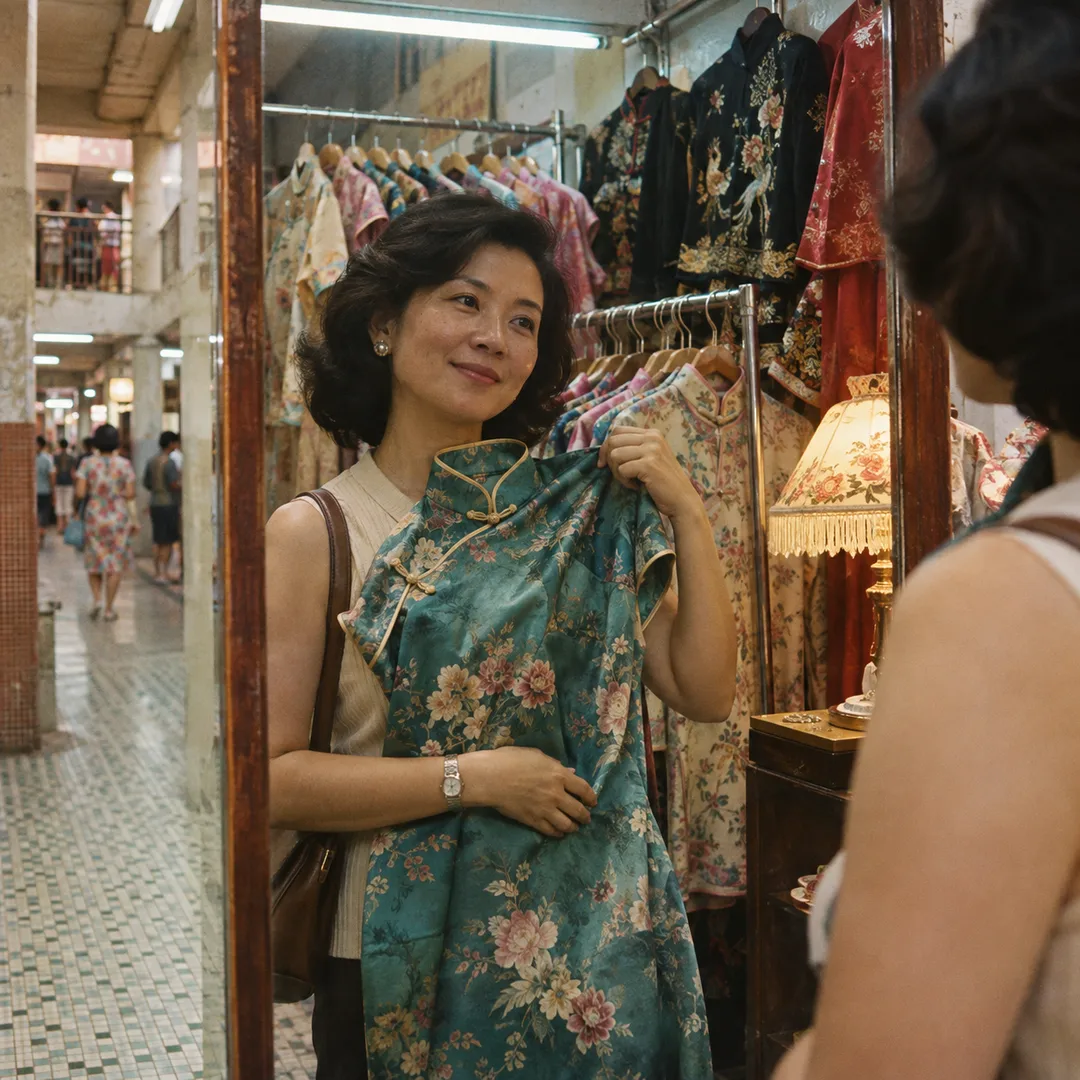
Chinatown is the right place for a thrift shop crawl with one very specific goal: finding a vintage cheongsam that fits. The dress was everyday wear in Singapore for decades before it became a festival and wedding outfit, so older pieces still surface in the district's ageing shopping complexes, among costume stalls and in boxes behind tailors' counters. This plan is for someone who wants one dress with real character, ahead of Chinese New Year, a family dinner or a wedding banquet, and is willing to try on a lot of near misses.
Why Old Cheongsam Still Turn Up in Chinatown
For much of the twentieth century, cheongsam in Singapore were made to measure. Women had them cut by neighbourhood tailors, wore them to work and to weddings, and kept them for years. When those wardrobes are cleared, the dresses often return to the district where the tailoring trade was strongest, passing through vintage dealers, costume rental stalls and occasionally a tailor who still has customers' unclaimed orders.
Because they were made for one body, each old piece is particular. You will see high collars with stiff interlining, sleeves cut in different lengths, fabrics ranging from cotton prints to heavy brocade. Some have hand-stitched hems, others have later zips added by a second owner. That variety is the joy of the hunt, and also the reason to expect a fitting or two before you take one home.
Starting in the Old Shopping Complexes
Chinatown's older multi-storey complexes, with their mosaic corridors, small family units and long escalators, are where most of the secondhand clothing hides. The upper floors tend to be quieter, with alteration counters, costume stalls and shops selling preloved jackets and dresses alongside new ones. Walk each floor slowly and look into the back of every unit, since owners often keep vintage on a separate rail.
Go on a weekday afternoon if you can. Weekends bring more shoppers and the stall owners have less time to pull dresses down for you. Ask simply whether they have any old cheongsam or qipao, and say what occasion it is for. Many owners know their stock by memory and will bring out a few pieces from storage that never made it onto the rail.
Checking a Vintage Dress Before You Fall for It
Hold the dress up to proper light and look along the side seams and the slit, since that is where old cheongsam split first. Check the frog closures and press studs one by one, run your fingers along the collar for cracks in the interlining, and sniff the underarms. Small stains on dark silk can be cleaned, but sun-faded shoulders and brittle fabric that tears at the touch cannot.
Try it on whenever you can. A cheongsam should sit close at the waist and hips without pulling across the bust, and you should be able to sit down without the side seam straining. If the dress is slightly large, that is good news, because taking in is easier than letting out. A dress that is too small almost always stays too small, whatever a hopeful seller says.
Finding a Tailor Who Respects the Dress
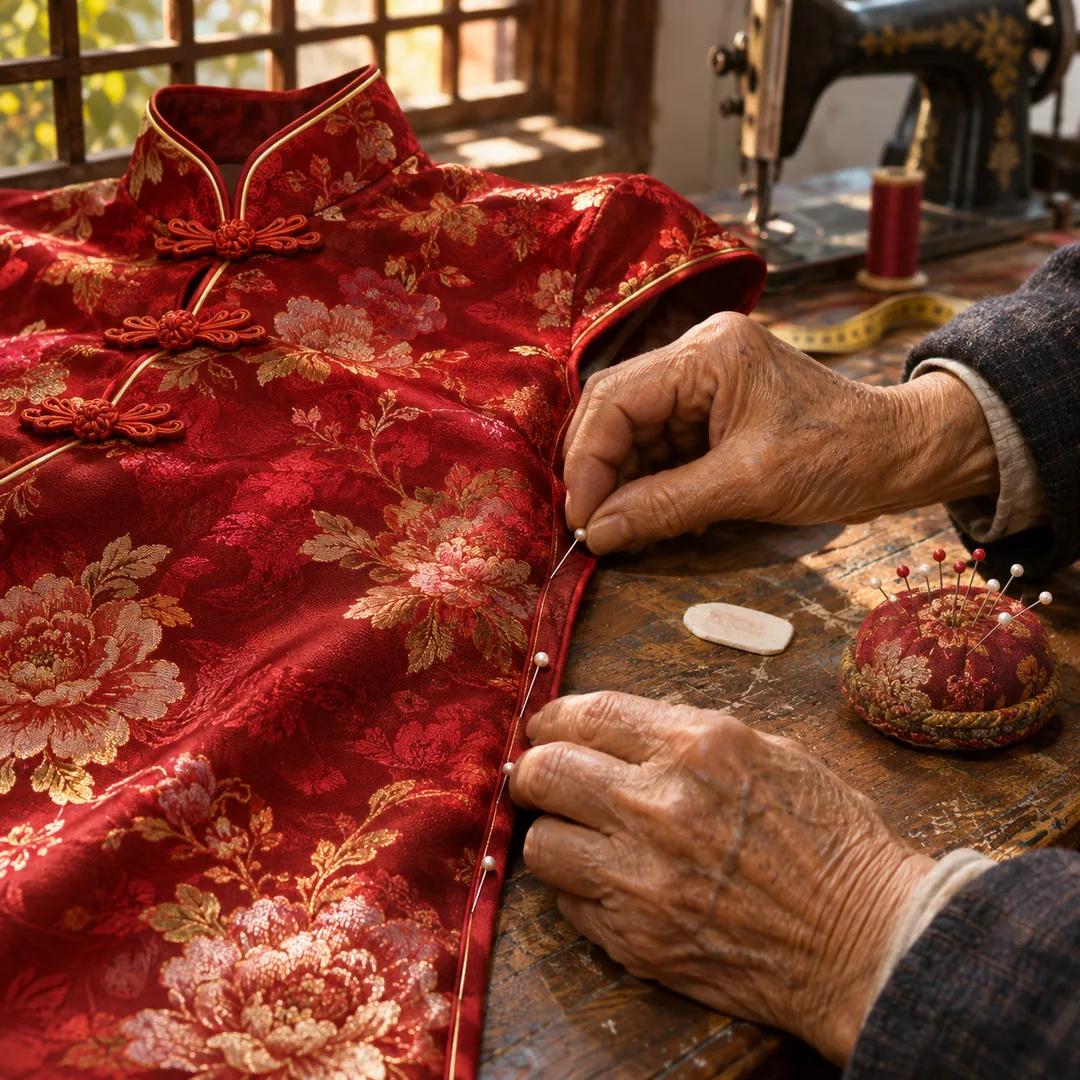
Alteration tailors in the complexes are used to cheongsam and will tell you honestly whether a piece can be adjusted. Bring the dress, wear the shoes you will pair with it, and stand still while they pin. Ask them to keep the original seam allowance where possible, so the dress can be changed again later, and agree on whether the old zip stays or goes.
Expect to leave the dress for a few days. During the weeks before Chinese New Year, tailors are busy and queues of urgent jobs build up, so start your hunt early if you have a fixed date. Take a photo of the dress with your receipt and the tailor's stall, then plan your return visit around a meal so the trip back feels like part of the outing.
A Walking Route Between Complexes and Shophouses
Link the complexes with a short walk through the shophouse streets in between. Pagoda Street and Temple Street are the busy souvenir lanes, worth one pass for embroidered slippers and fabric purses that pair well with a cheongsam. Then drift toward the quieter conservation streets on the other side of South Bridge Road, where the shophouse facades are better looked at than shopped.
If you need a breather, the temples along South Bridge Road offer shade and calm, and visitors are welcome when they dress modestly and keep their voices low. Avoid carrying a dress in a bag that crushes it. A loose tote or a garment bag with a hanger keeps the collar shape until the tailor sees it.
A Hawker Break That Fits the Day
Chinatown Complex has one of the busiest hawker centres in the city, and a seat there is the natural pause between floors. Order something light while you look through your photos, and keep any new dress well away from chilli and soya sauce. If a group is with you, let one person guard the seats and the bags while the others queue at different stalls.
Hawker centres can be warm and crowded in the middle of the day, so a later afternoon break is more comfortable. A cup of herbal tea or a sugarcane juice helps after a few floors of fluorescent light. If the hunt has gone well, this is a good moment to call the tailor and agree on a collection day.
Plan B When Nothing Fits
Most cheongsam hunts include a disappointing hour when every dress is too small or too worn. When that happens, widen the brief rather than walking aimlessly. A vintage mandarin-collar jacket, a brocade blouse or a pair of embroidered slippers can carry the same mood for a dinner, and they are far more forgiving about fit.
If you find a fabric you love on a damaged dress, ask a tailor whether it can be remade into something smaller, such as a cropped top or a purse. When the weather turns, the complexes are all indoors, so a sudden downpour is a reason to explore another floor rather than to leave. Save the shophouse walk for when the rain clears.
Using Karpo APP to Shape the Crawl
Before you set out, tell Karpo APP the occasion, your rough timeline and what you are hoping for, for example a silk cheongsam for a family banquet with time for one alteration. Ask it to suggest a walking order through Chinatown's complexes, a hawker break in the middle and a quiet temple stop for when you need shade.
Karpo APP can also point you to vintage and tailoring spots in other neighbourhoods if Chinatown does not deliver this time. It will not reserve dresses or contact tailors for you, so keep those conversations in person. What it gives you is a sensible plan, so the afternoon is spent trying on and talking to people rather than doubling back between floors.
Ask Karpo for more information.
Keep reading
- Chinatown Batik Canting Pen Picker: Fine Spouts for Silk
 Tiong Bahru Batik Canting Pen Picker: Handles and Bowls
 Katong Batik Canting Pen Picker: Wide Spouts for Wave Fills