 Chinatown Batik Canting Pen Picker: Fine Spouts for Silk
Hidden Gems & Odd Finds
Katong Stationery Shop Crawl Planner: A Family Recipe Book
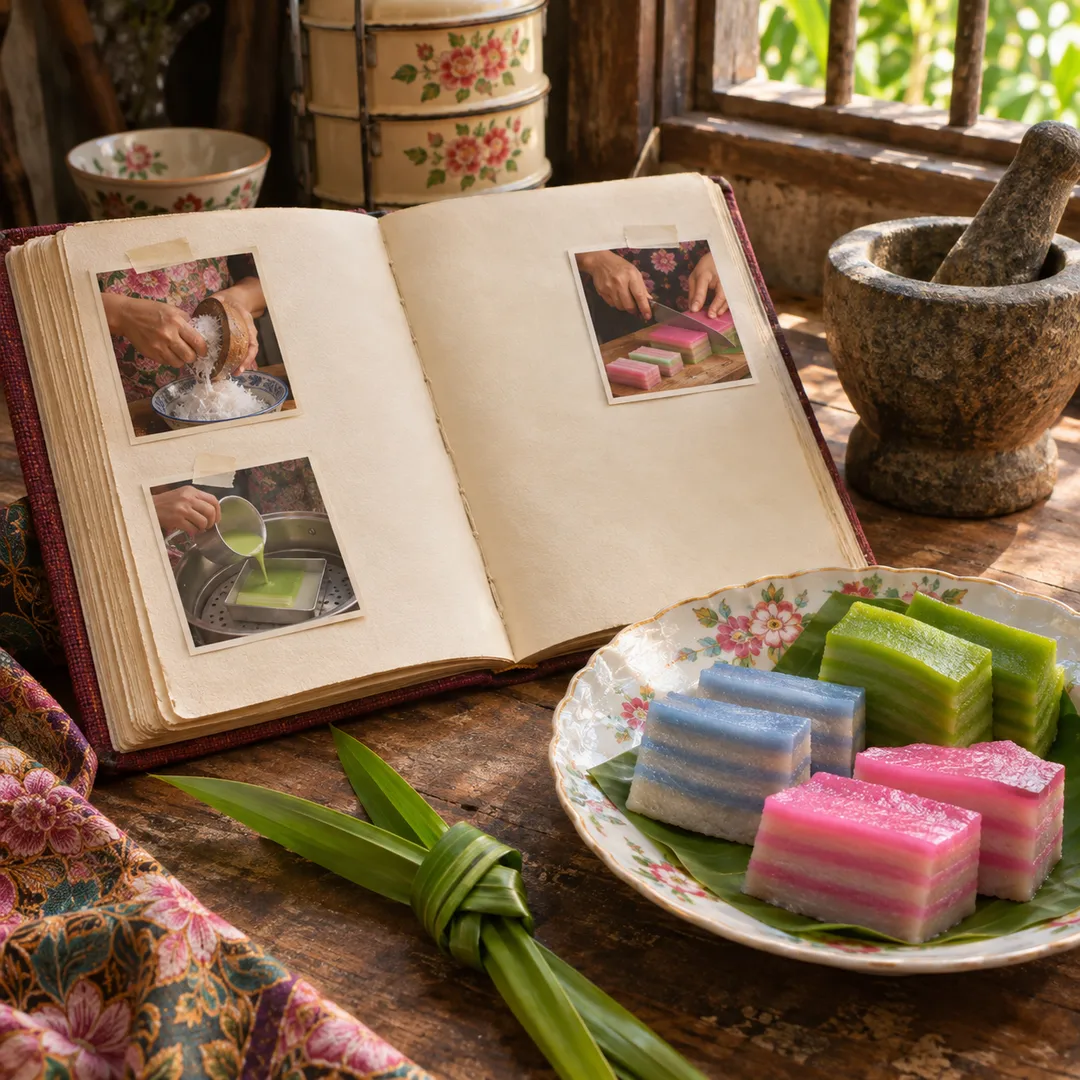
Saving family recipes in Singapore? This Katong stationery crawl finds a sturdy notebook and labels, then pairs it with a kueh tasting before you start writing.
A stationery shop crawl planner for Katong is a good fit for anyone who wants to save the family recipes before they are lost. The neighbourhood is famous for Peranakan and Eurasian cooking, so you can buy a notebook in the morning, taste the dishes your family makes at lunch and start writing that same evening.
Why Katong Is the Right Place to Start
Katong has fed families for generations. The streets around East Coast Road are known for Peranakan and Eurasian dishes, from laksa to kueh to slow-cooked curries. If your family's recipes come from this tradition, there is no better place to begin writing them down. You can taste, compare and remember in the same afternoon.
Even if your family cooks something else entirely, Katong's mood suits the project. The shophouses, the bakeries and the old coffee shops all carry a sense of handed-down knowledge. Spending a day here puts you in the right frame of mind to sit with an older relative and ask how they really make that dish.
Talk to the Cook Before You Shop
Before buying anything, call the person whose recipes you want to save. Ask which five dishes matter most to them and to the family. Most cooks will name the festive dishes first, then the everyday ones that everyone misses when they move away. That list tells you how big the book needs to be.
Ask how they like to share knowledge too. Some grandparents prefer to cook while you watch and write. Others would rather talk at the table. Knowing this helps you choose a notebook that can live in a kitchen or one that can stay neat on a shelf.
Choosing a Notebook That Can Live in a Kitchen
Kitchens are hard on paper. Look for a notebook with a sturdy cover, thick pages and a binding that lies flat when open. A spiral binding works well on a counter, while a cloth-bound book feels more like an heirloom. Pick based on whether the book will be used while cooking or kept safe.
Bring a pen that will not smudge. A fine waterproof pen is worth the small extra effort because oil and steam will reach the pages sooner or later. Add a small packet of labels or tabs so you can mark sections such as festive dishes, kueh and everyday meals.
Small Extras That Make the Book Personal
Stationery and craft shops in the area often carry stickers, washi tape and photo corners. Choose a few that echo the colours of Peranakan kueh, such as pandan green, butterfly pea blue and soft pink. Small details like this make each page feel cared for without needing any drawing skill.
Photo corners are especially useful. Print a few pictures of the cook at the stove, of the finished dish or of the family around the table, and stick them next to the recipe. In twenty years, those photos may be the part people treasure most.
A Tasting Lunch on East Coast Road
Plan lunch around one of the dishes on your list. If your grandmother makes laksa, order a bowl and talk about how hers is different. Is the gravy richer or lighter, does she use more dried shrimp, does she add cockles? These comparisons give you questions to ask later.
Bring the notebook and jot down first impressions. Do not try to reverse-engineer the recipe from a restaurant bowl. Use the tasting to sharpen your memory and give you the words for flavours. When you sit with the cook later, you will be able to ask better questions.
Picking Up Kueh for the Interview
Katong's bakeries and kueh shops are a joy to wander. Pick up a small box of kueh to bring to the person you are interviewing. Arriving with a treat sets a warm tone and often starts the conversation on its own. Many older cooks have firm opinions on which kueh is done properly.
Let them talk about what they see in the box. Which colours are natural and which are not, how thick the layers should be, how long the coconut milk should cook. Write down the stories as well as the facts, because the stories are what make a family recipe book worth reading.
Writing Down Recipes That Were Never Measured
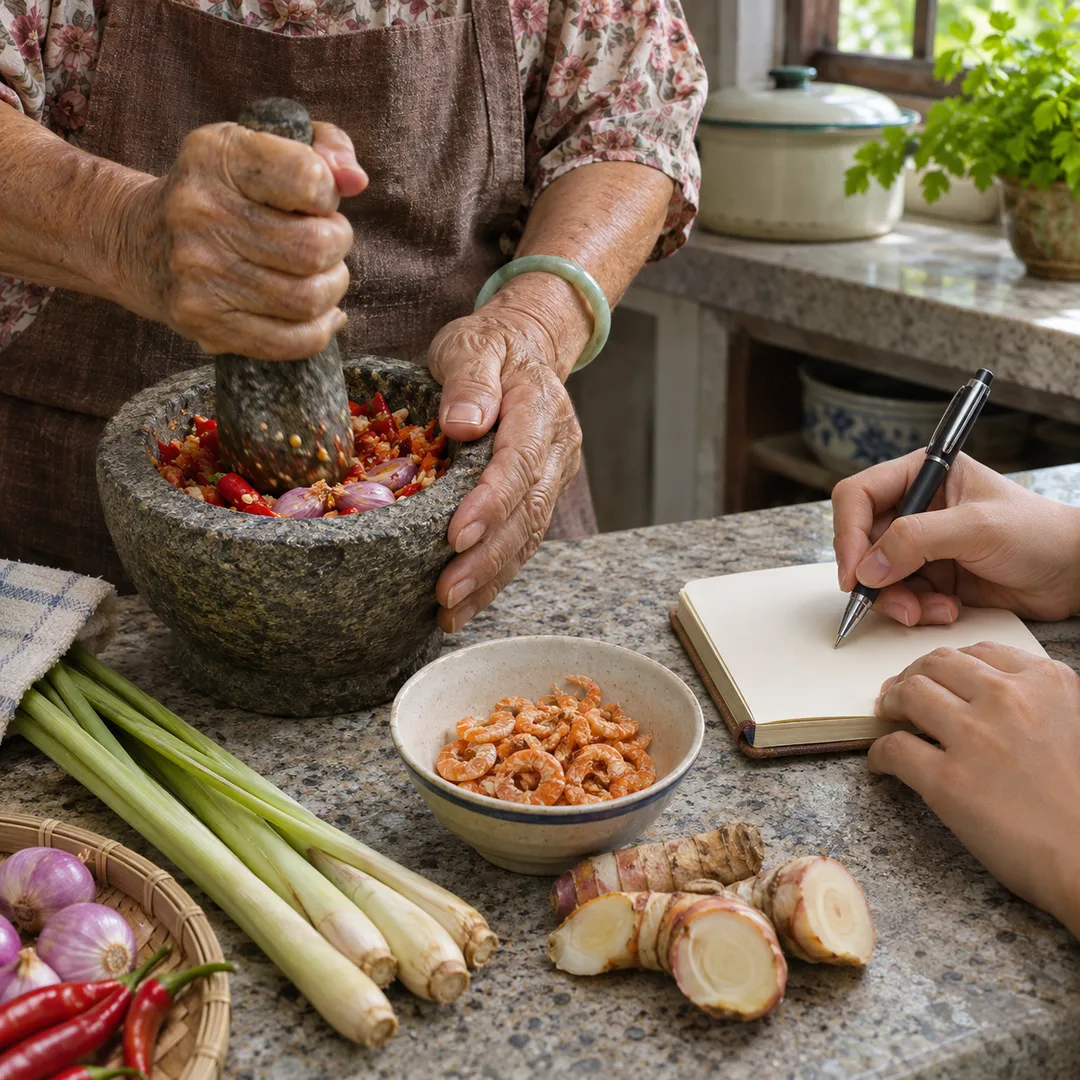
Many home cooks never measured anything. They add a handful of this and cook until it smells right. Do not force them into exact quantities. Instead, watch and measure what they actually use, writing down both the cook's words and your own estimate side by side.
Note the signs they look for too. When does the rempah smell ready, what colour should the oil turn, how should the kueh batter fall from a spoon? These cues are the real recipe. A list of quantities without them rarely produces the same taste.
Building the Book One Dish at a Time
Give each dish its own spread. Put the story on the left page, such as when the family made it and who taught the cook, and the method on the right. Leave space at the bottom for notes from future cooks who try it and adjust it.
Do not try to finish the whole book in one week. Aim for one dish a month, cooked together, written down and photographed. That steady pace makes the project last, and it gives you a regular reason to spend time with the person whose cooking you love.
Walking Off Lunch Before Heading Home
After a big lunch and a box of kueh, a walk helps. The colourful shophouses around Koon Seng Road are a short stroll from the main street, and East Coast Park is not far if you want a breeze off the sea. Either one gives you time to talk through the plan for your first interview.
Keep the walk respectful of residents. The terrace houses are homes, so stay on the pavement when you take photos and keep noise low. A quiet stroll leaves you calm and ready for the evening's writing session.
Bringing the Whole Family In
Once the book has a few dishes, share it at a family gathering. Pass it around and ask cousins, aunts and uncles to add their own memories in the margins. Someone will always remember a version of the recipe nobody else knew about, and the book grows richer for it.
Consider making copies for each branch of the family. Scan the pages at home or at a print shop, then bind simple copies for relatives who live far away. The original can stay with the cook or the eldest child, and everyone else still has the recipes.
When It Rains in Katong
Afternoon storms are common in Singapore, and Katong has plenty of covered walkways and cafés to wait in. Keep your notebook in a plastic sleeve so the pages stay dry if you get caught between shops. A rainy hour in a coffee shop is perfect for drafting your interview questions.
If the rain lasts, head straight to the cook's home and start early. There is something fitting about writing down a family recipe with the rain drumming on the roof and the smell of rempah filling the kitchen.
Planning Your Next Visit with Karpo APP
As the recipe book fills, you may want to return to Katong for more tastings or shop for a second notebook as a gift. Karpo APP can help you plan a relaxed day around the dishes on your list, with time for lunch, kueh and a walk.
You can also ask Karpo APP for ideas when relatives visit from abroad, such as a food-focused morning in the neighbourhood or a calm café to sit and look through the book together. Family recipes are best shared, and a little planning makes sharing easier.
Ask Karpo for more information.
Keep reading
- Chinatown Batik Canting Pen Picker: Fine Spouts for Silk
 Tiong Bahru Batik Canting Pen Picker: Handles and Bowls
 Katong Batik Canting Pen Picker: Wide Spouts for Wave Fills