 Chinatown Batik Canting Pen Picker: Fine Spouts for Silk
Hidden Gems & Odd Finds
Joo Chiat Stationery Shop Crawl Planner for Wedding Invites
Making your own wedding invitations in Singapore? This Joo Chiat stationery crawl borrows colours from Peranakan tiles and ends with a kopi tasting session.
A stationery shop crawl planner for Joo Chiat makes sense for couples who want handmade wedding invitations that feel local. The neighbourhood's painted shophouses and patterned tiles give you a colour palette for free, and an afternoon of looking, sketching and gathering paper can turn into an invitation your guests keep on the fridge.
Why Joo Chiat Fits Wedding Stationery
Joo Chiat looks like a box of sweets. The restored shophouses come in mint, coral, butter yellow and sky blue, and many are decorated with glazed tiles in floral patterns. For a couple designing invitations, that is a ready-made mood board. You can walk the streets, pick the colours you love and build your whole paper suite around them.
The neighbourhood also has a gentle rhythm that suits a planning afternoon. You can stop for kopi, sit in a café with your sketches and wander between small shops without feeling pushed along. Wedding planning is often stressful. This is a chance to make one piece of it feel like a date.
Start with a Colour Walk
Before you buy anything, take a slow walk past the most colourful terraces. Koon Seng Road is the famous one, but the side streets have plenty of detail too. Photograph doors, tiles and window shutters, and agree on two or three colours that feel like you as a couple.
Keep the photos close-up. A single tile with a pink peony on a green background tells you more than a wide shot of the whole street. When you get to the paper shops later, you can hold card stock up to your phone screen and choose shades that match.

Agree on the Invitation Before You Shop
Sit down for ten minutes and settle three questions. How many guests are you inviting, what size do you want the card to be and will you post the invitations or hand them over? The answers decide how much paper you need and whether you need envelopes at all.
Small weddings work beautifully with handmade cards because the numbers stay manageable. If you are inviting a large crowd, consider making a handmade card only for close family and a simpler printed version for everyone else. There is no rule against mixing the two.
What to Gather on the Crawl
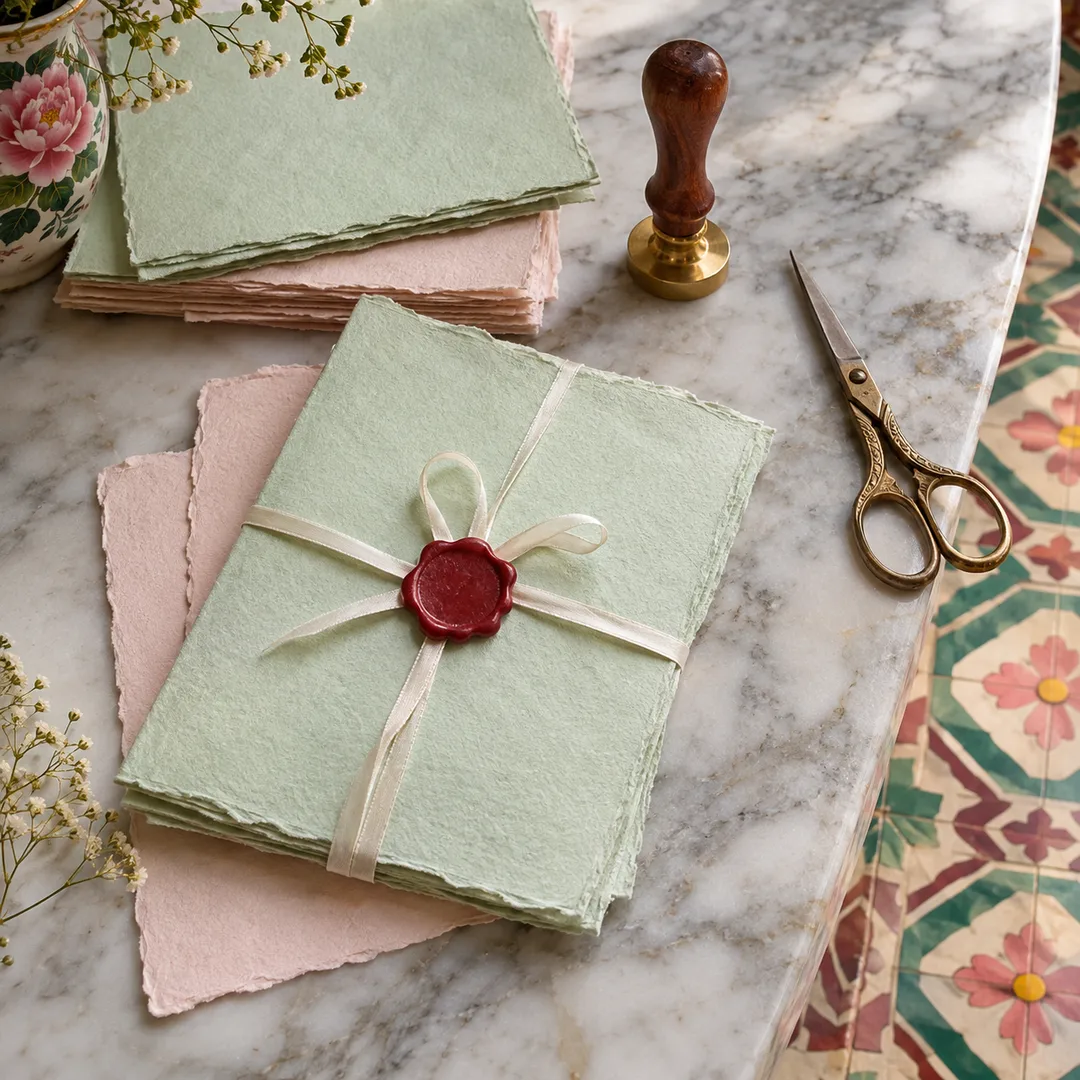
A simple suite needs heavy card stock in your main colour, a lighter paper or vellum for an inner layer, envelopes that fit and something to close them. Wax seals have become popular because they look special without needing any design skills. Ribbon, twine or a strip of patterned paper can do the same job.
Look out for small craft and stationery shops in the Joo Chiat and Katong area, as well as gift shops that stock Peranakan-themed paper goods. A tile-pattern washi tape or a set of floral stamps can echo the shophouses on every envelope. Buy one sample first and test it at home before you commit to a full set.
Testing Ideas Over Kopi
Take a break at a coffee shop and lay your samples out on the table. Hold the card against the vellum, try the ribbon in two colours and see which combination still looks good after a cup of kopi. Fresh eyes help, and the coffee shop setting keeps things relaxed.
This is also a good moment to sketch the layout. Where will the names go, and the date, and the venue? Draw three quick versions on a napkin and pick the one that feels calmest. Simple layouts age better than busy ones, and they are easier to write or print by hand.
Handwriting, Printing or Both
If one of you has neat handwriting, write the names on each card yourself. Even guests who have never met you will feel the care in it. A fine felt-tip pen or a calligraphy marker is easier for beginners than a dip pen, and it dries faster in Singapore's humidity.
If handwriting every card feels like too much, print the details at home or at a local print shop, then add a hand-written touch such as the guest's name on the envelope or a small drawn flower. The mix of print and handwriting looks personal without taking every evening for a month.
Bringing Peranakan Details In
Peranakan culture runs deep in this part of Singapore, and there are respectful ways to borrow from it. Use tile motifs as a border, choose the soft green and pink you saw on the shophouses or add a small drawing of a beaded slipper if a family member has Peranakan roots. Ask relatives what feels meaningful.
If the details come from your own family, invite an older relative to help. Some grandparents remember the patterns on their childhood homes or the kebaya worn at family weddings. Their input turns a design choice into a story you can share with guests on the day.
Lunch on East Coast Road
A planning afternoon needs fuel. East Coast Road and the streets around it are known for laksa, kueh and other Peranakan and Eurasian dishes, so pick somewhere that feels like a treat. A shared lunch away from spreadsheets reminds you why you are doing this in the first place.
Keep your paper safe while you eat. Card stock bends easily, and a splash of laksa gravy is a hard colour to match. A flat folder or a clipboard in your bag keeps the samples crisp until you get home.
A Small Assembly Night at Home
Set aside one evening to make a single finished invitation from start to end. Cut the card, layer the vellum, write the details, slip it into the envelope and add the seal. Time how long it takes. That number tells you how many evenings the full set will need.
Invite a friend or two to the later assembly nights. Put on music, order food and give everyone one job, such as cutting, sealing or tying ribbon. Many couples say these evenings end up among their favourite memories from the whole wedding season.
Keeping Paper Happy in the Humidity
Singapore's air can make paper curl and wax seals soften. Store finished invitations flat in a box with a lid, away from windows and kitchen steam. If you use wax, let each seal cool fully before stacking, and keep the box in an air-conditioned room if you can.
Handle the cards with clean, dry hands. It sounds fussy, but a fingerprint on pale card is easy to make and hard to remove. Keep a small cloth nearby during assembly nights, and the finished set will look as fresh on the day you send it as on the day you made it.
Respecting the Neighbourhood
Joo Chiat is a lived-in place, and the colourful terraces are people's homes. When you photograph doors and tiles, stay on the pavement, keep gates clear and avoid sitting on private steps. A quick smile or a nod to anyone nearby goes a long way.
Support the small businesses that make the area special. Buy your samples locally, eat in the neighbourhood and say thank you when a shopkeeper gives you advice. If your invitations are inspired by Joo Chiat, it feels right for some of your spending to stay there too.
Planning the Rest with Karpo APP
Once your invitations are under way, the next questions come quickly. Where will you take couple photos, where can you host a small dinner and what can out-of-town guests do the day before? Karpo APP can help you plan around the neighbourhood you already love.
Ask Karpo APP for a relaxed itinerary through Joo Chiat and Katong for visiting family, or for quieter spots to sit with your partner and talk through the guest list. A little help with the planning leaves more time for the parts that matter most.
Ask Karpo for more information.
Keep reading
- Chinatown Batik Canting Pen Picker: Fine Spouts for Silk
 Tiong Bahru Batik Canting Pen Picker: Handles and Bowls
 Katong Batik Canting Pen Picker: Wide Spouts for Wave Fills