 Chinatown Batik Canting Pen Picker: Fine Spouts for Silk
Hidden Gems & Odd Finds
River Valley Sneaker Shop Crawl Planner for New Arrivals
New arrivals in River Valley can build a three-pair shoe rotation for heat and storms in one afternoon, then test it on a Singapore River walk.
Most people who move to Singapore arrive with the wrong shoes. Suede boots, leather brogues and heavy winter trainers come out of the suitcase and last about a week before the heat, the afternoon storms and the shoes-off habit at every front door make them feel absurd. This sneaker shop crawl planner is for new arrivals settling into River Valley: one afternoon to build a small rotation that suits the climate, then a test walk along the Singapore River to see how it holds up.
Your Old Shoes Were Built for Another Climate
Shoes designed for cold, dry cities trap heat, and in Singapore that means damp socks by lunchtime and a smell that never quite leaves. Leather and suede soak up humidity, grow mould in a cupboard within weeks, and suffer badly in the sudden downpours that arrive most afternoons. Even good walking shoes can feel heavy when the air is this warm.
None of this means throwing everything away. Keep one pair of leather shoes for the office if your job needs it, and store the rest with care. What most newcomers need instead is a small set of lighter, breathable and quick-drying shoes that can cope with heat, rain and constant on-and-off at the door. That set is what this crawl is designed to build.
Three Pairs That Cover Most of Life Here
A simple rotation works for most people. First, a pair of breathable mesh sneakers or running shoes for walking around the city, which dry quickly and stay cool. Second, a pair of slides or sandals for errands, the hawker centre and the walk to the pool. Third, a rain-friendly pair, either something synthetic that shrugs off puddles or a cheap canvas pair you do not mind getting soaked.
Add a smarter pair only once you know your work and social life. Many people find that clean white sneakers go almost everywhere in Singapore, from the office to a casual dinner, and that formal shoes come out far less often than they did at home. Start with the three basics, live in them for a month, and then fill the gaps you actually notice.
Starting at the Malls on the River Valley Side
River Valley sits close to several shopping options, from the malls at the Great World end of the neighbourhood to the bigger stretches of Orchard Road a short walk or bus ride away. Start close to home. The nearby malls carry sports chains and lifestyle sneaker shops, which is enough to cover the first two pairs of your rotation without a long trip.
Use the first stop to learn your size in local stock. Brands sometimes fit differently from the versions sold in Europe or North America, and staff are used to newcomers asking about conversions. Try on in the afternoon, when your feet are at their warmest and largest, because that is how they will feel on most days here. Buy the breathable everyday pair first.
What Humidity Does to Materials
Ask staff about materials before you buy. Mesh uppers and synthetic linings breathe and dry quickly, while thick leather and suede struggle with constant humidity. Rubber outsoles with deep grooves grip better on wet paving, which matters on the smooth tiles of covered walkways and void decks after a storm. Removable insoles are a bonus because you can pull them out to dry.
Be wary of very light coloured suede or nubuck, however good it looks on the shelf. Rain splashes and mud stains are hard to remove, and the material can stiffen once it dries. White leather sneakers are easier to wipe clean and remain a popular choice for exactly that reason. Canvas is cheap and cheerful, but it soaks through quickly and needs time to dry.
Rainstorms and the Shoes-Off Doorstep
Afternoon storms in Singapore can arrive with very little warning, so your rain pair should be something you can wade through puddles in without worrying. Many locals simply wear slides on rainy days, carry a small towel and dry their feet once indoors. Covered walkways link much of the city, which helps, but the last few metres often mean wet feet.
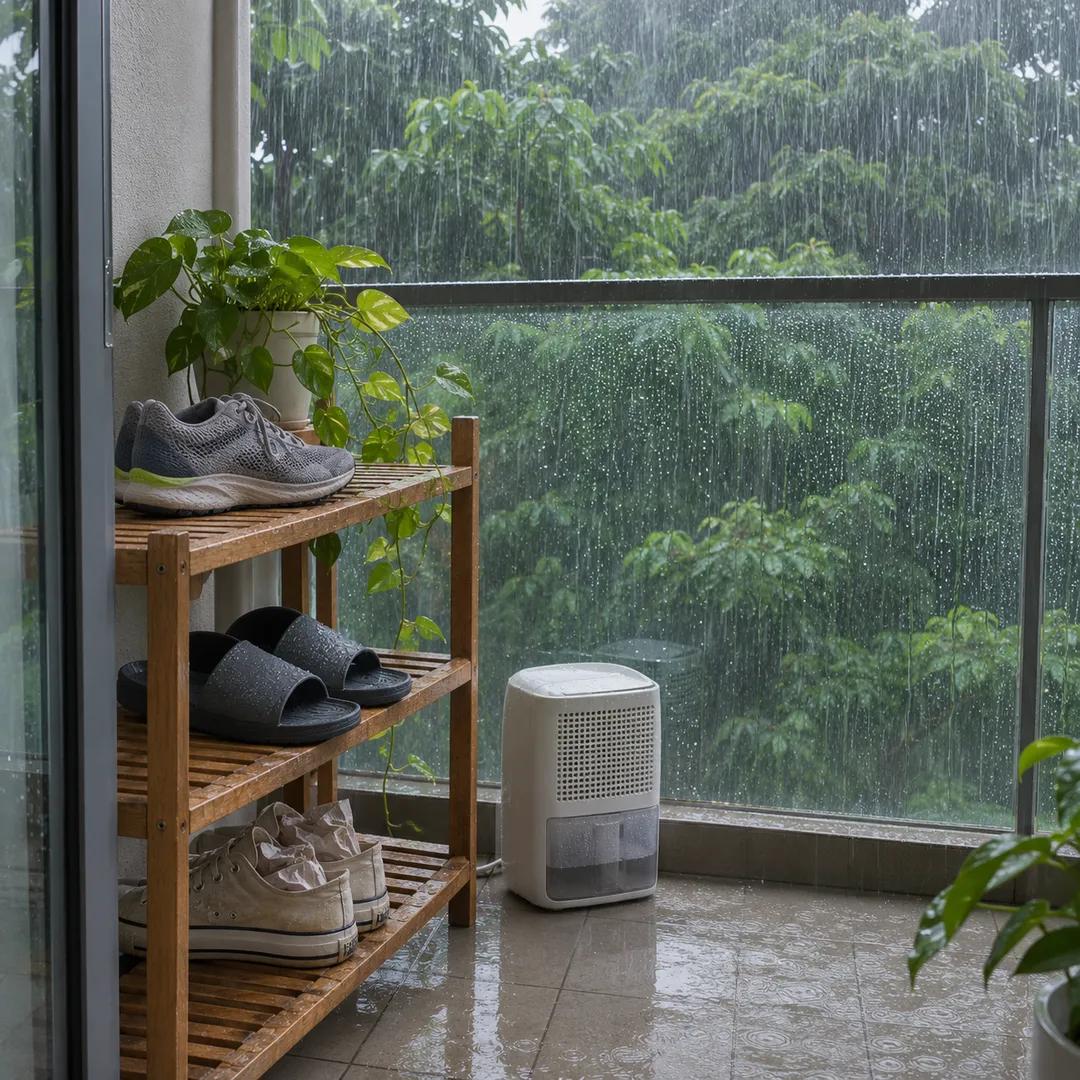
You will also notice that most homes, and many smaller offices and clinics, expect shoes to come off at the door. Shoe racks outside flats are part of everyday life. That habit favours slip-on shoes and easy laces over complicated boots, and it is worth thinking about when you choose your everyday pair. Fiddly lacing gets tiresome when you are doing it several times a day.
Drying and Storing Shoes in a Small Flat
Damp shoes are the biggest enemy of a rotation in this climate. Stuff wet pairs with newspaper, leave them somewhere airy, and avoid direct midday sun, which can crack glue and fade colours. A small dehumidifier or an air-conditioned room helps a lot, and many people keep their best shoes in a cupboard with moisture-absorbing packs to stop mould from forming.
Rotating pairs is not only about style here. Giving each pair a full day to dry between wears keeps them fresher, reduces odour and helps the foam recover. This is why three affordable pairs often last longer and feel better than one expensive pair worn every day. Check the cupboard every few weeks for signs of mould, especially on leather you rarely use.
Using the Karpo APP to Plan the Afternoon
If you are still learning the city, the Karpo APP is a useful way to turn this crawl into a route. Tell it something like breathable sneakers and rain shoes near River Valley, this Saturday afternoon, and Karpo can suggest which nearby shops to try, help you order the stops sensibly and point you to a good place for lunch between them.
As a newcomer you will also have other questions, from which hawker centre is closest to where a good walk starts. Karpo can help plan those small outings too, so the shoe crawl becomes part of getting to know the neighbourhood. Use the suggestions as a starting point, then trust what you see and feel in person when it comes to choosing a pair.
Testing the Rotation Along the Singapore River
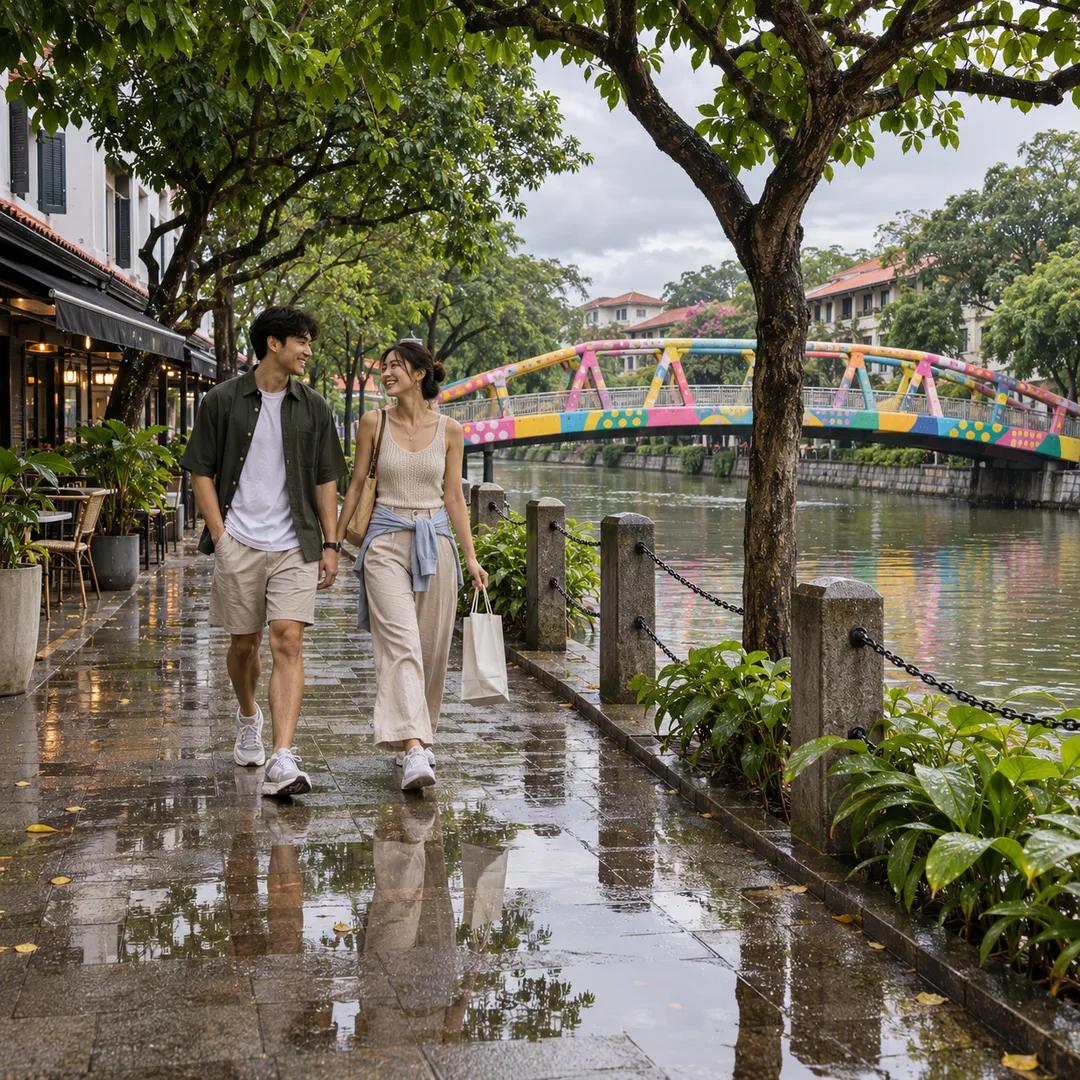
Once you have a pair or two, take them for a walk along the Singapore River. The promenade runs from the River Valley side past Robertson Quay, with its riverside cafes and brightly painted bridges, then on towards Clarke Quay. The path is flat, partly shaded and busy with joggers, dog walkers and families in the morning and evening.
Walk at your normal pace and pay attention to how the shoes feel on different surfaces, from smooth paving to timber boardwalks to wet patches after rain. If your feet stay cool and comfortable after half an hour, you have chosen well. If you feel hot spots or damp socks, you will know what to change on the next crawl.
A First Weekend Walk to Fort Canning
For a longer test, carry on from the river up into Fort Canning Park. The paths climb gently through old trees, past historic spice gardens and colonial buildings, and the extra slopes show you how your new shoes handle a little more effort in the heat. It is also one of the nicer green spaces to discover in your first weeks in the city.
Finish with a cold drink at a cafe nearby and take stock. Which pair did you reach for most? Which one stayed in the cupboard? After a month, your rotation will tell you what you really need, and you can plan a second crawl to fill the gap. By then, the boots you brought from home will have found their proper place, packed away for your next trip somewhere cold.
Ask Karpo for more information.
Keep reading
- Chinatown Batik Canting Pen Picker: Fine Spouts for Silk
 Tiong Bahru Batik Canting Pen Picker: Handles and Bowls
 Katong Batik Canting Pen Picker: Wide Spouts for Wave Fills