 Chinatown Batik Canting Pen Picker: Fine Spouts for Silk
Hidden Gems & Odd Finds

Tiong Bahru Rattan Weaving Cane Picker: Start Small
A coaster-sized practice weave keeps the first materials outing manageable, with room for a neighbourhood pause and a useful lesson about strand control.
Start with a sample small enough to finish studying, rather than a project large enough to fill an afternoon with uncertainty. For a Tiong Bahru rattan weaving cane picker outing, a coaster-sized practice weave gives thickness and pliability a visible purpose. You can judge how the strand behaves at a crossing, how it handles a gentle turn and whether the method feels manageable before applying it to an object you care about.
Define the lesson, then the object
A beginner often imagines the completed basket or restored panel and misses the smaller skill inside it. Choose one lesson for the first sample: keeping parallel rows even, recognising the two faces of a strip or turning a corner without crowding it. That choice changes what you ask about materials. You are seeking something suitable for a defined exercise, not a universal starter bundle that promises every possible woven object.
Draw the practice area on plain paper and leave generous space around it for loose ends. Keep the intended use decorative while you learn. A little sample does not need to become a trivet, a serving surface or a load-bearing repair to justify the effort. It can simply show how a material moves through your hands. Giving the exercise that permission makes it easier to choose an achievable strand and stop at a useful result.
Make thickness a handling question
Compare the shape of the strand before judging its size. Flat strip and round reed present different surfaces to your fingers and create different crossings. Tell anyone helping with a comparison which technique you intend to practise. A material that suits one method may frustrate another, even when its diameter or width looks comfortable. The useful question is how the profile fits the exercise you sketched.
Handling comfort deserves more attention than a dramatic finished appearance. Consider whether you can hold the sample steadily and distinguish where one pass ends and the next begins. Ask permission to examine an offcut rather than loosening a packaged coil. Avoid choosing the finest-looking strand merely because the small scale feels sophisticated. A clear crossing that you can understand is a better first lesson than an intricate surface whose errors you cannot yet recognise.
Watch what happens at a crossing
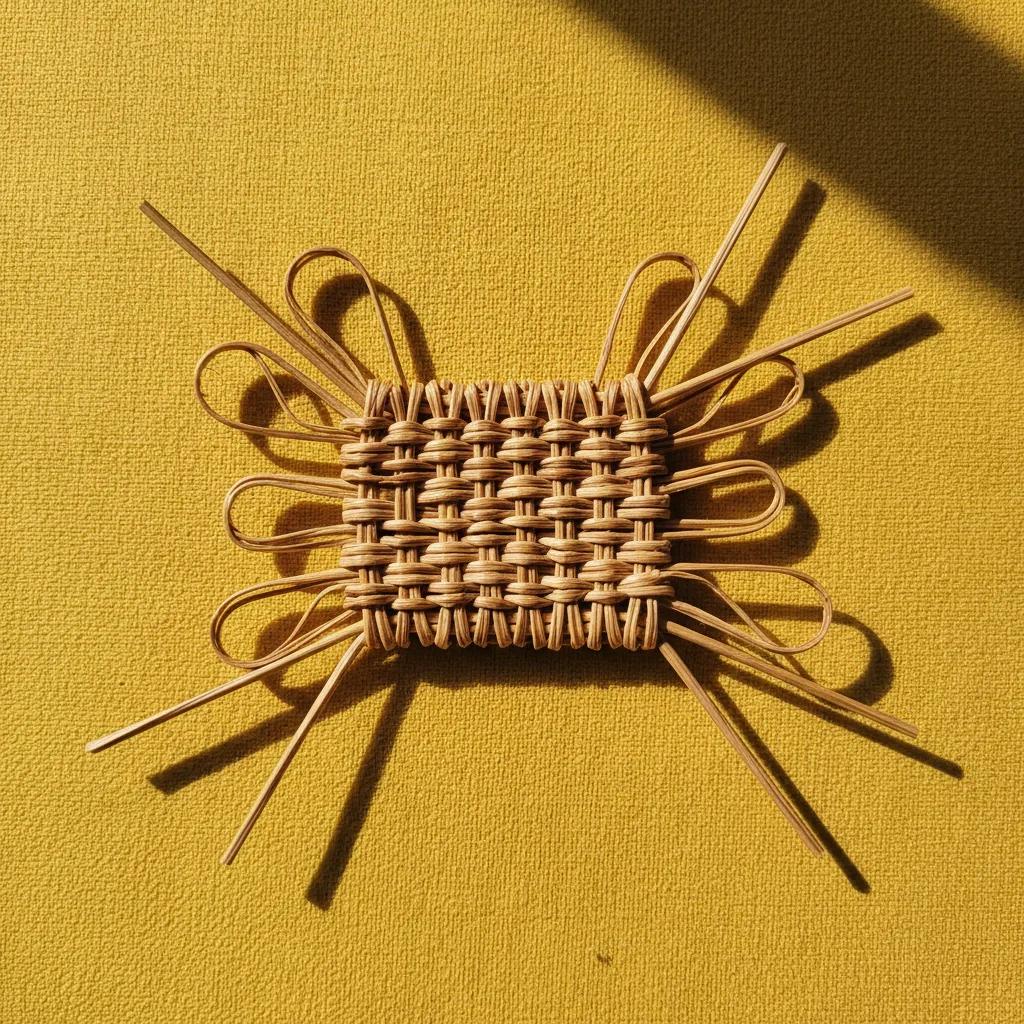
Your sample will bring strands into contact repeatedly. Look at whether the profile makes each intersection easy to see, and imagine the next pass lying beside the previous one. This is where width becomes a design issue as well as a measurement. A broader strip changes the proportions of a small exercise, while a fine strand gives you more crossings to manage within the same area.
Ask about appropriate preparation for the actual material, including whether its surface or finish changes the handling method. Do not copy a soaking routine from another kind of cane simply because the two look similar. Nor should a dry display sample be forced into a tight bend as a quick test. Learn the relevant handling guidance and compare materials through permitted samples, keeping the project small enough to revise without wasteful commitment.
Put an ending into the drawing
Even a tiny weave needs a considered way to stop. Before choosing material, draw what happens to the loose ends around the perimeter. Does the method use a separate border, a return through the weave or another finishing step? You do not need to master it in the aisle, but you should know what you need to learn. An unfinished sample is useful; an accidental claim that raw ends form a durable edge is less so.
Allow enough room for that lesson in the design. If your sketch crowds every turn into a tight corner, soften the outline or enlarge the practice area slightly. A beginner exercise should make the action visible, not hide it inside an awkward shape. Skip ornamental flourishes on the first attempt if they obscure the crossing you set out to understand. Decoration can return once the basic rhythm feels intentional.
Let the neighbourhood interrupt the shopping impulse
Tiong Bahru's curved forms, low-rise scale and leafy residential atmosphere suit a pause between ideas. Notice the balance of solid surfaces and open space as you walk. A weave also has that balance: the strand and the gap contribute together. The comparison is an invitation to look, not a claim that neighbourhood premises offer a particular material or that a local design tradition dictates what your project should become.
Carry a sketchbook and a small pouch instead of the unfinished household object that first inspired the errand. Photographs usually make a more comfortable companion on a casual walk. If you are browsing with a friend, let them respond to the proposed scale and texture rather than asking them to pronounce on technical suitability. Two people can enjoy the afternoon while contributing different kinds of attention to the same small project.
Ask for nearby possibilities and choose independently
Karpo APP can suggest nearby places in Tiong Bahru. Ask for craft-related places around the neighbourhood and decide which recommendations fit your interests. You select the places, the order of any visits and the way you travel. The project sketch stays with you as the basis for material questions; nearby discovery and the hands-on judgment of a particular strand are separate parts of the outing.
After a useful conversation, write down one practical observation in your own notebook. Perhaps a strip's face was easy to recognise, or a proposed finish needed more room than your sketch allowed. Keep any sample you are permitted to retain beside that observation. This creates a record you can return to at home without expecting a pale coil to remind you of every detail you noticed while browsing.
Return home with a small experiment
Work the chosen lesson slowly on the practice piece, following the appropriate technique and preparation for the material. Compare the first rows with the later ones and identify where spacing became easier or more difficult. Resist correcting every irregularity immediately. Some differences are useful evidence about how you held the strand, and noticing them can teach more than disguising them beneath an elaborate border.
The next project should emerge from that evidence. If the crossings are clear and the edge makes sense, you can choose another modest exercise or revisit the decorative repair with better questions. If the sample remains frustrating, adjust the method or seek suitable instruction before expanding the ambition. A Tiong Bahru afternoon has still produced something worthwhile: a pleasant neighbourhood outing, a material you understand a little better and a realistic next step for your hands.
Ask Karpo for more information.
Keep reading
- Chinatown Batik Canting Pen Picker: Fine Spouts for Silk
 Tiong Bahru Batik Canting Pen Picker: Handles and Bowls
 Katong Batik Canting Pen Picker: Wide Spouts for Wave Fills