 Chinatown Batik Canting Pen Picker: Fine Spouts for Silk
Hidden Gems & Odd Finds

Katong Rattan Weaving Cane Picker: 3 Decorative Decisions
Pair cane with the room you actually live in, using a tray rim or framed panel to test texture, openness and the quieter details of a decorative edge.
Choose the visual role of the cane before choosing its shade. An open panel lets the background participate. A close weave becomes a surface of its own. A wrapped edge can act as a quiet outline. This Katong rattan weaving cane picker focuses on decorative objects and personal craft repairs, with three decisions that connect the material in your hand to the room where the finished piece will live.
Decide what should catch the eye
A room already contains competing textures: fabric, timber grain, painted walls and the things you use every day. Cane adds another pattern, so consider whether it should become the focal point or soften the space around it. Photograph the intended location without tidying away every ordinary object. A sample that looks elegant in isolation may feel busier when placed beside the actual curtain, books and tabletop it will accompany.
Pick one modest project to carry through that comparison. A small framed insert, a decorative tray border or a non-structural container gives you a manageable scale. A chair seat is a different undertaking because appearance cannot establish whether a repair will carry weight safely. Keep this outing about surface and finish, and seek suitable expertise for any furniture repair whose integrity affects how the object can be used.
Decision one: let the background show or disappear
With an open weave, the spaces between strands are part of the design. Place a permitted sample over paper resembling the wall or fabric behind your project. Move it between a pale background and a darker one, and notice which part of the pattern becomes more visible. The cane itself has not changed, but its relationship to what sits behind it can alter the entire impression.
A dense weave makes a different promise. It may read as a stronger block of texture, leaving less of the underlying colour visible. That can be welcome on a little panel surrounded by plain timber and overwhelming beside a strongly patterned cloth. Decide which surface should lead. There is no universal winner between open and close construction. The useful comparison is the one tied to the object and its setting.
Decision two: give the border a proportion
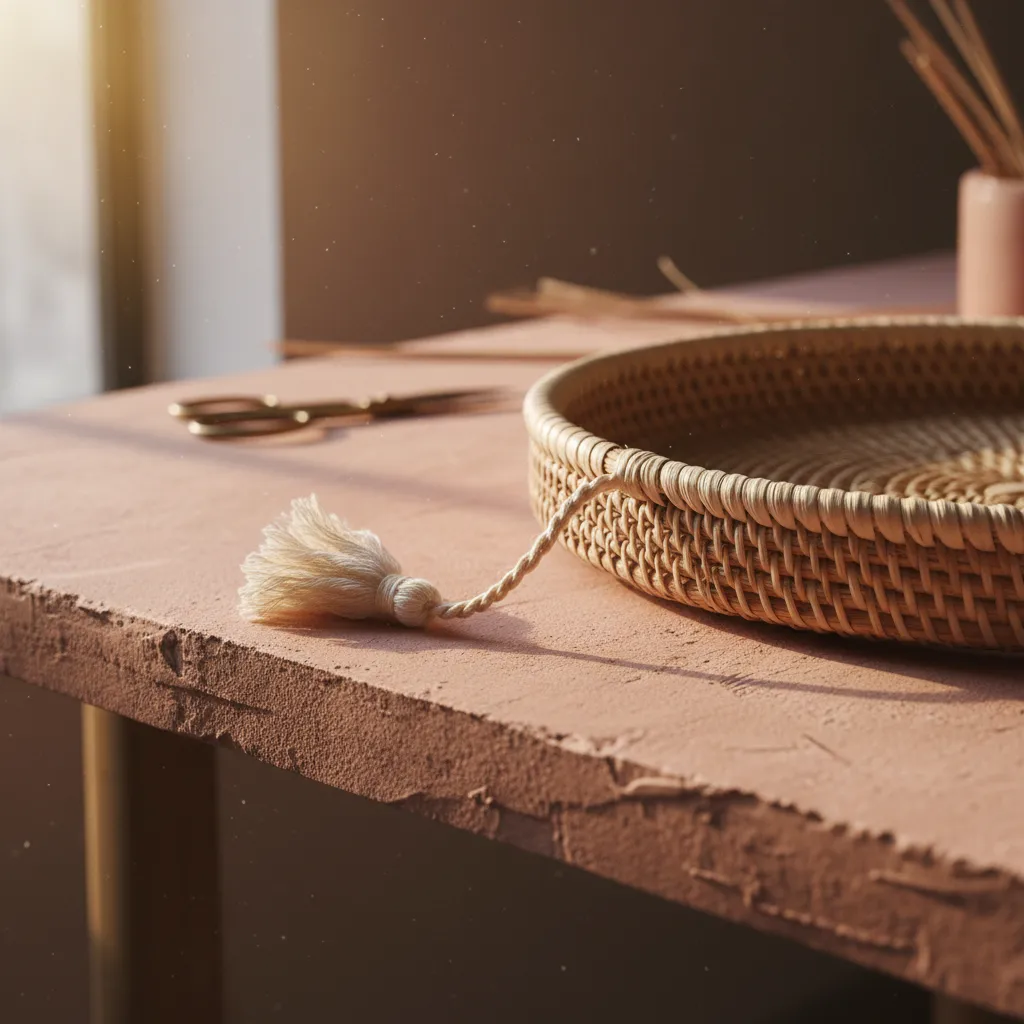
An edge can look deliberate without becoming heavy. Hold a paper strip of the proposed width against a photograph or sketch of the project and compare the amount of surface it would cover. This simple exercise keeps you from choosing a generous binder that swallows a small object. It also helps you see whether a border should echo another line in the room or remain visually quiet.
Treat width, thickness and curve as separate questions. A broad strip with a thin profile behaves differently from a chunky strand, and either may be unsuitable for a tight decorative turn. Ask about the material in relation to the method you intend to use. Never force a sample around a corner to make the design work on the spot. Revise the design or explore a more appropriate material instead.
Decision three: compare colour in company
Carry a small fabric offcut or a plain colour card from home. Put it beside the offered cane sample, with permission, and observe the relationship rather than hunting for an exact match. A warmer strand might sit comfortably beside terracotta, while a paler one may make another colour feel sharper. These are visual preferences, not claims that a certain shade belongs to every interior or every Katong home.
Look beyond the first impression of colour to the consistency and finish of the material. An old woven object may have darkened in ways that fresh cane does not reproduce. Decide whether a visible repair is acceptable or whether your project needs a larger redesign. Trying to disguise every difference can turn a straightforward material choice into a complicated surface-treatment experiment before you have even settled the construction.
Borrow Katong's attention to detail
Katong provides a rich setting for looking at repeated motifs, layered colours and the relationship between an edge and a larger facade. Let the neighbourhood's decorative character encourage patient observation. A border can organise a busy surface. A repeated shape can look lively without being loud. Use those impressions to refine your own taste, without assuming that a particular shopfront offers cane, repairs or craft materials.
Choose your own way to combine the material errand and the neighbourhood. You might carry only photographs and a fabric swatch, keeping your bag light enough for an unhurried walk. If your comparisons become indecisive, take a break and look again at the room photograph. Sometimes the answer is to simplify the object, leaving the more elaborate texture as an idea for another project rather than a necessary purchase today.
Ask for places nearby, then make your own selection
Karpo APP offers nearby place recommendations around Katong. Ask for craft-related places near the neighbourhood and consider which suggestions interest you. Select your destinations and choose your own order and means of travel. At any relevant place you visit, use the room photograph and samples to discuss materials directly. A nearby recommendation provides a starting point for discovery, while the decorative decision remains yours.
Keep your comparisons in a personal notebook with a quick sketch of the proposed edge. Write down what you liked in concrete terms: the background remained visible, the border left enough of the panel exposed or the surface felt calm beside the fabric. These observations are more useful than calling a sample beautiful. They help you reject another attractive option that answers a different design question from the one you brought.
Rehearse the whole little composition
Before attaching material to the object, arrange a small sample with the intended background and border. View it from the distance at which you will usually see the finished piece. A detail that dominates at arm's length can recede across a room. A delicate pattern can vanish entirely. Use an appropriate method for any actual sample work, following guidance for the material rather than assuming every natural strand has the same preparation needs.
Finish the outing with a preference you can defend in ordinary language. Perhaps the open weave keeps a corner light, or a narrow border gives a worn container a considered finish without overwhelming it. If the material still feels disconnected from the room, leave it undecided and enjoy the walk. A Katong afternoon can sharpen your eye even before you choose the cane that will become part of your home.
Ask Karpo for more information.
Keep reading
- Chinatown Batik Canting Pen Picker: Fine Spouts for Silk
 Tiong Bahru Batik Canting Pen Picker: Handles and Bowls
 Katong Batik Canting Pen Picker: Wide Spouts for Wave Fills