 Chinatown Batik Canting Pen Picker: Fine Spouts for Silk
Hidden Gems & Odd Finds

Kampong Glam Peranakan Beadwork Shop Walk: Shophouse Lanes
Route a Kampong Glam peranakan beadwork shop walk along historic textile arcades. Discover heritage seed-bead embroidery cases and vibrant ceremonial craft.
Kampong Glam offers a distinctive perspective for a peranakan beadwork shop walk because its historic commercial streets have functioned for generations as the epicenter of Singapore's regional textile trade, bringing together silk merchants, lace specialists, and traditional haberdashers. Late yesterday morning my friend Elena, a theatrical costume researcher who studies Southeast Asian ceremonial dress, and I mapped a walking trail along the shaded arcade corridors flanking Arab Street and Baghdad Street. While casual visitors often associate the precinct exclusively with fabric rolls and Middle Eastern dining, discerning craft enthusiasts know that these heritage blocks also harbor specialized ateliers where Peranakan beadwork, gold-thread embroidery, and Nyonya kebaya tailoring intersect in fascinating cross-cultural dialogues. Exploring these pedestrian lanes reveals how diverse artisan communities exchanged techniques and materials across the Straits maritime world.
Tracing Cross-Cultural Beadwork in Historic Textile Arcades
Walking through the covered pedestrian arcades of Kampong Glam during the morning provides an immersive sensory introduction to regional haberdashery traditions. Bolts of raw silk, iridescent organza, and delicate French chantilly lace spill from open shopfronts, filling the walkways with vibrant color and tactile richness. As you wander along the shaded colonnades, you will discover that many long-standing textile merchants maintain dedicated glass cases showcasing antique beadwork samples, illustrating how Straits Chinese and Malay artisans sourced their beads, metallic cord, and foundation cloths from the very same importers who supplied royal courts across the archipelago.
This shared material history is evident in the exquisite bead-embellished garments displayed in specialty heritage boutiques throughout the quarter. You can observe ceremonial kebayas where sheer voile fabric is bordered by micro-seed beads and metallic bullion wire, demonstrating a cross-pollination of Peranakan botanical motifs and traditional regional needlecraft. Strolling between these storied arcades gives you a profound appreciation for how Singapore's historic trading quarters fostered collaborative craft ecosystems that continue to inspire contemporary textile artisans.
In several restored corner merchant houses, second-generation textile traders preserve vintage pattern binders and sample cards showing how Bohemian glass beads and Venetian micro-beads arrived via regional maritime routes to supply local needleworkers. Examining these heritage ledgers reveals the immense international trade networks that supported domestic Straits craftsmanship, demonstrating how cosmopolitan mercantile culture enriched regional artistic expression.
Reading Seed Beads and Metallic Thread on Ceremonial Garments
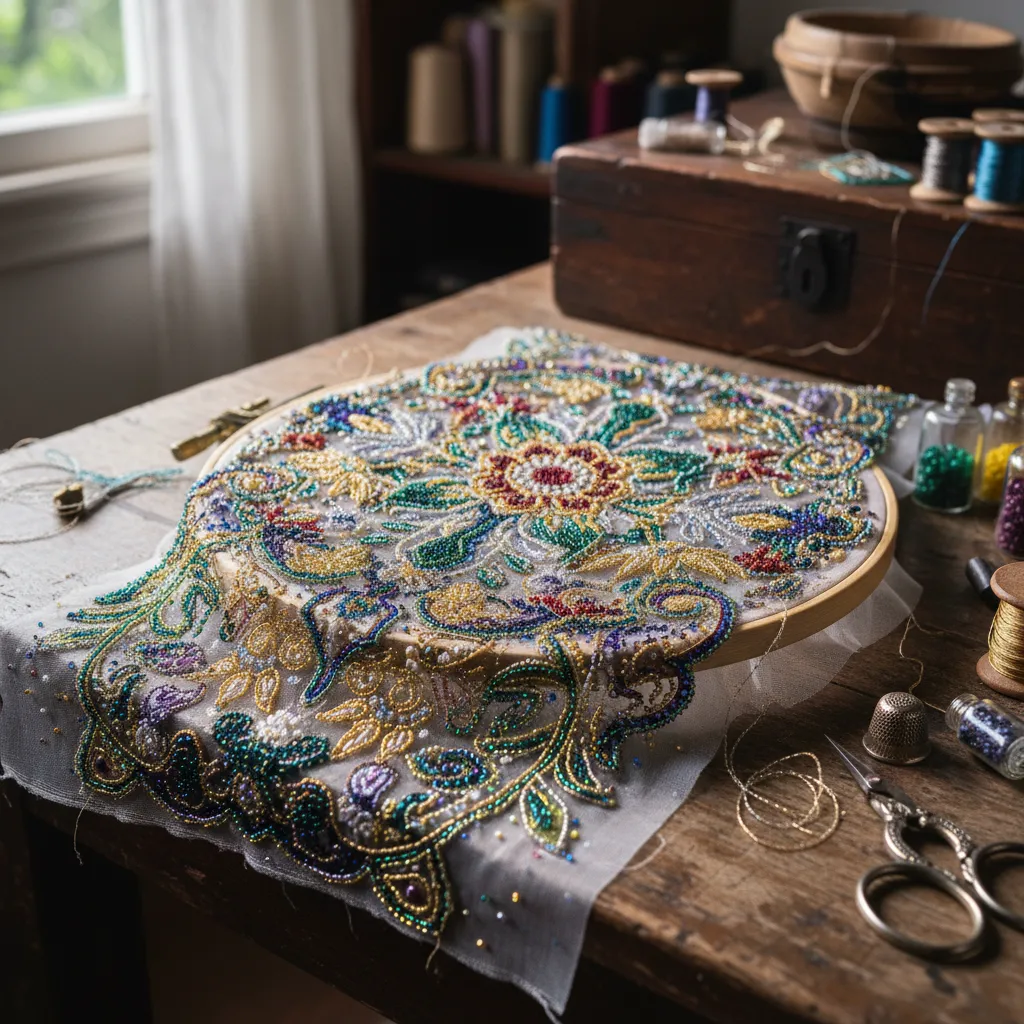
A closer inspection of the beadwork showcased in Kampong Glam reveals the intricate technical nuances that distinguish ceremonial embroidery from casual decorative work. Traditional artisans frequently combined glass seed beads with metallic couching threads—a technique known locally as tekat—where gold and silver cords are anchored across velvet foundations to create raised sculptural borders around floral motifs. In several specialized ateliers along Baghdad Street and Haji Lane, you can view framed bridal collars, ceremonial handkerchiefs, and heirloom belts that exhibit this complex mixed-media embroidery.
Studying these garments under gallery spotlights allows you to appreciate the subtle interplay of light and texture. While faceted glass beads catch natural daylight with sharp, glittering reflections, metallic threads provide a warm, burnished glow that frames each floral cluster with regal distinction. Resident artisans are often eager to point out these technical distinctions, explaining how the choice of thread thickness and bead size directly influenced the weight, drape, and visual balance of ceremonial Peranakan attire.
You will also observe how master embroiderers utilized specialized padded needlework techniques, placing tiny carved cardboard or felt underlays beneath the embroidery to elevate beaded petals and floral centers. This dimensional relief creates dramatic shadowing when garments move beneath evening illumination, giving ceremonial kebayas and bridal purse flaps an undeniable sculptural presence that flat stitching cannot duplicate.
Navigating Pedestrian Verandahs and Specialist Haberdashery Rows
The pedestrian-friendly street layout of Kampong Glam makes walking between specialist studios an effortless, engaging endeavor. Narrow side streets like Muscat Street and Bussorah Street are paved with smooth granite blocks and lined with historic two-story shophouses painted in warm earth tones of terracotta, ochre, and warm cream. Strolling beneath the overhanging timber eaves, you can browse specialist haberdashery rows where wooden drawers contain vintage glass beads sorted by diameter, color gradation, and country of origin.
These haberdashery shops are treasure troves for practicing crafters and curious collectors alike. Looking through transparent glass jars, you will see Czech seed beads, Japanese cylinder beads, and antique European micro-beads that are no longer manufactured today. Talking with experienced shopkeepers reveals how needleworkers travel from across the region to hunt for specific discontinued bead colors needed to restore damaged family heirlooms, making Kampong Glam an indispensable resource for the preservation of living Peranakan craft heritage.
Craft Pacing and Restful Shophouse Tea Breaks Around the Quarter
To maintain an unhurried, contemplative rhythm throughout your craft walk, schedule regular pauses at quiet shophouse cafes situated in the courtyard alcoves of Kampong Glam. Stepping off the main pedestrian streets into a sheltered garden courtyard allows you to rest your eyes while enjoying a freshly brewed cup of mint tea or cold-drip coffee paired with traditional regional sweetmeats like kueh dadar or steamed lapis. These tranquil moments provide a welcome mental breather to digest the visual richness of the textile collections you have just observed.
These peaceful interludes also let you admire the architectural restoration of the neighborhood itself. Many shophouses preserve original timber floor joists, spiral exterior staircases, and internal airwells that naturally cool the interior rooms. Looking up from your courtyard seat toward the ornate ceramic roof ridges, you can trace the harmonious proportions of early twentieth-century tropical architecture, recognizing how the physical environment was intentionally designed to support comfortable artisan living in the heart of the city.
Filtering Specialty Fabric Quarters and Wayfinding with Karpo APP
The Karpo APP is useful for narrowing a broad interest in textiles into a focused Kampong Glam walking plan. Try asking for nearby cultural places and craft shops relevant to embroidery, followed by a cafe stop. Elena's interest in ceremonial dress would make a helpful detail to include in the request, alongside a preference for a compact itinerary. Read the recommendations as possible destinations and select the ones that suit your research interests. Choosing a small cluster gives you space to compare what you see rather than hurrying through an ambitious checklist.
Follow-up questions can change the emphasis of the outing. Ask for another nearby textile-related recommendation, a shorter walking sequence, or a place to pause after your selected cultural stop. When the weather affects your plans, decide whether you would prefer to spend longer indoors and ask for suggestions that fit that choice. The resulting itinerary remains yours to adapt as you explore. Karpo's role is to help with local search and recommendations, while your own attention to fabrics, stitching, and street atmosphere gives this craft walk its particular character.
Ask Karpo for more information.
Keep reading
- Chinatown Batik Canting Pen Picker: Fine Spouts for Silk
 Tiong Bahru Batik Canting Pen Picker: Handles and Bowls
 Katong Batik Canting Pen Picker: Wide Spouts for Wave Fills