 Chinatown Batik Canting Pen Picker: Fine Spouts for Silk
Hidden Gems & Odd Finds

Dempsey Hill Optical Boutique Guide to Bespoke Frames
Considering made-to-measure glasses? This Dempsey Hill optical boutique guide explains fittings, acetate choices, timelines and what to agree before ordering.
Bespoke glasses, made to measure for one face, appeal to people who have never found a frame that fits properly or who want a design no one else wears. Dempsey Hill suits that kind of slow decision. The low former barracks blocks on Dempsey Road and Loewen Road, with their high ceilings, verandas and surrounding trees, now house galleries, design studios and restaurants where an afternoon passes easily. This guide explains how a bespoke frame commission usually works, what it can and cannot solve, and the questions to settle before you place an order.
What Bespoke Really Means for Eyewear
The word covers a range of services. At one end is true bespoke, where a maker designs and cuts a frame from scratch around your measurements. In the middle is made-to-measure, where an existing model is resized or adjusted in bridge, lens width or temple length. At the other end is customisation, which may mean choosing a colour or engraving a name on a standard frame. Ask exactly which one a shop is offering, because the time, cost and fitting process differ widely.
Who Gains Most From a Commission
People with a very wide or narrow face, a low or high nose bridge, uneven ears or a strong prescription that needs a carefully sized lens often benefit most. So do people who have worn one beloved frame for years and cannot find a replacement. If standard frames already fit you well, a commission is more about personal taste than comfort. That is a perfectly good reason, as long as you understand what you are paying for. Bring along any old frames you loved, even broken ones, because a maker can learn a lot from the shape, bridge and arm length of a pair that once felt right.
The Usual Steps of a Commission
A typical process starts with a consultation about your face, prescription and lifestyle, followed by measurements of bridge height, bridge width, temple length and the distance between your ears. The maker then proposes a shape, sometimes with a sketch or a prototype frame to try. You choose material and colour from swatches. Once the frame is cut and polished, lenses are fitted and a final adjustment session follows. Each stage can involve waiting, so ask for an honest timeline at the start.
Choosing Acetate and Finishes
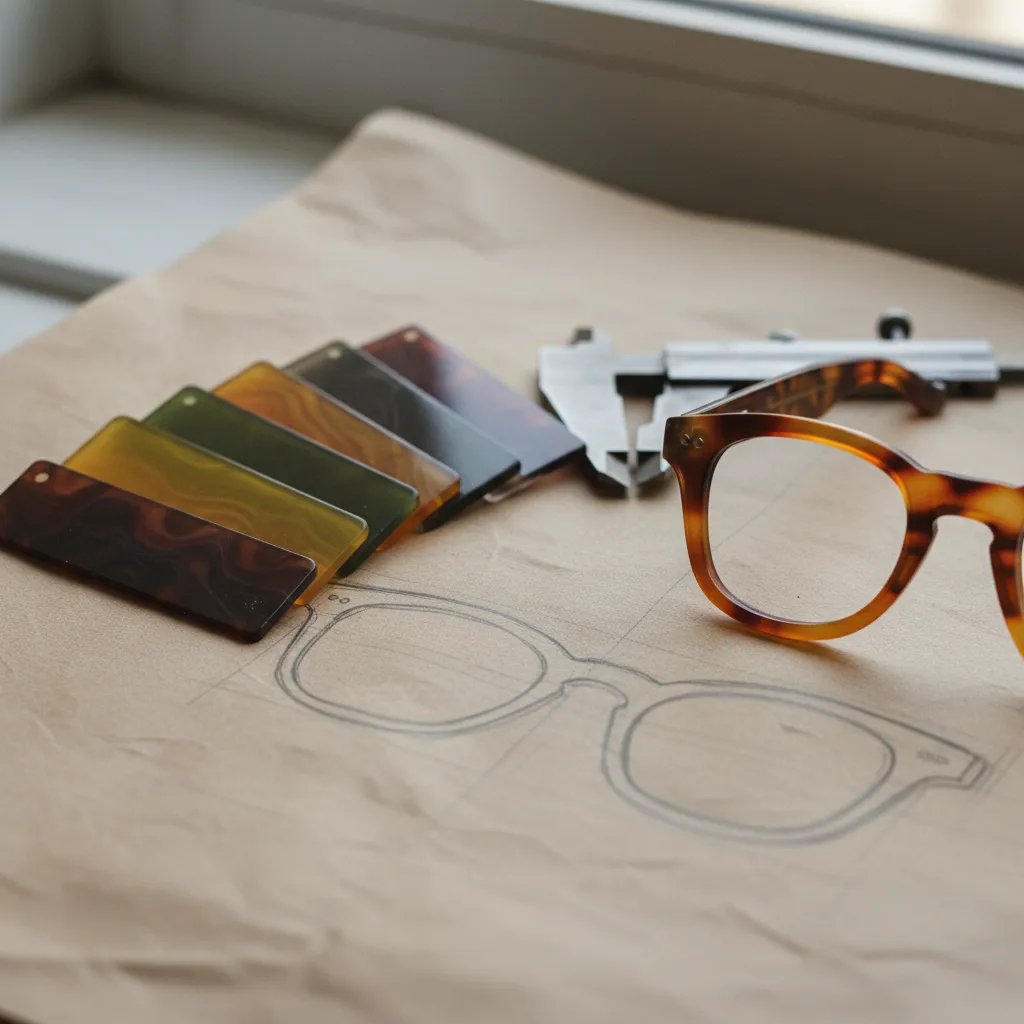
Cellulose acetate comes in sheets with layered colours, so a swatch shows only part of how the finished frame will look once it is shaped and polished. Look at the swatch against your skin in daylight on the veranda rather than only under shop lights. Ask whether the colour has a different inner layer that appears at the edges. Thicker acetate looks bold but adds weight, while thinner sections feel lighter. Finishes range from high gloss to matte, and matte can show skin oils sooner in humid weather.
The Fitting Is Where Value Shows
Expect at least one fitting session where the maker or optician heats and bends the arms, checks how the frame sits on your nose and ears, and confirms the lenses line up with your pupils. Wear the frame for a while during that session, then look down, smile and turn your head. A well-made bespoke frame should feel balanced without pressing anywhere. Pay attention to the hinges as well, which should open smoothly with a little resistance rather than flopping loose. If something feels off, say so then, because small adjustments are far easier at that stage than after weeks of wear.
An Afternoon on Dempsey Hill
Dempsey Hill takes its name from British general Sir Miles Dempsey, and the area grew from the colonial-era Tanglin Barracks. Today it draws families on weekend brunches, art collectors visiting galleries and couples walking the shaded paths. A commission consultation fits naturally between a gallery visit and a late lunch. Napier station on the Thomson-East Coast line is the closest rail link, and taxis or ride-hailing drop off right at the blocks. Bring an umbrella for the short walks between buildings when afternoon storms roll in.
Where Karpo APP Fits In
Karpo APP helps when you want options but do not know who offers what. Describe your aim in plain terms, for example made-to-measure acetate frames for a wide face and a strong prescription, with a preference for studios around Dempsey Hill or Tanglin. Karpo returns a shortlist of optical shops and studios to explore. Read each one's own website to see whether it describes true bespoke, made-to-measure or customisation, then contact the studio directly to ask about consultations.
Questions to Settle Before Ordering
Ask how many fittings are included and whether remakes are possible if the frame does not fit as planned. Ask whether the lenses are made in-house or by an outside lab, and who handles adjustments later. Check whether the shop keeps your measurements on file for a future pair. Ask how a deposit works and what happens if you change your mind after seeing the prototype. Clear answers at the start avoid awkward conversations at collection.
Caring for a Handmade Frame
Store the frame in its case whenever you take it off, since handmade acetate can warp if left in heat. Clean it with water and a mild soap, then dry it with a soft cloth. Avoid alcohol wipes and strong solvents, which can dull polished acetate. Return for a check-up after the first few weeks so the maker can tighten hinges and fine-tune the arms. Many people find a well-cared-for bespoke frame becomes the pair they reach for every single day.
Is It Worth It for You
A commission makes most sense when you value fit, longevity and individuality, and when you are willing to wait. If you need glasses urgently, start with a standard frame and consider a bespoke pair later. If you have struggled with fit for years, a thorough consultation alone can teach you which measurements matter, which helps with every frame you buy afterwards. Either way, the most useful outcome is knowing your own measurements and what makes a frame comfortable on your face.
Ask Karpo for more information.
Keep reading
- Chinatown Batik Canting Pen Picker: Fine Spouts for Silk
 Tiong Bahru Batik Canting Pen Picker: Handles and Bowls
 Katong Batik Canting Pen Picker: Wide Spouts for Wave Fills