 Chinatown Batik Canting Pen Picker: Fine Spouts for Silk
Hidden Gems & Odd Finds

Bugis Optical Boutique Guide to Frames for a Low Nose Bridge
Frames that slide down or rest on your cheeks usually mean a bridge mismatch. Use this Bugis optical boutique guide to test low bridge fit before you buy.
Frames that keep sliding down your nose, leave red marks on your cheeks or fog up the moment you smile usually share one cause: the bridge of the frame was designed for a taller nose than yours. Bugis is a practical place to fix that. Around Waterloo Street's pedestrian arts belt, the Bras Basah museum precinct and the busy lanes near Bugis Junction, you can try many frame styles in one unhurried afternoon. This guide explains what low bridge fit means, which measurements matter, and how to test a frame properly before you commit.
What Low Bridge Fit Actually Means
Many East and Southeast Asian faces have a flatter nasal bridge that sits lower in relation to the pupils, along with higher cheekbones. A frame cut for a high, narrow bridge has nothing to rest on, so it drops until the lower rim meets the cheeks. Brands and opticians use names such as Asian fit, low bridge fit or global fit for versions with a deeper bridge, longer nose pads or a slightly different tilt. The label alone guarantees nothing, so treat it as a starting point and judge by how the frame sits on your own face.
Three Numbers Printed on the Temple
Look inside the arm of almost any frame and you will find three numbers, such as 49, 20 and 145. The first is the lens width, the second is the distance between the lenses across the bridge, and the third is the arm length in millimetres. For a low bridge, the middle number tells only part of the story, because bridge height and pad position matter just as much. Still, writing down the numbers from a pair that fits well gives you a reference when you compare new shapes.
Nose Pads Versus Solid Acetate Bridges
Metal and titanium frames with adjustable nose pads are the most forgiving option, because an optician can bend the pad arms to lift the frame off your cheeks. Acetate frames usually have a moulded bridge with no pads, which looks clean but leaves little room for adjustment. Some acetate designs now include raised built-in pads or allow small clear pads to be fitted. If you love thick acetate, ask whether that option exists for the model you are considering before falling for the colour.
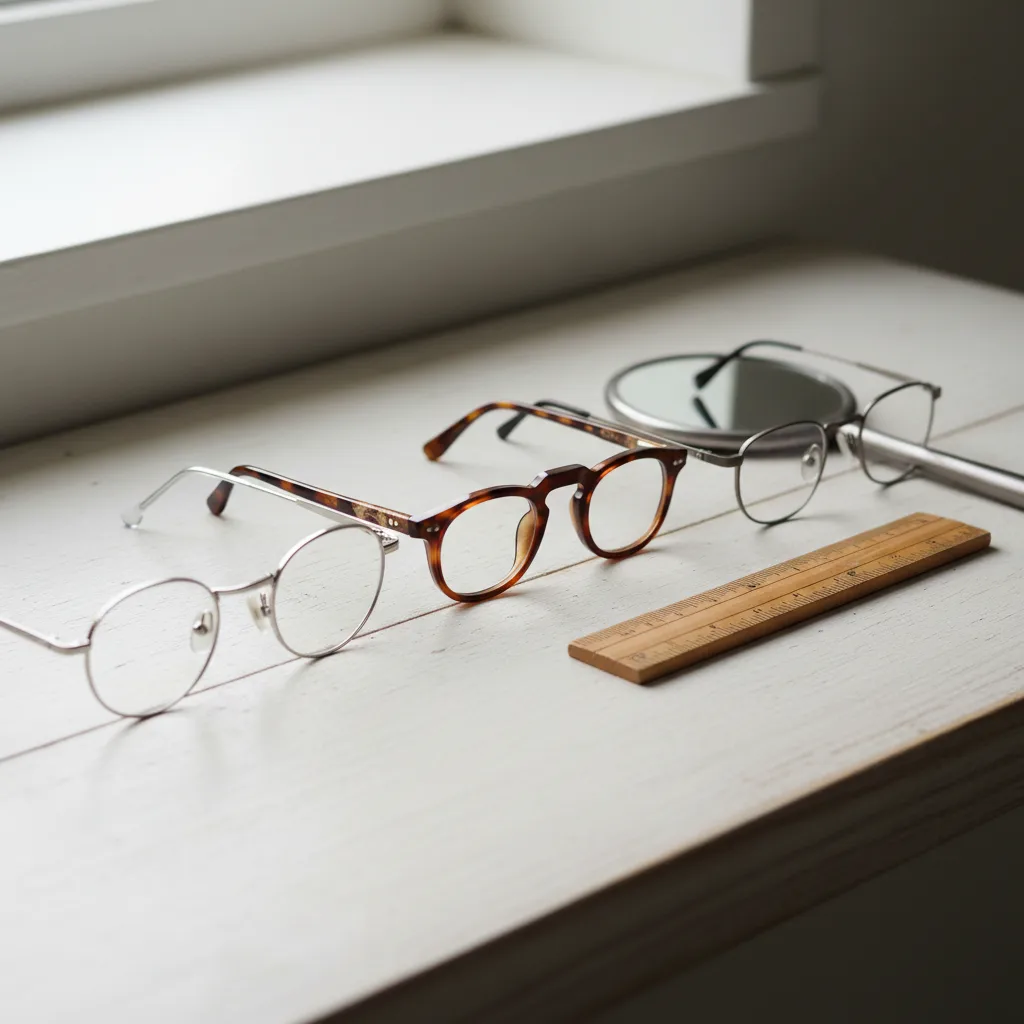
How to Test a Frame in the Shop
Put the frame on, then smile widely and look down at your phone. If the lower rim lifts or presses into your cheeks, the bridge is too shallow. Your eyes should sit close to the horizontal centre of each lens, and your eyelashes should not brush the lenses when you blink. Tilt your head forward gently to see whether the frame slides. Ask the staff to adjust the pads or arms there and then, since a good fitting changes how a frame feels within a few minutes.
Why Lens Choice Affects Fit Too
A strong prescription makes the edges of minus lenses thicker, and heavy lenses pull any frame down the nose. Smaller lens shapes, rounder outlines and higher-index materials keep the weight down. Your pupillary distance, the space between the centres of your pupils, also matters. If a frame is much wider than your face, the lenses have to be decentred, which can mean thicker edges on one side. Ask the optician to show where your pupils fall within the shape you have chosen.
Who You Meet Around Bugis
Bugis draws art and design students from the nearby campuses, office workers from the Beach Road towers, and families heading to the temples on Waterloo Street. Shop staff in the area see a wide range of faces and styles every day, from minimalist wire rims to chunky colourful acetate. The streets themselves mix eras: low shophouse rows, the old Bugis Street market lanes and newer glass towers all sit within a few minutes of each other, which makes the area an easy place to test how a frame looks against different light and backgrounds. Bring a friend whose taste you trust, or take photos from the front and side in natural light by the door, because store lighting and mirrors can flatter a shape that looks different outdoors.
Planning an Afternoon Around Waterloo Street
Bugis station on the East-West and Downtown lines puts you at the edge of the area, and Bras Basah station on the Circle line serves the museum side. A comfortable plan is to compare frames in the late afternoon after the midday heat, then walk the covered paths toward the National Library on Victoria Street to sit and look over your photos. Avoid choosing anything right after a long day staring at screens, when tired eyes make every lens feel strange.
Where Karpo APP Fits In
Karpo APP is useful when you know the problem but not the shops. Describe what you need, for example metal frames with adjustable pads for a low bridge, a strong minus prescription, and a preference for stores between Bugis and Bras Basah. Karpo returns a shortlist of optical shops worth a look. Then read each shop's own website for the services and brands it describes, and contact the shop directly to arrange a fitting at a time that works for you.
Questions Worth Asking Before You Pay
Ask whether adjustments are free after collection, since frames often loosen during the first weeks of wear. Ask whether nose pads can be replaced later and how easily the shop can source parts for the model. If you are ordering new lenses, ask how the optician will measure fitting height so the optical centres line up with your eyes in this specific frame. Finally, check how the shop handles a remake if the finished glasses still slide or press on your cheeks.
A Quick Checklist for Your Visit
Bring your current glasses even if they fit badly, because they show the optician exactly where the problem lies. Bring your latest prescription if you have one. Note the three numbers from any frame you liked online. Wear your hair as you usually do, and skip heavy makeup on the cheeks so you can see pressure marks clearly. Give yourself enough time to try several shapes rather than settling on the first one that looks good in the mirror. A frame that still feels comfortable after ten minutes of wear is a far better sign than one that only looks right in the first glance.
Ask Karpo for more information.
Keep reading
- Chinatown Batik Canting Pen Picker: Fine Spouts for Silk
 Tiong Bahru Batik Canting Pen Picker: Handles and Bowls
 Katong Batik Canting Pen Picker: Wide Spouts for Wave Fills