 Chinatown Batik Canting Pen Picker: Fine Spouts for Silk
Hidden Gems & Odd Finds
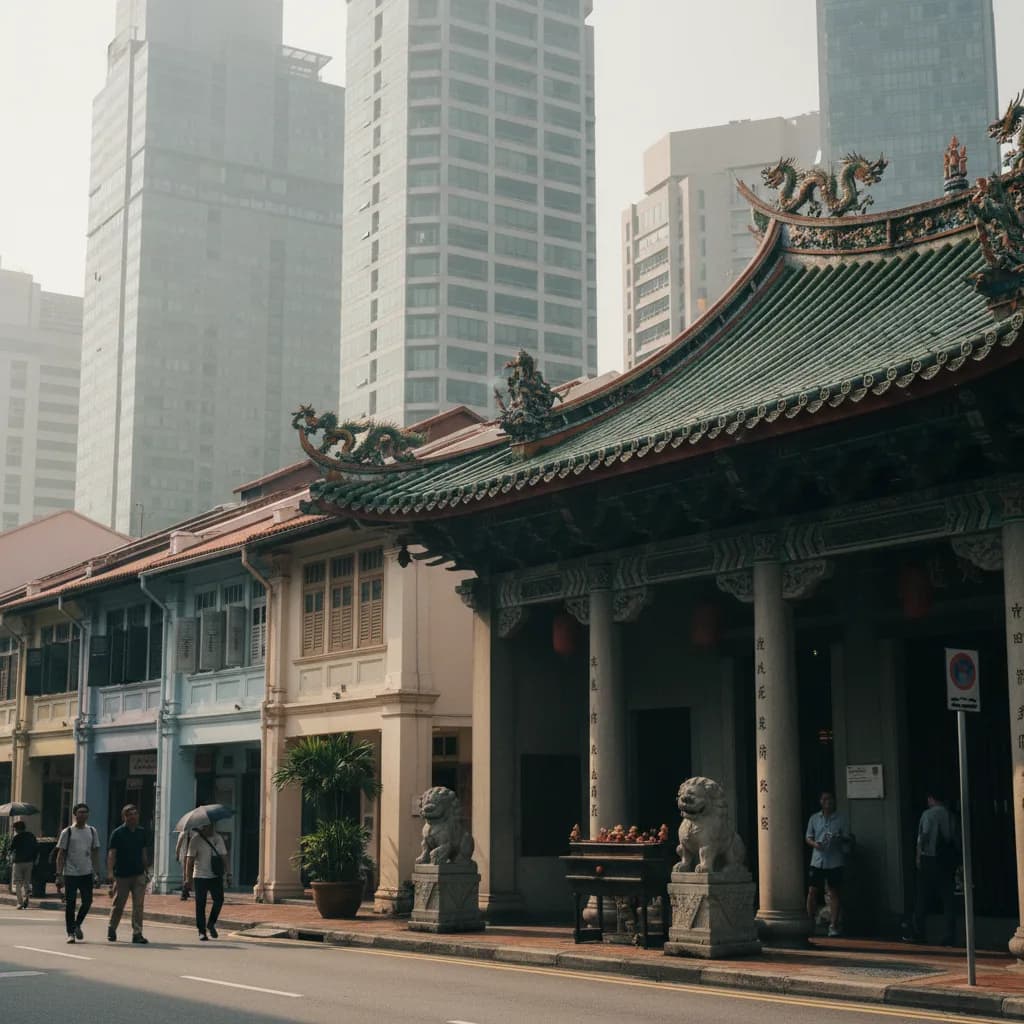
Telok Ayer Neighborhood Antiques Crawl: Old Shoreline Relics
Telok Ayer has no antiques dealers, but its 1820s temples and mosque line Singapore's old shoreline. Read them on foot, then save shopping for Dempsey Hill.
Telok Ayer Street has no antiques shops worth planning around, yet it may be the most rewarding neighborhood antiques crawl in Singapore for anyone who loves old objects. The street was the colony's shoreline until land reclamation in the late 1870s and 1880s, and the temples and mosque built along it in the 1820s still hold stone, timber and statues carried in by sea. You read the antiques here instead of buying them.
How to Approach a Street of Relics
Think of this walk as a museum without cases. Each building along Telok Ayer Street was put up by a different community of newcomers, and each holds materials and craftsmanship that tell you where those people came from. Bring the same habits you would use at a market stall: look closely at surfaces, ask how something was made, and notice repairs. A slow hour here sharpens the eye you will later use when shopping for real pieces.
Start at the southern end near Telok Ayer MRT station and walk the street as a single line, then loop back along Amoy Street. The distances are short, so the limiting factor is attention rather than stamina. Wear modest clothing that covers shoulders and knees, because you will be stepping into active places of worship, and carry a light scarf. Remove shoes where asked and keep voices low during prayers.
A little background helps. In 1822 Stamford Raffles set aside this district for Chinese settlement, and Telok Ayer became the main landing point for new arrivals. Between 1878 and 1885 the bay in front was reclaimed, pushing the sea several streets away and leaving these buildings stranded inland. Keep that lost waterline in mind as you walk, and every temple facing an office tower suddenly makes sense.
Thian Hock Keng and Its Ballast Stone
Thian Hock Keng is the anchor of the walk. A small joss house stood on the site from about 1821, and the present temple was completed in 1842 for the worship of Mazu, the sea goddess, whom sailors thanked for safe passage. It once faced the water directly. The statue of Mazu and much of the building material came from China, and some stone, timber and tiles were recycled from ships' ballast.
Stand under the eaves and look at the granite columns and carved beams. That ballast detail changes how you see them: material that once steadied junks crossing the South China Sea now holds up a roof. The temple was gazetted as a national monument on 6 July 1973, and a restoration completed in 2000 earned an honourable mention in the UNESCO Asia-Pacific Awards for Cultural Heritage Conservation in 2001.

Mosque, Shrine and the Cantonese Temple
A short walk along the street brings you to Al-Abrar Mosque, which dates its origins to around 1828 and was among the earliest mosques built by the Tamil Muslim community. Close by stands the Nagore Durgha, erected between 1828 and 1830, with a facade that blends Indian Islamic and classical details. Seeing the two together reminds you how many traditions shared this one strip of shoreline in the colony's first decade.
At the northern end, Fuk Tak Chi was founded in 1824 by the Cantonese and Hakka communities and is one of the oldest Chinese temples in the city. Its small scale contrasts with the grandeur of Thian Hock Keng and shows how modest early places of worship often were. Look for the timber details and doorway proportions, and compare them with the shophouses next door, which follow a very different building logic.
Later layers sit along the same street. The Telok Ayer Chinese Methodist Church went up in 1924, more than a century after the first temples, and its design reflects a very different period of building in the colony. Walking from the 1820s shrines to this twentieth-century church gives you a compressed timeline of Singapore's growth, the kind of dating practice that makes antique hunting easier later.
Shophouses, Green and a Hill of Water
Telok Ayer is gazetted under Singapore's conservation plan, and many of its two- and three-storey shophouses have been restored. Look up at the upper floors to spot timber shutters, plaster mouldings and the narrow frontages typical of the type. Telok Ayer Green, a small park nearby, holds sculptures depicting the festival activities of early Chinese immigrants, which helps you picture the street when it was a busy landing place.
Climb Ann Siang Hill before you leave. Its history is about water: the hill supplied fresh water to ships anchored in the bay, carried down by bullock cart. Today the slope is lined with restored shophouses and small bars, and it offers a compact view of how the old town rises away from the former shore. Pair it with a stroll along Amoy Street for more period facades and quieter side lanes.
Where to Shop After the Walk
Because Telok Ayer is about looking rather than buying, plan your shopping elsewhere. For serious Asian antiques such as carved furniture, ceramics and devotional sculpture, Dempsey Hill is the city's main cluster of dealers and suits a separate half day. For everyday vintage like enamelware, old bottles and retro crockery, the collectibles shops of nearby Chinatown are a short walk west and reward patient digging through crowded shelves.
Who gets the most from this crawl? History lovers, architecture photographers, and collectors who want context before they spend money on Chinese or Straits-era objects. It is also a calm option for visitors staying in the business district, since the walk fits neatly into a free morning. It is less satisfying if your only goal is to carry something home, so set expectations with travelling companions before you start.
What to Skip and When to Go
Skip the lunchtime rush on weekdays, when office workers from the surrounding towers pour into the street for food and the pavements become crowded. A weekend morning is calmer and better for lingering inside the temples. Skip treating Telok Ayer Green as a destination in its own right too, since it takes only a few minutes. Spend the saved time at Thian Hock Keng, where the details repay a second look.
On a rainy afternoon, shelter under the five-foot ways and use the temples as dry stops, but avoid entering in dripping gear. If you only have an evening, Ann Siang Hill and Amoy Street still make an atmospheric walk, though temple interiors are best seen in daylight. Karpo can help you plan the sequence: tell it whether you want history, photography or shopping, and it will suggest stops and save a shortlist for the walk.
Ask Karpo for more information.
Keep reading
- Chinatown Batik Canting Pen Picker: Fine Spouts for Silk
 Tiong Bahru Batik Canting Pen Picker: Handles and Bowls
 Katong Batik Canting Pen Picker: Wide Spouts for Wave Fills