 Chinatown Batik Canting Pen Picker: Fine Spouts for Silk
Hidden Gems & Odd Finds

Tanjong Pagar Neighborhood Antiques Crawl: Duxton Hill Walk
Tanjong Pagar's antiques are its streets: Duxton Hill sits on a former nutmeg estate, and 32 shophouses here became Singapore's first restoration pilot.
Tanjong Pagar is not a district of antique dealers, and a neighborhood antiques crawl here makes sense only if you accept that the buildings are the heirlooms. The terraces of Duxton Hill stand on what was once a nutmeg plantation, and in 1987 and 1988 a block of 32 shophouses in this area became the government's first restoration project. That pilot showed that old shophouses could be saved and still earn their keep.
Why Start Here
Much of Singapore's conservation story begins in these few streets. Before the pilot project, many people assumed shophouses were too tired to save and too small to be useful. The restored terraces in Tanjong Pagar proved otherwise, and private owners followed. Today the district sits within the Tanjong Pagar Conservation Area, and the facades you see are protected.
For an antiques lover, that history matters. Restoration work raised questions that collectors face every day: how much original material to keep, when replacement is honest, and how to tell a careful repair from a cosmetic one. Walking these streets with those questions in mind is good practice for judging furniture or porcelain later.
Duxton Hill and the Nutmeg Estate
Begin on Duxton Hill, the short, curving lane that rises above Duxton Road. The land was part of a 13-hectare nutmeg plantation belonging to Dr J. Montgomerie, planted with about 1,800 trees. After the plantation era, Straits Chinese families built fine residences and shophouses here, and the street still has a quieter, more domestic feel than the main roads below.
Look closely at the details. Fanlights above windows, timber shutters, plaster pilasters and decorative bands show how builders adapted European ornament to local life. Compare neighbouring facades, and you will notice that some keep more original timber and ironwork while others have been rebuilt more freely. That contrast is the most useful thing on this walk.
Respect the neighbourhood as you go. Many units are offices, bars or homes, so keep to the pavement and avoid blocking doorways for photographs.
A simple exercise helps here. Pick one facade and try to sort its parts into three groups: what looks original, what looks repaired with matching material, and what looks newly made. Weathered timber with old paint layers, slightly uneven plaster and hand-forged ironwork tend to belong to the first group. Crisp mouldings, perfectly straight louvres and bright, even paint belong to the last. Collectors use the same three questions on a cabinet or a ceramic jar.
Duxton Road and Craig Road
Drop down to Duxton Road and walk its length slowly. The two- and three-storey shophouses here form one of the best-preserved terraces in the area. Notice how the five-foot way, the covered walkway in front of each shop, links one building to the next. This was required in early town planning and remains one of the defining features of Singapore street life.
Continue to Craig Road, which climbs gently along a leafy edge of the conservation area. The terrace fronts change subtly as you move, with later buildings showing the simpler lines that arrived in the twentieth century. Use this as an informal timeline: heavier ornament often suggests an earlier date, while cleaner geometry points to later work.
Pause at a corner where several roofs meet and look up. The clay roof tiles, timber eaves and air wells behind the facades are harder to restore than the fronts, and many owners have handled them differently. Some kept clay tiles and timber rafters, while others switched to modern materials hidden from the street. You can rarely see inside, but the rooflines and side walls give clues to how much of each building is old.
Chinatown Heritage Centre
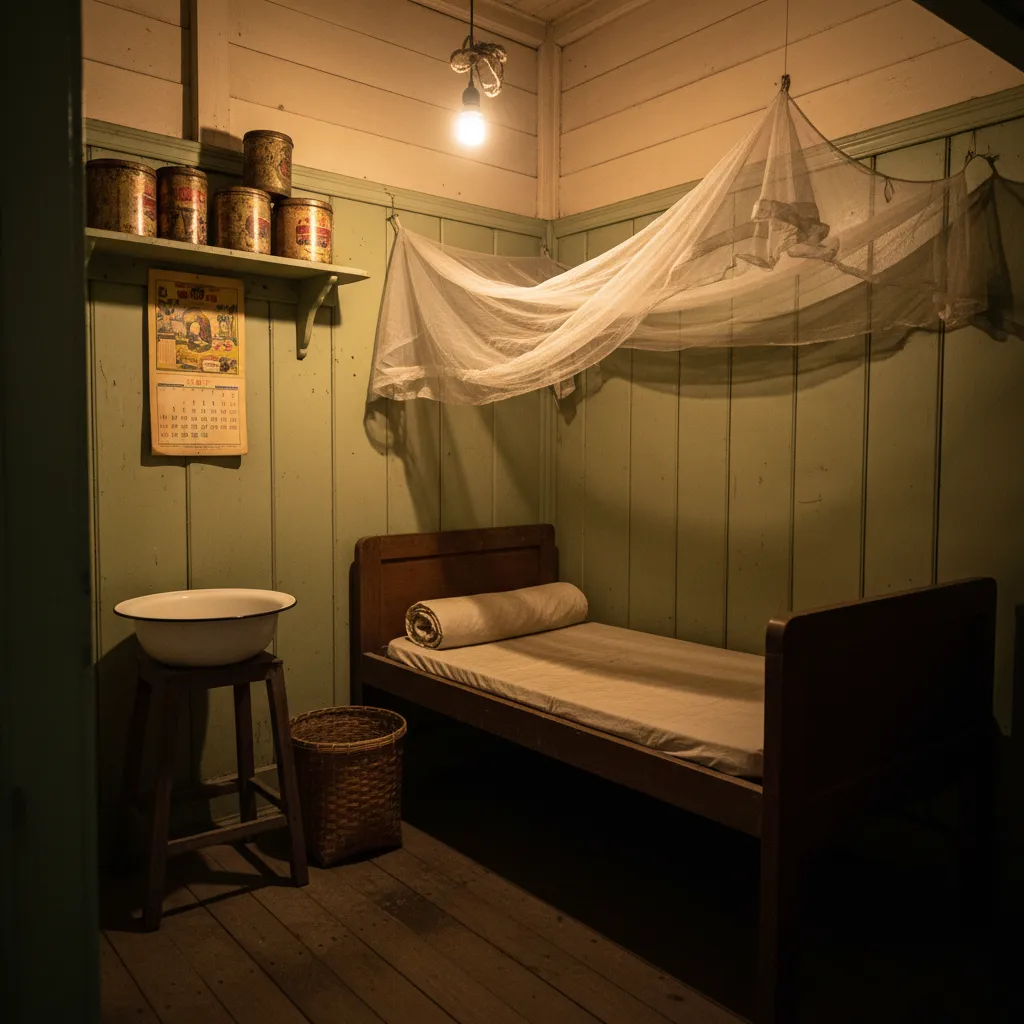
From Craig Road, it is a short walk north into Chinatown and the Chinatown Heritage Centre on Pagoda Street. It first opened in 2002 and reopened in January 2025 after a revamp of its three shophouses. Inside, you can walk through a recreated 1950s shophouse and a 1960s street market scene, complete with cramped cubicle rooms, household objects and trade tools.
This is the best place on the route to see everyday objects from the mid-twentieth century in their original setting. Enamel basins, biscuit tins, clogs and rattan baskets are exactly the kind of vintage pieces that turn up in Singapore's collectibles shops. Seeing them in a reconstructed home tells you what they were for and how worn a genuine example should look.
What to Skip and Where to Buy
Skip expecting a shopping trip in Tanjong Pagar itself. Duxton Road is known for food and drink, not antiques, and stores selling Asian-style decor nearby lean toward new pieces. Skip the tall-building detours as well, since they add little to the heritage story you came for.
When you want to buy, Dempsey Hill is the place for serious Asian antiques, with dealers in the former Tanglin Barracks who specialise in Chinese and Southeast Asian furniture, ceramics and textiles. For smaller vintage items, Chinatown has a handful of collectibles shops. Ask about age, origin and any restoration, and request written details before paying for anything significant.
Who gets the most from this walk? Architecture fans, new collectors who want to learn how to judge restoration, and anyone curious about how Singapore decided to keep its past. It suits a relaxed morning before lunch in Chinatown.
Practical Notes
Bring a small notebook or use your phone to jot down details you liked, such as a fanlight pattern or a shutter style. Those notes become a useful reference when you are comparing objects at a dealer and want to remember what period details looked like in their original setting.
Tanjong Pagar and Outram Park MRT stations are both close to the route, and the full loop is comfortably walkable. Carry water and an umbrella, because tropical rain can arrive without warning. The slope on Duxton Hill is gentle, but some five-foot ways have steps between buildings, so watch your footing.
Karpo can help you plan the loop around your interests, whether that is architecture, everyday vintage objects or a later trip to the dealers, and save the stops as a shortlist. Start on Duxton Hill, end at the Chinatown Heritage Centre, and save Dempsey Hill for the day you are ready to buy.
Ask Karpo for more information.
Keep reading
- Chinatown Batik Canting Pen Picker: Fine Spouts for Silk
 Tiong Bahru Batik Canting Pen Picker: Handles and Bowls
 Katong Batik Canting Pen Picker: Wide Spouts for Wave Fills