 Chinatown Batik Canting Pen Picker: Fine Spouts for Silk
Hidden Gems & Odd Finds
Bugis Neighborhood Antiques Crawl: Old Books and Temples
A Bugis antiques crawl links Bras Basah Complex's second-hand books, the 1884 Kwan Im temple on Waterloo Street and the Peranakan Museum's 1912 schoolhouse.
Bugis is known for bargain fashion and street snacks, yet a neighborhood antiques crawl here can be rewarding if you follow old paper and old rituals rather than old furniture. The route runs from the second-hand bookshops of Bras Basah Complex, completed in 1980 and long called the City of Books, along Waterloo Street with its 1884 temple, and on to the Peranakan Museum in a schoolhouse built in 1912.
What This Crawl Is and Is Not
Be clear before you set out. There is no cluster of furniture or porcelain dealers in Bugis, and the busy Bugis Street market sells new goods. Singapore's old flea market on Sungei Road, which once drew collectors to the edge of this district, closed in 2017. What remains is a concentration of second-hand books, devotional objects still in daily use, and two of the best museum collections in the country within easy walking distance.
That makes this walk ideal for collectors who want to train their eye, for readers who love old editions, and for anyone who prefers looking to buying. If you are hunting for a carved cabinet to ship home, read on for where to go instead.
Bras Basah Complex: The City of Books
Start at Bras Basah Complex, the block at the corner of North Bridge Road and Bras Basah Road. Before it was built, the surrounding streets were home to bookshops, second-hand dealers and stationers, and the complex was planned as their new home under urban renewal. The name City of Books stuck, and generations of students and bargain hunters have come here for used textbooks and out-of-print titles.
Today the mix has shifted, with art supply stores, framers and tuition centres sharing the floors with the remaining book dealers. Take the escalators slowly and look for the shops with stacks on the floor and handwritten labels. That is where older material hides: secondhand Chinese literature, colonial-era travel books, old school readers and occasionally maps or prints. Ask before you pull anything from a tied bundle, and handle brittle pages by the edges.
The building itself is part of the story. Its long corridors and small units are a time capsule of the planning ideas of the late 1970s, and older Singaporeans often have a memory of buying their first dictionary here.
A few habits make book hunting here more productive. Check the copyright page and printer's details rather than trusting a cover, since many older titles were reprinted locally. Look at the binding, the paper colour and any bookplates or school stamps, which often tell you more about a copy's history than the dealer can. Foxing and loose pages are normal in this climate, so judge condition against what you plan to do with the book, whether that is reading, framing or simply keeping.

Waterloo Street: Objects Still in Use
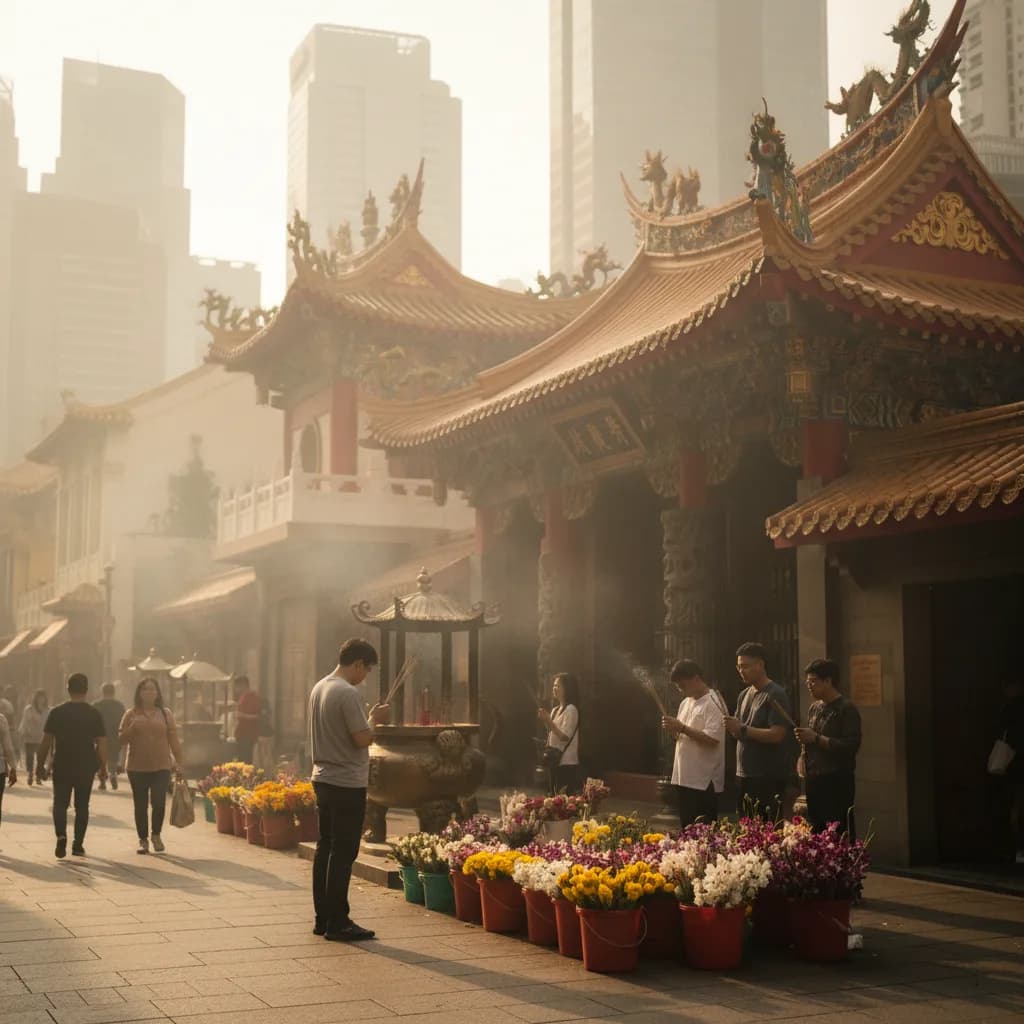
Cross to Waterloo Street, a pedestrian stretch where traditional faiths sit side by side. The Kwan Im Thong Hood Cho Temple traces its start to 1884, when land was donated for a temple, and it was listed by the National Heritage Board as a historic site in 2001. It remains one of the busiest temples in Singapore, and its neighbour is a Hindu temple whose worshippers often pay respects at both.
For an antiques lover, this street is a lesson in living material culture. Watch the bronze urns, carved wooden altar fittings and fortune sticks in use, and notice the stalls outside selling joss, flowers and devotional prints. These are not antiques for sale. They are the reason similar objects end up in dealers' shops elsewhere, and seeing them in context helps you understand what an aged piece once did.
Be respectful. Keep photography discreet inside places of worship, dress modestly and step aside for people at prayer.
Two Museums for Benchmarking
Walk a few minutes south-west to Armenian Street and the Peranakan Museum, housed in the former Tao Nan School of 1912. It reopened on 17 February 2023 after a renovation of nearly four years, and its displays of beadwork, silver, porcelain and carved furniture show the standard that serious Peranakan pieces reach. Study the glaze colours on nyonyaware and the density of beading on slippers. Those details separate good antiques from souvenirs.
If you have energy left, the National Museum of Singapore on Stamford Road is close by and covers the wider history of the island. Between the two, you will leave with a clear picture of how Straits Chinese, Malay, Indian and colonial objects differ, which is exactly the knowledge you need before spending money with a dealer.
What to Skip and Where to Buy
Skip Bugis Street market if antiques are your goal. It is fun for snacks and cheap clothing, but nothing there is old. Skip the mall stretch along Victoria Street too, unless you need a break from the heat.
When you are ready to buy, head to Dempsey Hill, Singapore's antiques enclave in the former Tanglin Barracks, where several dealers specialise in Chinese and Southeast Asian furniture, ceramics and textiles. For smaller vintage curios, Chinatown has a handful of collectibles shops. In both places, ask about age, origin and restoration, and request written details for anything significant.
Who gets the most from Bugis? Readers who enjoy browsing slowly, new collectors who want a crash course before a bigger purchase, and visitors interested in how different faiths share one short street. Travellers short on time can do the bookshops and the museum alone and still come away with a strong sense of what makes Singapore's old objects distinctive.
Practical Notes
The full loop from Bras Basah Complex to Waterloo Street and the Peranakan Museum is short and flat, and Bras Basah and Bugis MRT stations both sit close to the route. Carry water and an umbrella, because tropical showers arrive fast. Allow a relaxed half day if you plan to spend real time in the museum.
Karpo can help you shape the walk around what interests you most, whether that is old books, temple craft or Peranakan design, and save the stops as a shortlist. Pair Bugis with a later visit to Dempsey Hill, and the looking you do here will make the buying there far more confident.
Ask Karpo for more information.
Keep reading
- Chinatown Batik Canting Pen Picker: Fine Spouts for Silk
 Tiong Bahru Batik Canting Pen Picker: Handles and Bowls
 Katong Batik Canting Pen Picker: Wide Spouts for Wave Fills