 Chinatown Batik Canting Pen Picker: Fine Spouts for Silk
Hidden Gems & Odd Finds

Violin Musical Instrument Repair at Tong Ming Xi's Workshop
Tong Ming Xi, a Singapore violin house founded in 2004, repairs violins, violas, cellos and bows at its Commonwealth workshop, most jobs in 3 to 5 working days.
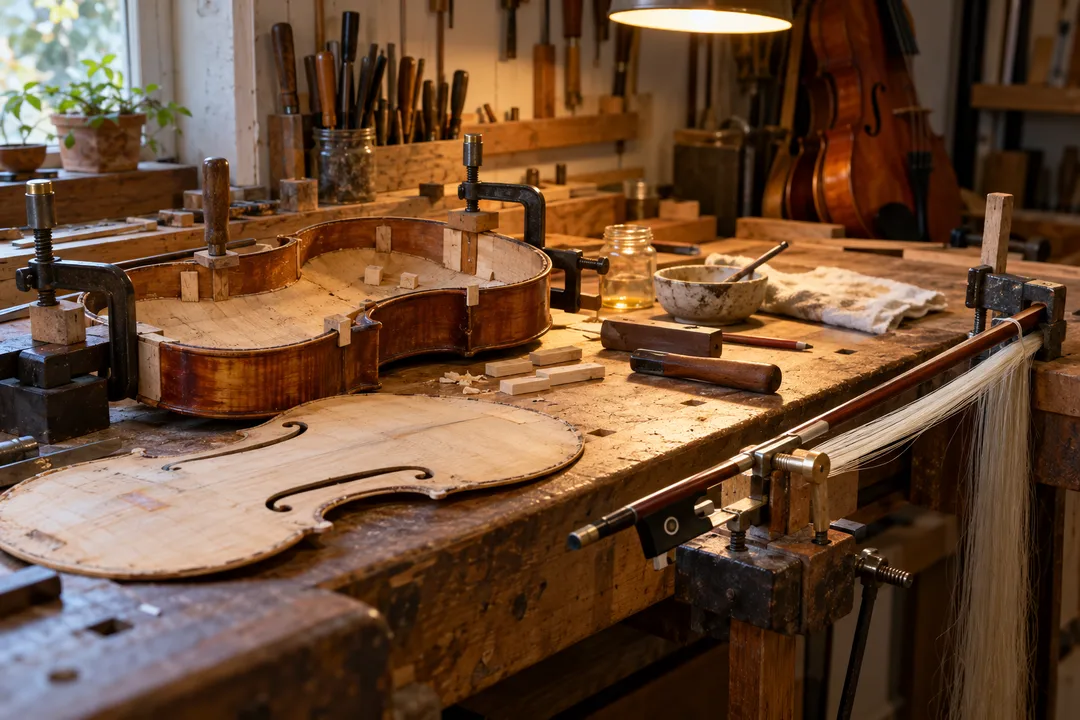
Singapore's heat and humidity are hard on string instruments, and few people in the city have spent more time undoing that damage than the luthier Tong Ming Xi, whom The Straits Times once called the country's modern-day musical Geppetto. His company, founded in 2004, sells violins, violas and cellos from a showroom at Esplanade, but the repairs happen eight floors up in an office building in Commonwealth. That workshop handles everything from a slipping peg to crack repairs, bow rehairs and tonal adjustment for competition players.
A Luthier Known for Restoration
Tong Ming Xi built his reputation on restoration and on improving an instrument's tone, and the company now describes itself as a one-stop shop for string players, with new and antique instruments from French, German and Italian makers alongside its own workshop. The business also says it is an appointed service provider for the string instruments of professional musicians and institutions, a sign of how much of its work is ongoing care rather than one-off fixes.
Beyond repairs, the company runs a beginner rental scheme starting from S$50 a month and a trade-in programme that credits up to 70 percent of an instrument's value towards an upgrade. For parents of young players moving through fractional sizes, that combination of rental, trade-in and an in-house workshop keeps everything with one team.
What the Workshop Repairs
The restoration page lists the everyday problems that bring players in. Worn or damaged varnish is touched up to protect the wood. Open seams between the top, back and ribs, a common cause of buzzing, are re-glued. Bridges are straightened, refitted or replaced so the strings sit at the right height, and stiff or slipping pegs are adjusted so the instrument stays in tune. Cracks in the top, back or ribs are repaired, rosin build-up is cleaned off without harming the varnish, and fingerboards are dressed to remove grooves.
Tonal adjustment is a separate service and one of the workshop's specialities. The luthiers look at soundpost position and fit, bridge height and shape, string choice, the tailpiece and afterlength, and the fingerboard and nut, after talking through the player's repertoire and goals. The company suggests it when a violin sounds dull, muted or harsh, when the sound changes after travel or a spell of weather, before an exam or competition, or when you have just bought a new or antique instrument.
Bows get their own bench. The workshop rehairs violin, viola, cello and double bass bows and repairs tips, frogs and windings, and it also re-cambers bows whose curve has drifted. Its general guide is a rehair every six to twelve months, or more often for anyone practising heavily every day. Darkened patches in the hair, or needing extra rosin to make the bow grip, are the usual signs that it is time.
Climate is a recurring theme in the company's advice. The tonal adjustment page notes that Singapore's heat and humidity can change a violin's sound and setup over time, which is why the workshop treats regular check-ups as normal maintenance rather than a sign that something has gone wrong. Players who move an instrument between air-conditioned rooms and outdoor heat several times a day are the most likely to see seams open or pegs start to slip.
Assessment, Turnaround and Loans
Tong Ming Xi does not publish repair prices. The FAQ says repair costs depend on the instrument's condition and the work required, and recommends an assessment first, for which a fee applies. The assessment covers the straightness of the bridge, open seams, loose or stiff pegs, cleanliness and fingerboard drop, so it is a good annual check-up even when nothing seems wrong.
Most standard repairs take about three to five working days, according to the company, and complex restorations take longer. When a job runs long, the workshop may be able to lend a temporary replacement instrument, subject to availability, which matters for students with weekly lessons. Instruments bought elsewhere are welcome, so you do not need to be an existing customer.
Looking after a bow between rehairs is simple, and the company spells it out. Loosen the hair every time you finish playing, avoid touching it with your fingers, because sweat and oils stay on the horsehair, and wipe rosin dust off the stick with a cloth. A bow left unrehaired for too long can lose tone and, in the worst cases, the shortened hair can pull the stick out of shape, which is far more expensive to fix than a routine rehair.
Which Location to Visit
The company has two sites, and they do different jobs. The Esplanade showroom is where most people try instruments and buy accessories. The appointment page lists repair and restoration, assessments, tonal adjustment, bow repair and rehair, and instrument collection at the Commonwealth workshop only, so book there if your instrument needs work. The FAQ mentions that instruments can be handed in at either location, but a booked slot at the workshop means a luthier is ready to look at it with you.
Tong Ming Xi Workshop is at One Commonwealth, 1 Commonwealth Lane, #08-28, Singapore 149544, a few minutes' walk from Commonwealth MRT station on the East-West Line. The building is a modern industrial and office tower, and the lifts make it easy to bring a cello up to the eighth floor.
Around Commonwealth
Commonwealth is a mature housing estate, and the area around the station has plenty of everyday food. Commonwealth Crescent Market and Food Centre is a short walk away for a hawker lunch. If you have time to spare while waiting, the Queenstown Heritage Trail passes through the neighbourhood, one of Singapore's oldest public housing estates, and Alexandra Canal Linear Park offers a shaded stroll towards Tanglin.
Practical Notes
Tong Ming Xi Workshop, One Commonwealth, 1 Commonwealth Lane, #08-28, Singapore 149544. Email: enquiry@tongmingxi.com. Hours: Monday to Saturday 9:30am to 6:30pm, closed Sunday. Repairs are quoted after a paid assessment, and appointments can be made through the company's website.
The workshop covers violins, violas, cellos, double bass bows and the bows of the whole violin family. Guitars, wind instruments and Chinese instruments need other specialists. Before a competition or exam, ask about timing for tonal adjustment early, since the luthiers like to discuss the setup with the player and may want a second visit to fine-tune it.
Ask Karpo for more information.
Keep reading
- Chinatown Batik Canting Pen Picker: Fine Spouts for Silk
 Tiong Bahru Batik Canting Pen Picker: Handles and Bowls
 Katong Batik Canting Pen Picker: Wide Spouts for Wave Fills