 Chinatown Batik Canting Pen Picker: Fine Spouts for Silk
Hidden Gems & Odd Finds
Erhu and Guzheng Musical Instrument Repair at Eason Music
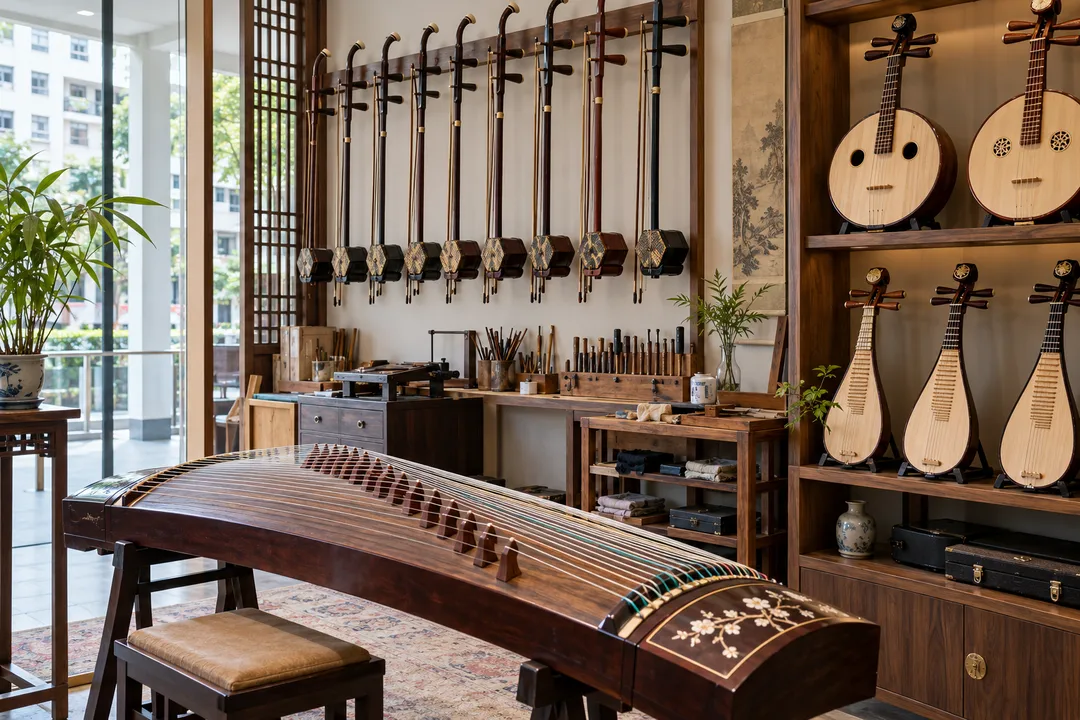
Eason Music, a Chinese instrument specialist founded in 1978, repairs erhu, guzheng and ruan at CT Hub in Kallang, with guzheng restrings at S$170.
When an erhu skin splits or a guzheng loses half its strings, most Western-style music shops in Singapore can only shrug. Eason Music is where Chinese orchestra players, school ensemble members and private students go instead. Founded in 1978, the company sells, teaches and repairs Chinese instruments from a unit in CT Hub, near Bendemeer, and it is unusually open about what repairs cost and how long they take.
A Chinese Instrument Specialist Since 1978
Eason Music was founded in 1978 by Mr Tan Chin Siong, according to the company's history page, and it has grown into a combined shop, music school and repair service for the instruments of the Chinese orchestra. The website covers the erhu, ruan, guzheng and yangqin, runs lesson programmes, and publishes buyer's guides; one on choosing a guzheng went up in May 2026.
That mix matters for repairs. A shop that teaches the instruments every week sees the same faults again and again: pegs that will not hold, bridges knocked over in a car boot, strings that snap during exam season. The repair service has grown out of that, and each instrument has its own repair page with an estimated cost and turnaround for common jobs, which makes it easy to judge what a fix will involve before you even leave home.
Erhu Repairs and Re-Skinning
The erhu page lists the most frequent problems. A broken head or neck is estimated from S$30 and takes about a week, a cracked body from S$35 and one to two weeks, and a new tuning peg from S$30. A string change costs S$12 to S$40 depending on the strings and is done in about 30 minutes, so it is often possible to wait while it is done.
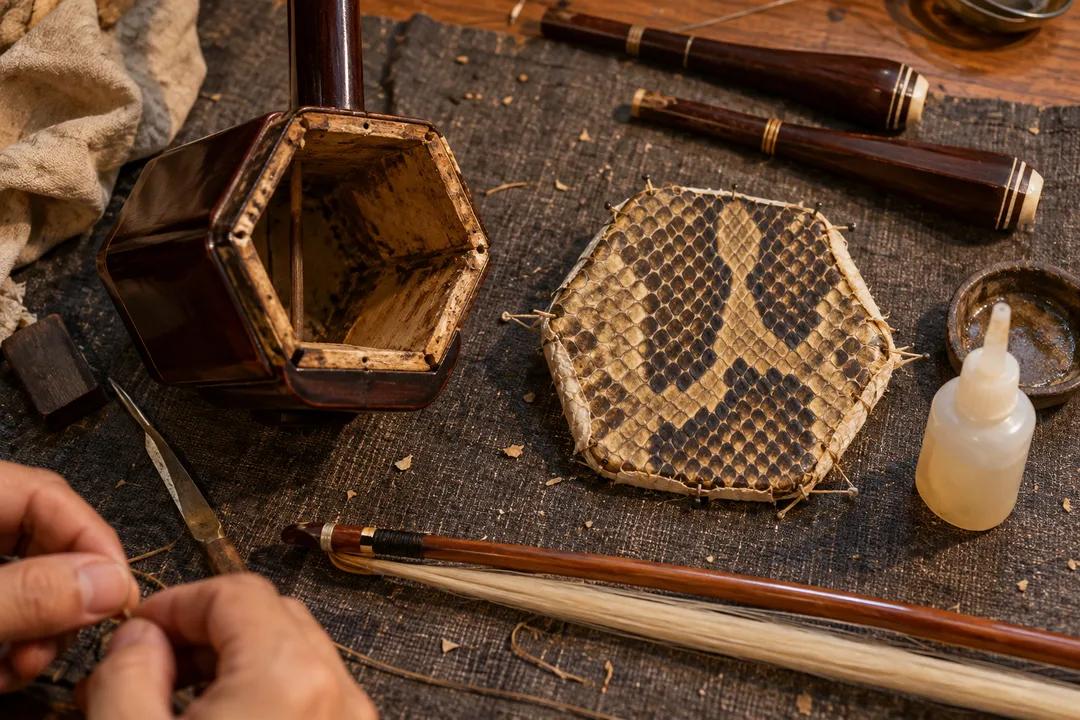
The big job is re-skinning. The python skin on the sound box is what gives the erhu its voice, and when it splits or goes slack the instrument has to be re-skinned. Eason estimates this from S$300, depending on the quality of the snakeskin used, and warns that it takes one to three months. For a cracked body, the page is frank that there is no guarantee the instrument will sound as good as before, which is a useful honesty when deciding whether to repair an old student erhu or replace it.
Guzheng, Ruan and Other Instruments
Guzheng owners have their own price list. A full restring is S$170 and takes about a week, which is the job most players need after years of practice have dulled the tone. Individual bridges, the movable wooden supports under each string, are S$5 each, and a crack in the soundboard is estimated at S$60 to S$120 depending on its length and position.
For the ruan, the round-bodied plucked lute, refretting is estimated from S$150 and takes about two weeks. Other Chinese instruments are handled case by case. An old page on the website for a separate ruan repair service run by Song Guang Ning is still online, but it is marked as discontinued, so the current repair service is the one listed on the main repair pages.
Every figure is labelled as an estimated cost, and the final price is agreed after the instrument has been seen. The quote also depends on materials: the erhu re-skin estimate, for example, changes with the grade of snakeskin, so ask what each option costs and how it affects the sound before you approve the work.
Getting a Quote Before You Come
A clear picture of the crack, the split skin or the broken peg, taken in good light, gets a much better answer than a description. The main phone line, is the one to call about lessons or to check that someone is in before you travel.
Bring the instrument in its case together with its bow, bridge and any loose parts. For a guzheng, which is long and heavy, a taxi to the building entrance is far easier than carrying it from the station. If the instrument belongs to a school or a Chinese orchestra, ask whether a written quote is needed for the group's accounts before the work starts.
Finding CT Hub and Walking Kallang
Eason Music, at 2 Kallang Ave, #02-08, CT Hub, Singapore 339407, is about a five-minute walk from Bendemeer MRT on the Downtown Line; the company also suggests buses 133 and 145 from exit B of Lavender MRT. CT Hub is a modern commercial building, and the shop is on the second floor.
Kallang Riverside Park runs along the river nearby and is a pleasant place to walk while a string is being changed, with views across to the Kallang Basin. For food, Bendemeer Market and Food Centre is a neighbourhood hawker centre a short walk away, with a wide choice of local dishes for lunch.
Practical Notes
Eason Music, 2 Kallang Ave, #02-08, CT Hub, Singapore 339407. Hours: Monday to Friday 10:30am to 6:30pm, Saturday 10am to 6pm, Sunday 10:30am to 4:30pm; closed on public holidays. All repair prices above are the estimates published on the company's repair pages, in Singapore dollars.
Turnaround is the thing to plan around. String changes can be done while you wait, guzheng restrings and erhu neck repairs take about a week, ruan refrets about two weeks, and an erhu re-skin can take up to three months. If you play in a concert or an exam soon, ask about the timing before you hand anything over, and keep a spare set of strings at home so a snapped string never stops practice.
The shop is closed on public holidays, which in Singapore include Chinese New Year, when many Chinese orchestras are busiest with performances. If an instrument needs attention before the festive season, bring it in well ahead of the holiday rather than in the last few days before the shop closes, so there is time for a second visit if a part has to be ordered.
Ask Karpo for more information.
Keep reading
- Chinatown Batik Canting Pen Picker: Fine Spouts for Silk
 Tiong Bahru Batik Canting Pen Picker: Handles and Bowls
 Katong Batik Canting Pen Picker: Wide Spouts for Wave Fills