 Chinatown Batik Canting Pen Picker: Fine Spouts for Silk
Hidden Gems & Odd Finds
Tanjong Pagar Flea Market Browsing Guide to Port Memorabilia
Tanjong Pagar grew up beside the docks and the old railway terminus. Hunt for ship photos, postcards and port lamps that still carry the story of the harbour.
Stand on a shophouse five-foot way in Tanjong Pagar and it is hard to picture the docks. Yet for generations this was the working edge of the harbour, a place of coolies and clerks, rickshaw pullers and ship chandlers, and the end of the line for the railway that ran down the Malay Peninsula. The port has moved west and the trains have gone, but small pieces of that world still turn up in the area's collector shops, weekend fairs and dusty back rooms. This flea market browsing guide is for anyone who wants to hunt for them: old postcards, ship photographs, brass lamps, tin trunks and the other objects that tell the story of a harbour town.
A Neighbourhood Built by the Harbour
Tanjong Pagar's name is often traced to the stakes or fences that once lined the shore here, and the area grew fast once the deep-water wharves opened nearby. Shophouses filled with traders who served the ships, boarding houses filled with dock workers, and the streets around Duxton Hill and Craig Road became busy with people coming and going from the port.
The old railway station at the edge of the district, with its tall arched hall and murals of rural life, was the gateway to the peninsula for travellers and goods. Today the hall stands quiet and the tracks have become a green corridor, but many older Singaporeans still remember buying snacks on the platform before an overnight train. That memory is part of what makes a railway postcard or an old luggage label feel so personal here.
What You Might Find
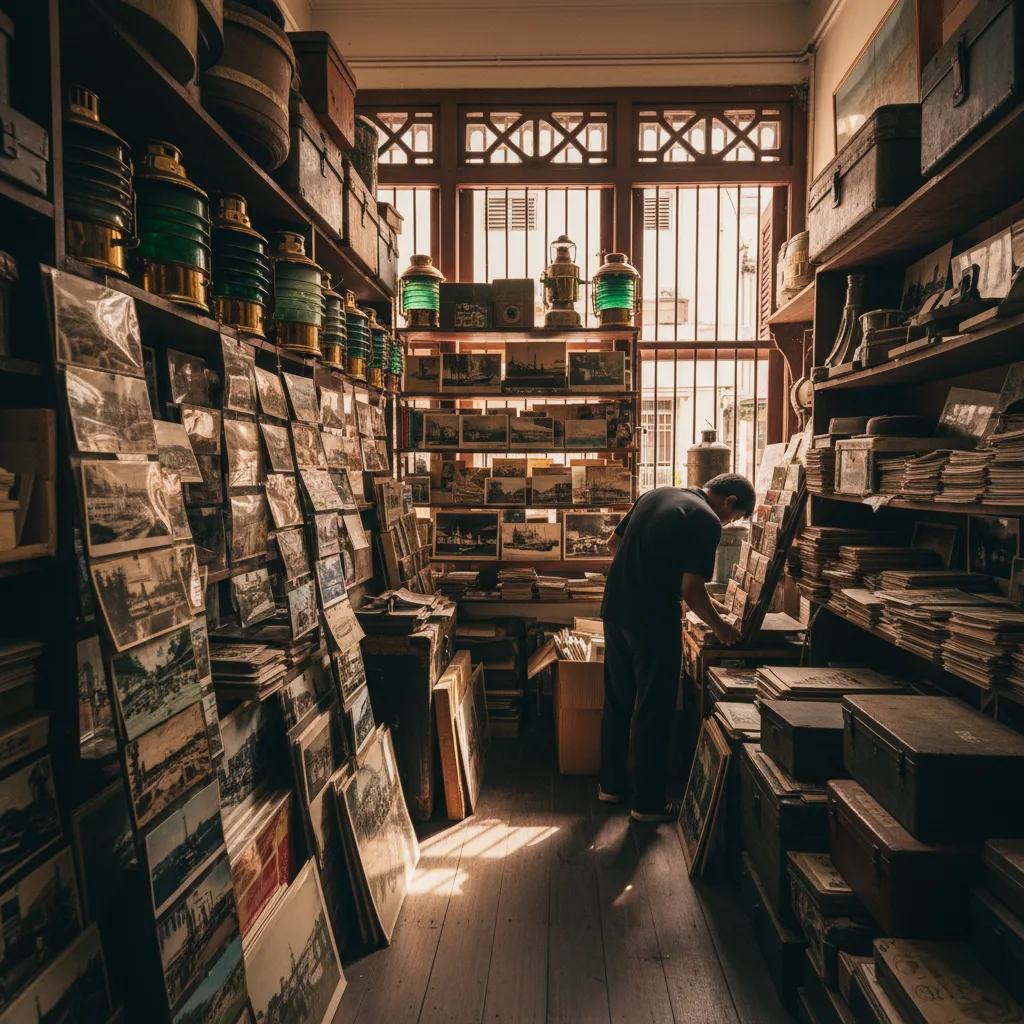
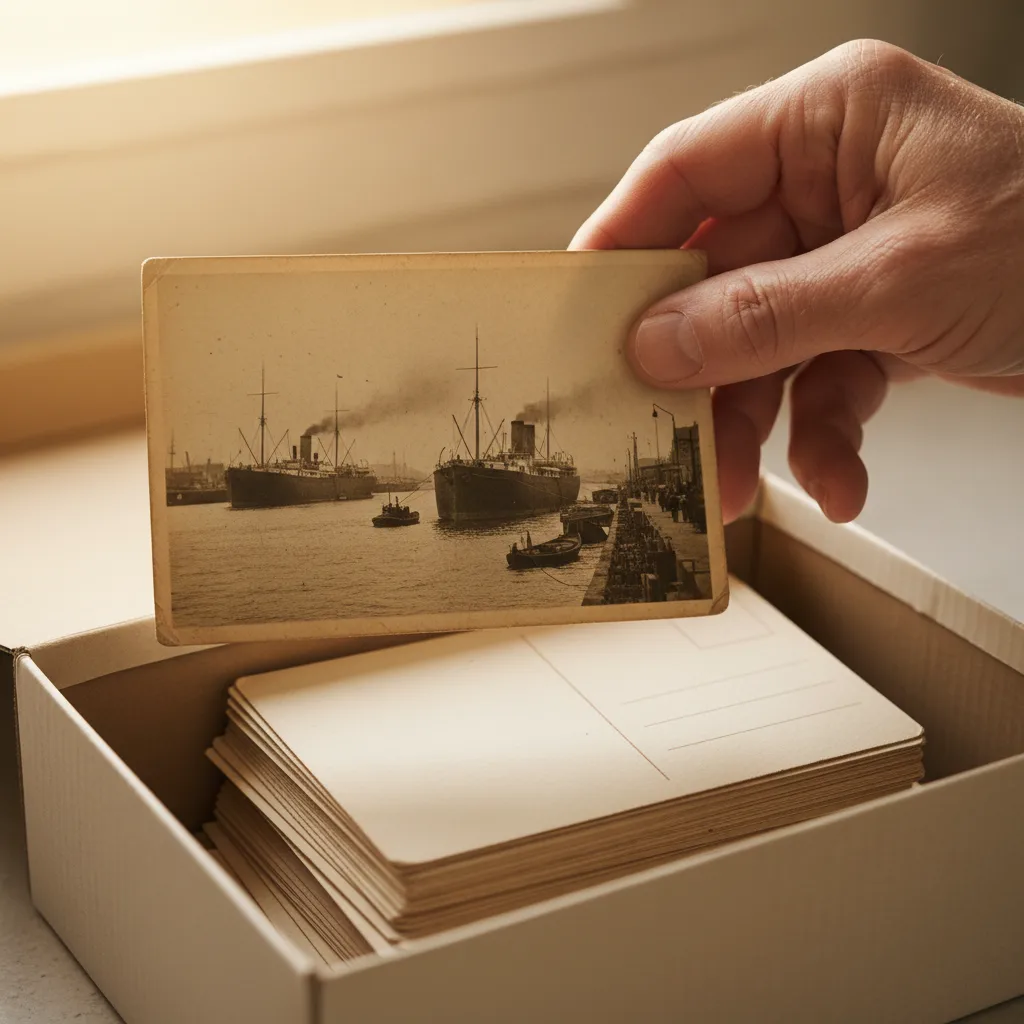
Postcards and photographs are the easiest place to start. Collectors often keep boxes of picture postcards showing the harbour, the godowns along the river and ships at anchor in the roads. Some are hand tinted, some are crisp black and white, and a few have messages on the back from sailors or travellers writing home.
Brass ship lamps, porthole frames, compasses and bells appear now and then, along with tin trunks and camphor wood chests that once travelled in a ship's hold. Smaller things are just as interesting. Shipping company crockery, luggage labels, enamel badges and old maps of the harbour all help tell the story of the port, and they are much easier to carry home than a heavy brass lamp.
Where to Look
Tanjong Pagar does not have one big flea market. The fun is in the scattered corners. Some antique and curio dealers in the shophouses keep a shelf of maritime pieces, a few vintage shops mix old photographs with furniture, and weekend fairs and pop-up markets in nearby malls and community spaces sometimes bring dealers who specialise in paper ephemera.
It helps to start with a slow walk. Go up Duxton Road, loop round Duxton Hill, cut through to Neil Road and Keong Saik, and look into any shop with old wood, brass or paper in the window. When a dealer has a box of postcards on the counter, ask whether they keep more in the back. Many of the best pieces are not on display.
Reading a Postcard Like a Historian
A good postcard is a small time machine. Turn it over first. The layout of the back, the style of the printing and any written message can tell you a lot about its age and journey. A divided back with space for a message and an address is a clue, as is the name of the printer along the edge.
On the front, look for landmarks you can still find today, such as the river bend, a church spire or a row of godowns. Comparing old and new views is part of the pleasure. Many collectors keep a phone photo of the modern scene next to the postcard, and it makes a lovely way to share what has changed with friends and family.
Condition matters, but not always in the way you expect. A crisp unused card is easy to admire, while a worn card with a faded message from a sailor to his mother may be the one you remember. Choose the ones that make you want to know more.
Judging Brass and Wood
Real ship lamps and fittings are heavy and often show signs of use, such as dents, worn edges and green patches in the crevices. Look for maker marks or stamped words on the base, although many have worn away. Very bright, light pieces with perfect finishes are often modern decorative copies, which can still be pretty but are a different thing.
With chests and trunks, open the lid, smell inside and check the hinges and corners. Camphor wood has a strong clean scent that lasts for decades. Tin trunks may have rust spots, painted initials or old shipping marks, and these details are part of their charm. Ask the dealer what they know about where a piece came from, and enjoy the story even if it cannot be proven.
Making a Small Port Collection
It is easy to get carried away, so many collectors pick a theme. You might collect only postcards of the harbour, only views of the old railway station or only objects from a single shipping line. A theme makes each find more meaningful and helps you say no to the rest.
Store paper items flat in acid-free sleeves, away from direct sunlight and humidity. Brass can be gently cleaned with a soft cloth, though many collectors leave the patina alone. A small shadow box with a postcard, a luggage label and a photograph can turn a few modest finds into a piece of the neighbourhood's history on your wall.
Walking the Story After You Shop
Once you have a few finds, walk the places they show. The green rail corridor begins near the old station and makes an easy stroll in the cooler hours. Duxton Plain Park, a narrow strip of trees on the line of an old railway spur, links back to the shophouses. From the higher ground near the Pinnacle, you can look out over the container cranes that took the port's work further west.
Holding an old picture of the harbour while you look at the modern skyline is a strange and moving feeling. It makes clear how much of the city was built on that busy waterfront and how quickly it has changed.
Finding More Curio Shops
Dealers move, pop-up fairs come and go, and the best boxes of postcards turn up in unexpected places. Open the Karpo APP to find antique shops, vintage stores and cafes around Tanjong Pagar, and save the ones that match your theme so you can return when you have an afternoon free.
Take your time, ask questions and let each find lead you to the next. In a neighbourhood shaped by ships and trains, every postcard and brass lamp is a small piece of the journey.
Ask Karpo for more information.
Keep reading
- Chinatown Batik Canting Pen Picker: Fine Spouts for Silk
 Tiong Bahru Batik Canting Pen Picker: Handles and Bowls
 Katong Batik Canting Pen Picker: Wide Spouts for Wave Fills