 Chinatown Batik Canting Pen Picker: Fine Spouts for Silk
Hidden Gems & Odd Finds
Little India Flea Market Browsing Guide to Brass and Lamps
Little India's metalware shops glow with brass lamps, steel tiffins and copper pots. Learn to judge solid brass, spot older pieces and keep a lamp shining.
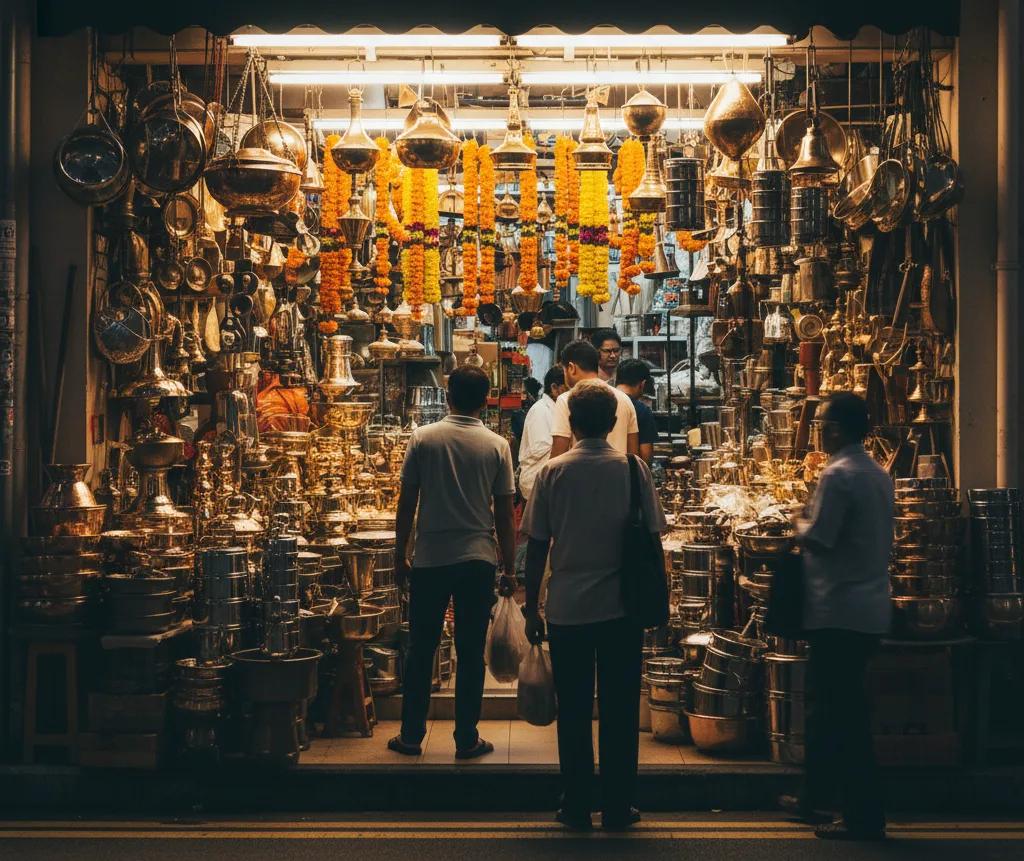
Step off Serangoon Road into one of Little India's metalware shops and the light changes. Shelves glow with brass oil lamps, copper pots, stacked steel tiffin carriers and bells of every size, some freshly polished and some dark with age. In the weeks around Deepavali, the festival of lights, these shops are busier than ever as families buy new lamps or bring old ones out to clean. This flea market browsing guide is for anyone drawn to that glow: how to browse a crowded metal shop, how to tell solid brass from plated, where second-hand pieces hide and how to look after a lamp once it is home.
Why Little India Shines for Metalware
Little India has long been the heart of Singapore's Tamil and wider South Asian community, and its shops supply the objects of daily and religious life. Brass and copper have a special place in that world. Oil lamps are lit for prayers at home and in temples, steel and brass vessels are used in kitchens and ceremonies, and well-made pieces are often passed from one generation to the next.
That is why the area is so good for browsing. New pieces sit next to older ones, some shops buy back used items, and a careful look along the lower shelves can turn up a lamp or tray that has already served one family for years. Even if you never buy, the craftsmanship on display is worth a slow walk.
Getting to Know the Lamps
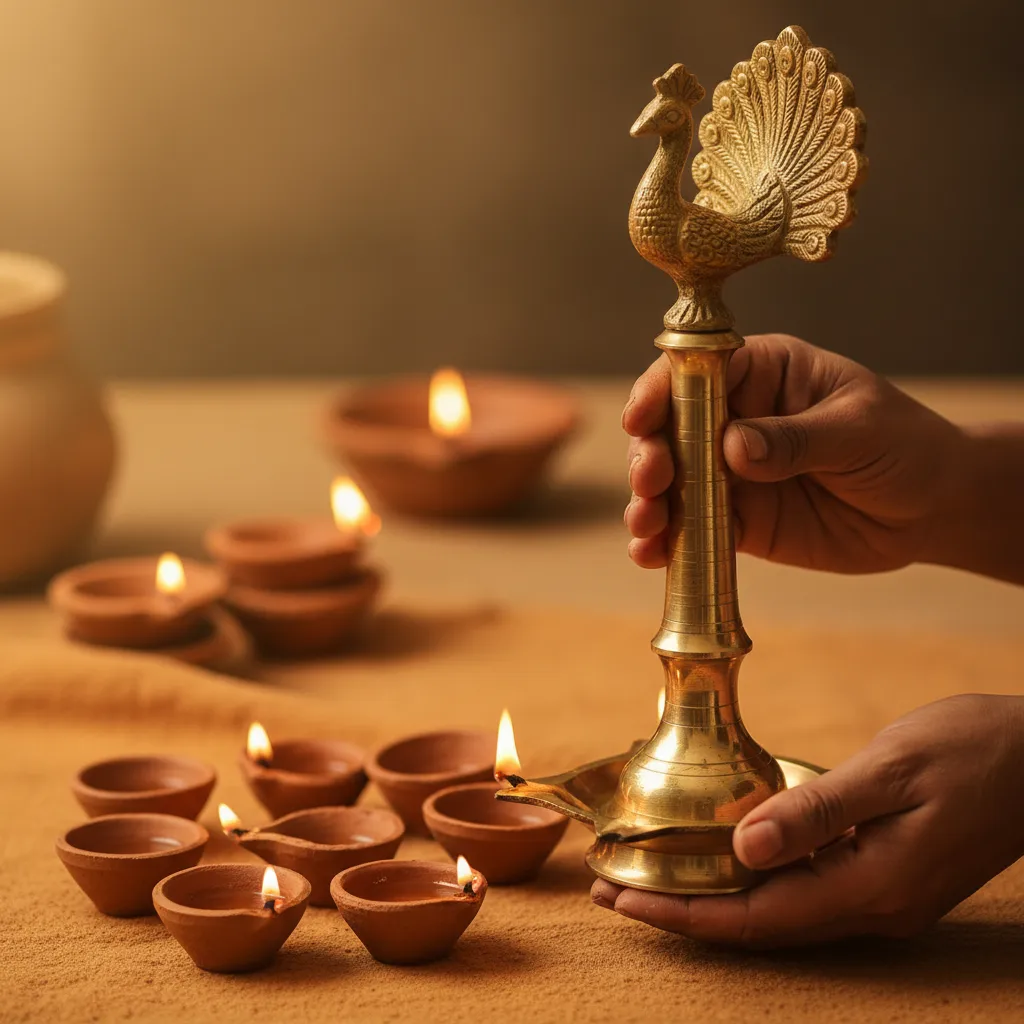
The tall standing oil lamp called kuthu vilakku is the classic piece. It has a round base, a slender stem and a dish at the top with several spouts for cotton wicks, often crowned with a peacock, a swan or a lotus bud. Smaller hanging lamps, hand-held aarti lamps and tiny clay diyas are also common, especially near the festival.
When you look at a lamp, check its balance first. A good kuthu vilakku stands steadily without wobbling and feels heavier than it looks. Look at how the sections join. Many tall lamps unscrew into parts for cleaning, and the threads should turn smoothly. Run a finger around the wick dish to feel for sharp edges or cracks.
Solid Brass or Plated
Solid brass is heavy for its size and has the same warm colour all the way through. Plated pieces are lighter and may show a different coloured metal underneath where the surface has worn, often on edges and bases. A small magnet can help, since brass is not magnetic, while many cheaper plated pieces have a steel core that the magnet will cling to.
Look underneath too. Older lamps may have casting marks, small file marks or a slightly rough base, signs of hand finishing. Very shiny pieces with a perfectly smooth, lacquered surface are usually newer. Neither is wrong, but knowing which you are looking at helps you judge what the seller is asking.
Finding Second-Hand Pieces
Not every shop deals in used items, but some keep older lamps, trays and vessels in a corner or behind the counter. Ask politely whether they have any old pieces, and you may be shown things that are not on display. Older brass often has a deep golden brown patina and small dents from years of use, which many buyers find more beautiful than a new mirror shine.
Steel tiffin carriers, copper water pots and brass betel boxes also turn up second-hand, along with old kitchen tools such as coconut scrapers and spice grinders. These are lovely to look at even if you have no plan to use them, and they tell the story of how households in the neighbourhood once cooked and served food.
If you buy a used lamp, ask whether it came from a family home or a temple, and whether anything should be done before it is lit again. Some families like to clean and bless a second-hand lamp before using it in prayer. The shopkeeper may not have every answer, but the question shows care and often leads to a good story about where the piece has been.
Browsing Respectfully
Remember that many of these items have religious meaning. Handle lamps and prayer objects gently, ask before picking up something from a shrine display and do not use them as photo props in a way that might offend. Shopkeepers are usually glad to explain what a piece is for, and asking is the best way to show respect.
Around Deepavali, the shops and streets can be extremely crowded, especially in the evenings when the festive lights are on. Go earlier in the day if you want time to talk with a shopkeeper, and save the evening for walking under the lights with a bag of murukku in hand.
Choosing a Piece for Your Home
Think about where the piece will live before you buy. A tall lamp needs a stable surface and space around it if you plan to light it. A small brass bowl or bell can sit on a bookshelf as a decoration. Visitors flying home may prefer a set of small diyas, a hand-held lamp or a brass bowl, which pack more easily than a heavy standing lamp.
If you are buying as a gift for someone who will use it in prayer, ask the shopkeeper for advice on the right size and style. They will know which lamps are traditional for different occasions, and they can wrap the piece carefully for travel.
Looking After Brass
Brass darkens naturally as it ages, and many families clean their lamps before festivals. A traditional method uses tamarind paste or lemon and salt rubbed gently over the surface, then rinsed and dried thoroughly. Commercial brass polish also works but can strip away old patina, so test it on a small hidden spot first if your piece is old.
After lighting, wipe away oil residue while it is still soft, and clean the wick dish regularly. Store lamps somewhere dry, as humidity can speed up tarnish. With a little care, a good lamp will last long enough to pass on.
Mapping the Metal Shops
Little India's metalware shops are mixed in among grocery stores, flower stalls and restaurants, and some sit down narrow side streets. Open the Karpo APP to spot brassware and household shops around Serangoon Road, then plan a route that also takes in the garland sellers and a stop for chai.
Browse slowly, ask about the stories behind each lamp and choose one piece you will truly use or treasure. When it is lit at home for the first time, the glow will carry a little of Little India with it.
Ask Karpo for more information.
Keep reading
- Chinatown Batik Canting Pen Picker: Fine Spouts for Silk
 Tiong Bahru Batik Canting Pen Picker: Handles and Bowls
 Katong Batik Canting Pen Picker: Wide Spouts for Wave Fills