 Chinatown Batik Canting Pen Picker: Fine Spouts for Silk
Hidden Gems & Odd Finds
Kampong Glam Flea Market Browsing Guide for Batik Hunters
Kampong Glam rewards slow fabric browsing, and this guide shows how to tell hand-drawn batik from print, handle songket and pace the shophouse lanes in heat.
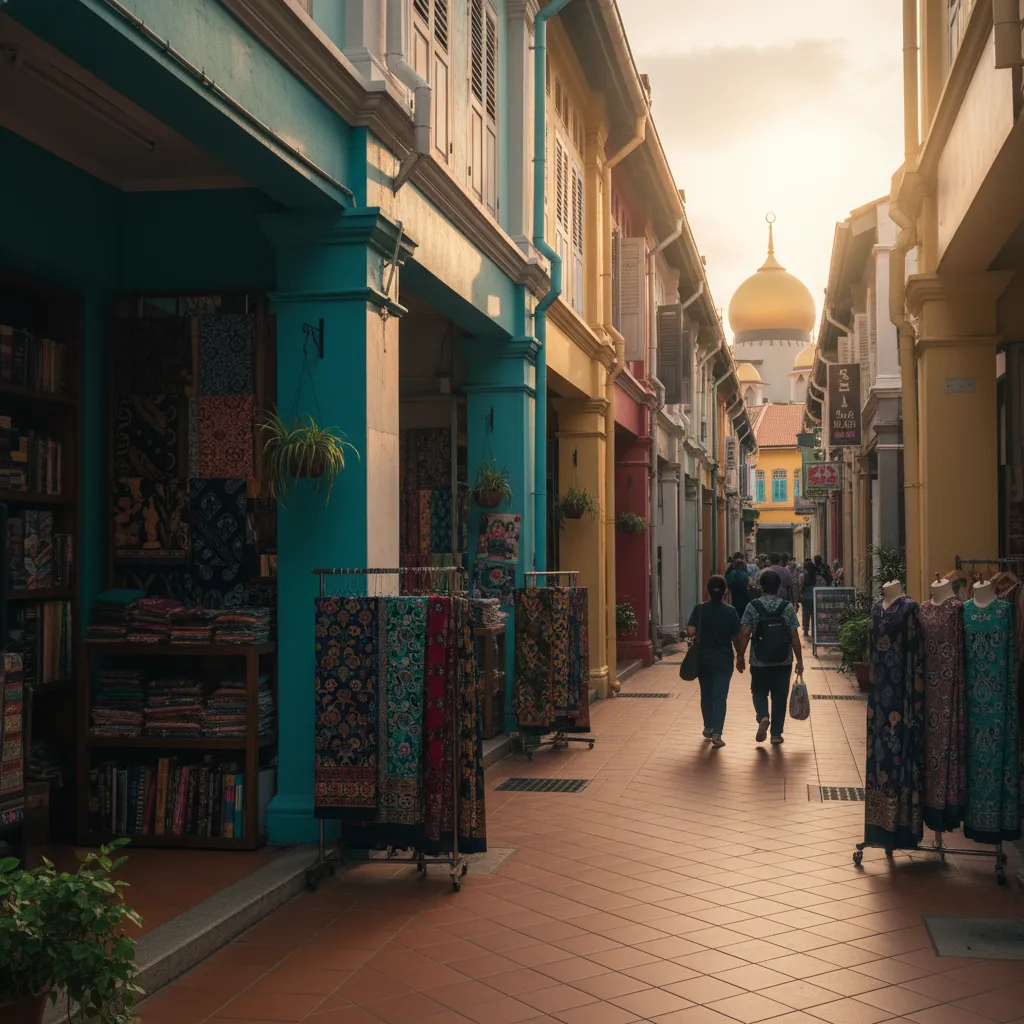
Kampong Glam is not a flea market in the London sense, with trestle tables in a car park. It is something more interesting for anyone who loves cloth. The shophouses around Arab Street have sold fabric to the region for generations, and the five-foot ways in front of them are stacked with bolts of batik, folded sarongs, lace and the gold-threaded weave called songket. Mixed in are a few dusty corners of old brass, used books and vintage clothes. This flea market browsing guide treats the area as a textile hunt: how to read what is on the shelves, how to talk to the people who sell it and how to pace an afternoon in tropical heat.
A Cloth Quarter with a Long Memory
Kampong Glam grew up as the home of Malay, Arab and Bugis traders, with the golden dome of Sultan Mosque at its centre. Fabric was always part of that trade. Merchants brought batik from Java, silk from further afield and lace from Europe, and families sold it from the ground floors of their shophouses while living upstairs. Some of the textile shops on Arab Street are still run by descendants of those families, and many of them can tell you which island a pattern comes from just by looking at it.
That history is why the area works for second-hand and vintage hunting. Old stock sits at the back of shelves, offcuts are piled in baskets and a shopkeeper who sees you are serious may pull out a sarong that has been folded in a drawer for years. The finds are less about bargains and more about cloth with a story.
Hand-Drawn, Stamped or Printed
The most useful skill here is telling the three main kinds of batik apart. Hand-drawn batik, called batik tulis, is made by drawing wax onto the cloth with a small spouted tool, so the lines wobble slightly and the dots are never perfectly even. Stamped batik, or batik cap, uses a copper block, which gives a crisper repeating pattern with small breaks where one stamp meets the next. Printed fabric with a batik look is made by machine and is the cheapest of the three.
Turn the cloth over. With real wax-resist batik, the pattern shows almost as strongly on the back as on the front, because the dye has soaked through. Machine prints are usually much paler on the reverse. Smell it too. Freshly waxed and dyed cloth often has a faint earthy scent, while printed polyester smells of nothing. None of these tests is perfect, but together they help you decide whether a higher asking price is fair.
Songket is easier to recognise but harder to judge. The metallic threads are woven in as part of the cloth, not printed or glued on, so the pattern feels slightly raised. Hold it up to the light and look at how tight and even the weave is. Older pieces may have tarnished threads, which some collectors love and others avoid.
How to Browse a Fabric Shop
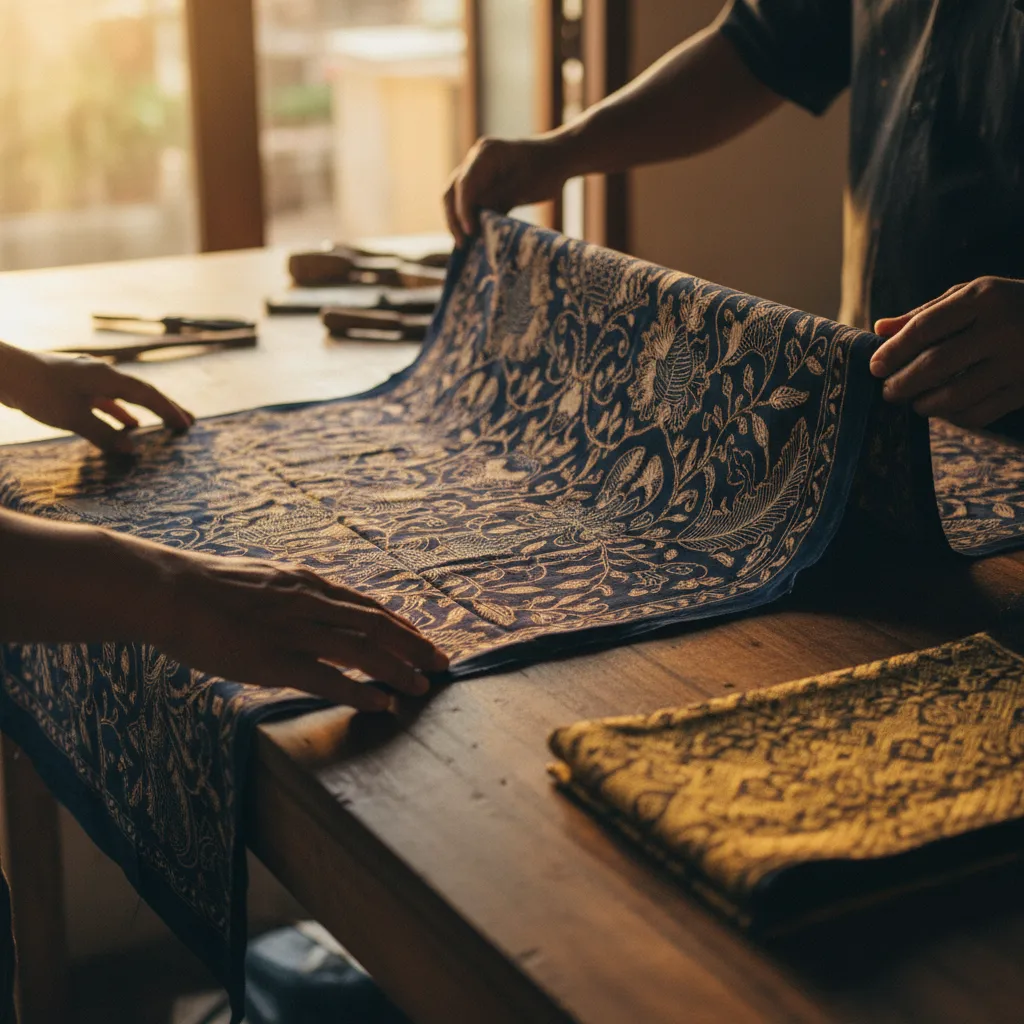
Fabric shops in Kampong Glam can feel overwhelming, with floor-to-ceiling shelves and little room to stand. Start by telling the shopkeeper what you want the cloth for: a sarong to wear, a length for sewing, a wall hanging or a gift. That one sentence changes what they show you. Ask to see older pieces if you are interested in vintage, since these are often kept in drawers rather than on display.
Handle cloth with clean, dry hands, and unfold it on the counter rather than shaking it out in the walkway. If you like a piece, ask where it was made and whether it is hand-drawn or stamped. Most sellers will answer honestly, and the conversation tells you as much as the cloth does. A polite request for a better price when buying several pieces is normal, but hard haggling over a single sarong is not how most of these family shops work.
Beyond the Fabric Shelves
Once your eyes are tired of patterns, the back lanes have other treasures. A few shops sell old brass trays, incense burners, lanterns and copper pots, some of them antique and many simply well used. Around Haji Lane and the narrow streets behind it, small boutiques mix new labels with racks of second-hand clothes, and there are corners where you can find used books, old Malay film posters and vinyl.
Perfume is another local craft worth a look. Traditional perfumers on Arab Street blend oils into tiny glass bottles, and some shops still have old decorative bottles on the shelf. They make light, unusual souvenirs that fit in a pocket.
Pacing an Afternoon in the Heat
Singapore heat changes how you browse. Walk in the shade of the five-foot ways, the covered walkways that run along the front of the shophouses, and step inside air-conditioned shops between outdoor stretches. Carry water and a small towel. Late afternoon is pleasant, as the light turns golden on the shophouse colours and the lanes start to fill with people heading to dinner.
Be aware of prayer times around Sultan Mosque, especially during Friday prayers, when the streets fill with worshippers. It is a lovely moment to see the neighbourhood at its most local, but it is not the time to block a narrow walkway with a large shopping bag. If you visit the mosque itself, dress modestly and follow the guidance at the entrance.
Who This Hunt Suits
Sewing enthusiasts and fashion students will get the most from a slow visit, since Kampong Glam has fabric lengths that are hard to find elsewhere in the city. Collectors of Southeast Asian textiles will enjoy talking to the older shopkeepers. Visitors looking for a meaningful souvenir can pick a single sarong or scarf and learn its story before they buy it.
Couples and friends can turn the afternoon into a game: each person chooses one piece of cloth for the other, explains why, and the pair compare choices over teh tarik or a plate of nasi padang at the end. It turns shopping into a conversation and keeps everyone from buying too much.
Caring for What You Bring Home
Hand-drawn batik should be washed gently by hand in cold water with mild soap, and dried in the shade so the colours do not fade. Fold songket rather than hanging it, and store it with tissue paper between the folds to protect the metallic threads. Old brass can be cleaned with a soft cloth, but resist the urge to polish away all the patina on an antique piece, since that is part of its character and value.
Finding Your Way Around
The streets of Kampong Glam are compact, but shops open onto lanes that look alike after an hour. Before you go, use the Karpo APP to pin a few textile shops, vintage racks and second-hand corners in the area, then work through them in a loop that starts and ends near the mosque.
Go slowly, ask questions and let the cloth tell you its story. You may leave with one sarong rather than five, but it will be one you understand, and you will see Arab Street differently next time you walk down it.
Ask Karpo for more information.
Keep reading
- Chinatown Batik Canting Pen Picker: Fine Spouts for Silk
 Tiong Bahru Batik Canting Pen Picker: Handles and Bowls
 Katong Batik Canting Pen Picker: Wide Spouts for Wave Fills