 Chinatown Batik Canting Pen Picker: Fine Spouts for Silk
Hidden Gems & Odd Finds

Chinatown Flea Market Browsing Guide with a Grandparent
Bring an older relative to Chinatown's antique and curio shops, and let their memories of enamel plates, biscuit tins and valve radios guide what you pick up.
Walk into one of Chinatown's cluttered curio shops alone and you see a jumble of tins, jars and plates. Walk in with your grandmother and the same shelves turn into a family history. She points at a floral enamel plate and remembers eating porridge from one just like it. Your grandfather spots a biscuit tin and tells you how his mother kept buttons in it. This flea market browsing guide is for that kind of afternoon: a slow nostalgia hunt through Chinatown with an older relative, where the stories matter more than the purchases and the best find might be a memory you never knew existed.
Why Chinatown Works for Memory Hunting
Chinatown has always been where Singapore kept its everyday objects. Among the souvenir stalls and restaurants, a handful of antique and curio shops still fill their shelves with things from ordinary homes: blue and white porcelain, enamel tiffin carriers, old coins, wooden clogs, valve radios, tin toys, calendars and the kind of rattan furniture that once filled every flat. Some of the shopkeepers grew up in the area and remember the streets before the conservation paint jobs.
For older Singaporeans, these shops feel like the kitchen and living room of their childhood. For younger ones, they are a chance to see the objects behind stories that are usually only told at the dinner table. That shared moment is the real point of the visit.
Plan Around Their Pace
Choose a cooler part of the day and keep the walk short. Chinatown's five-foot ways are covered, which helps with sun and rain, but the pavements are uneven and some shops have steps at the entrance. Decide on three or four shops at most and build in a long sit-down halfway through, perhaps at a kopitiam with ceiling fans or a hawker centre where they can choose their own drink.
Ask before the trip what they would like to see. Some grandparents will want to find something specific, such as the type of tingkat their family used or a radio like the one that played Rediffusion stories. Others will be happy simply to wander. Knowing which kind of afternoon it is stops you rushing them past a shelf they want to linger at.
Objects That Spark Stories
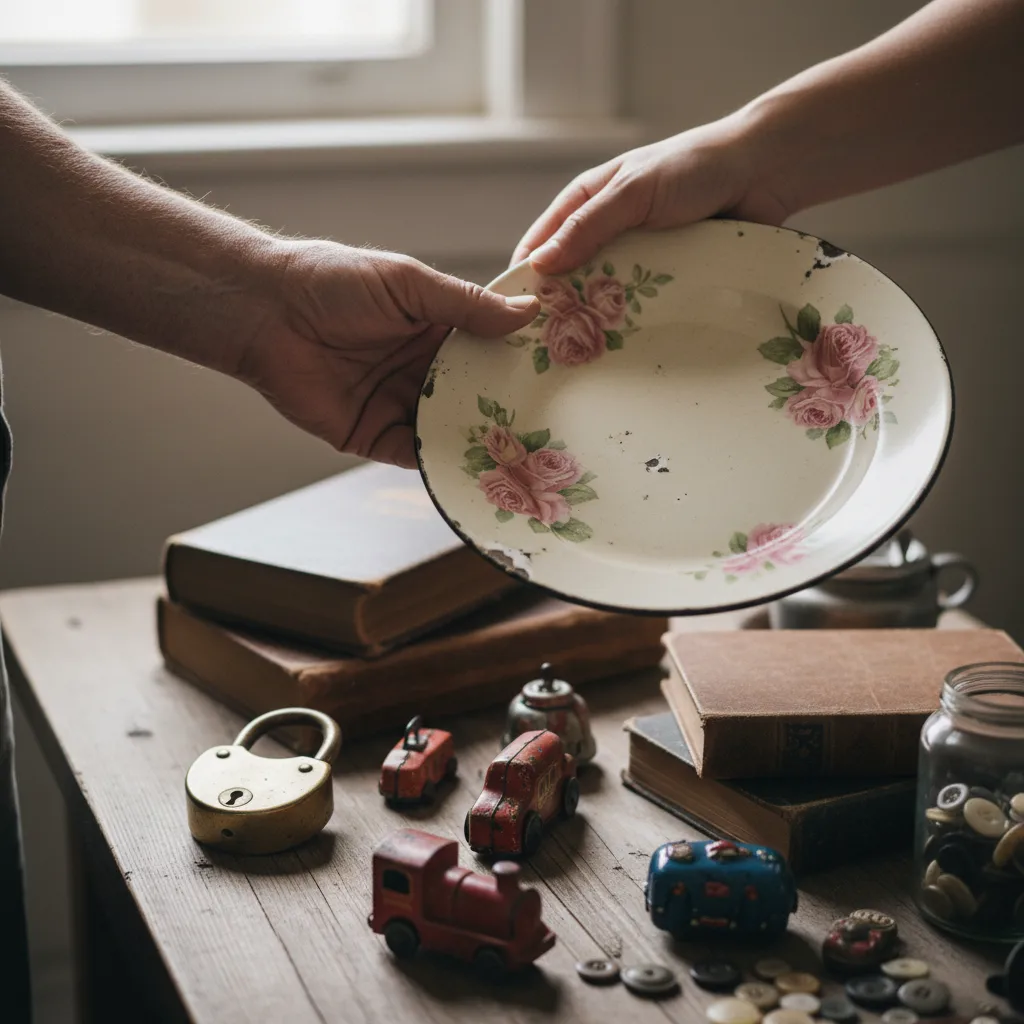
Enamelware is the easiest starting point. Plates, mugs, basins and tiffin carriers with painted flowers were found in almost every home, and many older people have strong memories of them. Ask which colours their family had and what each piece was used for. You will often hear about mealtimes, neighbours and food that has since disappeared from daily life.
Biscuit tins, old milk powder cans and kerosene lamps tell stories about thrift, since nothing in those homes was thrown away. Wooden clogs, rattan chairs and porcelain spoons bring back the sounds of a kampong house or an early HDB flat. Old coins and banknotes are another favourite, and grandparents often remember what a single coin could buy at the provision shop downstairs.
Expect some memories to be bittersweet. Objects from hard years can bring back stories of crowded homes, lost relatives or long working days. Give these moments room, do not rush to change the subject and do not push for details they do not want to share. A quiet walk to the next shop is sometimes the kindest response.
Let them handle things if the shopkeeper agrees. Holding a familiar object often unlocks a story that looking alone does not. Keep your phone ready to record a short voice note, with their permission, since these are the stories families wish they had saved.
Talking to the Shopkeepers
Many curio shop owners love this kind of visit. Introduce your grandparent and explain that you are looking for things from their childhood. Shopkeepers may pull out pieces from the back or share their own memories of the street. Conversations often slip between English, Mandarin, Cantonese, Hokkien and Malay, so an older relative who speaks a dialect can become the hero of the afternoon.
Ask simple questions: where did this come from, how old might it be, and was it common in homes or something special. Good dealers will tell you honestly if a piece is a newer reproduction. Porcelain in particular is often reproduced, so treat a very fine-looking jar with caution unless the seller can explain its background.
Choosing One Thing to Take Home
The aim is not to fill a bag. Agree beforehand that you will each pick one object, and let your grandparent choose first. A small enamel cup, a single porcelain spoon or an old biscuit tin is easy to carry and can sit on a shelf at home as a reminder of the day. If they do not want anything, take a photo of them with the object that brought back the strongest memory instead.
If you want to bargain, do it gently and let the shopkeeper lead. Many of these shops are small family businesses, and a friendly conversation goes further than a hard push. Buying two small pieces together is a natural moment to ask whether there is any flexibility.
Stops for a Rest
Chinatown is full of places to sit. A hawker centre gives you a wide choice of food, plenty of seats and fans overhead. A traditional teahouse offers a quieter break and a chance to talk over what you saw. The temples along South Bridge Road also offer a calm corner, and many older visitors like to pause there to light incense or simply sit in the cool inside.
Use the break to ask follow-up questions about the objects you saw. Where did the family live, who cooked, what did the street outside sound like. Those answers are often richer than anything said in the shops.
Who Else Enjoys This Walk
This walk is not only for grandchildren. Parents taking teenage children can use it to explain how Singapore homes looked a few decades ago. Families who have moved overseas and are visiting home can use it to reconnect with a city that changes quickly. New residents curious about local life will find the curio shops an honest window into everyday Singapore that museums sometimes polish away.
Planning the Route
Curio shops in Chinatown are scattered among busier streets, and some sit upstairs or in side lanes. Before you set out, open the Karpo APP to find antique and vintage shops in Chinatown that sit close together, so your grandparent can reach each one with only a short walk and a rest in between.
Go slowly, listen more than you talk and let the shelves do the work. The enamel plate you bring home may be worth very little in money, but the story attached to it will stay in the family for a long time.
Ask Karpo for more information.
Keep reading
- Chinatown Batik Canting Pen Picker: Fine Spouts for Silk
 Tiong Bahru Batik Canting Pen Picker: Handles and Bowls
 Katong Batik Canting Pen Picker: Wide Spouts for Wave Fills