 Chinatown Batik Canting Pen Picker: Fine Spouts for Silk
Hidden Gems & Odd Finds

Singapore Dark Fantasy Bookstore: Picture Books by Age
Plan a Singapore picture-book search with clear age and scare boundaries. Use images, read-aloud length and ending tone to shape a useful reading request.
For a family dark fantasy bookstore search in Singapore, age and emotional boundaries should come before a dramatic cover. A child may enjoy a mysterious forest while finding an abandoned animal upsetting, even when both appear in the same short book. Build the reading request around those differences. The aim here is a picture-book selection plan you can describe in the Karpo APP, with the child's interests made explicit and adult judgment left in charge of the final choice.
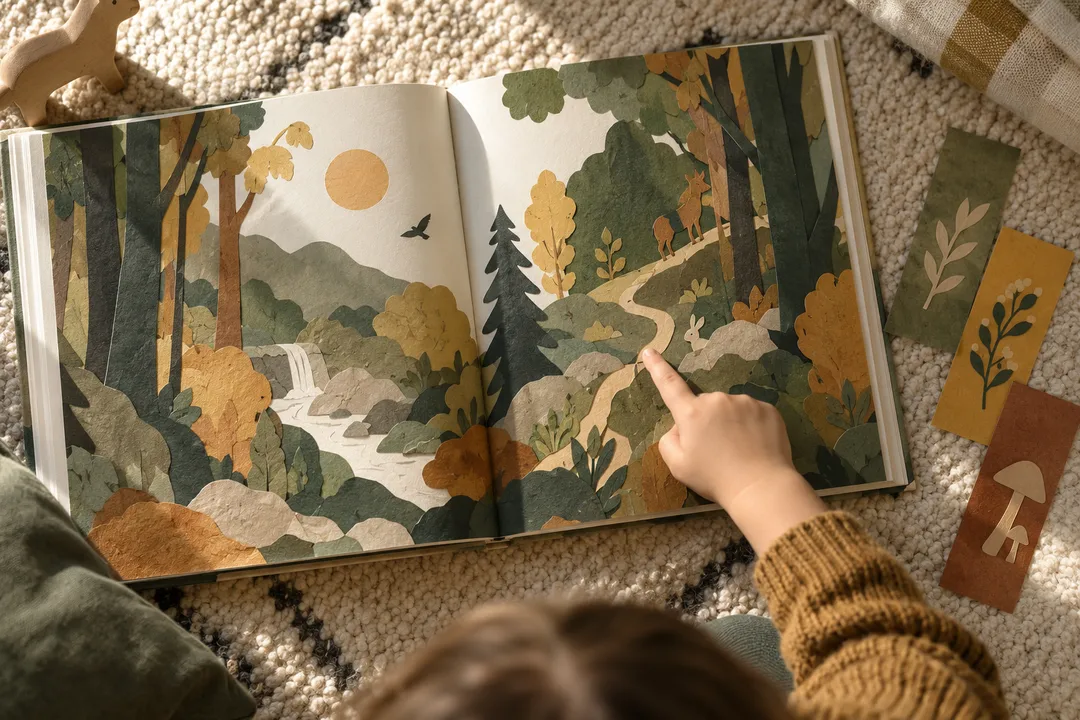
Ask what “dark” means to this child
Start with an image or scene the child already likes: a house with secret doors, a creature that seems strange but becomes a friend, or a journey through an unfamiliar landscape. Then ask what they would rather leave out. A child who happily discusses monsters may be sensitive to separation from a parent. These are individual responses. A broad genre label or a suggested age band cannot replace a conversation about the particular story and the particular reader.
Let the child describe the appeal in their own words before translating it into a search phrase. “I want the trees to look mysterious, but everyone gets home” is more useful than an adult's assumption that they want horror. Write down that request without expanding it into a list of fashionable titles. If the child only wants to look at a strange landscape today, a wordless or lightly narrated book may suit the moment better than a complex fantasy adventure.
Use three boundaries before making a shortlist
The first boundary is emotional: list the themes you intend to avoid. Be specific about separation, injury, bullying, death or threatening images when those matter to your family. The second is reading demand: decide whether the book will be shared aloud, explored mainly through pictures or read independently. The third is the ending: perhaps reassurance matters, or perhaps an unresolved question is welcome. None of these choices needs to match what another family prefers.
In the Karpo APP, an example brief is: “Help me shape a Singapore picture-book outing for a child who likes mysterious forests. Suggest how to narrow the search for a shared read, with no frightening harm to animals and a reassuring ending.” Add the child's age if you want, but keep the description of the reading situation. Ask for reasons behind suggestions rather than treating the age number as an automatic suitability filter.
Study the pictures as part of the story
Picture books can create tension through scale, shadows, a face partly hidden behind a doorway or the space left around a character. A short sentence may look gentle while the accompanying image feels intense. When a sample is available, consider the spread as a whole rather than extracting a reassuring line from it. The image is part of the narrative. A synopsis that describes only the plot may miss the detail that determines how a child responds.
Look at the transition across a page turn. A calm scene followed by a sudden large figure can have a different effect from the same figure introduced gradually. You do not need to classify that effect as universally good or bad. Decide whether it matches the experience you are seeking. For a child who prefers predictability, an adult can review the sequence first, then choose whether the surprise is a pleasure to share or a reason to set that book aside.
Reading aloud changes the selection
Consider who will read, where the reading will happen and whether there is room for questions. A book intended for a quiet daytime conversation need not serve the same purpose as one for bedtime. Dialogue, repeated phrases and opportunities to notice small visual details can support a shared reading. Dense exposition can ask for a different kind of attention. Describe those preferences when seeking suggestions, without assuming that a brief book must be an easy book.
During a shared read, pausing is a choice you control. You can ask what the child thinks is happening before explaining an image, or stop when their interest moves elsewhere. This is reading advice, not a claim about a retailer's activities or a guaranteed educational outcome. It also keeps the purchase decision proportionate: a book should serve the reading relationship you want, rather than becoming a test the child has to finish to justify the outing.
Make a comparison the child can participate in
Present two possible directions instead of asking the child to choose among a dozen unfamiliar covers. One direction might offer a playful creature encounter, while the other follows a puzzle through an unusual building. Explain those choices in ordinary language. If you have only a catalogue description, say what it describes and leave the unobserved pictures undecided. A child can express a preference without being asked to judge information neither of you has actually seen.
For the adult's note, record the title, creator, text language and the reason it seems suitable. Add any unresolved content question separately. A short note can be reused when talking to a bookseller. It is also a useful way to distinguish “my child likes this subject” from “this particular book is a good fit.” Those are different conclusions, and the second requires looking at the work itself rather than relying on its decorative style.
Plan a browse with a clear stopping point
Build the Singapore outing around the family's actual pace. Give a planning request a starting area and a realistic window for browsing, then include space for a break. Ask for fewer stops if a child tires quickly or prefers time to investigate one place. A proposed route can organise the day, but it does not establish stroller access, facilities or shop services. Those details belong to the individual venue's own information when they are part of a decision.
Agree beforehand that leaving without a book is an acceptable result. A child may discover that the pictures are more intense than expected, or that a different subject has become interesting. Keep the original boundaries while allowing that change in taste. Buying nothing is better than turning a family reading trip into pressure to accept an unsuitable story. If adults want additional browsing, plan that as a separate preference rather than extending the child's task indefinitely.
Practical Notes for the family brief
Bring a preferred theme, an emotional boundary, a reading mode and a language choice. If you own a book the child loves, its exact title can help explain the desired tone. A photograph of its cover is useful as a reference only when you can also identify the work. The images on this page are generated illustrations of shared reading, not records of a shop, a book's actual artwork or a children's event.
End the planning conversation with one sentence you and the child can both understand: “We are looking for a mysterious picture story that feels safe to share.” Replace that wording with your family's own goal. It gives a Singapore dark fantasy bookstore search a practical centre without promising that any shop has a particular title. The successful outcome is a clearer, kinder choice about reading together, with the child's response remaining more important than a category label.
Ask Karpo for more information.
Keep reading
- Chinatown Batik Canting Pen Picker: Fine Spouts for Silk
 Tiong Bahru Batik Canting Pen Picker: Handles and Bowls
 Katong Batik Canting Pen Picker: Wide Spouts for Wave Fills