 Chinatown Batik Canting Pen Picker: Fine Spouts for Silk
Hidden Gems & Odd Finds

Geylang Concept Store Shopping Crawl for Malay Craft Lovers
Explore Malay crafts on a Geylang concept store crawl: textile stalls by the market, songket and batik, young brands in shophouses and a kueh stop on the way.
Geylang has many sides, but for anyone interested in craft it holds one of the richest stories in Singapore. The streets around Geylang Serai have long been a heart of Malay community life, and its textile sellers, tailors and craft shops still serve families preparing for weddings and festivals. In recent years, young designers have begun reworking those same patterns into bags, homeware and clothing. A concept store shopping crawl here lets you see the old and the new side by side, and bring home something with real roots.
Why Geylang Serai Matters for Craft
Generations of Malay families have shopped in this part of Geylang for cloth, spices, prayer items and festive clothing. The market and the shops around it are part of daily life rather than a show for visitors, and that is what makes the area special. You see aunties comparing fabric for a family wedding, tailors pinning hems and children choosing new outfits, all in a few busy blocks.
Come with curiosity and respect. Ask questions, listen to the stories behind the patterns and accept that some shops are focused on regular customers with very specific needs. Most owners are warm and happy to explain their work to someone who is genuinely interested.
Round One: Textiles Around the Market
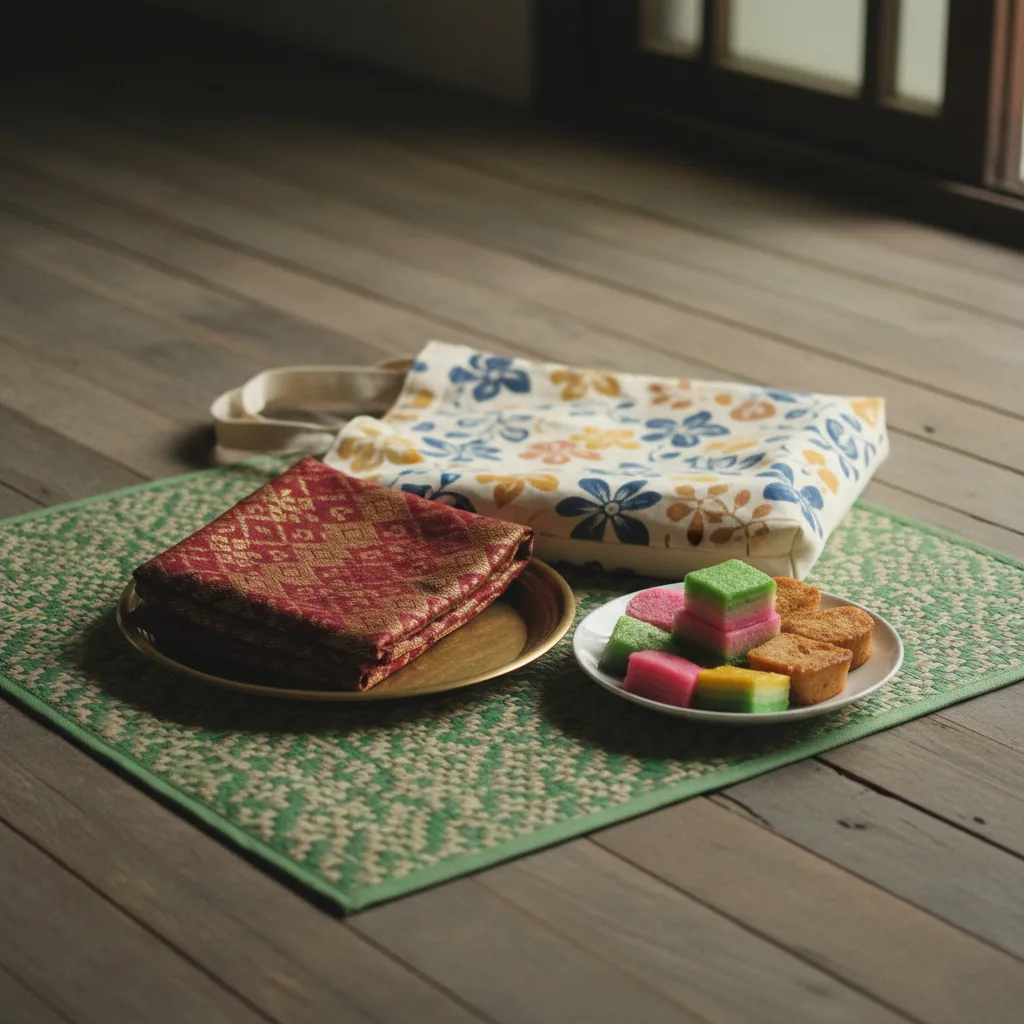
Start with the textile sellers near the market. Batik is the easiest entry point, with hand-drawn and stamped designs in deep blues, browns and bright tropical colours. Songket is the showpiece, woven with gold or silver thread and traditionally worn for weddings and special occasions. Ask a seller to show you the difference between the two and how to tell hand work from machine printing.
A length of batik makes a versatile purchase. It can become a scarf, a table runner, a wall hanging or the cover of a cushion. Songket is precious, and a small piece framed or used as a runner on a sideboard can bring a whole room to life. Feel the weight of the cloth and look closely at the edges before you decide.
If you would like a garment made, the tailors in this area are used to working with these fabrics. Bring a shirt or dress that fits you well as a guide, and ask how long the work will take.
Round Two: Woven, Carved and Polished Things
Beyond cloth, look for woven pandan and mengkuang mats and baskets, carved wooden trays and brass or copper serving pieces. These were once everyday household items and now make striking decor in a modern flat. A woven mat on a balcony or a brass tray on a coffee table carries a sense of place that mass-produced decor rarely matches.
Some sellers also carry small items made for prayer and festive tables, such as decorative covers and serving sets. Treat these with care, ask before handling and think about whether an item is appropriate as decoration in your own home.
Round Three: Young Brands Reworking Old Patterns
Walk east along the main road and into the side lanes, where restored shophouses hold a growing number of design studios, concept stores and cafes. Here you will find young Singaporean brands turning batik motifs into minimal tote bags, using songket offcuts for jewellery, or printing old kampung scenes onto postcards and enamel mugs. Many founders grew up in the area and are passionate about keeping the culture visible.
Talk with them about why they started. Their stories often link back to a grandmother's sewing box or a family textile shop, and knowing that history makes a simple tote feel like a meaningful object rather than another bag.
Pair one old piece with one new one. A length of hand-drawn batik from the market and a modern pouch printed with a similar motif tell the same story from two generations. Put them side by side at home and you have a small display of how Singapore's craft culture keeps moving forward.
A Kueh Stop Along the Way
No walk through Geylang Serai is complete without a taste of Malay kueh, the small, colourful cakes made from rice flour, coconut, pandan and palm sugar. Look for layered kueh lapis, green ondeh-ondeh that burst with palm sugar and soft kuih seri muka. Buy a small box to share as you walk, or take one home as a gift that matches the crafts in your bag.
The market's food stalls also make a good lunch break. Sit down, cool off with a glass of iced bandung or teh tarik and lay out what you have bought so far.
Who This Walk Suits and an Honest Skip
This crawl suits culture lovers, people furnishing a home with pieces that carry a story, and visitors who want to see a side of Singapore beyond the main tourist streets. It also suits anyone preparing for a Malay wedding or festive gathering who wants advice from people who know the traditions well.
Shoppers looking for international designer labels will be happier in Orchard. During major festive seasons the bazaar crowds can be intense, so travellers who prefer calm browsing should pick a quieter week.
Ask the stallholder which kueh is freshest that day. They will often point you to a favourite and explain where the recipe comes from, adding one more story to the walk.
Heat, Dress and Getting There
Paya Lebar MRT station is a short walk from the market, and Eunos is close too. Wear light, modest clothing that covers shoulders and knees, which is comfortable in the heat and respectful in a community area with mosques nearby. Carry water and an umbrella, as afternoon rain is common, and use the covered walkways and the market itself for shelter when the sky opens.
Keep Discovering With the Karpo APP
If one craft catches your eye, whether batik painting, weaving or traditional embroidery, ask the Karpo APP for nearby workshops, studios and shops in Singapore where you can learn more or find similar pieces. It can help you plan a second visit around the craft you love most. Geylang shows that heritage does not belong behind glass, because here it is still being worn, woven and reimagined every day.
Leave a little space in the day for the side streets of Geylang itself, where old shophouses hold family businesses, temples and clan associations alongside newer cafes. A slow wander after the shopping helps you understand how many communities have shaped this neighbourhood over the years. Keep your purchases light enough to carry, or ask a shop to wrap larger pieces so they survive the ride home.
Ask Karpo for more information.
Keep reading
- Chinatown Batik Canting Pen Picker: Fine Spouts for Silk
 Tiong Bahru Batik Canting Pen Picker: Handles and Bowls
 Katong Batik Canting Pen Picker: Wide Spouts for Wave Fills