 Chinatown Batik Canting Pen Picker: Fine Spouts for Silk
Hidden Gems & Odd Finds
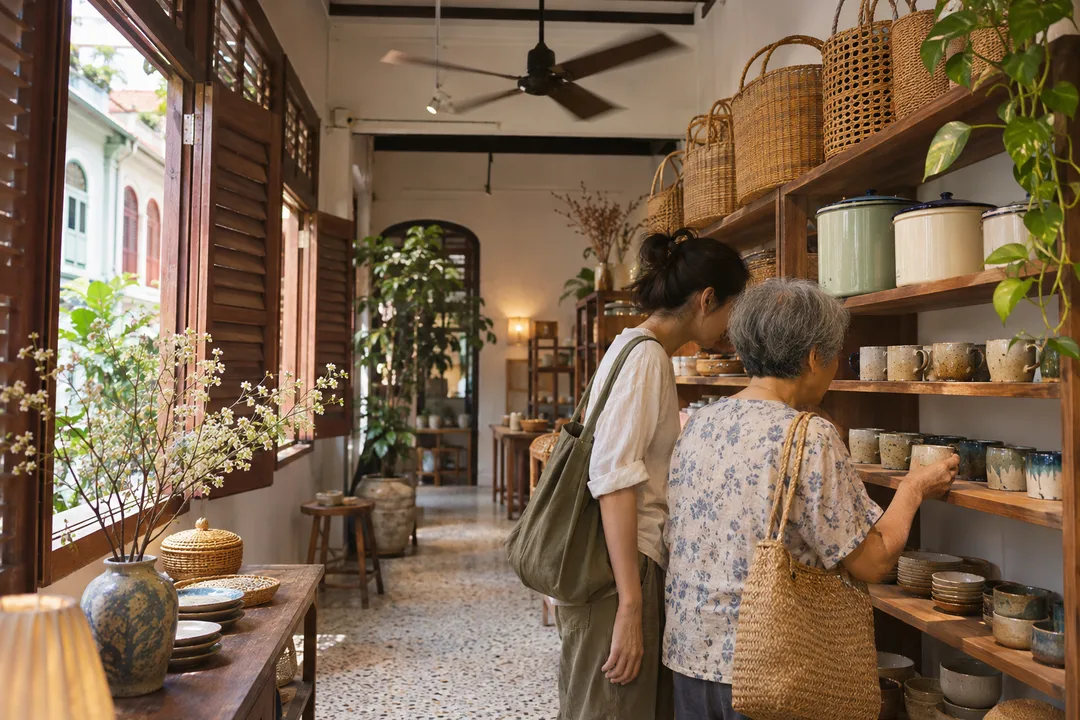
Chinatown Concept Store Shopping Crawl With a Grandparent
Shop Chinatown's concept stores with a grandparent who remembers the old trade streets, and turn each new design find into a story you both bring home today.
Chinatown is one of the few places in Singapore where two generations can shop side by side and both feel at home. Your grandparent may remember the streets when they were full of clog makers, letter writers, medicine halls and tailors. You may know them for small design studios, ceramic shelves and shophouse stores that mix old crafts with new ideas. A concept store crawl here works best when you slow down and let those memories guide the route. This planner shows how to shape a gentle walk, choose stops that suit an older pace, and come home with objects that mean something to both of you.
Why Chinatown Suits a Two-Generation Crawl
Most shopping districts are built for speed. Chinatown is built for wandering. The streets are short, the five-foot ways give shade, and almost every block has somewhere to rest, whether that is a coffee shop, a temple courtyard or a bench under a tree. For an older walker, that rhythm matters more than any single store.
There is also the matter of memory. Many grandparents in Singapore have a personal connection to these streets, even if they grew up elsewhere on the island. Perhaps they came here for festival shopping as children, bought their first watch on one of the trade streets, or ate at a stall that has long since moved into a hawker centre. When you walk with them, the concept stores stop being just pretty rooms. They become a way to compare then and now.
The newer shops in Chinatown often lean into that history themselves. You will see enamel tins, hand-painted porcelain, rattan baskets and printed textiles that echo the things your grandparent used at home. That makes it easy to start conversations. A simple question like whether they had a basket like this one can lead to twenty minutes of stories you have never heard before.
Plan the Walk Together in the Karpo APP
Before you go, sit down with your grandparent and open the Karpo APP together. Describe the day in plain words. For example: a slow afternoon in Chinatown with my grandmother, she walks well but needs a rest every half hour, we like ceramics, tea and things for the home, and we want to finish somewhere for a cold drink. Karpo suggests a short list of concept stores and nearby rest stops, with a line on why each one might suit the two of you.
It helps to add the details that only you know. Mention if stairs are difficult, if your grandparent prefers to speak Cantonese or Hokkien, or if they are curious about a particular craft. Karpo uses those preferences to shape the list and the order. It does not check real-time conditions or reserve anything for you, so treat the suggestions as a thoughtful starting point and adjust on the street.
Keep the list short. Three or four stores is plenty for an afternoon with an older companion. Ask Karpo for a gentle order that keeps the walking flat and the distances small, and save one or two backup ideas in case a stop is busier than you expected.

First Stop: Let Them Lead to a Memory
Start the walk with a place your grandparent remembers rather than a store you picked. It might be a temple they visited on festival days, a street where a relative once worked, or the corner where they used to buy snacks. Let them walk ahead and set the pace. You will learn more in those first ten minutes than any guide could tell you.
From there, find the closest concept store on your list. Ask your grandparent to look around first while you hang back. Watch what catches their eye. Often it will be the most humble object in the room, a tin cup, a woven fan or a plain wooden stool, because it looks like something they once had. Those are the objects worth asking about.
If they pick something up, ask them what it reminds them of. Write the answer down in your phone notes or a small notebook. By the end of the day you will have a handful of short stories tied to real objects, which is a better souvenir than anything you could buy.
Middle Stops: Crafts Old and New
The middle of the crawl is where you can mix things up. Choose one store focused on homeware or ceramics and another focused on paper goods, textiles or tea. Chinatown has long been a place for all of these trades, and the new shops often carry modern versions made by local designers or small studios from around the region.
Use each stop to compare. Hold a modern teacup next to the image of the cups your grandparent used at home. Look at a printed tote bag and ask whether they ever carried rattan or cloth bags to the market. These small comparisons keep the conversation going and help you both see how Singapore design has grown out of everyday life.
Plan a rest between the middle stops. A kopitiam, a quiet café in a shophouse, or a shaded bench near the temples on South Bridge Road all work well. Sit for long enough that your grandparent is truly rested, not just paused. An older walker who feels rushed will enjoy the afternoon less, no matter how good the shops are.
Choosing Gifts That Carry Both Generations
The best purchases on this crawl are the ones you both agree on. Instead of each person buying separately, try choosing one or two shared objects. A set of cups for family dinners, a small print of shophouse facades for a grandchild's first flat, or a tea tin that your grandparent can refill at home are all good choices.
Let your grandparent have the final say on at least one item. Many older people are reluctant to spend money on themselves, so frame it as something for the family or for the house. They are more likely to accept a gift that has a purpose, such as a new teapot for Lunar New Year visits.
Keep the bags light. Ask stores whether larger pieces can be wrapped well for travel, and carry the heavier items yourself. If something is fragile or bulky, it is fine to note it and come back another day. The aim is a happy afternoon, not a full car boot.
Finish With Food and a Story
End the walk somewhere your grandparent can sit down properly and eat or drink something they like. Chinatown has many choices, from hawker stalls with a long history to newer cafés in restored shophouses. Let them pick if they have a favourite. Many grandparents enjoy showing a younger relative the stall they have trusted for years.
While you eat, lay your purchases on the table and go through them one by one. Ask your grandparent to tell the story behind each object again, and take a photo of them holding it. Those photos become a small family archive, the kind that grandchildren and cousins will treasure long after the cups are chipped.
If you have time, add the stories to a shared family chat or print a few photos to tuck inside the gift wrapping. The objects you bought will then carry the memories with them wherever they end up.
Tips for a Comfortable Afternoon
Chinatown can be hot and busy, especially on weekends and in the weeks before Lunar New Year. Weekday afternoons tend to be calmer, and the late afternoon is usually more comfortable than midday. Bring water, a small umbrella for sun or rain, and a light cardigan for air-conditioned shops.
Wear shoes with good grip for your grandparent, since shophouse floors and five-foot ways can be uneven or slippery after rain. Plan the route so that you are never far from a taxi stand or MRT exit, and agree in advance on a simple signal for when they are tired and want to head home.
Finally, remember to let the day breathe. Some of the best moments will happen outside the shops, sitting under a tree, watching people pass, or standing in front of a temple while your grandparent explains a festival you only half understood as a child.
Turning One Walk Into a Family Tradition
Once you have done this crawl together, consider making it an annual ritual. Each year, open the Karpo APP and ask for one or two new concept stores in Chinatown to add to the route, while keeping your grandparent's favourite stops in place. Over time, the walk becomes a family map that mixes old memories with new discoveries.
You could also invite other relatives along. A cousin who loves design, a parent who remembers different stories, or a young child who is just starting to ask questions can all add something new. Each person sees the streets differently, and the objects you bring home will reflect that.
A concept store shopping crawl in Chinatown with a grandparent is not really about shopping at all. It is about walking slowly through a neighbourhood that holds part of your family history, and finding small, beautiful things that help you keep it.
Ask Karpo for more information.
Keep reading
- Chinatown Batik Canting Pen Picker: Fine Spouts for Silk
 Tiong Bahru Batik Canting Pen Picker: Handles and Bowls
 Katong Batik Canting Pen Picker: Wide Spouts for Wave Fills