 Chinatown Batik Canting Pen Picker: Fine Spouts for Silk
Hidden Gems & Odd Finds
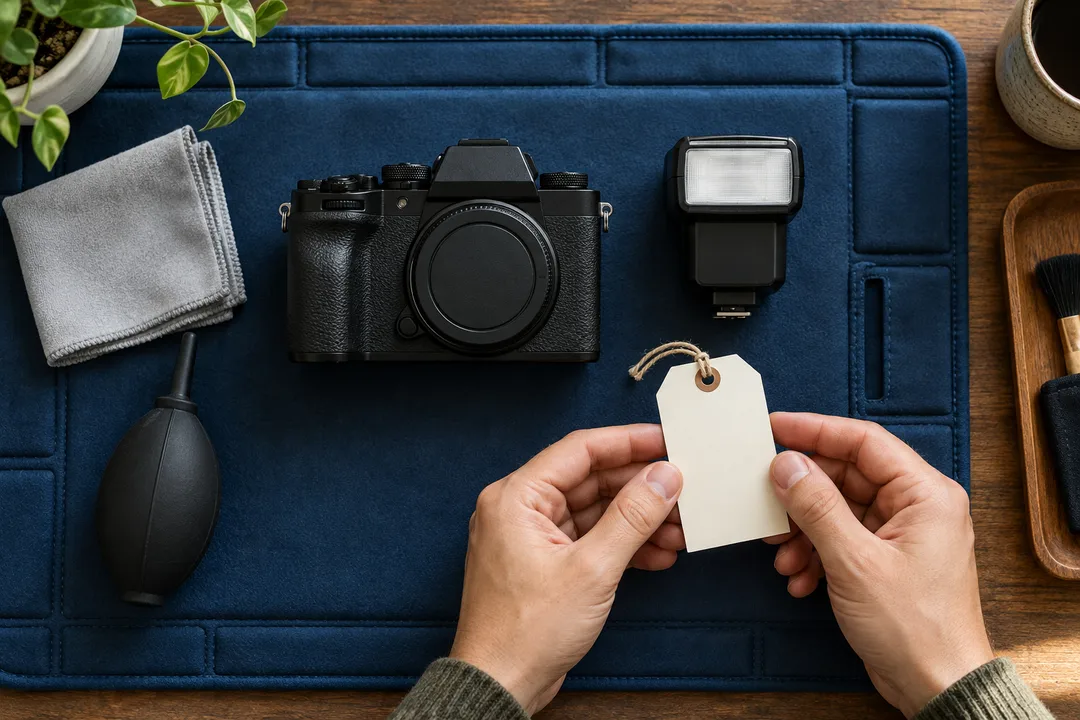
Tai Seng Camera Repair Shop: Nikon's 1–2 Year Checks
Nikon's Tai Seng service facility is listed in its October 2026 directory, while its Z6III manual recommends inspections every one to two years, with fees.
Nikon lists its Singapore service facility at 18 Tai Seng Street, #04-08, Singapore 539775 in an official directory dated October 2026. For owners looking for a camera repair shop, that fourth-floor unit is the relevant destination, rather than an arbitrary Nikon stockist. There is also a reason to think about servicing before a complete failure: Nikon's Z6III reference guide recommends an inspection every one to two years, and servicing every three to five years, with fees applying to those services.
Use the service address, including the floor
The building name in its address is also 18 Tai Seng, which makes the street number easy to remember, but does not replace the #04-08 suite. Keep the full address in the route you save. A retail counter with Nikon products and a manufacturer-listed service facility answer different needs when a camera has to be assessed or left behind.
The October 2026 date belongs to the official service directory itself. It is useful evidence that this is the manufacturer's listed local support route, rather than a stale address copied between shopping guides. The directory supplies no local opening timetable or appointment policy. This article therefore makes no weekend-access or walk-in-queue promise. Its practical value is the precise service contact and the manufacturer's own maintenance advice, without an invented price for the work an individual camera might need.
An inspection interval, not a warranty deadline
The one-to-two-year inspection recommendation comes from the Z6III manual's section on servicing the camera and accessories. The same paragraph recommends servicing once every three to five years, and more frequent attention for professional use. These are maintenance recommendations for that camera, not a statement that every Nikon model has an identical schedule. They are also not warranty periods. A working camera can reach an appropriate inspection point without having a manufacturing defect or any remaining warranty cover.
Nikon says that accessories regularly used with the camera, including lenses and optional flash units, should be included when the camera is inspected or serviced. That is a useful reason to think about the whole working kit before packing a body alone. A connection fault or a focus complaint can involve a combination of components. Make a short list of the items relevant to the problem rather than tipping an entire bag of unrelated equipment onto a service counter.
When sensor cleaning becomes a service question
The Z6III guide explains that dust can enter when lenses are changed or a body cap is removed, then adhere to the image sensor and affect photographs. Its Clean Image Sensor menu function vibrates the sensor to remove dust. The guide distinguishes that operation from manual cleaning, and directs owners to a Nikon-authorised service representative if the automatic cleaning fails to resolve the problem. That is a clear threshold for a technical enquiry rather than repeated, increasingly forceful cleaning attempts.
For the Z6III, the manual specifically recommends that manual sensor cleaning be performed only by an authorised service representative because the sensor is extremely delicate. It says dirt that cannot be removed with a blower can only be removed by authorised service personnel, and tells owners not to touch or wipe the sensor. Skip the improvised cotton-bud experiment. Show an original photograph with the recurring mark instead, and explain whether the camera's own cleaning function has already been used.
Bring evidence of the fault
A camera that fails intermittently can behave normally during a short demonstration. Record the circumstances while they are still fresh: the lens mounted, battery in use, error message and whether the problem occurred during still photography or video. Keep original files that illustrate an image defect. These are owner preparation steps, not an undocumented Nikon intake requirement. They make the service question narrower than a complaint that the camera sometimes behaves strangely, which leaves too much for the technician to reconstruct.
Keep your purchase evidence, equipment identifiers and any previous repair record together. That makes the camera's history available without claiming that a particular receipt guarantees free work. The service directory is not a warranty policy, and this article attaches no universal warranty entitlement to the Tai Seng address. If the job is paid, the useful decision is whether the proposed work addresses the fault and fits the value of the kit, rather than whether a generic online repair estimate looks reassuringly low.
Humidity matters between service visits
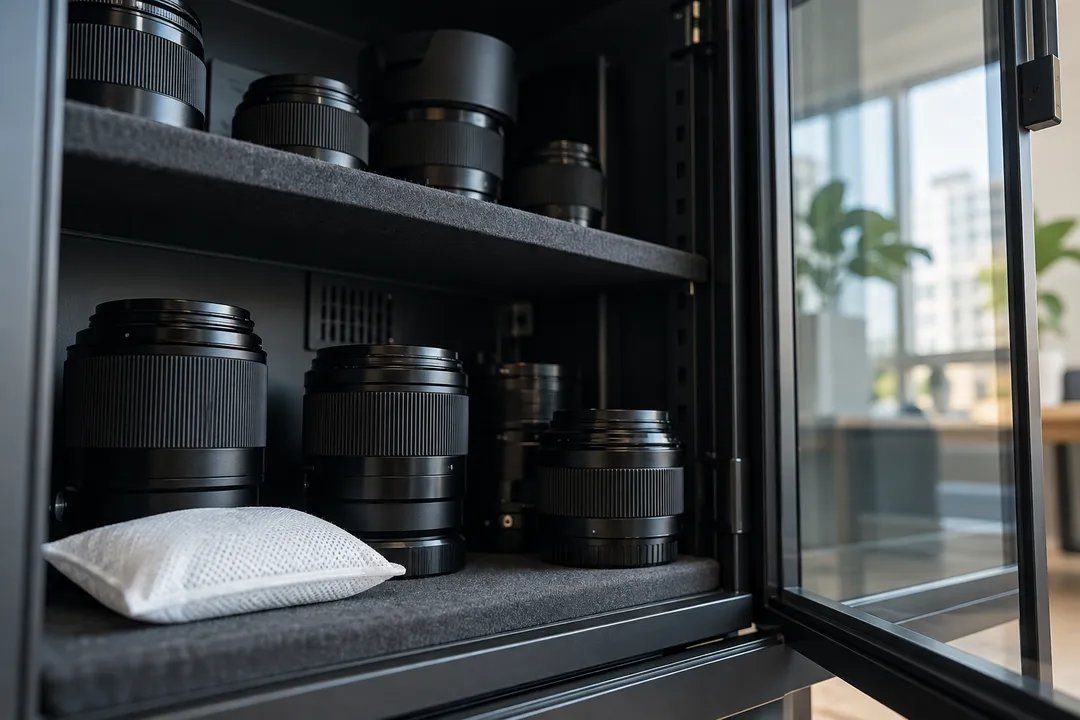
Nikon's Z6III long-term-storage instructions advise against poorly ventilated places and locations with humidity above 60%. The related care cautions recommend a dry, well-ventilated storage area to prevent mould or mildew. For a camera kept in Singapore, that turns storage into part of the maintenance plan rather than an afterthought. A repair does not change the environment to which the equipment returns. Choose a sensible storage arrangement for the camera and lenses rather than leaving them sealed in a damp bag.
The same manual advises removing the battery for an extended period of non-use and taking the camera out at least monthly, inserting the battery and releasing the shutter a few times. It also notes that desiccant gradually loses its moisture-absorbing capacity. These are model-specific instructions worth reading alongside the documentation for your own equipment. An unused camera is not automatically a preserved camera, particularly when it stays in the same bag long after a rainy photography trip.
A service visit belongs to a working-camera story
Nikon's corporate history presents the 1999 D1 as a turning point in professional digital photography. That history helps explain why a service network matters: cameras become parts of working systems, with lenses, flashes and familiar controls accumulated over years. It does not establish an opening year for the Tai Seng facility. The local address is grounded instead in the current service directory, while the maintenance discussion here is tied to a named contemporary camera manual.
A photographer who depends on one body for paid work should preserve a second usable option while repair decisions are being made. The published directory provides no completion guarantee or loan-camera arrangement. For a different brand in a mixed kit, the Canon Experience Hub is an official Canon service route; an independent camera-and-lens repair enquiry can go to P&G Photographic. Neither alternative changes Nikon's own support terms or proves compatibility with an unfamiliar item. Match the service destination to the equipment needing attention.
Keep the rest of the afternoon flexible
After the equipment discussion, the Tai Seng area has a different rhythm from the camera-shopping streets of the Civic District. Build a simple meal stop into the trip rather than treating a shopping excursion as a repair deadline. If the body stays with the service facility, leave it out of the afternoon's photography plans. The Karpo APP can help organise nearby food and another city stop, while the technical decision remains attached to the actual assessment rather than an assumed collection time.
Practical Notes
Save the full #04-08 address, keep a record of the camera and relevant accessories, and bring a concise description of the fault. The Z6III inspection and servicing intervals are recommendations with fees, not a free-maintenance offer. No paid repair amount, local opening schedule or same-day promise is asserted here. The strongest reason to use this route is straightforward: Nikon itself lists the Tai Seng facility in its October 2026 service network, and its own care instructions explain when an owner should stop troubleshooting and involve authorised service personnel.
Ask Karpo for more information.
Keep reading
- Chinatown Batik Canting Pen Picker: Fine Spouts for Silk
 Tiong Bahru Batik Canting Pen Picker: Handles and Bowls
 Katong Batik Canting Pen Picker: Wide Spouts for Wave Fills