 Chinatown Batik Canting Pen Picker: Fine Spouts for Silk
Hidden Gems & Odd Finds
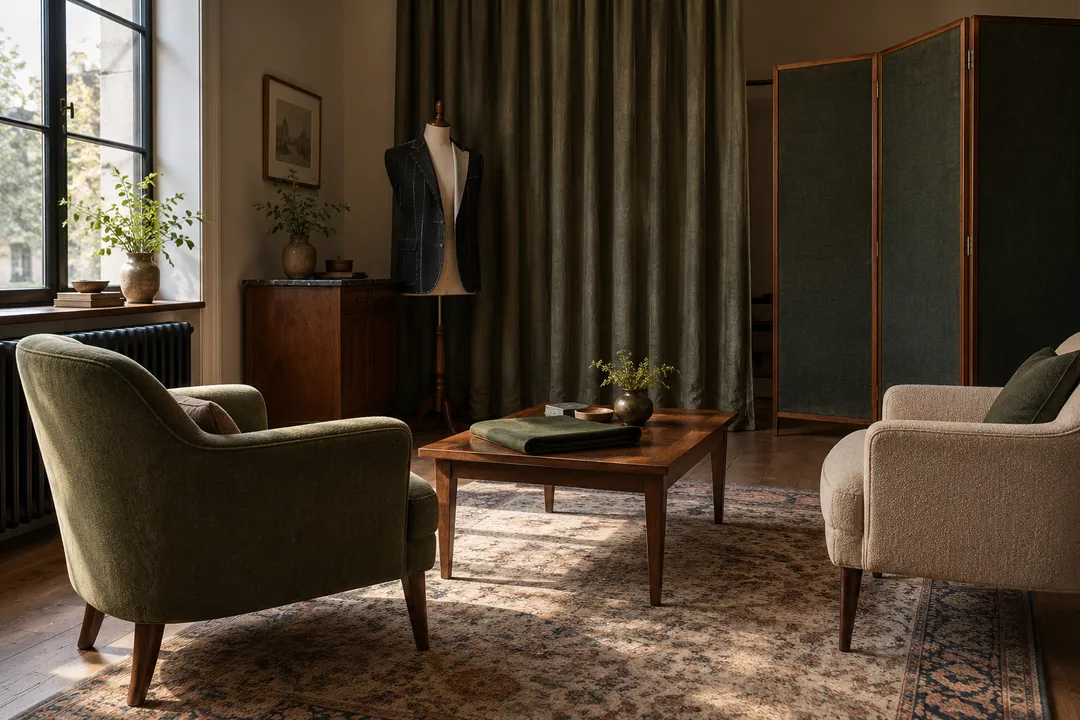
Singapore Bespoke Tailor Atelier: A Calm First Fitting
Plan a calm Singapore bespoke tailor atelier consultation with a short agenda, clear touch boundaries, and a written brief for your first fitting.
A calm first fitting starts with a short agenda and permission to pause. If a busy room, unfamiliar measuring process, or many choices at once makes a Singapore bespoke tailor atelier visit difficult, put that need into your consultation brief. Start a Karpo APP conversation with what helps you feel comfortable, then turn the result into a message you can send to an actual business. The appointment itself needs the atelier's agreement.
Decide what calm means for you
Quiet is not one universal arrangement. You might want fewer people in the room, a seated conversation before measurements, more time to process questions, or an explanation before anyone touches a garment you are wearing. Describe the specific accommodation that would help. A vague request for a relaxing experience leaves the staff to guess. A concrete request gives them something they can answer and gives you a clear basis for choosing an appointment.
Separate essential needs from nice extras. If step-free entry is necessary, that belongs in the first enquiry. If you would simply enjoy a less crowded consultation, describe it as a preference. Ask the business whether it can provide the setting you need at the proposed appointment. Do not assume the earliest slot, a weekday, or a smaller-looking shop will automatically be quieter. Only the atelier can describe its own staffing, room, and appointment arrangements.
Draft an enquiry that is easy to answer
Try asking for writing help in these terms: “Help me draft an enquiry to a Singapore bespoke tailor atelier. I would like to discuss one jacket before measurements, prefer a quiet setting, and need each step explained.” Add the date options you can actually attend. A useful draft should ask about the arrangement directly. It should not demand a guarantee of silence or imply that a booking has already been accepted.
Read the message yourself before sending it through the business's stated contact method. Remove personal details that do not help staff prepare. There is usually more practical value in describing the support you need than in sharing an extensive personal history with an unfamiliar shop. Keep the response in your own appointment notes. A helpful planning conversation is not a promise that the business has received, understood, or agreed to the request.
Reduce the number of decisions
Choose one garment to discuss first. A jacket consultation can already involve purpose, cloth, shape, pockets, lining, buttons, and fittings. You do not need a complete wardrobe plan at the same time. Begin with the occasion and the main comfort requirement. Ask which decisions are necessary today and which can wait until the maker has explained the process. A smaller agenda makes it easier to understand what you are agreeing to.
Limit reference pictures to a handful that you can explain. “I like the soft shoulder here” is useful. A large folder of contradictory silhouettes is harder to discuss, particularly when every picture is treated as equally important. You can also bring a familiar garment and identify one thing that feels good about it. That provides a physical reference without expecting the tailor to reproduce an entire photograph or interpret an unspoken preference.
Make measurement boundaries ordinary conversation
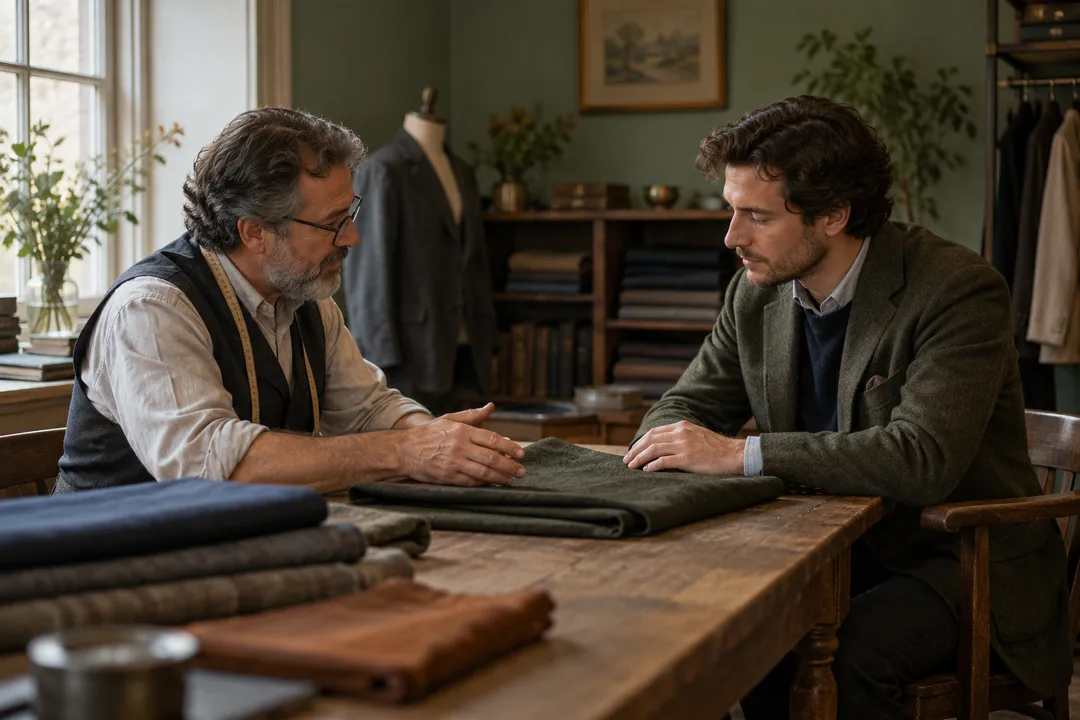
Before the measuring process starts, ask the tailor to describe what will happen. State any boundary about touch, changing, or the presence of another person in plain terms. You can ask to pause if you need an explanation. These requests belong in the fitting conversation. They do not require a dramatic justification, and they should not be left until you are already uncomfortable in the middle of an unfamiliar step.
Ask how the business handles a companion if you would like to bring one. Space, privacy, and the type of appointment can affect the answer, so include the request in your enquiry rather than arriving with an unexpected group. A companion can help remember questions, but your own preferences should remain central. Decide beforehand whether you want that person to take notes, offer an opinion, or simply be present without leading the discussion.
Use specific words for discomfort
During a fitting, distinguish pressure, restriction, texture, temperature, and appearance. “The waistband feels tight when I sit” gives the maker a movement to observe. “I do not like myself in this” may describe a different concern that needs more conversation. Neither response should be dismissed, but the next step differs. Take time to identify whether you want a fit adjustment, a styling discussion, or a pause before making any decision.
Ask one question at a time and repeat the answer in your own words if necessary. Technical vocabulary can arrive quickly during a consultation, especially when several adjustments are being proposed together. A short recap can reveal whether you understood the change correctly. You are not required to master tailoring terminology during the appointment. It is enough to understand what is being changed, what that change should achieve, and what remains undecided.
Build in a point where you can stop
Decide what a successful first visit looks like before you enter. It might be understanding the atelier's process and leaving with a written proposal. It does not have to mean commissioning immediately. If you feel overloaded by cloth options or details, ask for a recap of the discussion. A clear stopping point prevents an otherwise thoughtful consultation from becoming a sequence of rushed decisions made simply because the appointment is ending.
If the business cannot provide an essential accommodation, use that information to change the plan. You can look for another atelier or ask whether an initial written exchange is possible. Do not solve an access problem by pretending it will not matter on the day. The useful outcome of an enquiry can be a decision not to attend that particular appointment. That saves both you and the business an avoidable mismatch.
Keep the rest of the day gentle
Once an appointment is agreed, plan the journey using its actual address and your own transport needs. Leave room between the fitting and any fixed commitment afterwards. In a city planning conversation, describe the distance you can comfortably walk and whether you want a seated pause. Those details are more helpful than an ambitious itinerary with several unrelated stops. The tailoring visit is the purpose of this outing, so let the rest remain optional.
Afterwards, write only the details you will need next time: the garment discussed, the option you preferred, a question still open, and any arrangement the business actually supplied. Ask Karpo APP to help shorten your own notes if they feel unwieldy. Keep the original business message for dates, terms, and quotations. A readable recap should make the next conversation calmer without silently turning an assumption into an agreement.
Practical Notes for your consultation brief
Prepare a message containing the garment, the purpose, one or two essential accommodations, and the appointment options you can attend. Bring any agreed reference item and the clothes needed for the fitting. Ask permission before photographing the room or a garment in progress. You can decline an optional photograph or explain that you prefer written notes. End with the next step clearly stated by both sides, then record it in your own calendar rather than assuming a planning tool completed the booking.
Ask Karpo for more information.
Keep reading
- Chinatown Batik Canting Pen Picker: Fine Spouts for Silk
 Tiong Bahru Batik Canting Pen Picker: Handles and Bowls
 Katong Batik Canting Pen Picker: Wide Spouts for Wave Fills