 Chinatown Batik Canting Pen Picker: Fine Spouts for Silk
Hidden Gems & Odd Finds
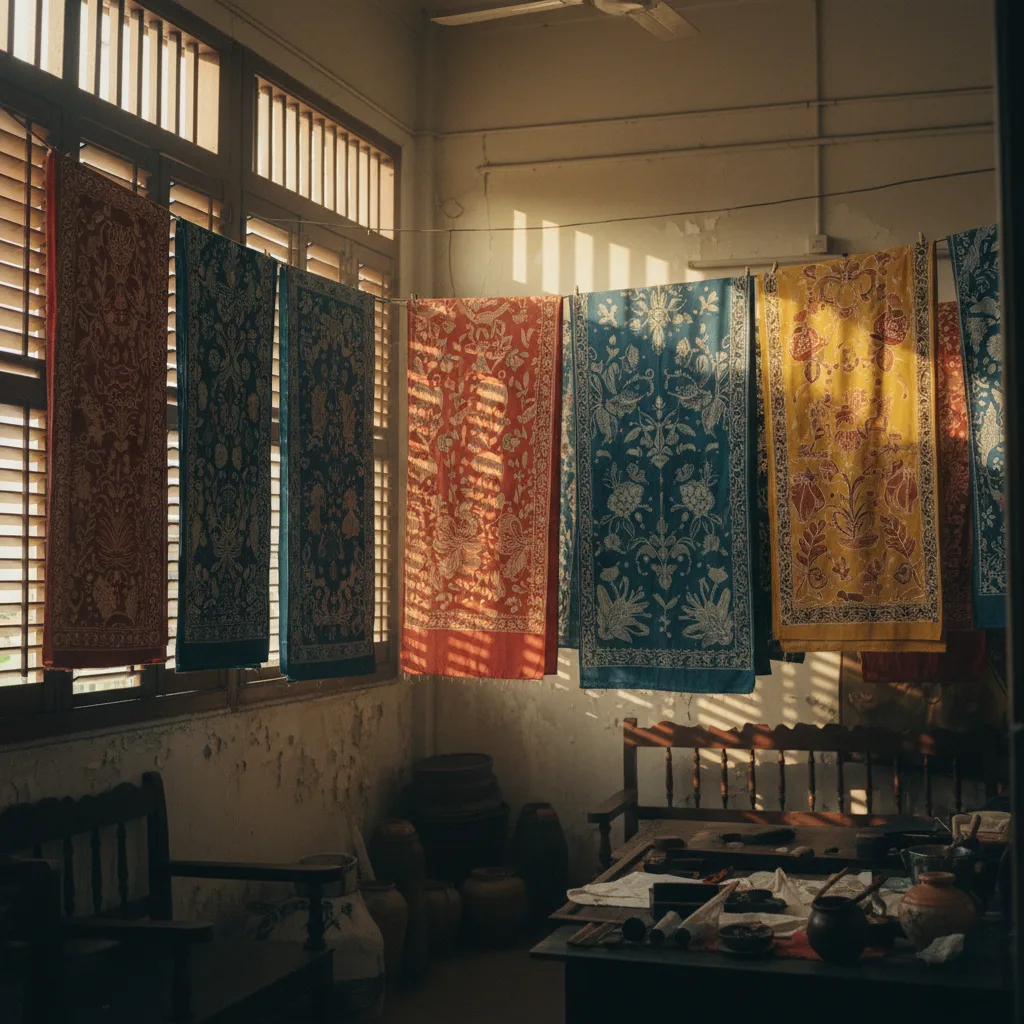
Kampong Glam Batik Textile Craft Walk: Silk Sarong Guide
Stroll Kampong Glam shophouses on a batik textile craft walk. Discover wax-resist hand-dyed cotton lengths and historic Peranakan floral motifs.
Walking beneath the terracotta eaves of Kampong Glam offers an immediate immersion into Singapore's enduring textile heritage. The neighborhood retains a distinct maritime trade atmosphere where covered five-foot ways shelter stacks of woven cotton and shimmering silk lengths. Taking a dedicated batik textile craft walk along these historic corridors allows you to appreciate the deliberate, unhurried pace of traditional wax-resist artistry. Instead of treating fabric shopping as a brisk commercial chore, wandering here encourages you to run your fingers over textured weave surfaces and observe how natural daylight reveals subtle dye gradations. The gentle scent of warmed beeswax and herbal mordants lingers in breezy archways, setting a contemplative mood for anyone drawn to Southeast Asian artisan craftsmanship.
The Sultanate Arcades and Wax-Resist Lineage
The historic urban grid of Kampong Glam developed around royal sultanate residences and portside trading quarters, drawing skilled weavers and dyers from across the Malay Archipelago. Generations of textile merchants established their trading posts within two-story plaster shophouses, displaying patterned fabrics that arrived on merchant schooners from Java, Sumatra, and the coastal trading towns of the peninsula. Today, these shaded arcades preserve that rich mercantile memory, providing an authentic backdrop where historic craft techniques continue to be honored and shared. As you amble through the district, look upward to observe decorative timber fretwork and shuttered upper windows that once housed dye workshops and textile storage lofts.
Traditional batik relies on an ingenious resist principle where molten beeswax, damar resin, and paraffin shield specific portions of cloth against cool dye baths. This labor-intensive discipline requires deep familiarity with fabric tension, dye temperature, and wax consistency. In Kampong Glam, textile enthusiasts can observe diverse stylistic lineages ranging from coastal floral interpretations with bright multi-colored backgrounds to formal inland patterns characterized by understated geometric restraint. Taking the time to examine these stylistic differences helps you understand how regional migration and cross-cultural trade shaped the visual vocabulary of Southeast Asian decorative arts.
Examining Canting Pens and Melted Beeswax Craftsmanship
At the center of authentic hand-drawn batik, known traditionally as batik tulis, sits the humble canting pen. This traditional instrument features a tiny hand-beaten copper reservoir mounted on a smoothed bamboo or reed handle, tapering into a slender downward spout. Artisans heat blended wax in shallow cast pans over low embers, scooping small quantities into the copper reservoir before blowing gently across the spout to regulate the fluid wax flow. Watching or studying this drawing method reveals the extraordinary neuromuscular coordination required to trace continuous freehand contours across taut white cotton without spilling or blistering the fabric.
When you inspect a finished hand-drawn length in a gallery, look closely at the wax line weight across both sides of the cloth. True hand-drawn batik displays identical clarity on the reverse side because the molten wax must thoroughly saturate the cotton weave to resist dye seepage. Small irregularities, delicate hand tremors, and subtle variations in line thickness are not imperfections; rather, they serve as the authentic signature of human craftsmanship. These organic nuances distinguish museum-grade hand-drawn pieces from mass-market screen reproductions, making each hand-drawn panel a completely unique work of wearable art.

Shophouse Verandahs and Textile Color Variations
Natural dyes form the historical foundation of regional batik traditions, yielding nuanced earthy palettes that age gracefully over decades. Master dyers historically derived rich indigo blues from fermented leaves of Indigofera tinctoria, warm ochre tones from bark extracts, and fiery russet shades from natural wood shavings. Wandering along the covered shophouse walkways allows you to examine how these botanical pigments respond to shifting natural light throughout the day. Unlike synthetic chemical pigments that remain uniform and flat, vegetable-based dyes possess depth, displaying subtle undertones that shift from midnight charcoal to translucent slate depending on the weave texture.
Beyond solid colors, many artisanal pieces showcase the celebrated cracked-wax marbling effect known locally as remekan. After applying wax to the fabric, artisans deliberately cool and gently crumple the stiffened cloth before immersing it in a secondary dye vat. The colored bath penetrates hairline fissures in the wax resist, producing delicate spiderweb veins that dance across floral medallions and borders. Appreciating this intentional cracking technique allows you to view batik not merely as patterned yardage, but as a dynamic collaboration between deliberate design and organic textural surprise.
Choosing Fabric Weights for Tropical Daily Wear
Selecting batik yardage or finished clothing for warm tropical weather requires paying close attention to fabric substrate and yarn count. Traditional cotton varieties like primissima and prima offer high thread counts woven from long-staple fibers, delivering a remarkably silky handfeel that stays breathable during humid afternoons. If you seek lightweight drapes, sheer cotton voile or habotai silk panels provide elegant movement and dry quickly when catching ocean breezes. Heavier cambric cottons, by contrast, possess the structural body necessary for tailored collared shirts, structured wrap skirts, or decorative table throws.
To determine fabric quality while browsing, lift the unfolded cloth toward ambient window light to examine weave uniformity and thread density. Run the palm of your hand across the surface to confirm the cloth feels smooth and free of stiff synthetic sizing chemicals. Quality cotton softens significantly after initial gentle washings, developing a comfortable, drapeable character that molds effortlessly to the body. Investing in thoughtfully produced natural fiber lengths ensures your pieces will endure regular wear while maintaining their vibrant colors and structural integrity.
Using Karpo for Nearby Craft Ideas
When you want another textile stop after exploring Kampong Glam, ask the Karpo APP for nearby craft recommendations that match your interests, such as hand-drawn cloth, natural dye, or small woven gifts. Review the suggestions, then decide which places fit your energy and curiosity. Your own choices keep the afternoon open: you can linger over a border motif, pause beneath a five-foot way, or leave a suggestion for another day.
The same approach works for a break between fabric viewings. Ask Karpo for nearby tea rooms, galleries, or quiet courtyards, then choose one yourself and set the pace. The app is a starting point for local ideas, while the walk remains yours to shape around shade, weather, and the textile details that catch your eye.
Ask Karpo for more information.
Keep reading
- Chinatown Batik Canting Pen Picker: Fine Spouts for Silk
 Tiong Bahru Batik Canting Pen Picker: Handles and Bowls
 Katong Batik Canting Pen Picker: Wide Spouts for Wave Fills