 Chinatown Batik Canting Pen Picker: Fine Spouts for Silk
Hidden Gems & Odd Finds
Batik Canting Pen Picker for Kampong Glam: First Line Spouts
A geometric scarf project in Kampong Glam becomes a calm lesson in spout width, wax flow, and choosing one canting that matches your first outline.
A first batik scarf rarely fails because of the dye; it fails at the moment hot wax leaves the spout faster than your hand can steer it. For a batik canting pen picker in Kampong Glam, begin with one decision: which spout width suits the single outline you want to draw first. Everything else, from reservoir size to handle length, follows from that line. The neighborhood's textile-lined streets, mosque domes, and patterned shopfronts make a fitting setting for slowing down and choosing deliberately.
Sketch the scarf before you look at any copper
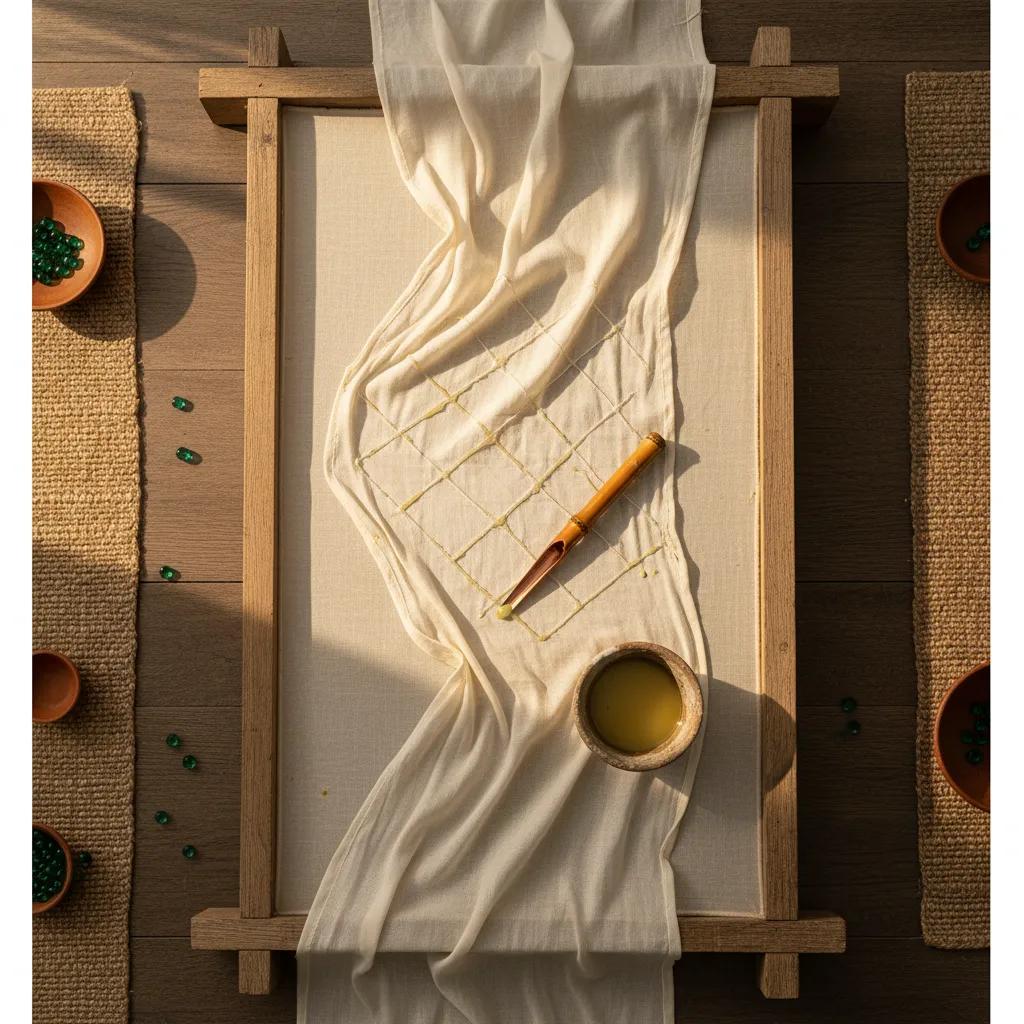
Draw the scarf as a long rectangle on scrap paper and give it a single repeating motif: a diamond lattice, a stepped border, or a row of interlocking hooks drawn from the woven geometry you might notice in the area. Mark where the outline must be continuous and where small breaks would be acceptable. A continuous lattice demands steady flow from a medium spout, while a broken border forgives a finer one. Knowing which you need prevents you from collecting a tray of tools you will not use on this piece.
Then decide how thick the resist line should look once the dye has settled around it. A thin line reads as delicate drawing; a bolder line reads as structure. Beginners often assume the finest spout signals skill, but a hairline spout on cotton voile can starve the fibre of wax, letting dye creep under the resist. A slightly wider opening lays down enough wax to penetrate both sides of the fabric, which matters more on a scarf because both faces will be seen.
Read the parts of a canting like a small instrument
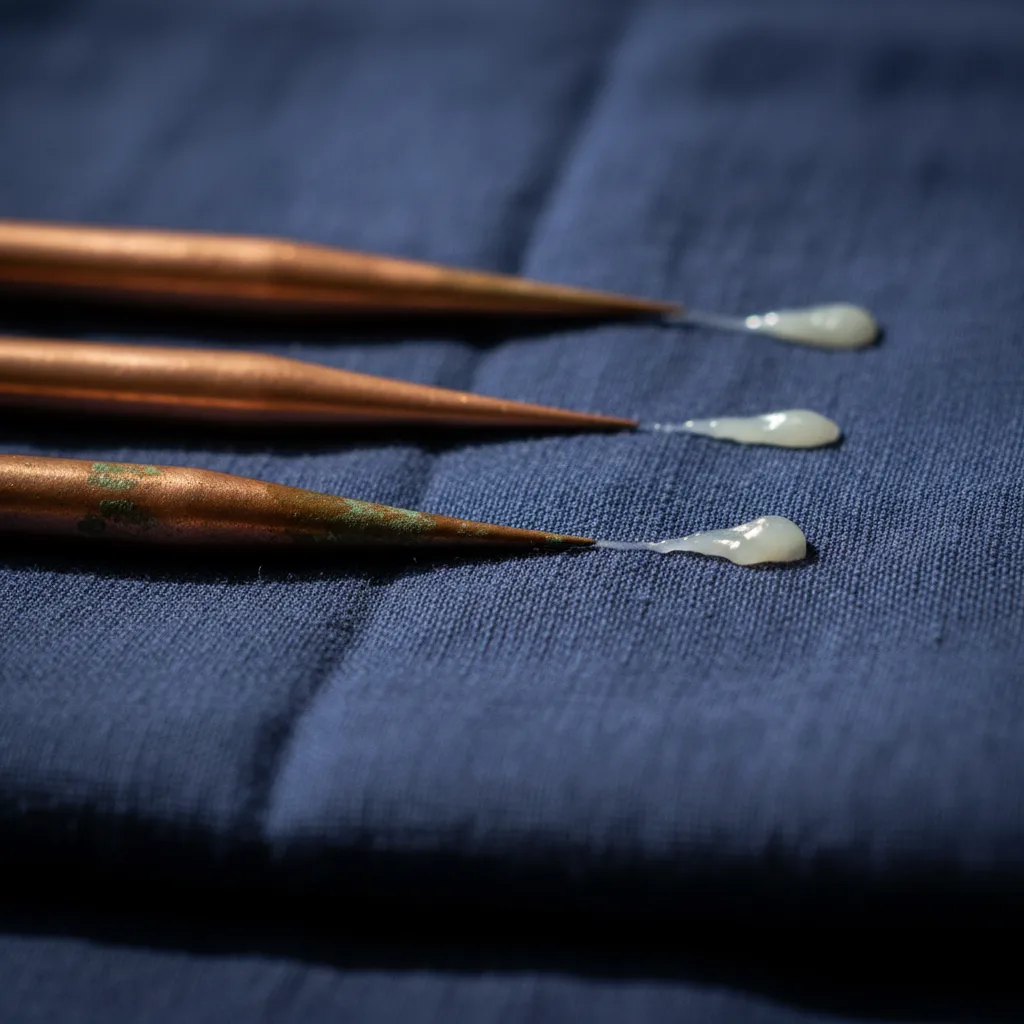
Every canting has three parts worth examining separately. The reservoir, usually a small copper or brass bowl, holds the molten wax and sets how long you can draw before refilling. The spout, a narrow tube soldered to the bowl, controls the line. The handle, often bamboo or turned wood, keeps your fingers away from the heat and sets your balance. When you hold one in a shop or a workshop setting, look at all three before deciding that the spout alone is right.
Examine the joint where spout meets bowl. A smooth, even seam lets wax flow without catching, and a spout that sits at a gentle downward angle encourages a natural writing posture. Look straight down the opening if it is clean and cool; a perfectly round bore gives a consistent line, while a slightly flattened one may produce a ribbon that changes width as you turn corners. That ribbon can be charming in a loose design, but it fights a precise lattice.
Match wax flow to the speed of your hand
Wax flow is the hidden variable in canting choice. A wide spout empties the reservoir quickly, so you must move briskly or blobs will pool at the start of each stroke. A fine spout drips slowly, which gives a hesitant beginner time to think but can clog as the wax cools. Notice your natural drawing speed by tracing your scarf motif on paper with a pencil, timing nothing, simply observing whether you move in long sweeps or short, careful steps.
If you move in long sweeps, a medium spout paired with a generous bowl will keep pace without constant refills. If you prefer short, careful steps, a finer spout and a smaller bowl keep the wax hotter for longer because there is less volume cooling at once. Neither approach is superior. The aim is to pick a canting that agrees with the rhythm you already have, rather than forcing a new rhythm onto a project you want to enjoy finishing.
Treat wax recipe and fabric as part of the decision
The same canting behaves differently with different wax. A blend heavy in paraffin flows thinly and cracks readily, producing the fine veining many people associate with batik. A blend richer in beeswax or resin stays supple, holds a clean edge, and resists cracking. For a geometric scarf where you want crisp lattice lines, a supple blend through a medium spout is a forgiving starting point. Ask about the wax used in any class or kit you consider, since it changes how the spout feels.
Fabric weight matters too. Fine cotton or rayon absorbs wax quickly, so the line spreads slightly beyond the spout's width. Heavier cotton holds the line closer to its drawn size but needs more wax to penetrate fully. Bring a small offcut of the fabric you intend to use when you browse, or at least note its weight, so you can picture how a given spout will translate onto it. That small habit replaces guesswork with a grounded comparison.
A browsing outing with one clear question
Kampong Glam rewards slow wandering. Its streets mix heritage shophouses, carpet and fabric displays, cafés, and small design studios, and the architecture itself, from carved timber details to arched windows, offers motifs worth sketching. Go with your scarf drawing and one question: which spout width lays my outline cleanly on this fabric? Carry that question from window to window instead of trying to absorb everything. A focused visit feels richer than a hurried attempt to see every corner.
If you would like options before heading out, Karpo APP can suggest nearby craft, textile, and art spots around Kampong Glam. You choose which suggestions interest you, the order you visit them, and how you travel between them. Treat any suggestion as a starting point for your own exploration, and leave room for the small detours that happen when a patterned doorway or a quiet lane catches your eye.
A short checklist before choosing
Before deciding, run through four checks. First, does the spout width suit the thickness of your main outline? Second, does the reservoir hold enough wax for one complete motif at your drawing speed? Third, does the handle feel balanced and comfortably cool in a relaxed grip? Fourth, does the wax blend you plan to use suit crisp lines rather than heavy crackle? If a canting passes all four for this scarf, it is a sensible first choice, even if it looks plain beside more ornate pieces.
Resist the urge to leave with a full set of every spout size. One well-matched canting for outlines, perhaps followed later by a wider one for filling, teaches more than a drawer of tools used once. Finish the scarf, study where the wax held and where dye crept through, and let that evidence guide your second purchase. Batik is a craft of patient iteration, and the right first tool is simply the one that helps you complete a first honest piece.
Ask Karpo for more information.
Keep reading
- Chinatown Batik Canting Pen Picker: Fine Spouts for Silk
 Tiong Bahru Batik Canting Pen Picker: Handles and Bowls
 Katong Batik Canting Pen Picker: Wide Spouts for Wave Fills