 Chinatown Batik Canting Pen Picker: Fine Spouts for Silk
Hidden Gems & Odd Finds
Telok Ayer Artisan Woodblock Print Studio: Heritage Walk
Trace historic relief print culture along Singapore's Telok Ayer corridor. Connect traditional ink workshops with peaceful temple walks and garden stops.
Once marking the original maritime shoreline where early immigrants and seafaring traders first stepped ashore in colonial Singapore, Telok Ayer has transformed into a vibrant cultural corridor bridging rich spiritual heritage with contemporary creative design. Lined with historic national monuments, quiet pedestrian lanes, and beautifully restored shophouses, this atmospheric precinct provides an evocative backdrop for discovering tactile graphic arts. Searching for an artisan woodblock print studio in Singapore along the Telok Ayer historic district connects creative travelers directly with centuries of visual storytelling and manual relief craftsmanship. Within quiet second-floor ateliers overlooking tiled temple roofs and shaded five-foot walkways, independent printmakers teach the deliberate arts of wood carving, ink grinding, and hand-burnished paper impression in an inspiring heritage setting.
Shoreline Heritage And The Origins Of Visual Narrative
The layered cultural history of Telok Ayer infuses local print workshops with profound contextual meaning. Before extensive land reclamation shifted Singapore's coastline eastward, the waves of the Singapore Straits literally lapped against the stone steps of Telok Ayer Street. Early merchant clans, artisan guilds, and immigrant communities established temples and printing presses here to produce paper amulets, maritime charts, commercial ledger headings, and festival banners. Today's artisan woodblock printmakers honor this heritage by drawing inspiration from classical Southeast Asian motifs, maritime trade iconography, and the intricate ceramic dragon crests adorning nearby historic roofs.
Participating in a relief print workshop in Telok Ayer allows visitors to experience artmaking as an unhurried cultural dialogue. Rather than rushing toward a decorative end product, instructors emphasize the sensory appreciation of material transformations. Working on seasoned timber blocks, students observe how the grain direction influences the path of the chisel, how subtle variations in wood density require nuanced hand adjustments, and how deliberate carvers plan positive silhouettes against empty relief ground. This patient, deliberate discipline offers a deeply grounding respite from the digital acceleration of modern life.
Mineral Inks, Baren Burnishing, And Handcrafted Sheets
A hands-on woodblock printing experience in this historic district revolves around the harmonious marriage of natural pigment, water, and plant fiber. Printmakers in Telok Ayer champion traditional water-based relief methods, grinding natural mineral pigments and blending them with refined rice flour paste to produce luminous, velvet-matte inks. When applied to the carved wooden plate using dense bristle brushes, the ink remains open and workable, allowing subtle gradations of tone, known traditionally as bokashi, where colors melt softly into un-inked wood grain.
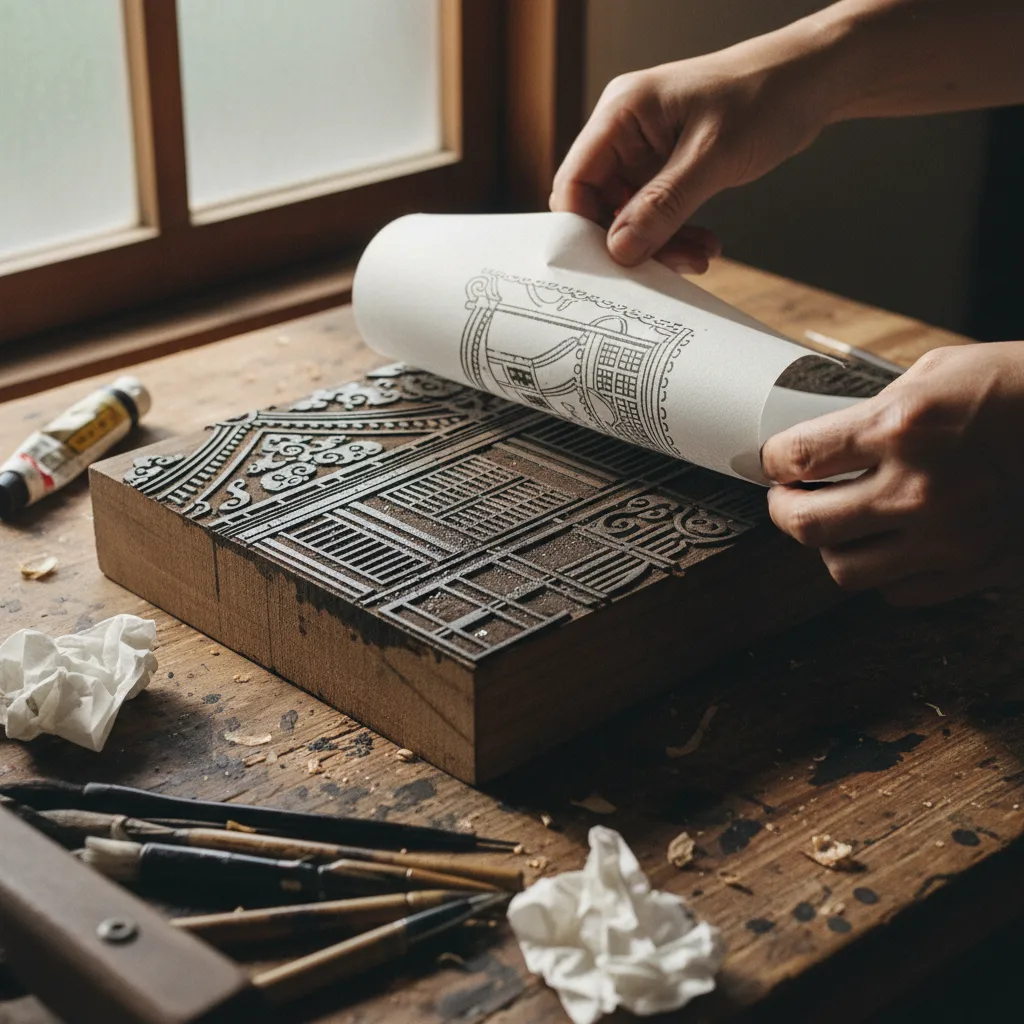
The actual printing is performed using a traditional bamboo baren rather than a mechanical crank press. Placing a sheet of delicate kozo paper over the inked block, the artisan guides the baren with steady palm pressure, listening to the distinctive soft rustle as damp paper fibers absorb the pigment. By peeling back one corner of the sheet while keeping the opposite edge anchored in the carved kento registration tab, the printer inspects ink saturation and makes real-time adjustments before lifting the finished print. The resulting impression captures the unique microscopic texture of both the carved wood ridges and the handmade paper matrix. Because each impression is pulled by hand with nuanced shifts in pressure and ink density, subtle variations emerge across every edition, making each individual print a distinctive original artifact.
Courteous Studio Etiquette For Shared Craft Workbenches
To preserve the calm, contemplative atmosphere of Telok Ayer's boutique studios, mindful visitor etiquette is warmly encouraged. Because relief carving requires keen hand-eye coordination and sharp tools, workspaces are kept meticulously organized. Visitors should place personal bags, drink containers, and coats on perimeter hooks or storage cubes upon arrival, keeping communal cutting tables completely unencumbered by clutter.
While carving, always direct cutting blades away from your body and free hand, keeping your non-carving fingers safely positioned behind the cutting stroke at all times. Taking regular breaks to stretch wrists and inspect plate contours prevents fatigue and maintains clean precision throughout extended cutting sessions. When observing fellow participants during the inking or burnishing stage, maintain a respectful quiet to allow full focus on delicate color alignment. If browsing studio archives or purchasing prints from the artist's proof drawers, handle each work carefully by its protective glassine sleeve to ensure the pristine deckled edges remain undamaged.
Historic Corridor Strolls Between Temples And Green Pockets
Complement your artisan printmaking session by taking an unhurried walking journey along the Telok Ayer heritage corridor. Stepping directly out of the studio onto Telok Ayer Street brings you face to face with Thian Hock Keng Temple, Singapore's oldest Hokkien temple, established in 1839. Admiring its intricate dragon crests, gilded timber carvings, and stone courtyard reliefs offers endless visual inspiration that mirrors the sculptural craft of woodblock carving. Just across the street, the distinctive green minarets of Nagore Dargah and the facade of the Al-Abrar Mosque illustrate the historic harmonious coexistence of diverse maritime communities along this ancient coastline.
Continuing your stroll northward, turn into Amoy Street to admire preserved late-shophouse architecture featuring decorative vents and pastel louvered shutters. Meandering up toward Ann Siang Hill Park leads to a peaceful elevated green enclave where mature tamarind and nutmeg trees provide canopy shade. Sitting on a park bench overlooking the contrasting historic shophouse tiled roofs below allows the morning's tactile impressions to integrate into a rich, layered appreciation of Singapore's enduring urban character. The gentle sound of breeze rustling through ancient tree canopies provides a soothing sensory counterpoint to the focused physical concentration spent at the carving bench earlier in the day.
Transit Connections And Effortless Day Coordination
Navigating to Telok Ayer's creative studios is straightforward and comfortable thanks to nearby public transportation. Telok Ayer MRT Station on the Downtown Line sits right at the heart of the historic street, while Tanjong Pagar and Chinatown MRT Stations are both within a five-minute sheltered walking radius. This excellent transit connectivity makes the neighborhood easily accessible from anywhere across the island, allowing art enthusiasts to plan relaxed half-day or full-day cultural immersions without the hassle of downtown traffic or parking limitations.
An ideal day plan combines a morning hands-on relief print workshop with an afternoon of architectural photography, heritage temple visits, and a relaxing pause at an independent neighborhood tea room along Amoy Street. To plot your walking route, find recommended print studios, and discover hidden architectural courtyards throughout Telok Ayer, let Karpo APP guide your neighborhood discovery with curated walking trails and local cultural suggestions.
Ask Karpo for more information.
Keep reading
- Chinatown Batik Canting Pen Picker: Fine Spouts for Silk
 Tiong Bahru Batik Canting Pen Picker: Handles and Bowls
 Katong Batik Canting Pen Picker: Wide Spouts for Wave Fills