 Chinatown Batik Canting Pen Picker: Fine Spouts for Silk
Hidden Gems & Odd Finds
Marina Bay Artisan Woodblock Print Studio: Waterfront Loop
Discover tactile relief printmaking across Singapore's Marina Bay waterfront. Follow calm promenades between civic landmarks and scenic bay views.
Set against the sweeping modern panorama of Singapore's urban skyline, the Marina Bay waterfront is celebrated globally for its daring architectural feats, expansive gardens, and shimmering maritime basin. Yet beneath the gleam of glass towers and monumental attractions, the waterfront district also serves as an inspiring gathering point for contemporary fine art and hands-on tactile craft. Seeking out an artisan woodblock print studio in Singapore around the Marina Bay precinct offers creative enthusiasts a contemplative counterbalance to the rapid pulse of the downtown core. Here, open-air cultural plazas, design gallery corners, and temporary waterfront creative spaces introduce visitors to the meditative rhythm of relief printmaking, where untreated woodblocks, water-based pigments, and fibrous handmade papers converge under natural equatorial light.
Relief Printmaking Along The Downtown Water Basin
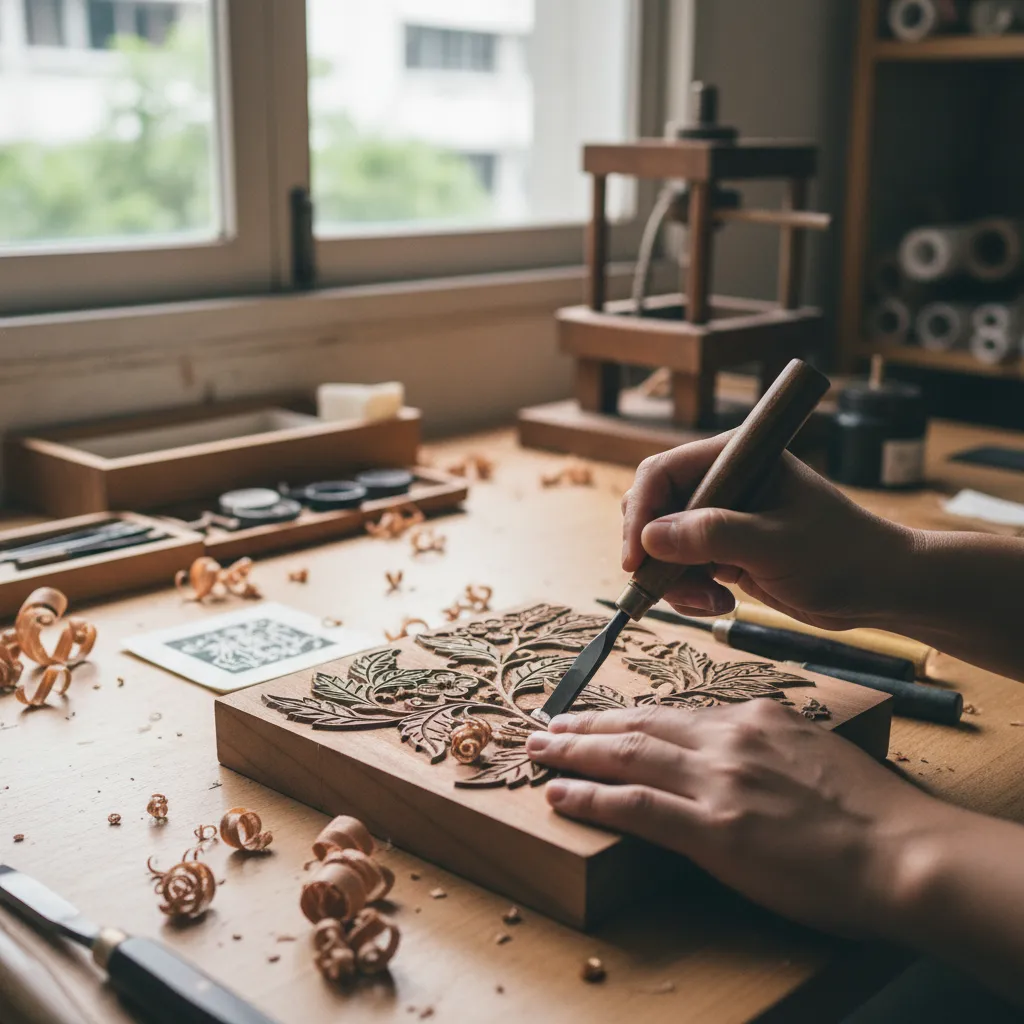
Woodblock printing, or relief printmaking, carries a storied lineage across Asia, evolving through centuries of cultural exchange into an expressive modern medium embraced by independent designers and artists in Singapore. Unlike commercial screen printing or digital press reproduction, relief printmaking demands intimate physical collaboration with natural materials. Practitioners begin by sketching reversed compositions onto fine-grained cherry or basswood plates, using micro-chisels to remove non-image voids while leaving intricate raised outlines intact. When ink is rolled across the carved ridge lines and transferred onto damp mulberry paper, every micro-texture of the wood grain is captured with unmistakable clarity and depth.
In the creative zones surrounding Marina Bay, artisan studios and visiting master printers often conduct specialized introductory sessions tailored for design lovers, visiting travelers, and curious beginners. These workshops demystify traditional woodblock mechanics without requiring extensive prior illustration training. Participants discover how traditional carvers visualize negative space, how subtle adjustments in blade tilt produce delicate linework versus bold solid fields, and how mineral pigments react to varying atmospheric humidity along the tropical harbor basin. The experience fosters a renewed appreciation for deliberate, analog craftsmanship in a world increasingly dominated by digital screens.
Mastering Pigments, Baren Burnishers, And Kozo Paper
A central revelation of any authentic artisan woodblock session is the tactile interaction with specialized traditional tools. Foremost among these is the baren, a disc-shaped hand press constructed from braided bamboo core encased in lacquered washi paper and wrapped in a fresh bamboo leaf. Rather than relying on heavy mechanical rollers or high-pressure cast-iron presses, the printer holds the baren flat against the palm and applies rhythmic circular strokes across the back of the paper. This gentle yet focused manual pressure allows the printer to feel the wood contour beneath the sheet, intuitively controlling ink penetration and gradated tonal shading.
Paper selection forms another vital pillar of the craft. Artisans frequently introduce students to Japanese kozo and regional mulberry washi, prized for their long, interlocking plant fibers that remain resilient and supple when moist. Working with water-based pigments mixed with rice paste binder rather than harsh synthetic solvents ensures a clean, non-toxic studio atmosphere filled only with the faint scent of natural cedar and damp cellulose. Watching deep midnight indigo or warm vermilion ink bloom across the porous paper surface produces a quiet thrill that remains unmatched by automated print machinery.
Etiquette And Studio Flow In Creative Communal Spaces
Because artisan print spaces around Marina Bay prioritize focused concentration and shared communal workbenches, adhering to basic studio etiquette ensures an enjoyable and safe visit for all participants. When stepping into an active workshop space, keep personal backpacks and wet umbrellas stowed in designated entryway racks to keep shared timber tables clear. Always treat carving chisels with the utmost care, placing them in protective wooden trays when not actively in hand to prevent delicate blade tips from nicking or causing accidental injury.
During collaborative printing demonstrations, allow the artisan uninterrupted focus while they align the moist paper against the kento registration notches on the woodblock. Asking questions before inking begins or after the finished proof is safely lifted onto the drying rack preserves the printmaker's workflow and prevents smudging. If purchasing limited-edition hand-pulled relief prints from studio retail shelves, handle all specimen folios gently by the protective archival corners to prevent finger oils from marking the delicate deckled edges.
Civic Promenades And Scenic Strolls Around Marina Bay
Complement your studio visit by pairing it with an unhurried walking exploration of the surrounding waterfront promenade. Stepping outside the creative spaces near the Esplanade arts concourse places you immediately along the wide pedestrian boardwalk tracing Marina Bay. The gentle breeze sweeping off the harbor provides natural cooling as you stroll past outdoor sculpture installations, shaded amphitheater steps, and scenic viewing platforms framing the downtown financial skyline. Crossing the graceful curves of the Jubilee Bridge toward Merlion Park offers expansive perspectives of the glittering bay basin under shifting afternoon clouds. Pausing along the water-facing steps allows you to observe the subtle reflections of historic colonial architecture alongside cutting-edge modern engineering across the harbor.
For an extended cultural route, continue your walk eastward across the architectural helix bridge toward the waterfront promenade flanking Marina Bay Sands. Here, public art displays, quiet waterside benches, and panoramic vistas of the Singapore River mouth invite unhurried reflection. The seamless pedestrian pathways allow you to decompress and let the artistic impressions gathered during your hands-on woodblock carving experience settle comfortably into memory while watching passenger ferries carve white wakes across the turquoise water.
Transit Connections And Day Planning Strategies
Reaching the Marina Bay cultural corridor is remarkably efficient via Singapore's comprehensive public transit network. Both Bayfront MRT Station on the Downtown and Circle Lines and Esplanade MRT Station on the Circle Line provide direct underground pedestrian links into the waterfront arts precinct, allowing visitors to arrive smoothly in sheltered comfort regardless of tropical afternoon rain showers. Multiple sheltered pedestrian underpasses connect the train exits directly with civic venues and waterside promenades.
An ideal day itinerary begins in the late morning, taking advantage of peaceful daylight hours to explore independent craft galleries and engage in hands-on relief printing before afternoon pedestrian crowds gather along the harbor. As dusk descends across the bay, the district transforms into a luminous urban tapestry of warm reflections and glowing architecture. To navigate studio locations, chart scenic walking trails, and discover hidden cultural exhibitions throughout Marina Bay, rely on Karpo APP to coordinate transit routes and curate personalized neighborhood walking itineraries effortlessly.
Ask Karpo for more information.
Keep reading
- Chinatown Batik Canting Pen Picker: Fine Spouts for Silk
 Tiong Bahru Batik Canting Pen Picker: Handles and Bowls
 Katong Batik Canting Pen Picker: Wide Spouts for Wave Fills