 Chinatown Batik Canting Pen Picker: Fine Spouts for Silk
Hidden Gems & Odd Finds
Kampong Glam Artisan Woodblock Print Studio: Creative Loop
Uncover artisan woodblock printing studios in Singapore's Kampong Glam enclave. Experience hands-on relief carving amid historic lanes and textile houses.
Distinguished by the majestic golden dome of the Sultan Mosque, pedestrian palm corridors, and rows of colorful shophouses teeming with textile emporiums, Kampong Glam stands as Singapore's premier historic Malay-Arab cultural enclave. For generations, this dynamic precinct has pulsed with artistic enterprise, from traditional songket weaving and copper batik block stamping to calligraphy bookmaking and modern indie illustration. Exploring an artisan woodblock print studio in Singapore within the Kampong Glam creative quarter immerses travelers in a unique intersection of heritage craft traditions and contemporary graphic experimentation. Housed in sunlit shophouse studios above fabric shops and perfume dispensaries along Arab Street and Baghdad Street, local printmakers preserve the expressive art of relief woodcarving and hand-pressed printing in an inspiring community atmosphere.
Textile Legacies And The Cross-Cultural Graphic Arts
The rich commercial heritage of Kampong Glam offers an exceptionally fertile environment for tactile printmaking. Historically, regional textile traders, Javanese batik masters, and Arab paper merchants gathered in this district, exchanging intricate geometric patterns, botanical scrollwork, and specialized dyeing techniques. Modern relief printmakers working here draw continuous creative vitality from this cross-pollination. Studio sketchbooks often feature hand-drawn interpretations of Malay floral woodcarvings, Islamic tessellations, and coastal maritime fauna, translating age-old decorative motifs into bold, contemporary relief prints.
Entering a print studio in Kampong Glam reveals an environment where traditional craftsmanship meets accessible modern mentorship. Classes are deliberately kept small to foster intimate creative dialogue between artisans and learners. Novice carvers discover how wood density affects the flow of cutting chisels, how to translate fluid brush strokes into crisp sculptural wood ridges, and how the interplay of positive line and negative space forms compelling visual narratives across the print. The collaborative hum of the studio encourages participants to slow down and immerse themselves fully in the tactile craft. Instructors share anecdotes about historic Malay woodcarving traditions, pointing out how classical leaf and vine patterns were designed to flow continuously without abrupt termination. Learning to carve these rhythmically continuous lines instills an appreciation for organic harmony and patient physical execution.
Carving Precision, Organic Binders, And Baren Impression
The technical discipline of woodblock printmaking hinges on a respectful mastery of handheld tools. Students handle professional gouges and chisels made from high-carbon tempered steel, learning how to sharpen blades against waterstones to achieve clean, effortless cuts across tight-grained woodblocks. Carving along curved timber grain requires gentle rotational movement of the block rather than twisting the wrist, ensuring smooth bevels and preventing delicate ridge walls from chipping under subsequent press pressure.
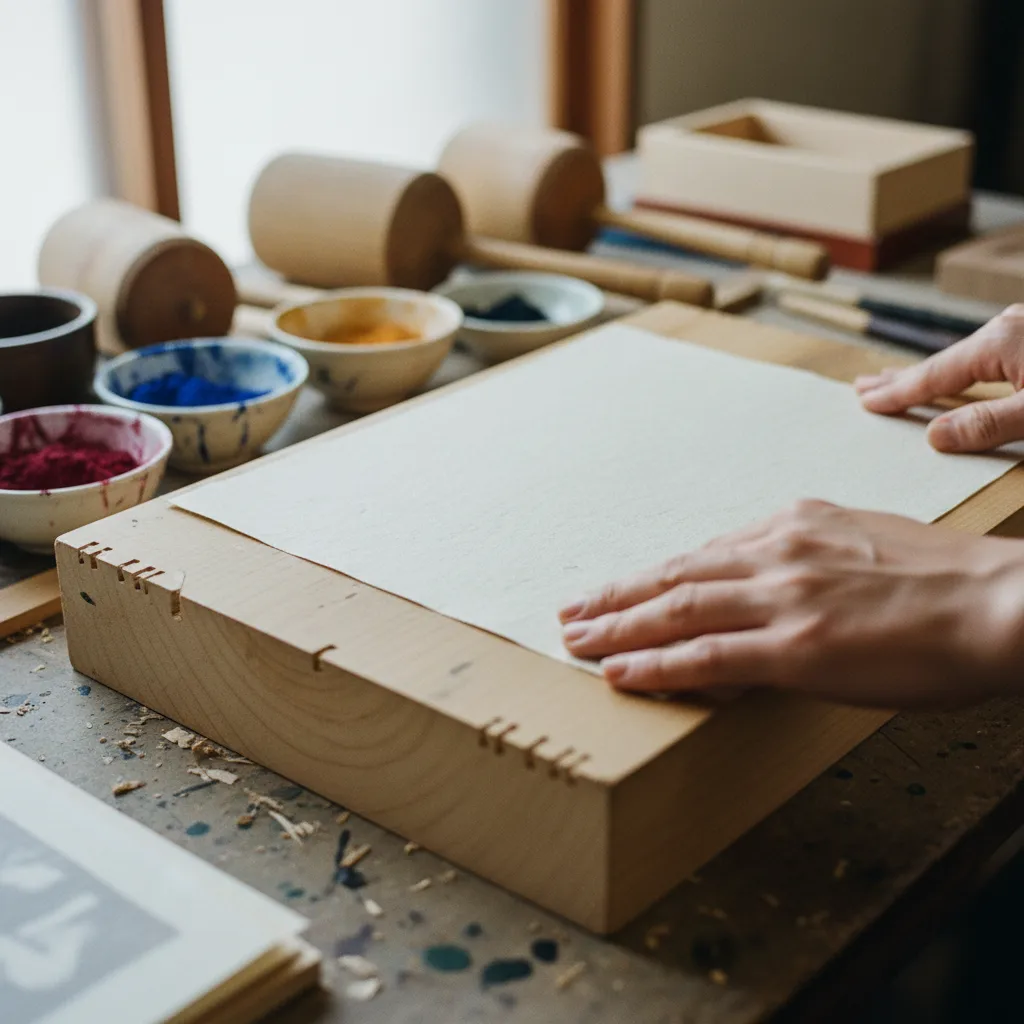
Inking the finished relief block involves rolling velvety, water-miscible inks across the surface using soft rubber brayers. Artisans demonstrate how to achieve an ultra-fine, even layer that kisses the relief ridges without pooling into recessed valleys. A sheet of fibrous washi or mulberry paper is laid atop the block, guided precisely by carved corner registration notches called kento. Using a traditional circular bamboo baren held firmly in the palm, the printer applies deliberate circular pressure across the sheet. Lifting the printed paper off the block produces an indelible moment of creative joy, revealing the deep, matte saturation of the pigments and the distinctive tactile impression pressed permanently into the paper fibers. The slight embossed relief created by the baren's pressure catches raking side light, giving the finished work a dimensional vitality that digital reproduction simply cannot replicate.
Mindful Etiquette In Boutique Shophouse Workspaces
Because independent studios in Kampong Glam operate within cozy, shared architectural footprints, maintaining thoughtful studio etiquette ensures a pleasant and harmonious environment for all. Upon entering, visitors should remove footwear if requested in accordance with regional custom, placing shoes and bulky daypacks in designated entrance racks to maintain unobstructed circulation around worktables.
When handling specialized carving tools, always replace protective blade caps when setting chisels aside, and keep blades safely flat in wooden tool trays. Avoid making abrupt movements near communal inking stations where delicate wet proofs are drying on horizontal racks or clothesline pins. If examining finished artwork in studio portfolios, handle prints strictly by the protective archival tissue paper to protect porous unvarnished inks from skin oils, showing appreciation for the dedication invested in every limited edition. Taking a moment to read artist statement labels and ask thoughtful questions about motif choices enriches the exchange between creator and visitor.
Creative Alleys, Arab Street, And Aliwal Arts Center
Pairing your woodblock studio session with an unhurried neighborhood walk unlocks the full charm of Kampong Glam. Stepping out onto the sunlit pedestrian concourse of Bussorah Street frames breathtaking perspectives of the Sultan Mosque's golden dome framed by towering royal palms. Wandering along Arab Street immerses you in the tactile pleasures of silk, linen, and hand-printed batik fabrics stacked high in open-fronted merchant houses, offering endless inspiration for surface pattern design and textile color combinations.
Turn down adjacent Haji Lane to experience vibrant indie boutiques, contemporary murals, and independent coffee roasters occupying historic two-story shophouses, where creative storefronts showcase innovative locally designed homeware and stationery. For a deeper cultural immersion, walk north toward Aliwal Street, where the Aliwal Arts Centre anchors a dynamic community of performing artists, graphic designers, and print collectives. The relaxed pace of the neighborhood allows the rhythmic focus of your morning printmaking session to blend seamlessly into an inspiring afternoon of visual exploration. Strolling along the shaded five-foot ways while holding your carefully wrapped test prints brings an immense sense of personal accomplishment and lasting cultural connection to the city.
Transit Access And Craft Day Itinerary Advice
Kampong Glam is readily accessible through Singapore's public transportation network. Bugis MRT Station, serving both the Downtown Line and East-West Line, is only a five-minute sheltered walk from the entrance of the heritage district. Additionally, Jalan Besar MRT Station on the Downtown Line and Nicoll Highway MRT Station on the Circle Line provide convenient access to the northern and eastern edges of the neighborhood, ensuring sheltered transit options regardless of midday sunshine or afternoon rainfall.
To maximize your visit, reserve a morning workshop slot to enjoy optimal natural lighting across the carving benches, followed by an afternoon exploring heritage spice shops, textile bazaars, and scenic street art alleys. To uncover tucked-away print studios, identify craft workshops, and follow curated pedestrian routes throughout Kampong Glam, consult Karpo APP for intuitive walking directions and local cultural recommendations.
Ask Karpo for more information.
Keep reading
- Chinatown Batik Canting Pen Picker: Fine Spouts for Silk
 Tiong Bahru Batik Canting Pen Picker: Handles and Bowls
 Katong Batik Canting Pen Picker: Wide Spouts for Wave Fills