 North Beach Tailor Alteration Shop Finder: Inherited Suits
Neighborhood Guides
SF Transit Station Pitstop Finder: Breakfast Before Ferry
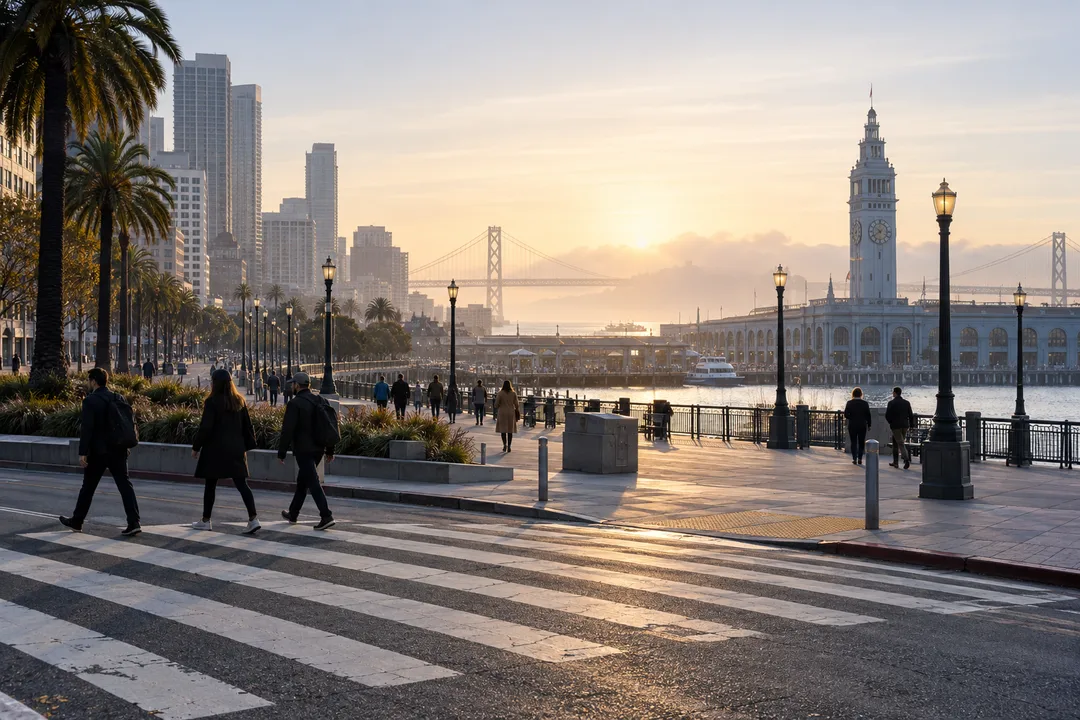
Plan breakfast between Embarcadero station and the San Francisco waterfront around your ferry destination, food portability, and your own boarding margin.
Breakfast on the way from Embarcadero station to a ferry is a connection problem before it is a food search. Give the Karpo APP your intended ferry terminal, destination, baggage, and breakfast preferences, then ask for a manageable stop along that journey. Keep your own boarding margin outside the food allowance. A suggestion for a pastry or sandwich does not establish a departure gate, a sailing time, or how quickly a counter can serve you.
Name the ferry destination first
The waterfront is a broad destination. “I am heading to the ferry” leaves important details out of a breakfast request, especially when several people have different ideas about the departure point. Supply the operator and terminal information from your travel arrangements. If you have not chosen a sailing, keep the request exploratory. It is easier to compare food possibilities when the end of the walk is defined than to add a terminal decision after choosing breakfast.
Embarcadero station provides the downtown transit anchor for this scenario. The Ferry Building supplies a recognizable waterfront reference, but its name should not replace the details of your actual ferry trip. Do not assume that every boat you might take boards at the same point. Work from the destination in the operator's instructions. A useful breakfast plan follows the connection you intend to make rather than taking a scenic landmark as a universal boarding location.
Treat breakfast and boarding as different deadlines
Work backward from the arrival point you have chosen for the ferry portion. Leave whatever boarding preparation your own journey requires, then decide whether a food stop belongs in the remaining interval. Your margin might include finding the terminal, managing a ticket, gathering companions, and putting food away. Those are tasks, not just walking distance. A map pin near the water does not resolve them, even if a cafe seems to sit directly on the way.
For an illustrative planning exercise, a traveler might reserve ten minutes for reaching and organizing at the departure area and allow an additional eight for a breakfast deviation. Both figures are personal inputs. They are not a recommended ferry arrival standard or measured service times. If you do not have room for both, remove the food deviation. A breakfast plan can move to the other end of the crossing without requiring a second downtown search.
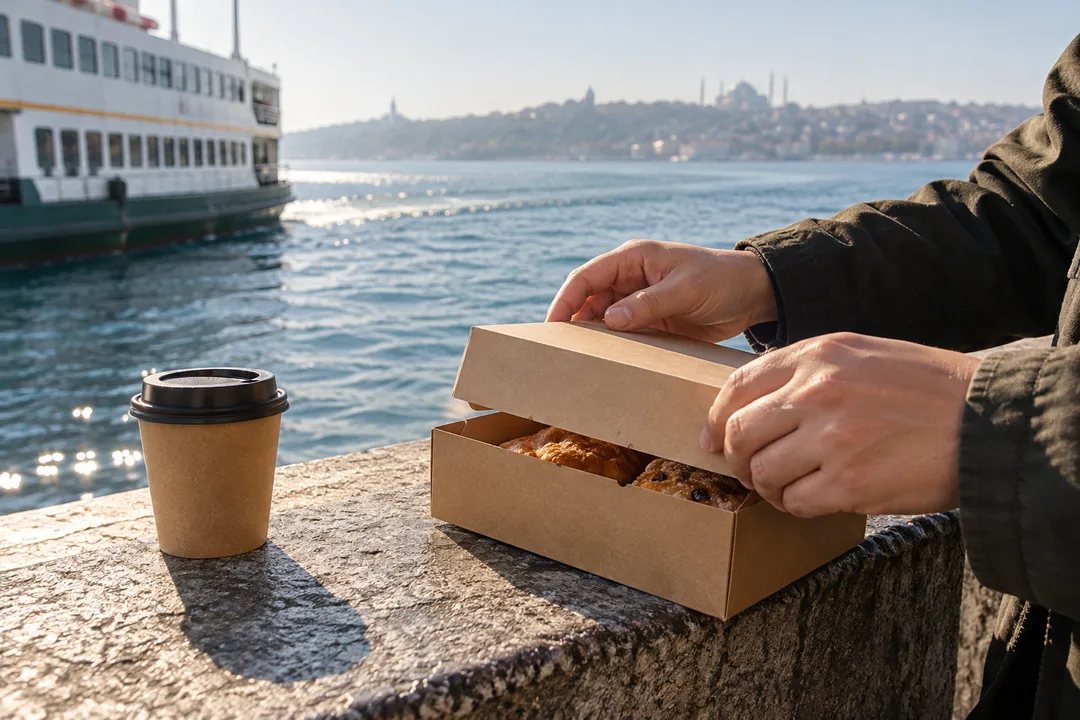
AI-generated waterfront and breakfast scenes; no merchant, ferry departure gate, or available meal is documented.
Ask for food that travels in one package
Describe breakfast by how you will carry and eat it. A small closed box, a wrapped sandwich, and an uncovered plate imply very different journeys. If you need to manage a suitcase or keep one hand available, make that a central condition. “Gourmet” can mean that you care about the bread or filling, rather than that you want a long menu consultation. Say which quality matters and which extra items you are willing to leave out.
Coffee deserves a separate carrying decision. Someone with a rolling case and breakfast already has two objects to manage. You might choose a drink after boarding if your operator's rules and the available service support it, or simply postpone it until arrival. Those are possibilities to consider, not claims about a particular ferry's catering. Tell Karpo if you already carry water so the response does not turn a single food purchase into a multi-counter shopping sequence.
Build a request around the direction of travel
A practical message might read: “I am leaving Embarcadero station and walking toward the ferry terminal named in my ticket. Suggest one portable breakfast possibility along that direction. I want a savory item, carry a small suitcase, and have set eight minutes aside for the extra stop. Keep my terminal arrival margin separate. Also suggest a way to simplify breakfast if a purchase would add backtracking.” Add the terminal name before you send the request.
This is a conversation about priorities and options. It does not require Karpo to inspect an escalator, predict a line, or monitor a boat. If a response places the stop in a direction that conflicts with your terminal, point out the mismatch and ask for a revised suggestion. Keep the operator's journey information authoritative for the sailing. Use Karpo to discuss how breakfast fits around that information rather than letting food advice determine the departure point.
Compare the route, then compare the pastry
When two food suggestions are appealing, compare the deviations before comparing descriptions of the food. Does one require leaving the intended approach and then retracing it? Does the other keep you moving toward the terminal? Is a crossing needed in either direction? You can ask Karpo to explain these tradeoffs using the locations you supply. Avoid translating “nearby” into “will take only a minute.” Distance and a complete purchase are different parts of the problem.
Choose a fallback that changes the task instead of adding another stop. That might be eating a snack you brought, buying breakfast after the crossing, or choosing a smaller item at the first suitable counter you encounter. The fallback should not depend on an unverified second cafe being faster. If the primary option feels inconvenient, the alternative is most useful when it reduces movement and carrying rather than creating another comparison beside the waterfront.
Let companions make one shared choice
Groups often lose the food allowance before anyone orders because each traveler is still selecting a separate destination. Agree on one purchase location or decide that everyone will use their own carried snack. Tell Karpo if one person needs a dietary accommodation that determines the choice for the group. Then keep the recommendation focused on that requirement. A larger list of possibilities can make this particular connection harder when it encourages everyone to optimize breakfast separately.
If someone has already reached the ferry departure area, update the request to reflect that split. Do not route the whole group back toward the station for a more appealing food description. The person still walking can decide whether a compact pickup belongs on their approach. Keep the meeting point precise and mutually understood. Any offer to carry food for others should account for what fits in a bag and what needs an upright hand throughout the remaining walk.
End the purchase before the terminal search
Have the food wrapped, close your bag, and put payment items away before shifting attention to boarding. That makes the transition from shopping to travel easier to manage. Follow the ferry operator's food and boarding instructions for the actual trip. The breakfast conversation provides no guarantee of entry with a drink, a place to sit, or stock at a named counter. Leave those assumptions out of the plan instead of treating a pleasant illustration as evidence.
Bring the Karpo APP a defined terminal, a realistic personal allowance, and a clear description of breakfast you can carry. Ask for one route-compatible suggestion and a genuinely smaller alternative. The useful outcome is a meal decision that respects the crossing: buy along the approach when it fits, or move breakfast beyond the ferry journey. You keep control of the terminal choice and the boarding margin while the conversation helps make the food decision less scattered.
Ask Karpo for more information.
Keep reading
- North Beach Tailor Alteration Shop Finder: Inherited Suits
 Hayes Valley Tailor Alteration Shop Finder for Boutique Buys
 Pac Heights Tailor Alteration Shop Finder for Heirloom Gowns