 North Beach Tailor Alteration Shop Finder: Inherited Suits
Neighborhood Guides

SF Transit Pitstop Planner: 2 Sunset Family Choices
An SF transit pitstop planner compares a Sunset family rest with one shared food stop, using group pace, supplies, and adult tasks to keep everyone together.
A family transit pitstop planner for SF's Sunset should help the group stay together before it helps anyone buy a snack. Tell the Karpo APP how many adults and children are traveling, what you are carrying, and the next place everyone needs to reach. Ask it to compare a short pause using what you already have with one shared purchase. The useful result is a decision the whole party can follow without creating a second meeting point.
Count the jobs, not just the travelers
An adult can have several simultaneous jobs: keeping a child close, managing a stroller, holding a bag, or finding the onward direction. Saying “two adults” does not mean two people are available to queue. Explain who is doing what and which tasks cannot be handed over. The assistant can use that context to narrow suggestions. It should not assume that one person can disappear into a shop while the other manages every remaining responsibility on the pavement.
Children's needs can differ within the same family. One may be hungry while another mainly needs to stop walking. Ask which need the pause is intended to solve. Buying food for everyone is not always necessary when the immediate problem is fatigue, and sitting down is not a substitute for a child who needs lunch. Describe the actual priority in ordinary language. A family-friendly recommendation becomes more useful when “friendly” is replaced by the specific action the group needs to accomplish.
First option: a pause with your own supplies
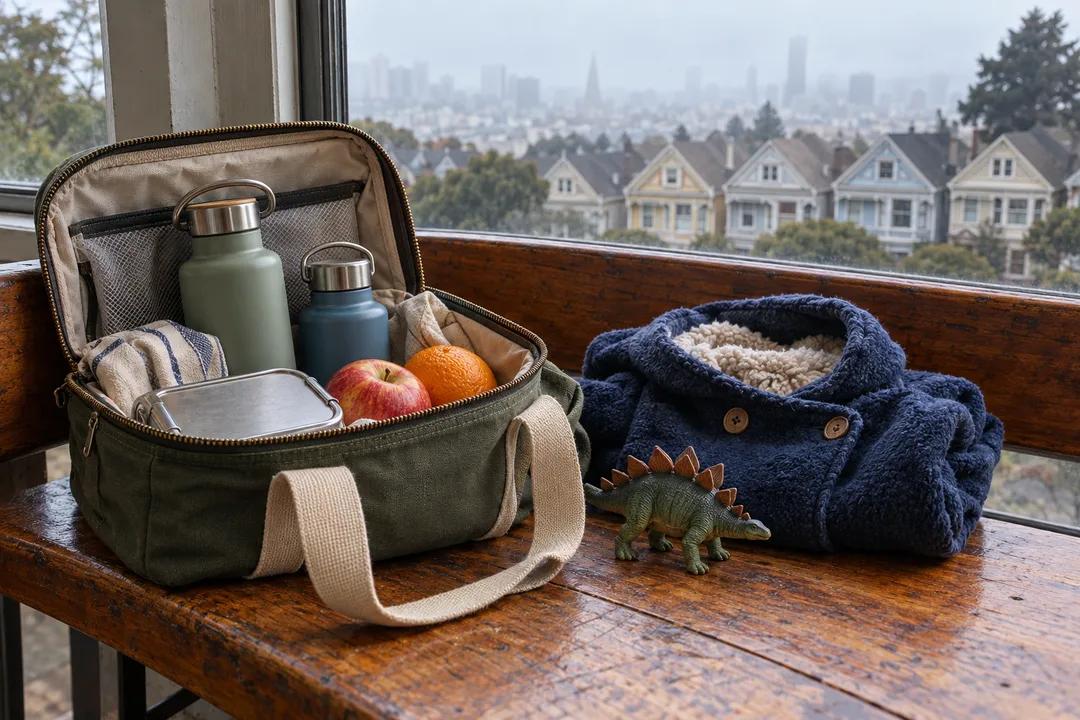
Look at what you already carry before requesting a shop. Water, a suitable snack, and an extra layer may solve the immediate problem without adding an order. The pause still needs an appropriate location and enough room to keep the group out of other people's way. This article does not identify or guarantee a particular bench, restroom, or sheltered area. If one of those facilities is essential, state it as a requirement rather than assuming it exists beside the next stop.
A no-purchase pause can also let you reorganize bags. Put the item needed next within reach, move anything fragile away from the bottom of a bag, and decide which adult will handle navigation when walking resumes. These are suggested routines, not rules of a venue. They can make a short break useful even when nobody is especially hungry. A snack search should not crowd out the simpler task of making the next part of the journey easier to manage.
Second option: make one shared purchase
If food really is the priority, describe a purchase that suits the whole group. That might mean individually wrapped portions or something that can be divided without cutlery. Ask for a single compatible stop rather than separate favorites for each traveler. Give dietary restrictions and any personal spending cap before requesting options. A number you supply as a budget is not a quoted shop price, and a suggested menu item is not evidence of stock or preparation speed.
Keep the family together by default in this scenario. Splitting into a shopping party and a traveling party creates another task: agreeing where to meet, deciding how long to wait, and handling a delayed purchase. A shared stop may offer fewer choices but make the next step clearer. If your group deliberately chooses to separate, that is a different plan with its own meeting arrangement. Do not let the assistant imply a reunion is automatic simply because both adults have phones.
Explain pace through an example
Suppose you have set aside twenty minutes for the entire pause. You might reserve eight minutes for getting everyone ready to move and regaining the onward route. The remaining twelve would need to cover the break itself, including any purchase. These figures are a fictional family budget, not local journey measurements. If children need longer to put coats on or finish eating, reduce the shopping ambition. The deadline should describe the pace you can sustain together, not the pace of the fastest adult.
Avoid promising a child a particular treat before the choice is workable. A suggestion in an app is not an order confirmation, and an unavailable item can create a more difficult transition than buying nothing. You can present the decision as two possibilities: use the snacks in the bag or make one stop if it fits. That keeps the family discussion aligned with what is still optional. The aim is to simplify the pause rather than turn a candidate into an expectation.
A request the whole family can use
Try: “We are traveling through the Sunset in SF from the public location below toward the destination I have entered. Our group includes the adults and children described here. We have these bags and supplies. Compare a brief rest with our own snacks against one shared takeaway purchase. Keep us together, use our walking pace, and explain what would make the purchase impractical.” Add your own details. The example specifies how to ask, not where a family should actually stop.
Read the recommendation aloud in a short form. Everyone responsible for the children should understand where the group goes next and when the optional stop ends. If the explanation needs several backup meeting points, ask for a simpler version. The assistant can help reduce a complicated plan to the essential decision, but the adults remain responsible for supervising the group. A route that looks compact on a screen may still involve more tasks than your family wants to take on during this journey.
Keep a neighborhood outing separate
The Sunset can be the setting for a longer family walk on another occasion. For a transfer, avoid adding a playground, beach visit, or shopping circuit just because a child needs a break. Those are distinct outings with their own access, timing, and supervision needs. Ask for an optional walking segment only when the original journey genuinely allows it. The immediate route should still have an understandable endpoint, so the family knows when the pause is over and travel resumes.
If the group becomes tired before reaching the proposed purchase, stop treating the recommendation as a destination you must finish. Give Karpo the new position and explain that walking tolerance has changed. Ask it to remove the purchase and summarize the onward task. It is reasonable to leave lunch until arrival or use suitable supplies already available. Protecting the group from an unnecessary extra leg is a useful result, even if the original request began with enthusiasm for finding somewhere new.
Practical Notes
Enter a public starting location, the next destination, group needs, carrying responsibilities, and a personal time allowance in the Karpo APP. Request one shared next step plus a no-purchase alternative. Do not treat a suggestion as proof of stroller access, restroom availability, child seating, live service conditions, or a successful order. This page asserts no named venue's facilities, hours, or prices. Its generated family and snack-bag photographs illustrate the planning choices. Choose the pause that leaves the adults able to explain, carry, and supervise the next stage of the journey together.
Ask Karpo for more information.
Keep reading
- North Beach Tailor Alteration Shop Finder: Inherited Suits
 Hayes Valley Tailor Alteration Shop Finder for Boutique Buys
 Pac Heights Tailor Alteration Shop Finder for Heirloom Gowns