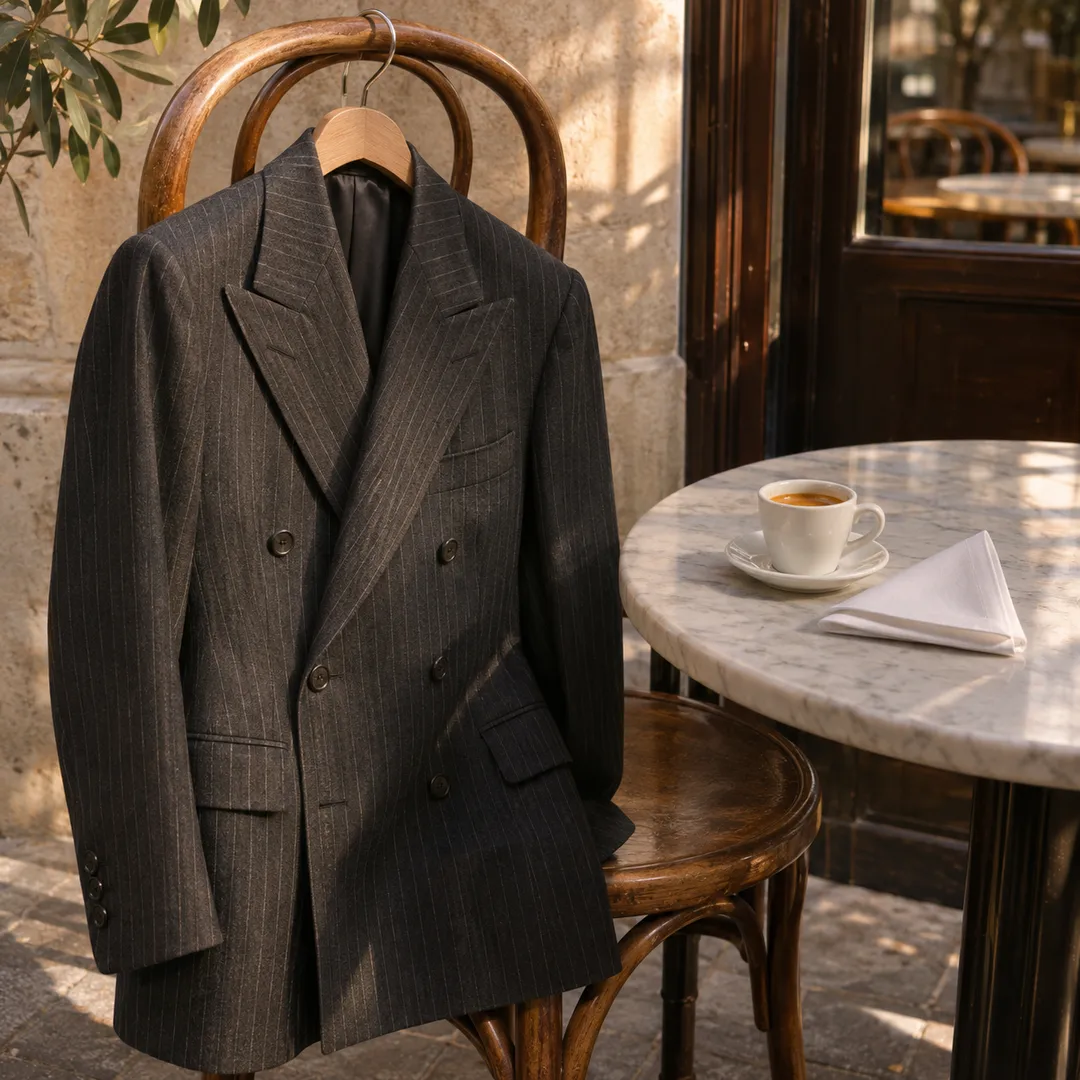
 North Beach Tailor Alteration Shop Finder: Inherited Suits
Neighborhood Guides
SF Transit Pitstop Planner: 2 Choices Before Evening Travel
An SF transit pitstop planner compares an Embarcadero takeaway with staying on route, using your return cutoff and carrying needs before evening travel.
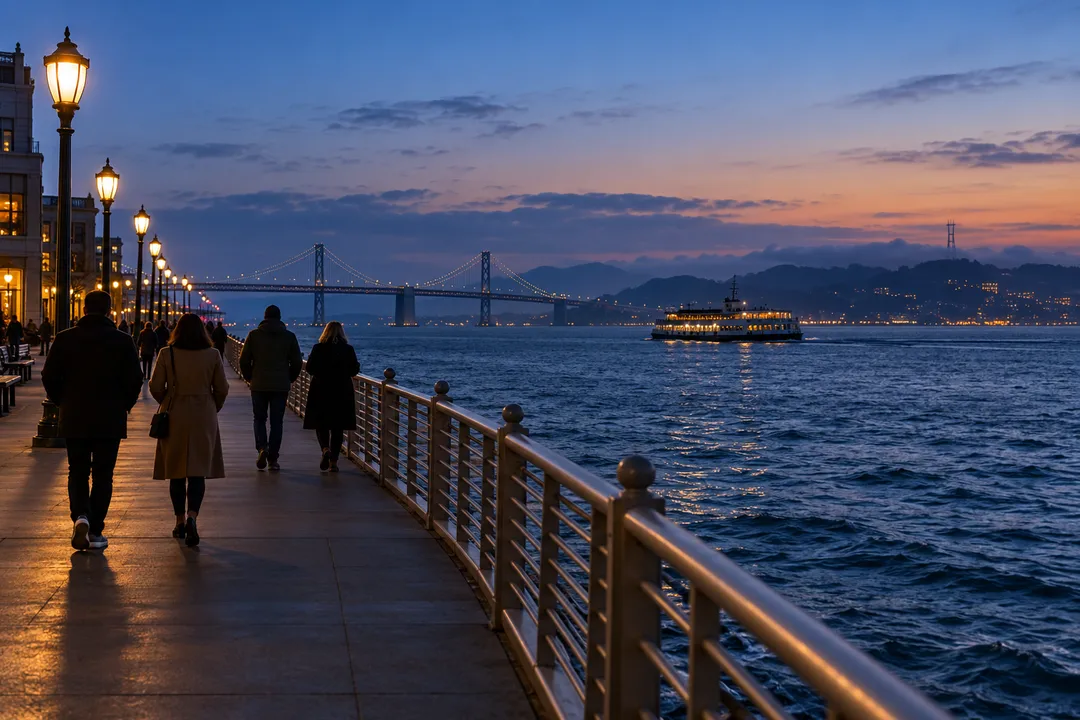
An evening transit pitstop planner for SF should put your departure point ahead of a waterfront meal. Along the Embarcadero, a pleasant pause and an awkward return can begin from the same map pin. Tell the Karpo APP where you are actually waiting, which onward journey matters, and whether the stop is for warmth, hunger, or a few quiet minutes. Ask for a recommendation that explains the return leg before describing the food.
Name the journey after the pause
“Near the waterfront” is not enough information for a useful evening plan. Start with a public intersection or the entrance you can identify, then describe where you need to be next. If your next journey is by ferry, distinguish the boarding location from a general view of the bay. If you are continuing by another form of transit, say so. The goal is to stop the conversation from treating every waterfront destination as interchangeable simply because the water appears in the background.
Think about the direction of the evening too. Are you finishing work and heading home, meeting someone on arrival, or taking a leisurely trip with no fixed appointment? Each version permits a different kind of pause. Share the actual constraint rather than asking for the fastest option by default. Someone with time to sit can choose differently from someone whose remaining allowance must include finding an unfamiliar boarding area. The planner needs that distinction more than it needs a long list of cuisines.
Warmth is a different request from dinner
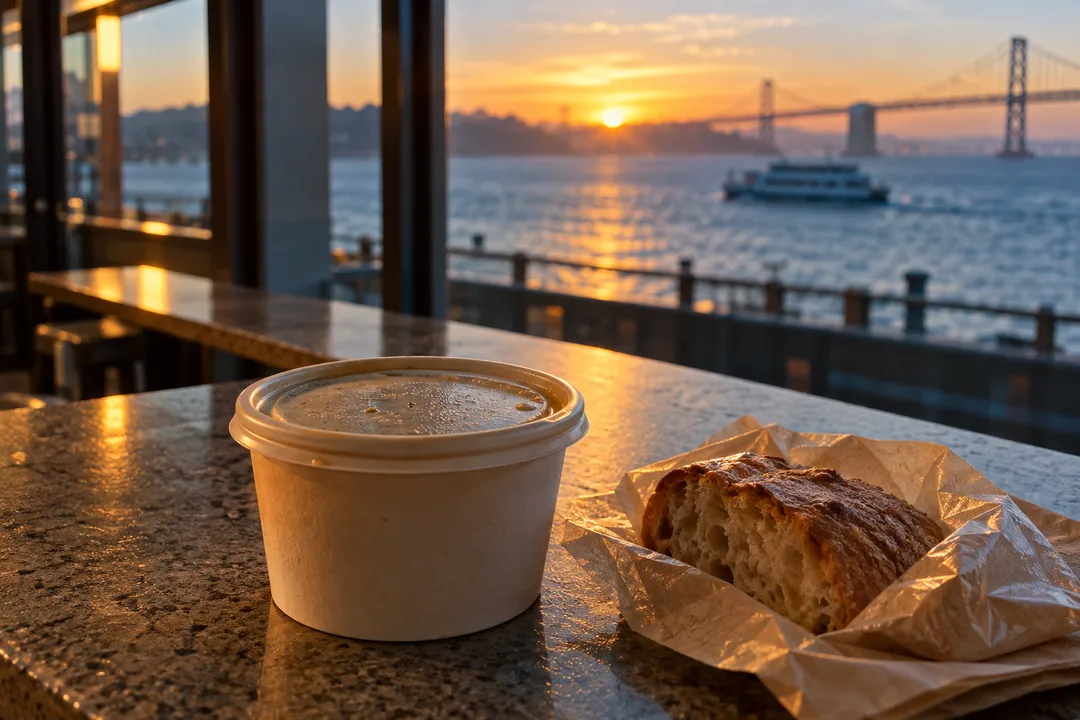
If the reason for stopping is to get out of the wind, say that clearly. A recommendation focused on a large meal could create an unnecessary wait, while a drink may leave a hungry traveler needing another stop later. Choose one primary need. Ask for an indoor pause if that is essential, without assuming that any nearby venue offers a seat to someone making a small purchase. The article makes no claim about a particular business's seating or customer policy.
Carryability matters on the return. A hot bowl with a loose lid can be a poor choice when you are carrying a laptop bag and need a hand free. A compact item that can be packed away may be easier. Give Karpo those handling preferences and any dietary restrictions as inputs. Food suggestions should remain options for you to evaluate. They do not establish what is in stock, how a kitchen handles allergens, or when an order will be ready.
Work backward from being ready to board
Use an invented schedule to see the difference between departure and readiness. Suppose your own plan gives you thirty minutes until a required departure, and you decide to be back at the correct waiting area twelve minutes beforehand. Only eighteen minutes remain for every part of the detour. The twelve-minute reserve is a personal planning choice in this example, not an operator's boarding requirement. Replace both numbers with the constraints of the journey you are actually taking.
Break the flexible portion into leaving, purchasing, and returning. Avoid spending all of it on a single estimate of “walking distance.” You may need to locate an entrance, put food away, and orient yourself again. Ask the assistant to expose those steps separately. It is acceptable for an answer to say that the purchase does not fit the allowance you supplied. A neat-looking plan with no room to regain your bearings is less useful than an honest recommendation to eat after arrival.
A message that keeps the water in perspective
Try this: “I am on the Embarcadero in SF at the public location below. My next departure is the one I have supplied, and I want to be back at its waiting area by my stated cutoff. Compare a compact takeaway with staying here. I have a work bag, need one hand free, and care more about a clear return than a waterfront view.” Supply your own position and timing rather than treating this example as travel information.
Request two outputs: the smallest workable food option and the simplest continuation. For the food option, ask which condition would disqualify it. That could be a route that doubles back, an order that needs a lengthy preparation step, or no suitable way to carry the result. For continuation, ask where the food decision moves next: after arrival rather than at an unspecified point during the trip. You then have a complete evening plan even if you never enter a shop.
Do not let the view set the pace
A waterfront outlook can make a brief stop feel like spare time. Set the return cutoff before sitting down, and keep the onward location in mind when choosing where to pause. This is a personal time-management suggestion, not a claim about the promenade's facilities. If you want a scenic walk as well as food, decide which matters more. Two small extras can become a substantial detour when each pulls you away from the same departure point.
Take a walk along your onward corridor only if it remains compatible with the plan. Avoid turning a visible pier or attractive side route into an assumed shortcut. Water, barriers, and entrances can separate places that look close on a screen. Ask Karpo to state any unresolved access assumption in the proposed route. If that assumption matters to your return, remove the optional segment instead of building another estimate on top of it.
Change the plan before ordering
Imagine reaching a counter and discovering that the format of the purchase is wrong for the trip. Perhaps the food needs a tray or the drink cannot be packed away. Leave that option behind before paying. Tell the assistant that carrying is now the deciding constraint and ask whether any simpler purchase fits the time already remaining. Do not restart the whole search with your original allowance. The time spent reaching the counter has already happened, regardless of whether you bought anything.
If you are traveling with a friend, agree who is responsible for the cutoff. One person comparing food while the other watches the departure clock can still produce confusion if nobody says when to leave. State the plan aloud in one sentence: purchase only until the agreed point, then return together. Keeping the party together is a reasonable default for this scenario. Splitting up adds a rendezvous problem to an evening that was meant to become easier.
Practical Notes
Use the Karpo APP to organize choices around the location, destination, and limits you provide. Operator information remains the source for the actual departure and boarding instructions. This page does not publish a timetable, forecast a queue, guarantee indoor seating, or reserve a meal. No venue prices or opening times are asserted here. The generated waterfront and takeaway photographs are illustrations of this decision, not evidence that a particular counter exists. The successful pitstop is the one that still leaves a straightforward next journey.
Ask Karpo for more information.
Keep reading
- North Beach Tailor Alteration Shop Finder: Inherited Suits
 Hayes Valley Tailor Alteration Shop Finder for Boutique Buys
 Pac Heights Tailor Alteration Shop Finder for Heirloom Gowns