 North Beach Tailor Alteration Shop Finder: Inherited Suits
Neighborhood Guides
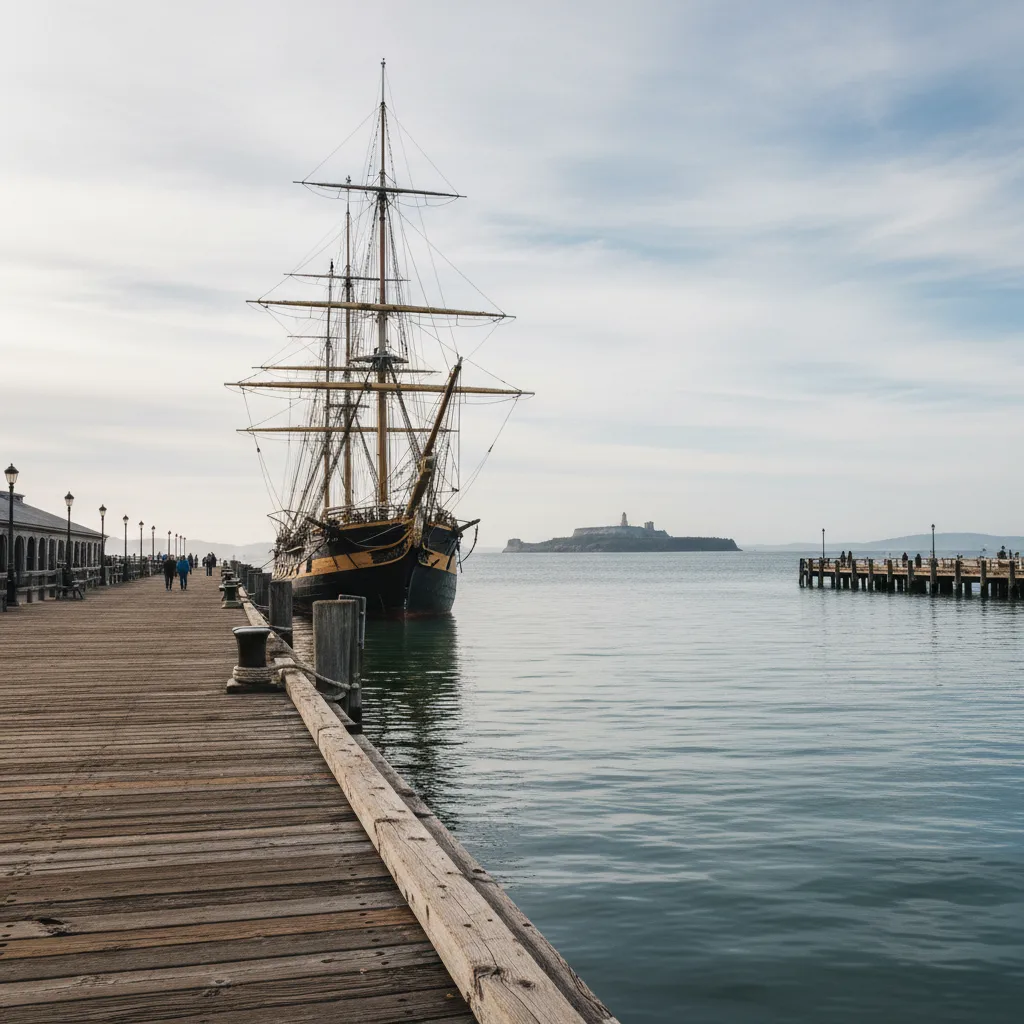
Hyde Street Pier Scenic Riverfront Promenade Route in SF
Follow the Hyde Street Pier scenic riverfront promenade along Aquatic Park with historic wooden ships, maritime vistas and a sheltered coastal walking route.
The Hyde Street Pier scenic riverfront promenade hugs the sheltered curve of Aquatic Park Cove at the western terminus of Fisherman's Wharf, right where the Powell-Hyde cable car turntable overlooks the bay. While the salt waters rippling against the pier pilings belong to the great Pacific estuary of San Francisco Bay rather than an inland freshwater river, this protected coastal promenade functions as the city's most evocative historic maritime walkway. The wide wooden pier and curving concrete shoreline concourse combine working waterfront history with panoramic views across the Golden Gate strait toward Alcatraz Island and the Marin Headlands.
Stepping onto the Historic Wooden Pier
Walking out onto the heavy timber decking of Hyde Street Pier transports visitors directly into the late nineteenth and early twentieth centuries. Originally constructed in 1922 as a vital ferry terminal handling automobile traffic between San Francisco and Sausalito before the completion of the Golden Gate Bridge, the pier now serves as the primary floating exhibition facility of the San Francisco Maritime National Historical Park. Massive creosote-treated pilings creak softly beneath the deck as ocean swells filter through the harbor mouth.
Moored along both sides of the pier is a remarkable collection of National Historic Landmark vessels. Foremost among them is the 1886 Balclutha, an iron-hulled three-masted square-rigger that rounded Cape Horn seventeen times carrying Welsh coal and California grain. Next to it sits the 1890 Eureka, the world's longest wooden walking-beam passenger ferry, and the 1895 lumber schooner C.A. Thayer. Historic steam tugboats like the 1907 Hercules rest in the outer slips with their massive towing winches preserved in operating condition. Tar-soaked rigging lines, polished brass binnacles, and weathered oak rails infuse the air with an authentic scent of maritime heritage that feels completely genuine.
Curving Around the Aquatic Park Amphitheater
Leaving the timber pier and continuing westward, the promenade connects seamlessly with the curved concrete bleachers and terraced seawall of the Aquatic Park Historic District. Developed during the late 1930s by the Works Progress Administration, this grand circular amphitheater steps down directly into the calm waters of the cove. Overhead stands the historic 1939 Maritime Museum building, a celebrated masterpiece of Streamline Moderne architecture designed to resemble a luxury ocean liner, complete with rounded nautical porthole windows, ship-deck railings, and vibrant maritime murals by artist Hilaire Hiler.
Along the waterfront esplanade, local open-water swimmers from the historic Dolphin Club (founded in 1877) and the South End Rowing Club (founded in 1873) plunge into the brisk 54-degree cove water without wetsuits, carving graceful strokes across the marked buoy lanes. Hand-built wooden rowing shells and traditional Monterey double-ender fishing craft rest in the club boathouses, prepared for morning rowing outings across the harbor. Their disciplined athletic presence lends the park an enduring civic character that has remained unchanged for over a century.

The Municipal Pier Crescent and Open Bay Vistas
The curving promenade extends outward toward the historic Municipal Pier, a massive 1,850-foot curving concrete breakwater constructed in 1934 to shelter the Aquatic Park lagoon from turbulent ocean swells. Walking along the shoreline path approaching the pier root delivers an awe-inspiring vantage: the red brick fortress of Fort Mason rises abruptly on the bluffs to the west, while unobstructed views across the bay frame the rocky escarpment of Alcatraz Island just over a mile offshore.
Looking back eastward across the lagoon, the terraced skyline of Russian Hill and Telegraph Hill rises majestically above the waterfront, punctuated by the slender silhouette of Coit Tower. Even on bustling weekends, the western reaches of the Aquatic Park promenade near the foot of Van Ness Avenue remain substantially quieter than the commercial wharf piers farther east.
What to Order and What to Skip Nearby
When you finish your waterfront walk, step across Beach Street into the historic brick courtyard of Ghirardelli Square or walk toward Polk Street for focused culinary stops. Order a freshly baked sourdough boule filled with hot Dungeness crab chowder from authentic neighborhood seafood counters, or pick up a classic warm sourdough baguette from nearby French bakeries. For a traditional warm beverage, stop by the Buena Vista Cafe at Hyde and Beach Streets, which has served its famous Irish coffee in heavy glass goblets since 1952.
Skip the commercial fast-food stands, generic chain souvenir outlets, and aggressively hawked wax museum ticket booths along central Jefferson Street. If the front waterfront corridor becomes congested with cruise excursion crowds around midday, bypass the gift shops and head two blocks south up the Hyde Street hill toward Russian Hill, where independent Italian espresso bars, neighborhood wine shops, and quiet sidewalk cafes provide authentic local hospitality.
Timing the Tide and Sidestepping Tourist Congestion
Fisherman's Wharf experiences its heaviest tourist foot traffic between 11:30 AM and 4:30 PM on sunny weekends. During these hours, street performers, bicycle rental groups, and souvenir shoppers pack the eastern sidewalks around Pier 39 and Jefferson Street.
To experience the genuine poetic maritime spirit of Hyde Street Pier and Aquatic Park, arrive early in the morning between 7:30 AM and 9:30 AM. At this hour, the low morning sun illuminates the rigging of the tall ships in warm amber light, and the cove water remains glassy and calm. Alternatively, visit at twilight when the waterfront lights reflect across the bay and the distant foghorn at Point Bonita begins its resonant evening call.
Practical Notes for the Hyde Street Pier Route
The Aquatic Park and Hyde Street Pier walking route covers approximately 1.2 miles of paved concrete and level wooden boardwalk paths that are fully accessible for wheelchairs and strollers. The most scenic way to arrive is via the historic Powell-Hyde cable car, which descends Russian Hill directly to the Hyde Street turnaround right at the pier entrance. Alternatively, the historic F-Market & Wharves heritage streetcar line terminates at Jones and Beach Streets, just two short blocks away.
Public restrooms and water bottle filling stations are available at the entrance plaza to Hyde Street Pier and adjacent to the Aquatic Park bathhouse building. The shoreline here catches cool westerly breezes sweeping off the Pacific through the Golden Gate strait. Wear a wind-resistant jacket with an insulated mid-layer, choose sturdy walking shoes with rubber soles for timber decking, and consult Karpo APP to explore connected walking routes through the Fort Mason meadow trail or into North Beach.
Ask Karpo for more information.
Keep reading
- North Beach Tailor Alteration Shop Finder: Inherited Suits
 Hayes Valley Tailor Alteration Shop Finder for Boutique Buys
 Pac Heights Tailor Alteration Shop Finder for Heirloom Gowns