 North Beach Tailor Alteration Shop Finder: Inherited Suits
Neighborhood Guides
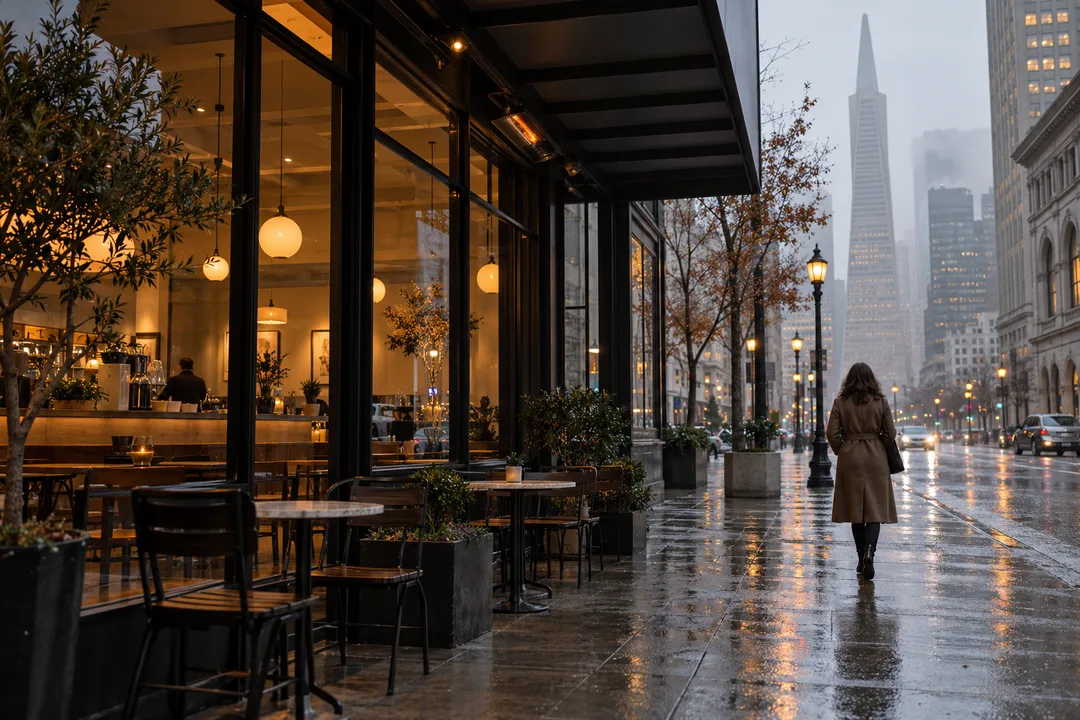
SF Post Work Route Planner: 3 Ways to Dodge Wind
Keep a windy SF evening manageable with short outdoor legs, a purposeful indoor pause and an early exit option, rather than a chain of exposed detours.
A cold commute does not need an ambitious outdoor itinerary attached to it. When you leave work wanting a change of scene but dislike the wind, use a post-work route planner to organize a few short transitions and one worthwhile indoor pause. Start with what you can comfortably tolerate outside. Then choose between staying close to work, pausing near your onward connection or going directly home. The purpose is to conserve energy while making room for something pleasant.
Read your own weather tolerance first
Begin with how the conditions feel to you, rather than a dramatic description of San Francisco fog. Wind, damp clothing and the effort of carrying a bag can change what counts as a reasonable walk. State whether you are already cold, have an extra layer and want to avoid exposed outdoor waiting. You do not need an exact temperature to describe those limits. A useful plan can work from your preferences without pretending to measure the weather at each street corner.
Separate the weather you observe from information a planner has supplied. Looking out of an office window tells you something about that view, not every block of a proposed route. A forecast describes expected conditions, not a guaranteed sheltered pavement. Ask for a route that reduces your outdoor exposure through shorter walking legs and a clear destination. Avoid asking for an invisible network of wind-free streets, which would require evidence beyond an ordinary itinerary suggestion.
Option 1: Pause close to the office
If the main problem is that you are cold and hungry before the trip starts, keep the first indoor stop near your departure point. A simple meal or drink can give the evening a boundary between work and commuting. Choose a place you actually want to patronize and describe the kind of seating you need. A restaurant, cafe or other public-facing business is a destination with its own terms of entry, not an unlimited waiting room supplied by the route.
The advantage is a small initial commitment: you leave the office and make one short move before deciding what happens next. The cost is that the homeward journey remains ahead of you. This option fits an evening without a fixed departure, or one where you have deliberately allowed time for the pause. It fits poorly if sitting down means abandoning a connection you need. Keep the return trip visible while you decide, and resist adding another stop simply because you have warmed up.
Option 2: Put the indoor break near the exit
When a particular station or onward pickup point defines the evening, choose a break near that exit anchor. Work through the commute approach first, then consider a meal or coffee only within a compact area that leaves you close to the next leg. This makes the remaining journey easier to picture. The relevant question becomes "How much outside movement follows this pause?" rather than "How attractive is this indoor stop on its own?"
Ask for two versions of the approach: a direct one and one with a single indoor destination. Keep any walking-time estimates clearly separate from time spent waiting for service or finding a seat. If the stop creates a long reversal or another outdoor wait, it may offer little benefit. A good sheltered-stopover plan reduces friction across the complete trip. It does not merely insert a warm-looking interior between two exposed segments while calling the overall route comfortable.

Option 3: Make the direct trip the evening plan
Some days the sensible unwind route is the shortest workable trip home, followed by dinner in a familiar setting. Treat that as a positive choice, especially if your clothing is wet or you have little energy left for navigation. Ask the planner to remove optional walking and extra transfers from consideration, then assess the remaining route against your needs. A city assistant can help organize the decision without making every weekday into a miniature outing.
This option is also useful when your group has different tolerances. One friend may want an outdoor walk while another needs to get warm. Agree on separate departures instead of forcing a compromise that satisfies nobody. If you still want company, choose a shared indoor destination that both people have decided to visit, with independent routes afterward. The plan should explain where the shared portion ends, so nobody discovers an unwanted extra walk at the end of dinner.
Know the difference between shelter and access
An awning, arcade or glass-fronted building in a generated picture is not evidence that you can shelter there. Private lobbies and passageways may have access restrictions, and a station is not automatically an indoor lounge. Do not create a route around assumed access to an unnamed interior. Use a specific, suitable destination or choose the direct trip instead. An indoor pause is helpful only when entering the space is a legitimate part of your plan.
Accessibility also deserves its own line in the brief. Step-free entry, seating, toilet access and the ability to avoid prolonged standing are separate from protection against weather. SFMTA publishes accessibility information alongside its transportation guidance, but a route-level suggestion still needs to be matched to the particular service and stop. Describe the requirement explicitly. If the proposed pause leaves an important access detail unanswered, request an alternative that does not depend on that unresolved feature.
Give Karpo a decision instead of a weather fantasy
In the Karpo APP, try: "I am leaving [work intersection] for [homeward connection]. I am cold and want at most one short outdoor walk before sitting indoors. Compare a pause near work, a stop near my connection and a direct trip. I need [access requirement] and would prefer [food or drink]." This prompt gives the assistant a practical comparison task. It does not ask it to track street-level gusts, monitor every doorway or promise that a vehicle is arriving.
Evaluate the response by what remains outside after each option. A useful comparison should identify the walking legs, the indoor destination or search area, the onward anchor and the reason to reject an option. If every choice still relies on standing outdoors, explain that this fails your main constraint. Ask for one targeted revision. Keep transit service information with the operator and any table request with the venue, rather than reading a suggested sequence as a confirmed itinerary.
Practical notes for an evening with an early exit
Pick an exit rule you can apply without negotiation: once you feel too cold for another leg, take the direct route home. Keep a spare layer available when you have one, and allow yourself to abandon a scenic extension even if the weather improves briefly. No fixed duration in this plan is a statement about today's forecast or service. It is your chosen tolerance. A sheltered evening succeeds when the transitions are manageable and the pause gives you what you needed, whether that is a meal, a seat or simply a clear path out of the workday.
Ask Karpo for more information.
Keep reading
- North Beach Tailor Alteration Shop Finder: Inherited Suits
 Hayes Valley Tailor Alteration Shop Finder for Boutique Buys
 Pac Heights Tailor Alteration Shop Finder for Heirloom Gowns