 North Beach Tailor Alteration Shop Finder: Inherited Suits
Neighborhood Guides

SF Neighborhood Itinerary Builder: 3 Stops Without Shopping
Plan a San Francisco neighborhood browse without a shopping list, pairing window displays, street details, and a chosen pause around your own interests.
A San Francisco neighborhood browse can have a clear purpose without ending in a purchase. Use a neighborhood itinerary builder conversation in the Karpo APP to describe what you like looking at, how long you want to be out, and whether entering shops is part of the afternoon. Start with three possible elements: a window to study, a street detail to notice, and a pause you would enjoy. Those are planning choices, not a list of promised attractions.
Choose what catches your eye
A shopping category is often too broad to describe the pleasure of browsing. Someone interested in ceramics might care about glaze and shape rather than the number of stores visited. Someone who enjoys clothing might prefer window styling to racks of stock. Tell Karpo which part holds your attention and which part you want to avoid. That gives the conversation a useful subject before you ask for a neighborhood recommendation or an order of stops.
Try this opening request: “I want an afternoon in San Francisco looking at interesting windows and small design details. I am not shopping for anything. Suggest a neighborhood direction and a few kinds of places I could browse without making purchases the goal.” Add a starting area if you already have one. The wording asks for ideas and gives your intention plainly. It does not assume that any particular shop welcomes extended browsing or provides a public seating area.
Keep a purchase from becoming the finish line
Decide whether your spending boundary is firm or simply a preference. “I do not want to buy objects today” leaves room for a drink, while “I want to spend nothing during the walk” means something different. State the version you mean. Otherwise a recommendation involving a cafe or a paid exhibition can quietly change the character of the outing. A clear boundary also makes it easier to reject an appealing suggestion that belongs on another day's list.
Give yourself a way to enjoy an object without acquiring it. You could remember a color combination, sketch a shape later, or note a question about how something was made. These are your own activities, not services offered by the venue. Avoid turning every display into a photo assignment. A private shop's photography rules still apply, and an interesting window can be enough without entering. The point is to pay attention rather than collect evidence that you visited.
Ask for a sequence with different textures
Three similar retail interiors can blur together. Request a change in the kind of attention each part needs: perhaps a display, a short stretch of architecture, and a chance to sit. Ask Karpo to explain why those elements belong in the same outing. The explanation is useful even when you replace a suggestion. It tells you whether the plan is organized around your interest or merely stacks places that share a broad category.
Use an illustrative follow-up such as: “Give the first part a strong visual focus, make the middle mostly outdoors, and leave the final pause optional.” This creates variety without pretending to know today's stock or a shop's interior arrangement. If a result depends on a named exhibition, a scheduled event, or access to a private room, treat that as a separate decision. A casual browsing afternoon should not acquire a booking commitment just because a recommendation sounds interesting.
Browse considerately when you go inside
Entering a shop changes your relationship to the space. Keep doorways and working counters clear, and let other customers reach what they came to buy. Ask before handling fragile pieces or opening a display. Those are sensible visitor habits, not claims about a particular business's policy. If the room is busy and your main pleasure was the window, continue the walk. You do not need to turn a quick look into a long indoor stop to justify the plan.
A companion can make browsing easier or more awkward depending on expectations. Agree whether you will linger together or separate briefly within the same small area. If one person wants to try things on and the other wants a no-purchase afternoon, say so before choosing the next stop. Ask Karpo for a street-focused alternative if the group drifts into a shopping trip. The original constraint is still useful after the walk begins, especially when your interests diverge.
Build a pause around what you need
A rest can be the part that makes the outing feel complete. Decide whether you need a seat, food, a quiet conversation, or simply a moment away from displays. These are different requests. A cafe recommendation should not be treated as a guarantee of an empty table, and a public outdoor space should not be assumed to provide shelter. Tell Karpo what the pause needs to accomplish so you can choose an appropriate kind of stop.
For example, you might ask for a paid drink break only after deciding that a drink fits your budget. Or you might keep the afternoon entirely outdoors and finish when you feel ready to leave. Both are valid. Skip an extra retail stop if it adds little beyond another room of objects. The most useful judgment in this kind of plan is often knowing when your attention has been satisfied, rather than squeezing another destination into the available time.
Make your own short record
Afterward, write down one detail you actually noticed: a material, a way objects were arranged, or a contrast between two facades. A personal record can be brief and need not include photographs or a list of business names. If the walk made you curious about a craft, that becomes a more precise request for another day. You can ask about learning opportunities separately instead of adding a class or appointment to an outing that began as a browse.
Keep potential purchases separate from the route itself. Saving an idea for later removes the pressure to circle back immediately. If you do decide to buy something, consider what carrying it would do to the remaining walk. Fragile or bulky objects may make an early finish more comfortable. That is a reason to revise your afternoon, not a failure of the original plan. Your decisions remain yours even when the conversation provides a helpful starting structure.
Practical Notes
Before sending your first message, choose a visual interest, a spending boundary, and an approximate end point. A phrase like “windows and street details, no objects to buy, finish near my return journey” is more useful than an unrestricted shopping request. Add any walking or seating needs that affect your choices. Karpo's public site presents conversational local discovery and an invitation to ask for ideas. This workflow uses that conversation to organize your preferences, with no claim of reserved access or live shop inventory.
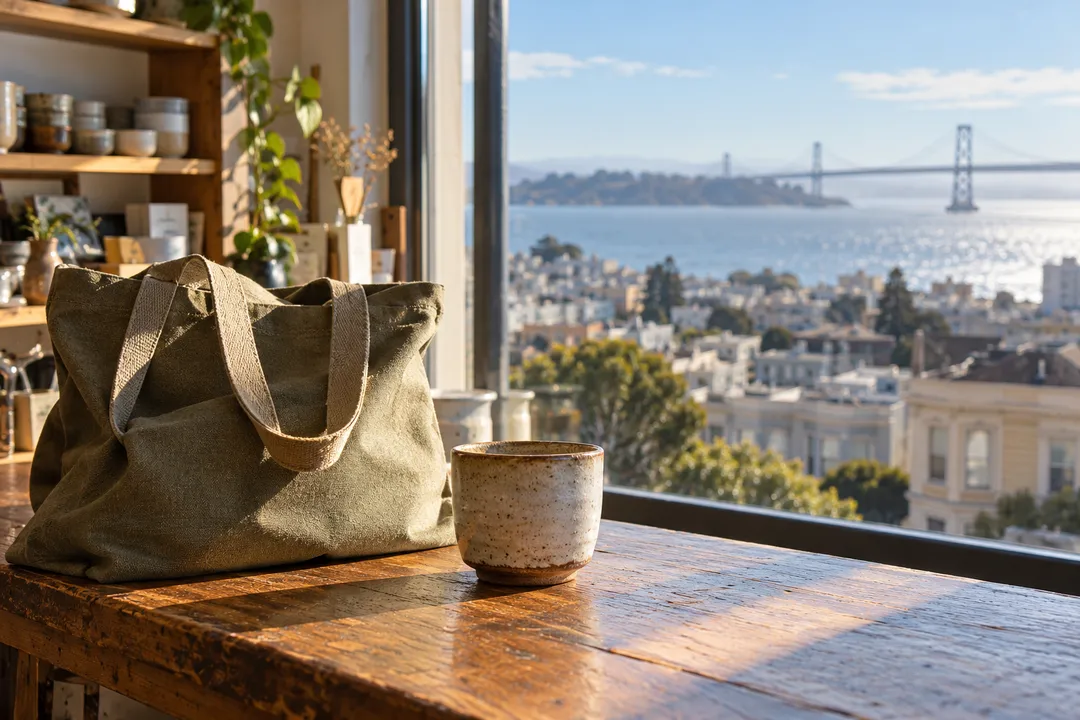
The photographs accompanying this article are generated illustrations of neighborhood browsing, not pictures of recommended shops. The three-part structure is an example you can shorten or rearrange. When you are ready to begin, open the Karpo APP and describe what you enjoy noticing. Ask for a small set of possibilities, choose the most appealing direction, and leave enough unplanned attention for something you encounter yourself. A good browse can end with a clearer sense of your taste and an empty shopping bag.
Ask Karpo for more information.
Keep reading
- North Beach Tailor Alteration Shop Finder: Inherited Suits
 Hayes Valley Tailor Alteration Shop Finder for Boutique Buys
 Pac Heights Tailor Alteration Shop Finder for Heirloom Gowns