 North Beach Tailor Alteration Shop Finder: Inherited Suits
Neighborhood Guides
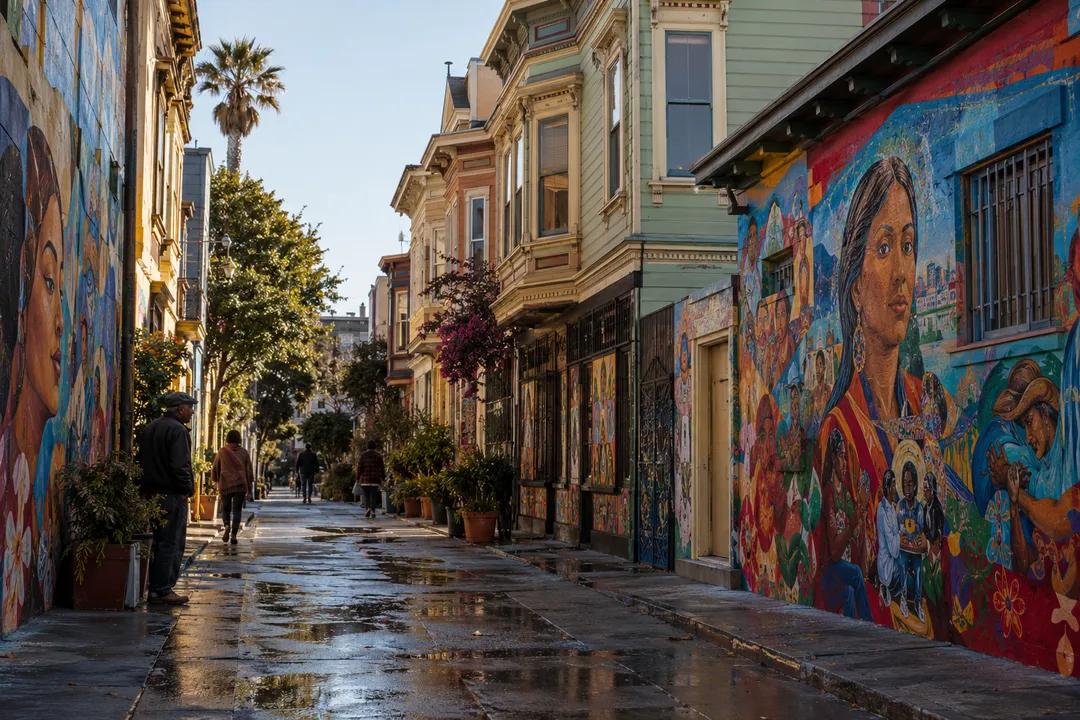
SF Neighborhood Audio Walk: Free Mission Murals Route
Explore vibrant Mission District murals, historic tiled doorways, and community culture on this self-guided San Francisco neighborhood audio walk route.
Begin this neighborhood audio walk in San Francisco’s Mission District with the volume low enough to hear bus brakes, taqueria griddles, and footsteps on the pavement. The route is designed as a self-guided sequence through the Mission’s mural corridors, old Victorians, and pocket parks, so the story changes whenever the block changes. You are following a listening plan rather than a timed tour: pause at a painted wall, replay a detail, or skip ahead when a crowd gathers.
Transit and Route Rhythm
Start near a major Mission transit corridor, then let the walk run mostly east and west so the hills stay manageable. Cross streets are busy, and the guide’s stop order makes room for safe crossings instead of asking you to stare at a map. Wear shoes with a stable sole; tile, patched asphalt, and curb ramps change underfoot from block to block.
Keep the route downloaded before leaving a strong-signal area, then use the Karpo APP as a prompt for what to notice next. The app can provide a route outline, landmark prompts, and exploration suggestions; it does not claim to detect your exact position or trigger audio automatically. That honest boundary keeps the walk simple and leaves your attention on the street.
What to Notice Before You Leave
Save one image in memory rather than collecting every wall in a camera roll. The best takeaway may be a repeated color, a phrase in a mural, or the sound of a particular corner. This route rewards a second pass because the same block can feel intimate in the morning and theatrical after sunset.
For a shorter version, stop after the central mural cluster and continue another day. For a longer outing, follow the guide toward Dolores Park and let the neighborhood story widen into open sky. Either choice keeps the walk exploratory, which is the point of a neighborhood audio walk. The Mission chapter is especially useful for listeners who want a neighborhood story without a rigid tour script. You can stop at a mural, let a friend describe what they see, and then restart with the next prompt. Notice how the route moves between public art and ordinary errands: a parent steering a stroller, a cyclist choosing a quieter lane, a worker unlocking a gate. Those details are not filler. They explain why the district feels layered rather than staged. If you return on another day, choose a different direction through the same blocks and compare which sounds become prominent. The guide stays useful because it gives you an order of attention, not a claim that one walk captures every story. That is the right scale for a self-guided audio walk in a neighborhood that keeps changing.
Mission Murals as the Opening Chapter
Starting near Precita Eyes Mural Arts at 2981 24th St, Balmy Alley gives the walk its visual first sentence. Its narrow passage is lined with murals that treat migration, labor, family memory, and political protest as a shared neighborhood archive. Listen for the way the guide separates a wall-wide composition from the small signatures and dates at its edges. A useful habit is to stand at both ends of the alley; the scene reads like a procession from one direction and a conversation from the other.
Clarion Alley, near the Roxie Theater at 3117 16th St, shifts the mood toward sharper contemporary commentary. The walls change often, and the route treats that impermanence as part of the story instead of pretending the alley is a finished monument. Walk slowly enough to notice layered paint, uncovered brick, and the tiny gaps where an older image survives. The guide suggests a short pause here because visual density makes rushing feel like skipping pages.
Victorians, Tiles, and Small Details
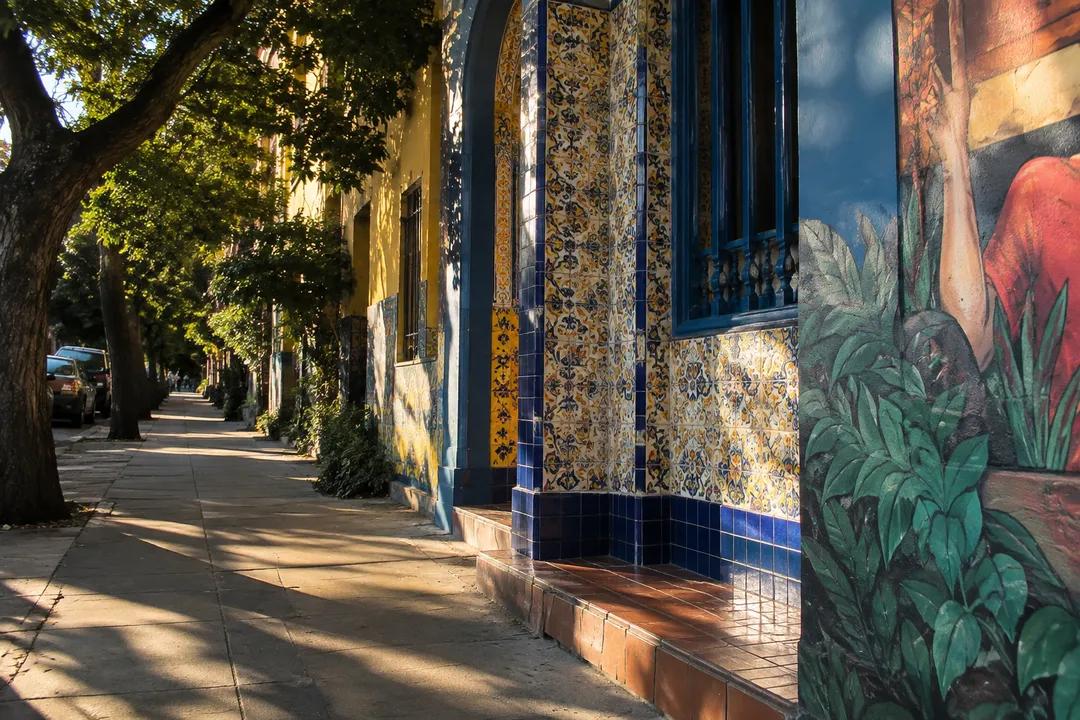
On the connecting streets, the audio points out Italianate bay windows, painted cornices, and glazed tile steps that sit beside newer apartment fronts. The contrast is the point: the Mission is not a museum street but a working neighborhood where decorative details remain in daily use. Look for door hardware, porch brackets, and small gardens rather than only the tallest facades.
A good listening trick is to let one block play without looking at the screen. The guide names a shape, color, or sound, then you find it with your eyes. That keeps the walk social and leaves your hands free at crossings. The route’s strongest moments are often modest: a hand-lettered sign, a tiled threshold, or a window where plants have taken over the sill.
Food-Court Energy Without a Checklist
The route passes the kind of storefronts that make the Mission feel immediate: bakeries opening, produce stacked outside markets, and taquerias sending steam toward the sidewalk. It does not turn the walk into a restaurant directory. Instead, it uses smells and street rhythms as orientation cues, suggesting that you choose a break when the neighborhood feels alive rather than chasing a prescribed stop.
If you want a pause, choose a public square or a bench and keep the audio running at a lower level. The guide is written for listeners who may stop for a snack, but it does not assume a reservation, a menu, or a particular budget. That flexibility matters on weekends, when a ten-minute detour can reveal a completely different block tempo.
Timing the Loop
Weekday mornings give you the clearest sound mix: delivery carts, school drop-offs, and the first café conversations create texture without the louder weekend surge. Late afternoon brings warmer mural colors and longer shadows, while early evening adds more voices and vehicle noise. Pick the window that matches your listening style; the route remains useful when the atmosphere changes.
Crowds collect at mural alleys and transit corners, so leave a little space between your group and the next doorway. When a sidewalk tightens, pause the narration rather than standing in the flow. The practical advantage of a self-guided walk is that you can resume at the next calm corner without losing the order of the story. Bring a notebook if you like, but do not turn the route into a transcription exercise. Write down one question the murals raise and one sound you would have missed without the guide. That small record keeps the experience personal and avoids the pressure to document every stop. The neighborhood is generous to repeat visitors because color, weather, and street activity continually rearrange the same visual material. Listen for the neighborhood’s edges as well: the rumble of a truck changing gears, the echo under an awning, and the sudden openness near a park. These transitions help you remember the route when the painted walls blur together. A friend can take the role of timekeeper, but no one needs to rush. The walk is successful when the group notices something it would have passed before. Leave enough time to look back. A mural may change meaning when seen from the opposite end, and a quiet porch may reveal the street’s loudest rhythm. The route is meant to be revisited, not consumed once.
Ask Karpo for more information.
Keep reading
- North Beach Tailor Alteration Shop Finder: Inherited Suits
 Hayes Valley Tailor Alteration Shop Finder for Boutique Buys
 Pac Heights Tailor Alteration Shop Finder for Heirloom Gowns