 North Beach Tailor Alteration Shop Finder: Inherited Suits
Neighborhood Guides
SF Neighborhood Audio Walk: Free Japantown Peace Plaza Loop
Discover Peace Plaza echoes, traditional storefronts, and quiet residential passages on this self-guided Japantown neighborhood audio walk in San Francisco.
San Francisco Japantown rewards a neighborhood audio walk that listens for spaces between the obvious landmarks. The route begins around Peace Plaza, then folds through arcades, cultural buildings, and quieter residential edges where the city’s grid feels less pronounced. The guide treats the district as a living place shaped by memory, business, and gathering, so every stop pairs a visual detail with a sound to notice.
Access and Listening Etiquette
Japantown’s routes are mostly level around the plaza, but small transitions and crowded entrances still require patience. Keep the group compact, avoid stopping in front of doors, and lower the volume when entering shared indoor areas. A self-guided route should fit the neighborhood’s existing rhythm.
Use the Karpo APP for a clear stop order, alternative loop lengths, and nearby exploration prompts. It does not track your body position or start audio automatically. Manual chapter starts take a moment, but they keep the experience transparent and make it easy to pause for a conversation or a sudden street sound.
End With One Repeated Motif
Before leaving, find a motif that appeared more than once: a lantern shape, a curved roofline, a tiled pattern, or a particular shade of red. Repetition gives the walk a visual thread and makes the district easier to remember later.
You can finish in one loop or split the route across two shorter visits. The guide is intentionally flexible because Japantown changes with events, weather, and the pace of the people using it. The strongest ending is often a quiet one, when the plaza sounds recede behind you. The route’s flexibility is part of its respect for Japantown. Events, ceremonies, school groups, and ordinary shopping all share the same limited spaces, so a good listener makes room. Step out of a doorway, lower your voice, and let a busy chapter wait. If you visit again, compare the plaza at two times of day and note which sounds belong to the architecture and which belong to the people using it. This is why the walk avoids a single “correct” mood. It offers a sequence of prompts that can hold quiet reflection, lively conversation, or a short cultural outing. You leave with a few durable images and a better sense of how the district carries memory through daily use.
Peace Plaza as a Compass
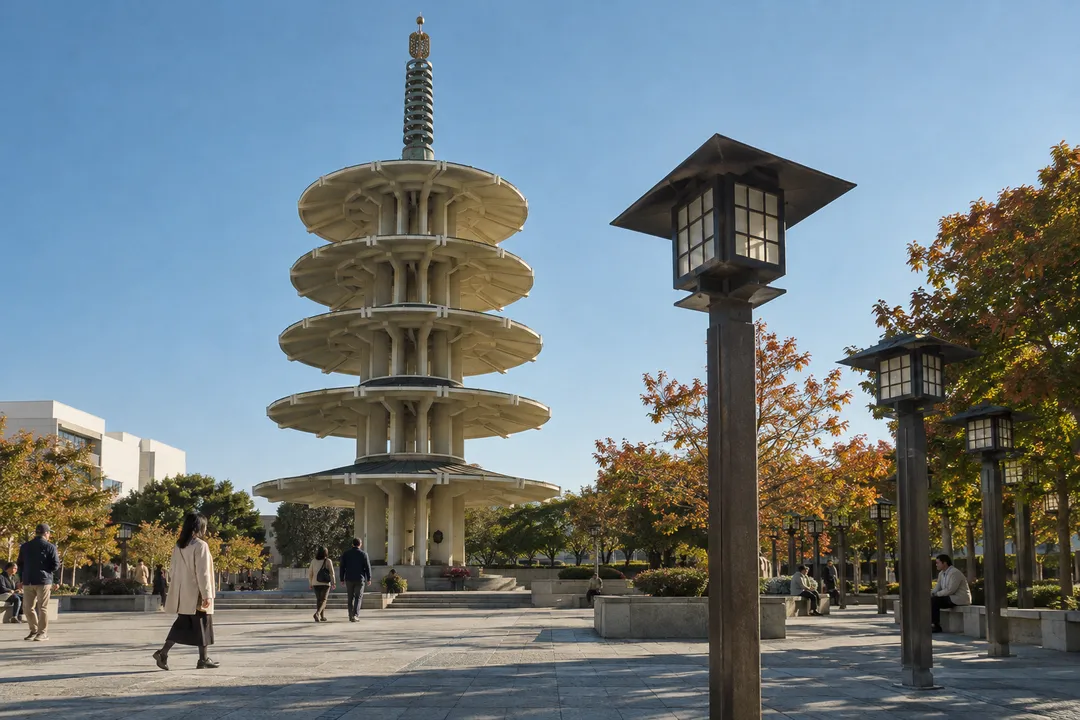
Located at 1610 Geary Blvd, Peace Plaza is the route’s compass because its open geometry lets you reorient without staring at a map. Look at the pagoda silhouette, the paving pattern, and the way pedestrians cross the space diagonally. The opening audio sets a gentle pace and suggests standing near the edge, where you can hear several directions at once.
The plaza also works as a weather check. In bright sun, the paving and lantern colors carry the chapter; under cloud, the surrounding facades and reflections become more prominent. Use the same stop twice if you want to compare moods rather than rushing to collect new landmarks.
Arcades and Storefront Texture
Inside the Japan Center arcade near 1737 Post St, storefronts create a sequence of thresholds: glass, wood, tiled walls, and compact displays. The route asks you to notice how each entrance frames the next one. Keep moving when a shop is busy and save the visual detail for a pause farther from the doorway; observation should not interrupt customers.
A short passage can feel like a sound booth. Fans, kitchen activity, and footsteps gather under the ceiling, then fade when you step back into open air. The guide uses that change to explain why Japantown feels intimate even when the wider street is busy.
Cultural Memory Without a Checklist
The walk introduces memorial and cultural references in broad, sourced language, then leaves space for your own response. Listen for how names and dates are spoken, but do not treat the district as a static history display. The surrounding businesses and gatherings are evidence that memory is active, negotiated, and renewed.
If you want a pause, choose a plaza edge, a public bench, or a quiet block away from storefront traffic. The route is comfortable for solo listeners and small groups. Keep one ear open near driveways and loading areas, where the soundscape can change before the guide’s next chapter.
Choosing the Right Time
Late morning offers clean light on the plaza and a manageable mix of shoppers. Afternoon brings more conversations and a warmer storefront glow. Early evening emphasizes lamps and interior activity, but it also increases foot traffic near dining corridors. Pick the mood that helps you listen instead of trying to experience every version in one day.
Rain can make the plaza slick, so shorten the outdoor section and spend longer under covered arcades. The route can be rearranged without losing its logic: start with the central chapter, then add the residential edge when conditions improve. Listen for the moments when the district becomes quiet enough to hear your own steps. Those intervals often occur just beyond the busiest arcade, where a residential wall or small garden absorbs the street noise. They are valuable because they let the historical chapters settle before the next visual sequence begins. Take a quiet minute before the final stop and let the district’s layers settle: commerce, remembrance, architecture, and the routines of people who live nearby. You do not need to identify every reference to understand the route. Good listening leaves room for partial knowledge and respectful curiosity. The most memorable detail may be a threshold rather than a landmark: a cedar screen, a worn tile, or a patch of reflected light. Let the guide point you toward those small discoveries, then keep walking with care. Let the final sound be something ordinary: a door closing, a bicycle bell, or shoes crossing the plaza. Ordinary sounds prevent the route from ending as a postcard and return the district to daily life. Notice how that modest ending changes your sense of scale, then leave through the route’s quietest edge.
Ask Karpo for more information.
Keep reading
- North Beach Tailor Alteration Shop Finder: Inherited Suits
 Hayes Valley Tailor Alteration Shop Finder for Boutique Buys
 Pac Heights Tailor Alteration Shop Finder for Heirloom Gowns