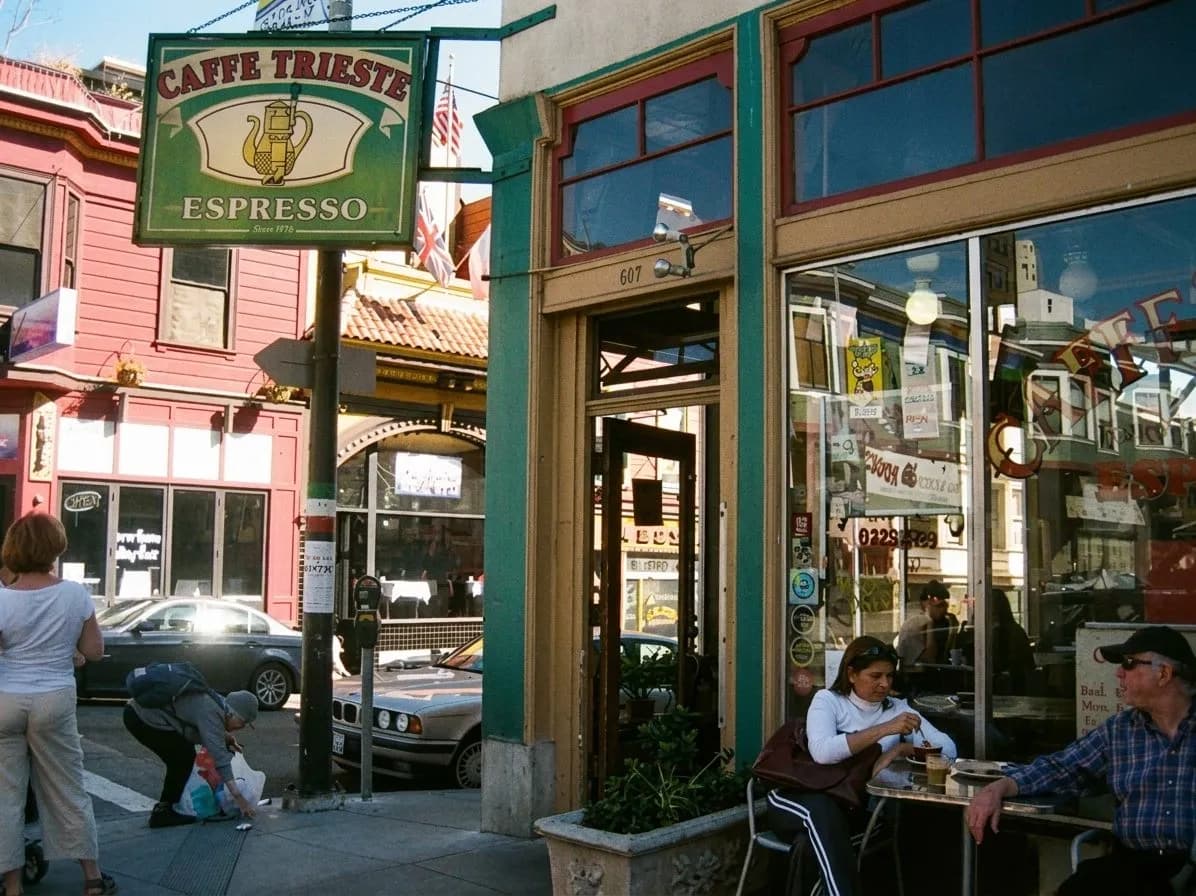
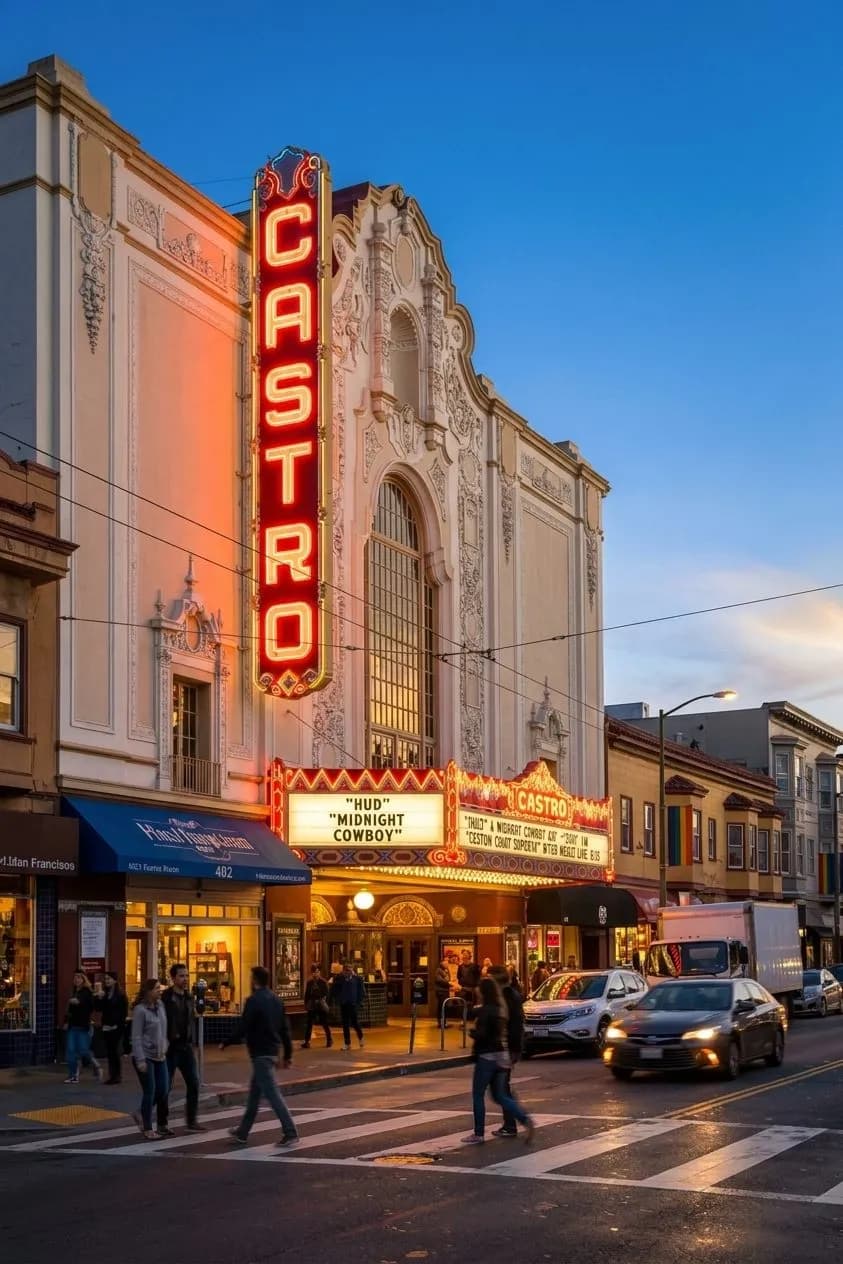
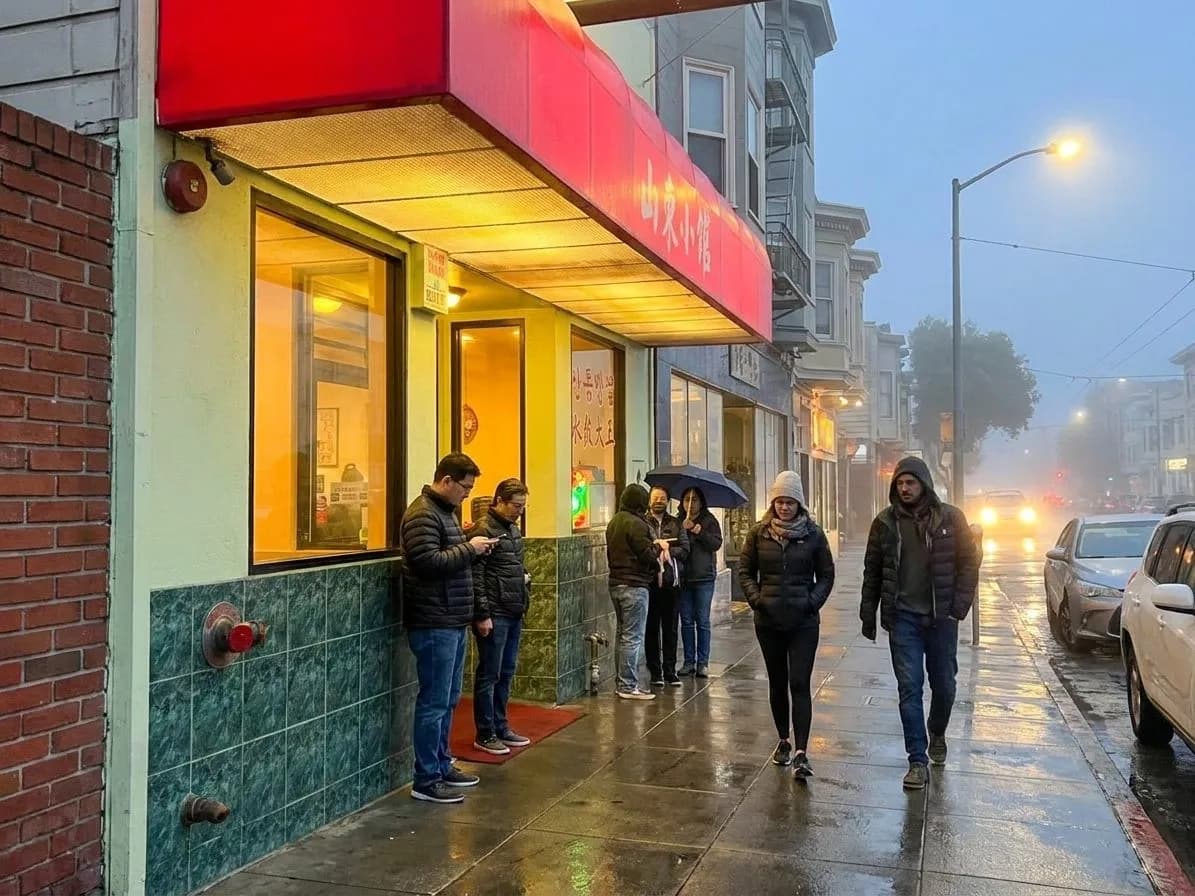
This guide is built for someone going solo without wanting to feel stranded. A good solo plan has a clear arrival time and an easy exit. The headline may be timely, but the useful part is a plan that still works when a venue changes hours, a schedule moves, or the group chat wakes up late.
Text Karpo what matters most—timing, budget, neighborhood, noise level or accessibility—and use the reply to narrow the city to a small number of workable choices. The goal is not to add more tabs, but to make it easy to say yes and show up.

National surveillance reported broad growth in infections in August, with wastewater and lineage monitoring drawing renewed attention. Conditions can change quickly, so the durable value is a decision framework for tests, indoor events, transit and conversations with a clinician rather than a fixed claim about today's neighborhood risk.
Start with the neighborhood, not the list
San Francisco residents regularly move between crowded transit, offices, restaurants, concerts and foggy outdoor spaces in the same day. A useful city guide should help readers adjust plans without turning every invitation into a crisis or treating public-health guidance as static.
For someone going solo without wanting to feel stranded, the highest-value decision is usually the first one: where the plan begins. Once that is fixed, arrival time, food, transportation and the backup become much easier to coordinate. The opposite approach—collecting a long list before choosing a neighborhood—creates options without creating a plan.
Use a two-option rule. Pick one primary choice that best matches your energy and one backup that solves the most likely failure mode. The backup should be close enough to use without restarting the day. It should also be genuinely acceptable, because a theoretical backup rarely survives real traffic, weather or a full room.
If your primary choice is an outdoor market in the Mission, your backup might be a covered café three blocks away, not a museum across town in the Richmond. If your primary choice is a ticketed indoor show in SoMa, your backup might be a walk-in bar on the same block, not another venue that requires advance planning. The backup exists to keep the day moving, not to become a second research project.
The verification pass
Time-sensitive city guides age quickly. Verify operational details on the day you go, and distinguish an announced date from a confirmed reservation, ticket, seat or medical recommendation. Screenshots and old social posts are useful clues, not guarantees.
- Check current CDC, California and San Francisco Department of Public Health guidance before acting on any health recommendation.
- Use a fresh test according to its instructions when symptoms or known exposure make it relevant.
- Improve ventilation or move a gathering outdoors when practical and when it fits the plan.
- Carry a well-fitting mask for crowded indoor situations if it fits your personal risk assessment.
- Contact a qualified clinician for personal medical advice, treatment eligibility or urgent symptoms. Do not rely on a city guide for clinical decisions.
Verify hours, capacity limits and any current health policies directly with the venue on the day you plan to go. A restaurant that served dinner indoors last month may have shifted to outdoor-only service, reduced capacity or changed reservation requirements. A concert venue may require proof of vaccination or a negative test, or it may have dropped those requirements. Do not assume continuity.
Build the plan in three chapters
Chapter one is arrival. Decide when you should actually arrive, not merely when the event begins. If you are meeting others, give the earliest person a useful task such as checking the room, confirming the table or finding the correct entrance. That turns waiting into information for everyone else. If you are going solo, arrive early enough to handle one surprise—a closed street, a full parking lot, a longer walk from the bus stop—without missing the start.
Chapter two is the main experience. Protect it from avoidable friction by agreeing on one communication channel and one decision-maker for last-minute changes. If everyone independently calls venues, checks maps and forwards updates, the group gets noisier while the information gets worse. For solo plans, this means deciding in advance what you will do if the primary choice is full, closed or uncomfortable. The backup should already be saved, not researched in real time.
Chapter three is the exit. Decide whether you want food, a walk, a second venue or a clean trip home. In San Francisco, the post-event move often determines whether the day feels complete or exhausting. A short next step is usually better than an ambitious cross-city detour. If your main event is in the Haight, a walk to Golden Gate Park or a quick bite on Divisadero is easier to execute than a ride to the Ferry Building. If your main event is in North Beach, a walk to the waterfront or a drink on Columbus is easier than a trip to the Outer Sunset.
A good solo plan has a clear arrival time and an easy exit. The backup should be close enough to use without restarting the day.
What this angle changes
A guide for someone going solo without wanting to feel stranded should not pretend that every reader wants the loudest, cheapest or most famous option. It should make the tradeoffs visible. Comfort can matter more than spectacle; certainty can matter more than novelty; and a ten-minute walk can be more valuable than another five-star listing across town.
If you value predictability, choose venues with confirmed reservations or advance tickets over walk-in spots during peak hours. If you value flexibility, choose neighborhoods with multiple similar options within a few blocks. If you value outdoor space, choose the Mission, the Marina or the Presidio over dense indoor districts. If you value transit access, choose corridors served by BART, Muni Metro or multiple bus lines over areas that require transfers or long walks.
Late summer in San Francisco means fog in the western neighborhoods, microclimates that shift every few blocks, and outdoor spaces that feel warm at noon and cold by six. Layer clothing, check the forecast for your specific neighborhood, and do not assume that conditions in SoMa match conditions in the Sunset.
The final checklist
Save the primary choice, the backup, the arrival time and the one detail that must be reconfirmed. Then stop researching. The goal is not to prove that you found every possible option. The goal is to make it easy to say yes, show up, and enjoy late-summer outings in San Francisco.
- Pick one neighborhood and one primary venue or activity.
- Pick one backup in the same neighborhood that solves the most likely failure mode.
- Decide on an arrival time that includes buffer for transit, parking or one surprise.
- Verify hours, capacity and current health policies on the day you go.
- Decide in advance whether the exit is food, a walk, a second stop or a direct trip home.
- Save the plan in one place and stop adding tabs.
Tags: #san-francisco #late-summer #solo-planning #neighborhood-guides #covid-context #karpo
Sources consulted: San Francisco Department of Public Health COVID-19 guidance · California Department of Public Health · CDC COVID-19 information
All trademarks are the property of their respective owners.