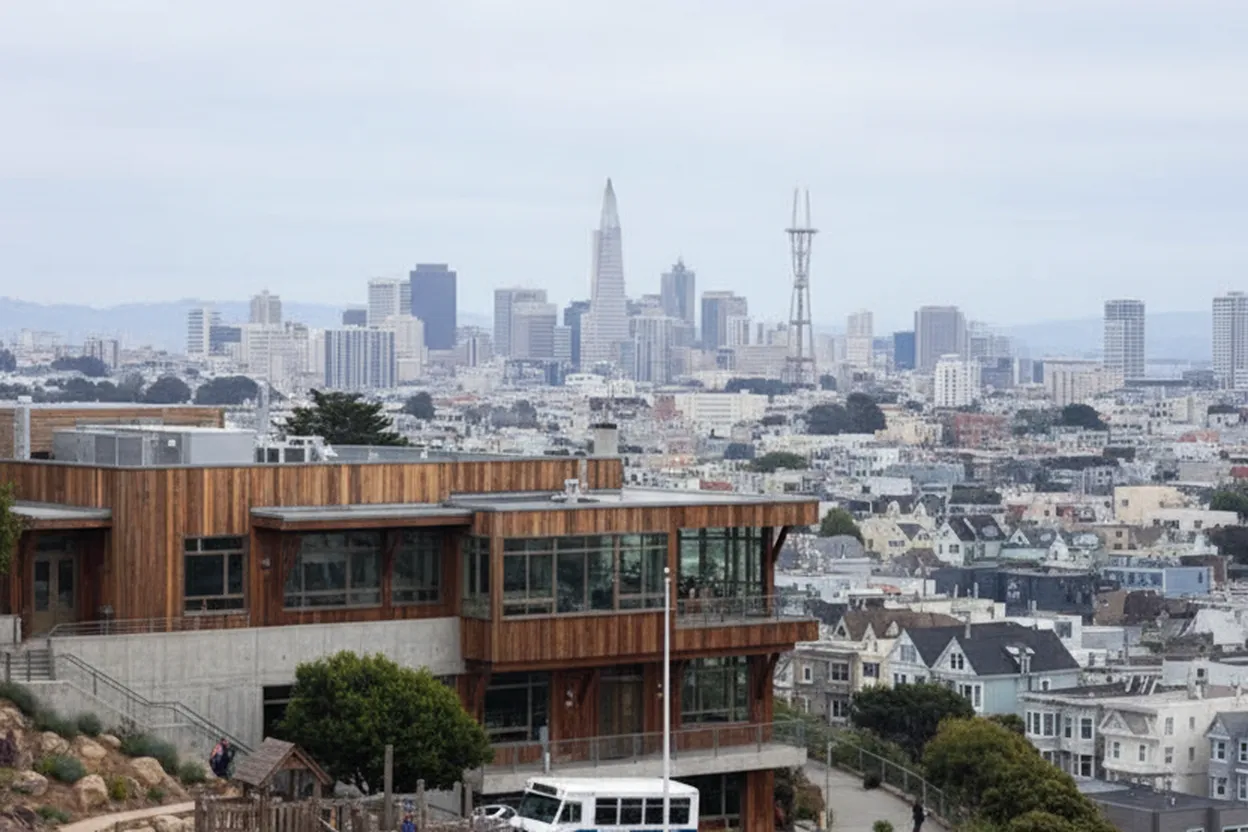
San Francisco families following Jackie, the Big Bear bald eagle receiving care after severe anemia reports in July 2026, have a better option than refreshing rumor-heavy feeds all day. Treat the phrase jackie bald eagle anemia as a prompt for careful learning, not alarm. Randall Museum in Corona Heights gives children and adults a local, low-pressure place to talk about raptors, animal rehabilitation, and what public updates can and cannot prove. Pair that visit with reputable sources from wildlife centers, museums, and public land managers. The goal is simple: understand the story, protect privacy around veterinary care, and avoid turning uncertainty into noise.
Want a calmer SF plan before you discuss Jackie with kids? Text Karpo for a Randall Museum route, source-check prompts, and nearby birdwatching backup ideas tied to San Francisco.

Randall Museum Animal Exhibits in Corona Heights
Start at Randall Museum because it is local, free to enter, and built for patient observation rather than breaking-news reaction. The museum lists habitat-based live animal exhibits, including raptors and small birds, plus California mammals, reptiles, amphibians, insects, and tide pool animals. Its role is not to diagnose Jackie from afar. Use the visit to show how trained animal staff communicate cautiously, why nonreleasable animals may live in education settings, and why one viral case never represents every eagle.
For an easy daytime visit, plan around the museum's posted Tuesday through Saturday hours, 10 a.m. to 5 p.m., and confirm the day before going. The address is 199 Museum Way in Corona Heights Park. Admission is listed as free, with donations encouraged. The tradeoff is that live animal viewing can be quieter than children expect, so frame the outing around questions, sketching, and comparing habitats instead of expecting dramatic animal behavior.
Ojai Raptor Center Update Page on Your Phone
Use the Ojai Raptor Center and Friends of Big Bear Valley update trail as the health source, then stop. Recent reputable reports tied Jackie to patient 26-519, described severe anemia and kidney inflammation, and said the underlying cause had not been determined. Friends of Big Bear Valley’s July 27 update relayed that Jackie was stable but critical, eating on her own, and receiving intensive supportive treatment. Those words matter because they leave room for uncertainty.
The failure mode is screenshot gossip: a partial quote travels faster than the full update and turns a medical unknown into a claim about poison, injury, or blame. Read the date, source, and exact status before repeating anything. If a child asks whether Jackie will recover, the honest answer is that wildlife teams were still monitoring bloodwork and could not responsibly predict the outcome. That is a lesson in compassion and evidence, not a reason to speculate.
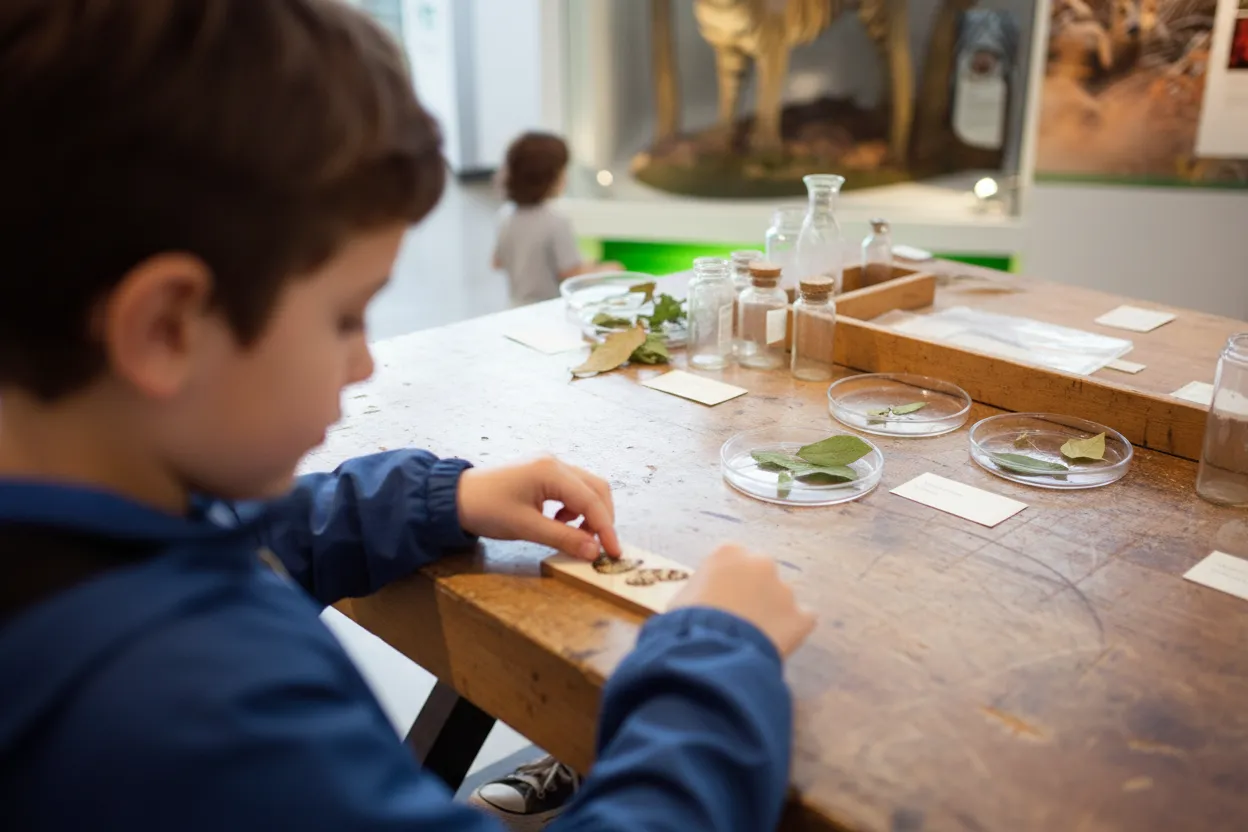
California Academy of Sciences Collections in Golden Gate Park
If your family wants a deeper science stop, the California Academy of Sciences offers the stronger museum context. Its Ornithology and Mammalogy Department describes large bird, mammal, egg, and nest collections used to study distribution, evolution, threats, and environmental change. That does not make the Academy a source for Jackie’s private treatment. It does help explain why specimens, records, and long-term observation matter when people try to understand wildlife health beyond one emotional story.
Inside Golden Gate Park, focus on exhibits and collections language that shows how scientists preserve evidence and compare cases over time. The Academy’s Hidden Wonders material explains that collections can help researchers track disease spread and environmental impacts. The practical tradeoff is cost, crowds, and time compared with Randall Museum. Choose it when older children or adults want a more formal science day; choose Randall when the main goal is a short, accessible neighborhood conversation.
Crissy Field Birdwatching as a Low-Impact Backup
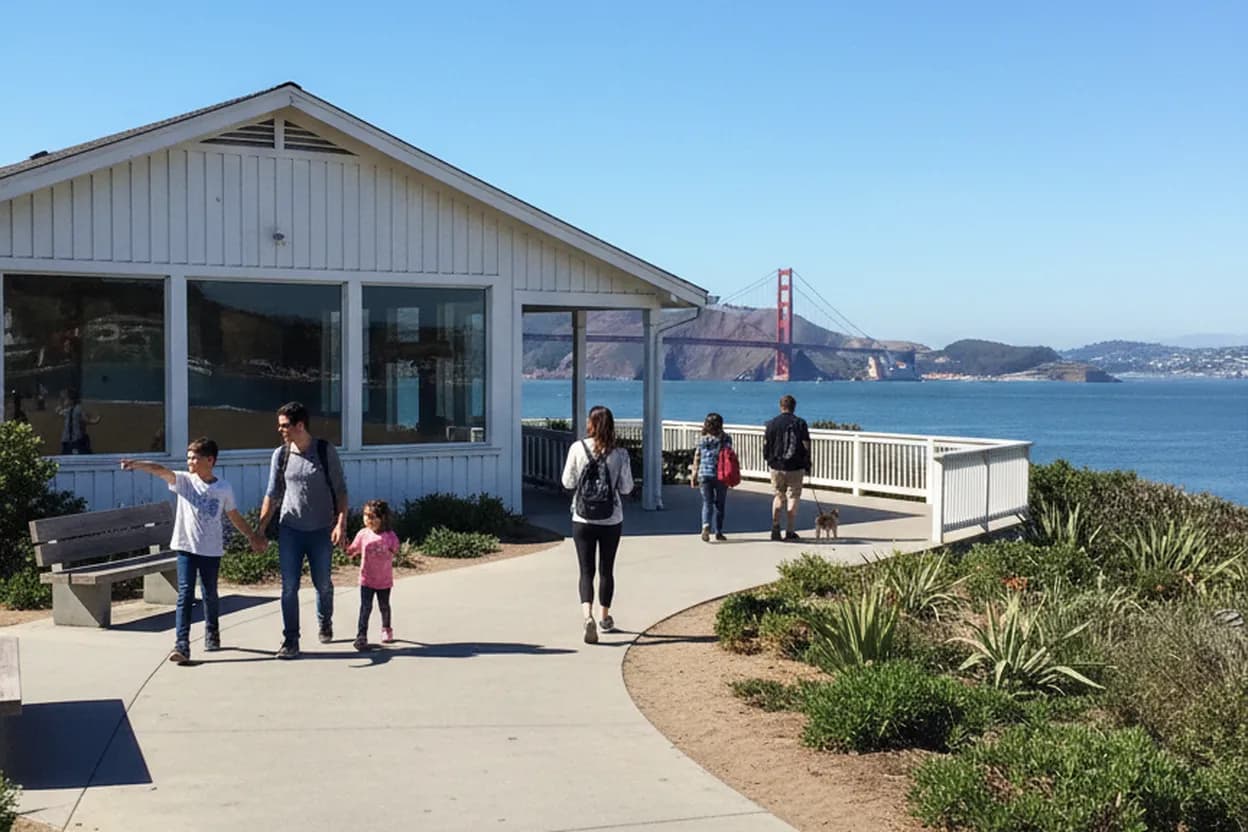
Crissy Field is the outdoor backup when screens feel too intense. The National Park Service describes birdwatching along the promenade, boardwalks, and restored Crissy Field Marsh, with shorebirds, gulls, terns, ducks, grebes, loons, and other species using the habitat. Bring binoculars if you have them, stay on public paths, and keep the lesson broad: wild birds need distance, clean habitat, and observers who do not interfere.
This stop works best after Randall Museum, not before, because children will already have a vocabulary for habitat and animal care. It also handles weather uncertainty well: fog and wind are normal, and the route can be shortened. The key rule is restraint. Do not approach nests, feed birds, play calls, or treat birdwatching as a search for distress. If conditions are poor, use the marsh as a brief observation stop and leave without forcing it.
37 Corbett Bus or Rideshare to Museum Way
Transit planning keeps the day from becoming the story. Randall Museum sits up in Corona Heights, so families should check current Muni routing, walking grade, and service alerts before leaving. The 37 Corbett commonly serves the hill area, but schedules and stop conditions can change. If mobility, stroller handling, or fatigue is a concern, rideshare or a drop-off near Museum Way may be simpler than making the final climb part of the learning plan.
Accessibility deserves the same verification. Randall’s FAQ says the main floor, including lobby, deck, animal exhibit, restrooms, theater, art studio, and grounds, is wheelchair accessible, with other floors reachable by elevator. It also lists an ADA coordinator contact through SF Recreation and Park for accommodations. Confirm elevator status and any program-specific needs before you go, especially if the visit depends on a particular room, captioning, assistive listening, or reduced sensory load.
Museum Way Question List for Kids and Adults
Give everyone one job before entering: collect questions, not conclusions. Good prompts include who is speaking, what they directly observed, what tests are still pending, and whether the claim comes from a care team, a conservation group, a news outlet, or a commenter. For younger children, simplify it to three buckets: known, unknown, and kind. That structure prevents a sad animal-health story from becoming either frightening or falsely resolved.
At Randall, connect those questions to visible objects: feathers, enclosures, perches, habitat signs, and animal-care rules. Ask why a raptor might need specialized handling, why rehabilitation centers limit interruptions, and why public updates may be brief. Avoid asking staff to opine on Jackie unless they volunteer relevant educational context. The respectful move is to learn from the institution’s general wildlife expertise while leaving case-specific medical judgments to the treating veterinary team.
Final Source Check Before Sharing in San Francisco
Before posting, texting relatives, or discussing Jackie in a classroom, do one final source check. Look for the newest dated update from Ojai Raptor Center or Friends of Big Bear Valley, then compare it with a reputable news report if the wording seems unclear. If those sources do not confirm a cause, treatment change, release plan, or prognosis, say that clearly. Silence is better than turning an unconfirmed medical detail into public certainty.
End the San Francisco outing with one concrete action: save the official update page, decide when you will check again, and close the feed until then. For families, that pacing matters. It lets concern become learning instead of compulsive monitoring. If the story changes after Tuesday, August 4, 2026, update only the practical parts you can verify: Jackie’s status, Randall’s hours, transit conditions, access details, and any current wildlife guidance from public agencies.
Tags: #SanFrancisco #RandallMuseum #CoronaHeights #JackieBaldEagle #BaldEagle #WildlifeLearning #MediaLiteracy #FamilyActivity #SFWithKids #CaliforniaWildlife #CrissyField #GoldenGatePark #AskKarpo #BeforeYouGo
Sources consulted: Source 1: randallmuseum.org · Source 2: sfrecpark.org · Source 3: friendsofbigbearvalley.org · Source 4: latimes.com · Source 5: calacademy.org · Source 6: nps.gov
All trademarks are the property of their respective owners.
Ask Karpo first
Tell Karpo your date, group size, budget, and starting point. We’ll check current access, timing, transit, and the cleanest San Francisco plan for Randall Museum before you head out.


