 North Beach Tailor Alteration Shop Finder: Inherited Suits
Neighborhood Guides
SF Historic Walking Route: 3 Jackson Square Detail Hunts
A Jackson Square historic walking route rewards close looking at brickwork, windows, and changing uses. Build a short circuit rather than chasing landmarks.
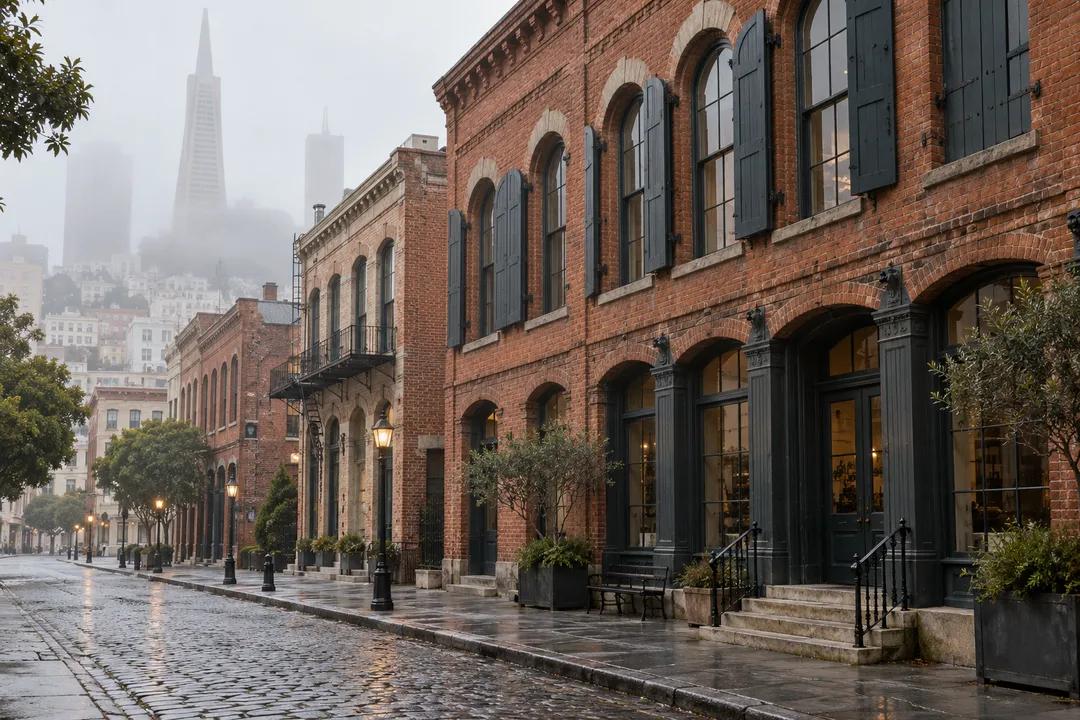
Jackson Square is a strong choice for a historic walking route that stays small and looks closely. San Francisco Heritage identifies it as a district containing some of the city's earliest commercial structures. That gives you a concrete starting question: what can a commercial building reveal from the pavement, and what still requires documentary evidence? Instead of trying to traverse several neighborhoods, organize a short circuit around three detail hunts: the building's material, the way its openings are arranged, and the relationship between an older shell and its present use. The interest is in comparison, not the number of stops.
A circuit small enough to repeat
Begin by drawing a modest circuit around Jackson Street and the surrounding historic district. Mark the actual walking connections on a current map rather than copying a historic district boundary as though it were a route. A preservation boundary identifies a planning area, not necessarily the most comfortable path for a group. Select a starting corner that you can recognize again. If you return to the same blocks from another direction, that repetition can be useful: light and viewing angle may reveal details you missed on the first pass.
Keep North Beach and the waterfront as optional later outings. They are close enough to tempt you into extending the route, but each introduces a different historical thread. Here, the advantage of staying compact is that you can compare several facades without spending most of the outing walking between unrelated highlights. A companion interested in photography can work on a single detail while somebody else reads a short note. Set the expectation that this is a slow observation exercise. It will disappoint anyone expecting an attraction at every stop, which is a useful distinction to make before inviting people.
First hunt: the material beneath the finish
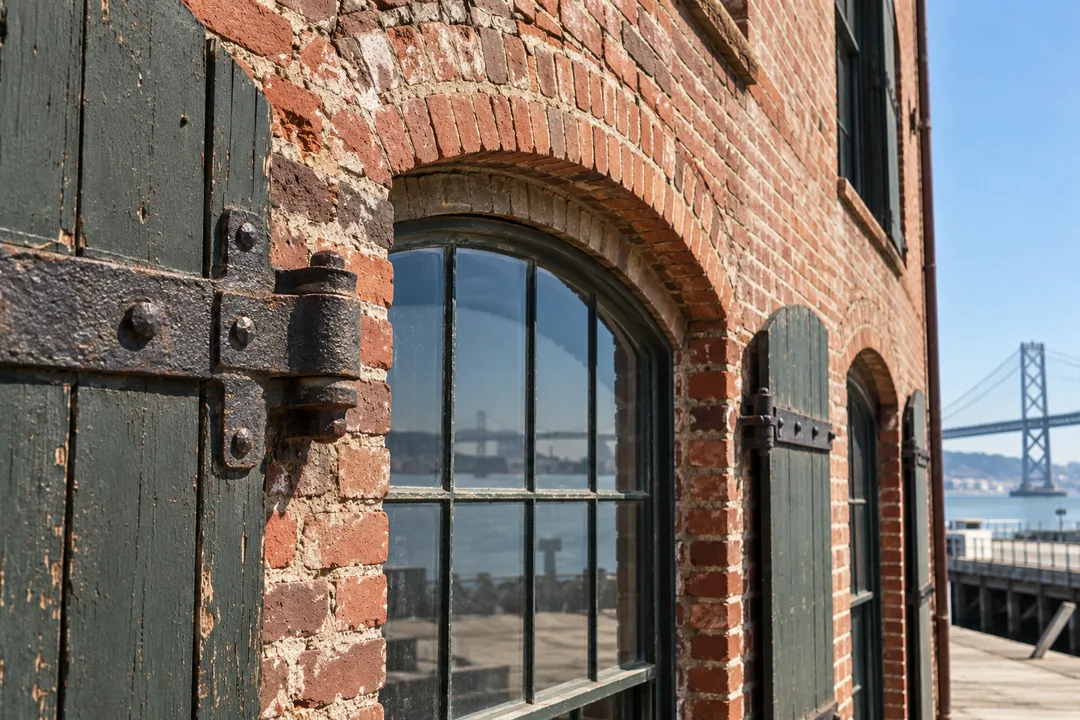
Choose a visible section of brickwork and look at it without immediately assigning a date. Notice variation in color, the proportions of individual units, the mortar lines, and any transitions to another material. Then compare those features with a second facade. A repaired area may look noticeably different, but appearance alone does not establish when or why the work happened. Keep the language of your notes observational: a lighter patch, a different joint, an opening filled with another material. Save explanations until you can connect them to a reliable building history.
Stand far enough back that you are not obstructing a doorway or leaning against a wall. An exterior is still someone's property, even when it belongs to a historic district. Do not rub a surface to test whether it is old, move a display to inspect the base, or reach through a railing for a better photograph. These are simple visitor boundaries, not a reconstruction of any particular property's rules. A zoomed photograph from the public pavement is enough to record a question. The walk should leave the building exactly as you encountered it.
Second hunt: what the windows tell you
Look at the arrangement of windows across the upper floors. Count the visual rhythm rather than trying to identify every architectural style. Are the openings evenly spaced? Does the ground floor follow the same pattern? Is there a change between the corner and the middle of the block? These questions make the facade legible even if you have never studied architecture. They also create a useful conversation between walkers: one person can describe the pattern while another points out an exception. An exception is a research lead, not automatic proof of a later alteration.
Photograph a whole facade before isolating a detail. The wide image preserves context, while a tight crop records the thing you want to investigate. Without the wider view, a beautiful window photograph may be hard to place when you get home. Note the street and the building's position relative to a corner in a private notebook. Do not photograph into occupied interiors. Reflection can be part of an architectural image, but somebody at a desk or table does not become a historical subject simply because they are visible through the glass.
Third hunt: old shell, present purpose
Read the distinction between exterior form and present activity. An older commercial building may contain a business whose work has little connection to its original use. That is not a failure of authenticity. It is a reason to ask which parts of the building persist and which parts of its social role have changed. Avoid assuming that a fashionable display indicates a particular restoration date or that a weathered surface indicates neglect. The task is to notice a relationship, then seek evidence. You can appreciate the street without inventing a continuous story for every tenancy.
San Francisco Heritage's Jackson Square material and the city's district designation provide different kinds of background. Heritage offers a neighborhood-focused introduction. The planning designation explains why the district is recognized within the preservation framework. Neither should be used as a blanket source for every claim about every building. Select one documented example to investigate more deeply after the walk. A narrow question about one alteration or former use is easier to answer well than a sweeping claim that the whole district has remained unchanged since a particular era.
Give the camera a stopping rule
If you are walking with a camera, choose the image you want before crossing the street. A long view down a block, a facade rhythm, and a hinge or lintel are different compositions. Moving backward while staring through a viewfinder is a poor substitute for choosing a safe position. Keep crossings separate from picture-making. If the angle is obstructed, continue walking and try a different subject. The route is an exercise in noticing what is available from public space, not a reason to step into a loading area or occupy a traffic lane.
Practical Notes
The three hunts are an organizing method, not a claim that the district contains only three worthwhile stops. Choose a route length that allows time to look and talk. Keep a rest or refreshment pause separate from your essential circuit, and do not assume a shop's presence provides public seating. This is an exterior walk with no promised interior access, guided tour, or included admission. If you want to enter a business, treat that as a separate visit and follow the information and instructions it provides. The architecture can remain the subject without a purchase.
A useful request in the Karpo APP is a compact Jackson Square walk focused on commercial facades, with minimal detours and time for photographs. Evaluate any suggested stops by asking whether they help compare material, openings, or changing use. Then arrange the actual street sequence in your navigation map. Finish by choosing one wide photograph and one detail photograph that belong together. Write a sentence about what you observed and a separate question about what you do not yet know. That pair turns a pleasant walk into a small, honest piece of historical inquiry.
Ask Karpo for more information.
Keep reading
- North Beach Tailor Alteration Shop Finder: Inherited Suits
 Hayes Valley Tailor Alteration Shop Finder for Boutique Buys
 Pac Heights Tailor Alteration Shop Finder for Heirloom Gowns