 North Beach Tailor Alteration Shop Finder: Inherited Suits
Neighborhood Guides
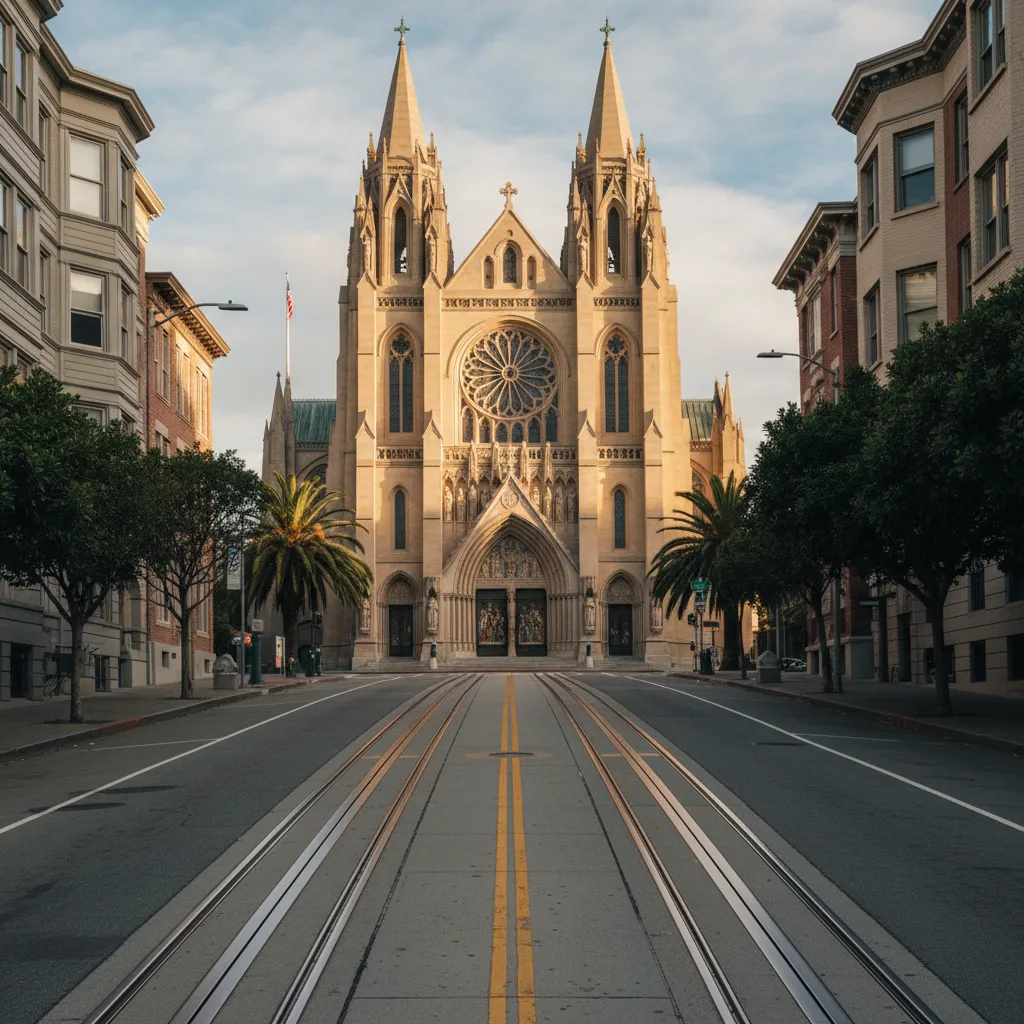
SF Historic Architecture Stroll: Free Cable Car Mansions
Walk San Francisco Nob Hill on this free self-guided historic architecture stroll past Grace Cathedral, the Flood Mansion, and Beaux-Arts luxury hotels.
Crowning one of the steepest and most prestigious hills in San Francisco, Nob Hill represents the historic summit of California railroad and silver wealth. This self-guided historic architecture stroll ascends to the crest of California, Sacramento, and Mason Streets, where the Big Four railroad magnates—Leland Stanford, Mark Hopkins, Collis Huntington, and Charles Crocker—built palatial wooden castles in the late nineteenth century. Following the devastating 1906 firestorm that swept the hilltop, Nob Hill was reborn in monumental stone, French Gothic reinforced concrete, and palatial Beaux-Arts hotel palaces that continue to define the city aristocratic silhouette.
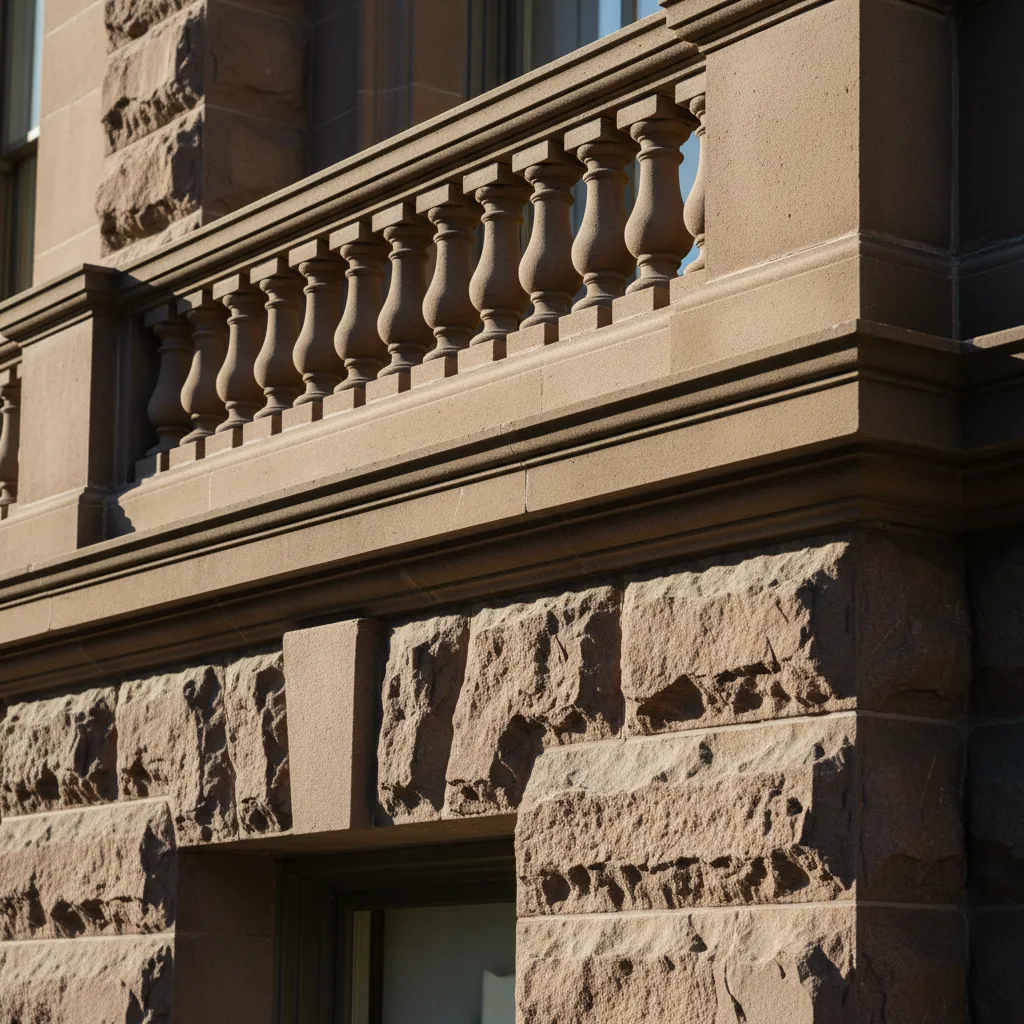
The Resilient Brownstone Legacy of the Flood Mansion
Begin your walking tour at 1000 California Street, standing before the majestic James Clair Flood Mansion, home to the exclusive Pacific-Union Club. Designed in 1886 by prominent architect Augustus Laver for silver mining tycoon James C Flood, this stately brownstone palace was the only Gilded Age residential mansion on Nob Hill to survive the 1906 disaster intact. Constructed of massive blocks of Connecticut brownstone shipped around Cape Horn at enormous expense, its fireproof masonry core withstood the raging conflagration that leveled surrounding wooden estates.
Examine the monumental neoclassical symmetry of the California Street facade, framed by an elegant semicircular entry portico supported by fluted ionic columns. Surrounding the perimeter is a magnificent, hand-wrought brass fence designed by master metalworkers, which required a full-time polisher during the late nineteenth century to keep its gleaming luster bright against coastal fog. The building stands as an enduring physical bridge linking the frontier Gold Rush era with twentieth-century metropolitan sophistication.
French Gothic Majesty at Grace Cathedral
Directly across Taylor Street at 1100 California Street rises Grace Cathedral, one of the most magnificent ecclesiastical landmarks in the western hemisphere. Designed by renowned English-born architect Lewis P Hobart following the destruction of the original parish downtown in 1906, construction of this French Gothic masterpiece commenced in 1928 and spanned decades. Built of reinforced concrete skillfully treated to evoke ancient French limestone, the cathedral is modeled directly on Notre-Dame de Paris and the great medieval cathedrals of Chartres and Amiens.
Climb the ceremonial granite steps of the Great West Front to admire the towering north and south spires and the monumental central rose window crafted by glass master Gabriel Loire. Stand before the famous Ghiberti Doors at the main western portal, cast from the original bronze molds of Lorenzo Ghiberti celebrated Gates of Paradise at the Florence Baptistery. The monumental relief panels depict detailed Old Testament narratives framed by delicate portraits of biblical prophets, establishing an artistic dialogue that spans six centuries of sacred architectural heritage.
Palatial Beaux-Arts Grandeur at the Fairmont Hotel
Stroll eastward along California Street to Mason Street, where the Fairmont Hotel commands an entire city block at 950 Mason Street. Commissioned by Virginia and Tessie Fair in memory of their father, mining senator James Graham Fair, the palatial hotel was designed by the celebrated firm of Reid and Reid. The grand granite and terra cotta palazzo was days away from its grand opening in April 1906 when the earthquake struck, gutting the interior but leaving its heroic classical facade structurally sound.
Look upward along the monumental classical facade to admire the heroic rusticated granite base, fluted ionic pilasters, and deeply sculpted stone pediments framing the central entry arch. The pioneering female architect Julia Morgan was immediately commissioned to oversee the heroic 1906 structural rehabilitation, pioneering reinforced concrete engineering techniques that allowed the hotel to celebrate its grand opening exactly one year after the disaster, symbolizing the unquenchable vitality of San Francisco.
Neoclassical Refinement at the Mark Hopkins and Huntington Park
Directly across California Street at 999 California stands the InterContinental Mark Hopkins Hotel, completed in 1926 by architects Weeks and Day on the site of Mark Hopkins original wooden turreted fantasy. This nineteen-story tower combines French château and Spanish Renaissance revival motifs, terminating in a central decorative tower that houses the legendary Top of the Mark lounge. Surrounding these grand hotels is Huntington Park, gifted to the city in 1915 by the widow of railroad baron Collis P Huntington.
Take a seat beside the central bronze Fountain of the Tortoises, an exquisite replica of Taddeo Landini sixteenth-century Fontana delle Tartarughe in Rome, sculpted by Roman artisans and purchased for the estate in 1904. From this peaceful garden sanctuary, listen to the rhythmic metallic clanging of passing California Street cable cars, a sound that has echoed across this stone hilltop since Andrew Hallidie tested his first mechanized cable line down Clay Street in 1873.
Hilltop Stone Enclaves and Historic Club Architecture
Overlooking California Street at the corner of Powell at 800 Powell Street stands the University Club of San Francisco, another dignified brick and granite palazzo constructed in 1912 by architects Bliss and Faville. Its clean Florentine Renaissance proportions, stone quoins, and arched loggia windows overlook the cable car crossing, contributing to the exclusive hilltop architectural sanctuary that emerged in the early twentieth century.
Every corner of Nob Hill reveals master craftsmanship in granite, bronze, and reinforced concrete. Strolling along these crest pavements, you walk in the footsteps of California founding pioneers whose fortunes built the transcontinental railway and whose architectural ambitions created an enduring stone acropolis high above the bay.
Transit Logistics and Practical Architecture Stroll Notes
This Nob Hill historic architecture stroll spans approximately one point one miles and requires between sixty and seventy-five minutes to complete at an observant walking pace. While Nob Hill summit is relatively flat around the park and cathedral perimeter, ascending the hill from downtown requires navigating steep sidewalk gradients. For the most pleasant experience, take the historic California Street cable car line directly from Market and California Streets straight to the crest at California and Mason, stepping off directly at the route starting threshold.
Alternatively, the Muni 1 California bus line runs along Sacramento Street one block north of the cathedral, providing frequent accessible transit connections. To capture the best photographic light on Grace Cathedral west portals and the Flood Mansion brownstone facade, plan your walk for mid-to-late afternoon between two and four thirty, when golden hour sunlight illuminates the western stone towers. Karpo guides your hilltop excursion in the Karpo APP, identifying landmark survivor clubhouses and French Gothic granite spires crowning Nob Hill.
Ask Karpo for more information.
Keep reading
- North Beach Tailor Alteration Shop Finder: Inherited Suits
 Hayes Valley Tailor Alteration Shop Finder for Boutique Buys
 Pac Heights Tailor Alteration Shop Finder for Heirloom Gowns