 North Beach Tailor Alteration Shop Finder: Inherited Suits
Neighborhood Guides
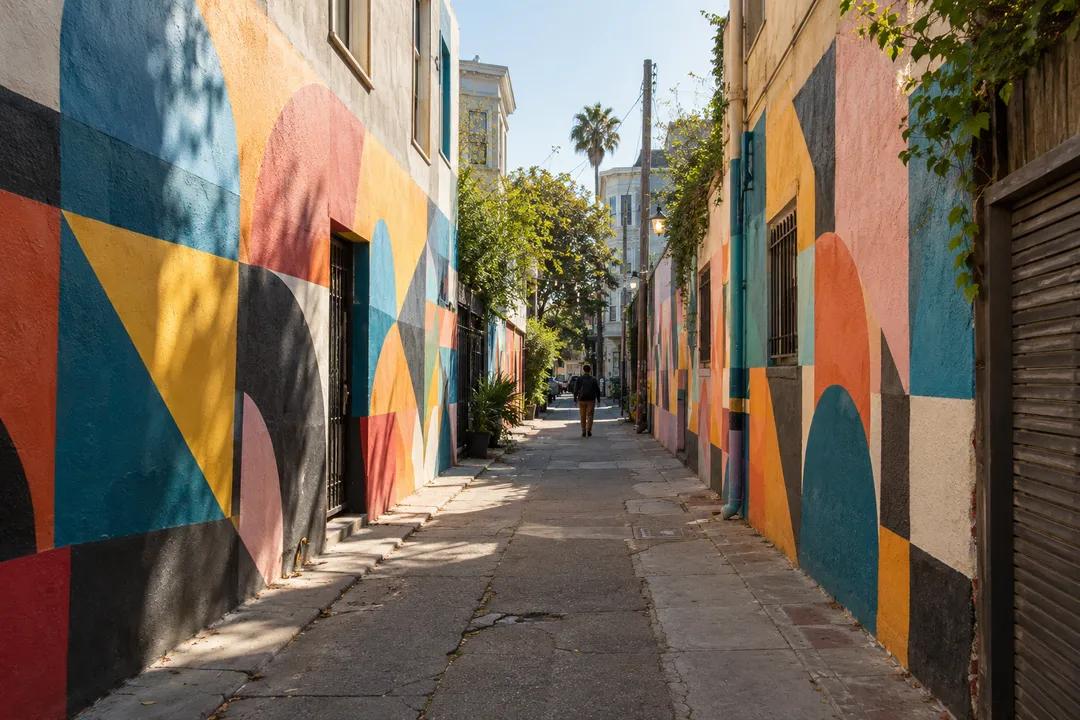
SF Historic Alleyway Walk Planner: Pick 1 Mural Lane
Balmy and Clarion offer two different Mission alley walks. Pick one for a focused visit, or separate them with a street walk when time and energy allow.
Choose one Mission mural alley before deciding to visit two. Balmy Alley and Clarion Alley can both belong in a historic alleyway walk planner, but treating them as interchangeable stops misses the practical decision. Are you making a brief visit to look closely at a few works, or spending a larger part of the day walking between different parts of the neighborhood? This page helps you choose the version that fits. It asks you to spend your attention deliberately and leave enough room for the art to be more than a background.
The difference begins with location
San Francisco Travel places Balmy Alley off 24th Street near Harrison, while Clarion lies between Mission and Valencia, south of 17th Street. Put both locations on a map before making a promise to your companions. They are not adjacent walls in the same courtyard. The streets between them form a substantial part of a combined outing. If the available time is short, choose the one that suits your arrival and onward destination instead of spending most of the visit traveling between the two names.
Make the choice by describing the outing in ordinary language. One mural lane and a nearby wander is a compact plan. Two mural lanes with a connecting neighborhood walk is a longer one. Those descriptions are more useful than calling both options quick. They also let a companion disagree with a specific proposal. Someone may happily agree to the first and decline the second because they have another commitment. That is valuable information to have before you start walking, rather than after the group has become tired or separated.
Begin with a wall you can actually study
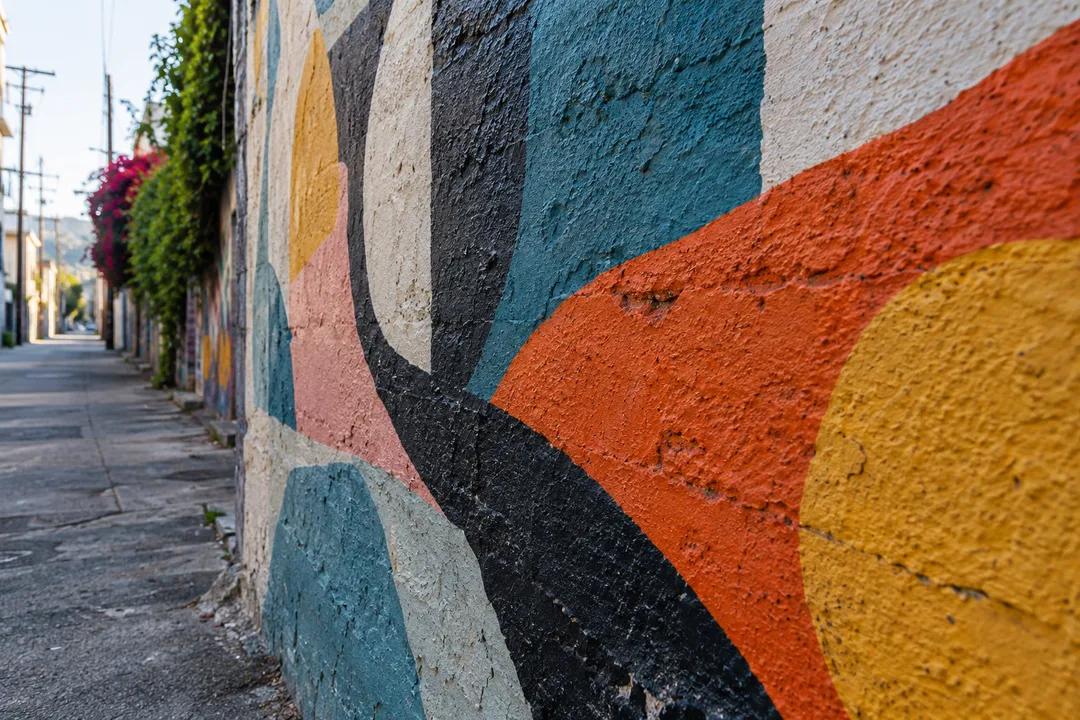
On arrival, walk far enough to understand the space before choosing where to pause. Find a work that you can look at without standing in a doorway or preventing people from passing. Give it a little uninterrupted attention. Look at the composition, then the relationship between the image and the wall around it. If a title, artist credit or explanatory text is present, read what is there rather than supplying a story from memory. Your interpretation can remain tentative while still being thoughtful.
A useful exercise is to describe one feature precisely to a companion. Name a color relationship, the placement of a figure or the way an image uses the available surface. Then listen to what the other person noticed. You do not need an art-history vocabulary to do this well. The point is to replace a quick declaration that a wall looks cool with an observation that explains why it held your attention. A conversation grounded in the work is more rewarding than taking photographs of every surface at the same pace.
Leave room for the neighborhood around the art
The lanes are part of the Mission rather than isolated exhibition rooms. Keep a clear path for anyone who is moving through them, and treat residential entrances as entrances. A group can make a narrow space feel occupied very quickly, even when every person thinks they are standing briefly. Choose a place to talk where others can get past. If there is no suitable stopping place in front of a work you wanted to discuss, move on and return to the conversation elsewhere.
Ask before making someone the subject of a photograph. An artist working, a resident arriving home or a passerby using the alley is not automatically part of your picture. You can photograph a visual detail without documenting the person beside it. Likewise, avoid touching a painted surface or leaning against it for a portrait. These choices do not require a special event rule to make sense. They follow from treating the alley as a shared place and the artwork as something deserving care.
A single-alley visit can be the stronger option
If you begin with Balmy and find yourself engaged, stay with that visit instead of hurrying away to satisfy a two-stop plan. You can extend the outing into the surrounding public streets without adding another mural destination. A close look at a few works, followed by time to think about them, can be more memorable than a larger count. The same reasoning applies at Clarion. The route should support attention, not measure success by how many named places appear in your photographs.
For a group with mixed interests, agree on a point at which to decide whether to continue. That decision belongs after the first alley, when you know how people feel, rather than being fixed by an ambitious list at the start. One person may want to sketch, another may want food and a third may have already seen enough. A clean finish gives everyone a useful choice. You can part company or select the next activity together without framing an ordinary change of plan as somebody spoiling the afternoon.
If you choose both, give the middle a purpose
Look at a street map and select a public-street connection suited to your group. Think about crossings, your preferred walking pace and where you can stop without blocking a pavement. Do not assume that the shortest line on a screen creates the most pleasant outing. If you want a direct transfer, say so. If you want to notice the neighborhood between the alleys, allow attention for that part as well. The connecting walk deserves a place in your time budget instead of disappearing between two destination labels.
At the second alley, choose a different looking task. If the first visit focused on individual figures, pay attention to how separate works relate across the space. This keeps the second stop from becoming a repeat of the first. Avoid turning your comparison into a contest between neighborhoods or artists. The useful question is what each visit helped you notice. You can finish with two distinct observations rather than deciding which alley deserves an unsupported superlative after one short walk.
Practical Notes
Murals are not a fixed checklist. San Francisco Travel notes that some works remain while others are painted over. A photograph you found elsewhere may show a wall differently from the one you encounter. Let the current work be the subject of your visit instead of searching indefinitely for an older image. Read any on-site information that is available and preserve uncertainty when you cannot identify a piece. A missing familiar mural is a reason to look again, not to invent a history of what happened to it.
In Karpo APP, describe the outing you want in terms of one focused Mission mural stop or a longer neighborhood walk with two alley destinations. Include your time limit and whether your group wants a separate break. The final selection still rests on the places and conditions you encounter. Before heading home, choose one work you can remember without opening your camera roll and one question you would like to research later. That gives the walk an afterlife beyond a collection of pictures and makes a shorter visit feel complete.
Ask Karpo for more information.
Keep reading
- North Beach Tailor Alteration Shop Finder: Inherited Suits
 Hayes Valley Tailor Alteration Shop Finder for Boutique Buys
 Pac Heights Tailor Alteration Shop Finder for Heirloom Gowns