 North Beach Tailor Alteration Shop Finder: Inherited Suits
Neighborhood Guides
SF Historic Alleyway Walk Planner: 3 Lanes on Foot
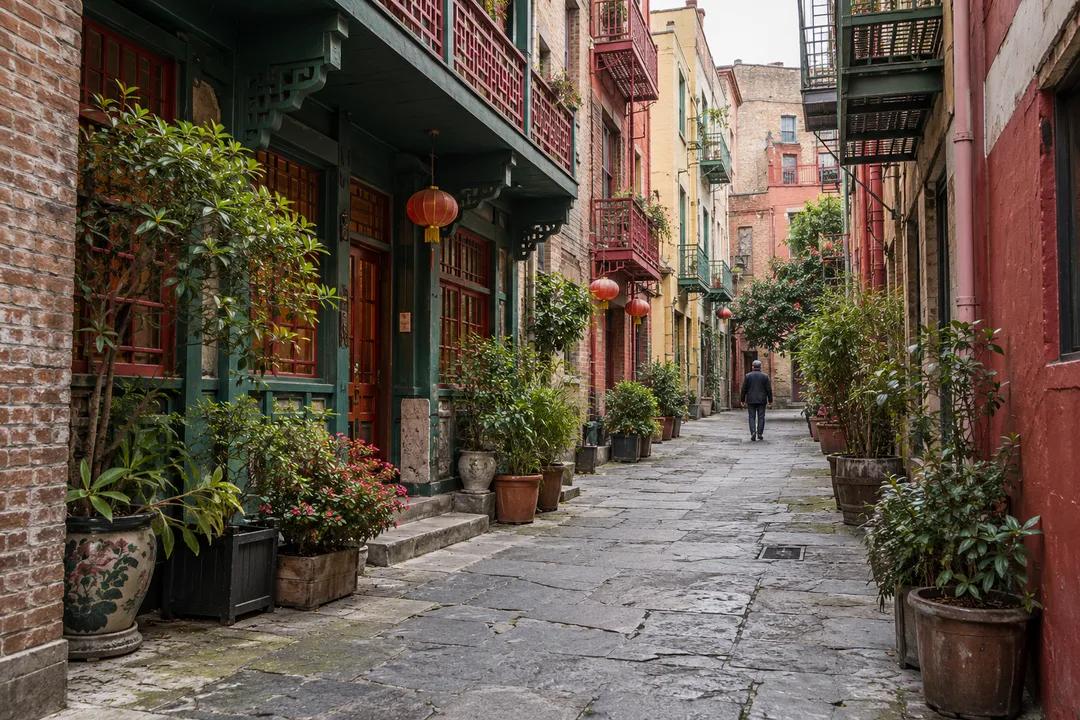
A compact Chinatown walk links Waverly Place, Ross Alley and Spofford Alley. Choose three lanes together rather than spending the afternoon crossing town.
Chinatown rewards a short route with room to pause. This historic alleyway walk planner keeps Waverly Place, Ross Alley and Spofford Alley together instead of stitching every photogenic passage in San Francisco into one exhausting afternoon. Treat the three lanes as a small field of choices, with Grant Avenue as your orientation line. The goal is to notice how a narrow passage changes the experience of a neighborhood, then leave enough energy for the rest of your day. No shop visit is required for this walk.

Start with a question, not a collection
Decide what interests you before adding stops. A visitor looking at balconies will spend the walk differently from a visitor interested in the relationship between commercial streets and residential passages. For the former, give Waverly Place the most attention. For the latter, compare the change in scale as you enter and leave each lane. These are observation tasks, not promises that a particular event, performance or interior will be available. Your own question makes the route more useful than a list of supposedly secret places.
Choose one companion question as well. Perhaps you want to notice which details can be seen without stopping in anyone's way, or how the sound changes between a broad street and a narrow lane. Keep the question simple enough to remember without reading your screen. An afternoon becomes fragmented when every doorway produces another search. You can look things up later, after you have observed what is actually in front of you. A photograph and a short personal note are enough to mark a question for another day.
Keep the three lanes in one cluster
Locate all three passages on a street map while you are still standing somewhere with space to stop. Waverly Place, Ross Alley and Spofford Alley belong to the Chinatown alley network described by San Francisco Public Works. Use that network as your boundary. You do not need to add a separate district because a recommendation happens to look attractive. Crossing the city to collect another lane changes a compact neighborhood walk into a transit project, with less time available for the original reason you came.
Pick an approach from your actual arrival point rather than following an arbitrary north-to-south order. If you reach Waverly Place first, make it the opening observation. If Ross Alley is closer, start there. Connect the passages using mapped public streets, and regard the next junction as a decision point. The order can change without ruining the walk. What matters is avoiding repeated crossings simply because a saved list placed the stops in an inconvenient sequence. This is a cluster to explore, not a timed challenge to complete.
Waverly Place: look above the shopfronts
Waverly Place offers a useful prompt to raise your gaze. San Francisco Travel calls attention to its painted balconies. Give those upper levels a moment before returning to street level and continuing. You do not need to attach a historical date to every detail in order to look carefully. Separate what you can observe from what you would need to research. Color, alignment and the relationship between balconies and the lane are observations. A claim about who built a particular frontage needs evidence beyond appearance.
Do your looking from a position that leaves a clear route past you. A balcony is part of someone's surroundings, not a stage set supplied for visitors. Avoid aiming a camera into windows or following people through a doorway. If your group wants a discussion, move back to a wider public space before starting it. That small adjustment makes a slow architectural walk compatible with ordinary neighborhood use. It also improves the conversation, because nobody needs to talk while repeatedly stepping aside for other pedestrians.
Ross and Spofford: compare, then move on
Use Ross Alley for a change of scale rather than an automatic shopping stop. Enter the passage, register its proportions and look for a place where you can see the relationship between the walls and the sky. If a queue or delivery occupies the space you intended to use, keep moving. You have not missed the walk by declining to stand in a congested spot. The next public junction is a better place to decide whether you want another look or are ready for the next lane.
Spofford Alley makes a useful second comparison because your eye has already adjusted to the larger street and to Ross. Ask a narrower question here: what changed when you turned the corner? You might notice paving, building height or the amount of visible sky. Write down only what you actually saw. Avoid turning a quick impression into a sweeping claim about the people who live nearby. Looking closely is more rewarding when it remains modest about what one brief visit can establish.
What to leave off this version
Skip the temptation to add every Chinatown attraction to the same outing. A museum, a meal, a guided tour and three passages can each deserve attention, but they do not automatically fit into the same available time. If you have a fixed commitment later, choose the lanes first and let the extra activity remain optional. That protects the walk from being squeezed into the gap between reservations. It also prevents a closed door or a long queue from becoming the defining event of the afternoon.
A sensible short version is one lane observed carefully and a second used for comparison. The full three-lane version is for a group that still wants to explore after the second stop. Do not make somebody continue simply because three names appeared in the title. A route earns its place by serving the people walking it. If one person is tired, cold or ready to leave, return to the wider street network and finish. The unused lane can become a separate reason to revisit Chinatown.
Bring the decision to Karpo APP
If you use Karpo APP to explore local options, start with the neighborhood and the kind of outing you want rather than an unsupported demand for live access information. A useful request describes a short walk through public Chinatown lanes, your available time and whether you want to keep shopping separate. The route decisions in this article are yours to make. Keep the public-lane walk separate from any indoor activity you decide to add, and use the venue’s own visitor information for that separate choice.
Practical Notes
Plan the time budget yourself as three parts: reaching Chinatown, walking the lane cluster and getting to your next commitment. Do not count only the pleasant middle section. Wear footwear you already trust on city paving and carry what you need for your own comfort. At a narrow entrance, pass through rather than gathering across it. Treat barriers and directions on site as boundaries. If a passage is unavailable, omit it and use the surrounding public streets instead of searching for a way around a gate.
Before leaving, choose one image or observation that explains why this route worked for you. A balcony detail, a change in street scale or a comparison between two passages is more useful than a complete camera roll with no remembered context. Keep the account personal and specific. You have made a small, coherent Chinatown walk, not certified every lane in the neighborhood. That is a good outcome for an afternoon that began with three names and a question about how to connect them.
Ask Karpo for more information.
Keep reading
- North Beach Tailor Alteration Shop Finder: Inherited Suits
 Hayes Valley Tailor Alteration Shop Finder for Boutique Buys
 Pac Heights Tailor Alteration Shop Finder for Heirloom Gowns