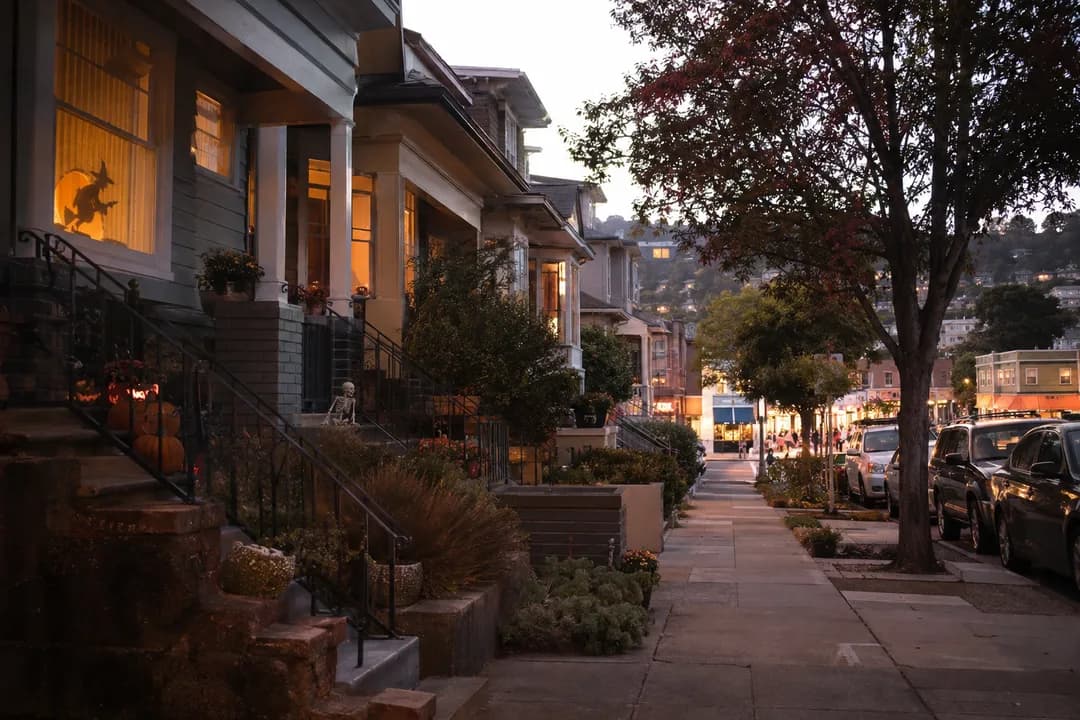
 Best Trick or Treating Neighborhoods Near Me: West Portal
Neighborhood Guides
The Embarcadero to Ocean Beach: San Francisco's Longest Straight Line
Seven miles of JFK Drive trace San Francisco's entire geological story—from tidal marsh to sand dune to Pacific fog. You'll walk through four ecosystems before lunch.
Start where the city starts
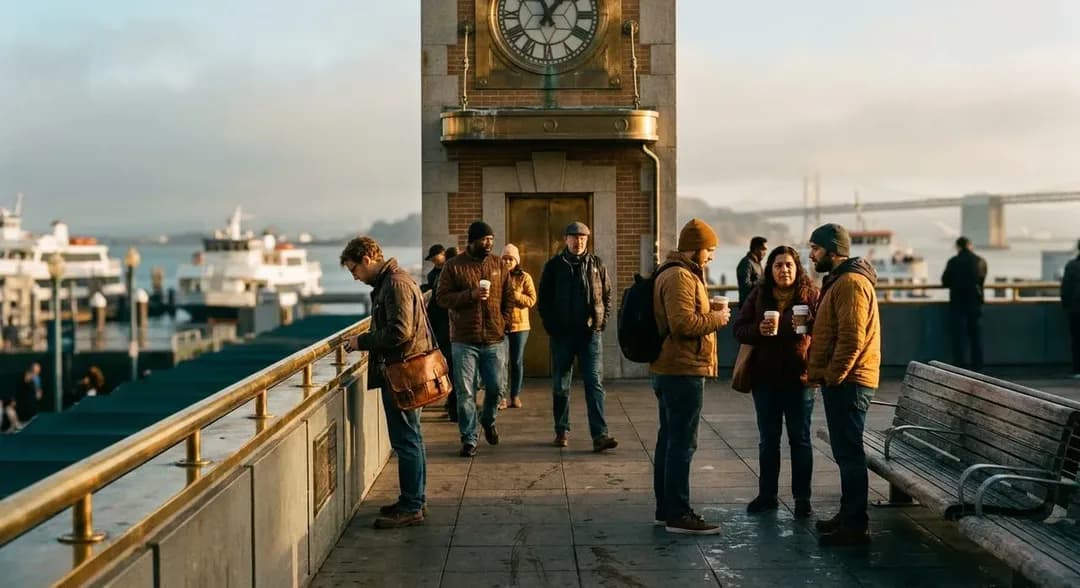
The Ferry Building's north arcade empties onto a small concrete plaza most people ignore. Stand there on a weekday morning and watch commuters pour off the Larkspur ferry like a reversed tide. This is your starting point—not the tourist entrance, but the working doorway where longshoremen once clocked in. The Bay Bridge cables slice the sky into geometric sections. You're standing on fill dirt, landfill dumped here in the nineteenth century to push the shoreline east. The original waterfront sat blocks inland. Beneath your feet: tidal mud, oyster shells, abandoned ship hulls from the Gold Rush. The barista at Blue Bottle—the one in the north corner, not the main hall—might tell you about the old photographs that document which buildings survived the 1906 earthquake.
The SOMA corridor reveals itself slowly
Head west on Market Street. The grid here runs diagonal to the rest of the city, following the old Mission Road to Dolores. At 2nd Street, duck into Sightglass Coffee's roastery space. Sit at the long community table near the garage doors where you can watch the roaster operator work. The building was a printing press warehouse decades ago. The massive skylights remain original. You're walking through what was once sand dunes and scrub, flattened and filled after the 1906 earthquake created a blank slate. The street numbers climb: 3rd, 4th, 5th. Each block west adds elevation. Your calves will tell you what maps don't—this city was built against its own topography. At 8th Street, the Twitter building looms north. Former furniture mart. The loading docks still read "Merchandise Mart" in faded paint above the modern glass entrance.
City Hall appears like a mirage
The Beaux-Arts dome announces itself blocks before you arrive. Walk through the Civic Center Plaza—not across it, but through the diagonal pathway that cuts from the northeast corner to the southwest. This route follows an old cart path that once connected Market Street to Hayes Valley. Stop at the fountain installed recently. The Asian Art Museum to your right was the old Main Library. The circulation desk occupied what's now the Samsung Hall. Underground streams once ran through this area, now buried in culverts below the streets. The California Historical Society maintains historical maps documenting the city's lost waterways in their collection.
Hayes Valley to the Panhandle: the transition zone

Fell Street carries you west into Hayes Valley. The boutiques and wine bars occupy Victorians that survived 1906 but nearly succumbed to the Central Freeway, demolished in the early 1990s. The pale yellow building with the turret at one corner has upper windows that frame views of both the Painted Ladies and downtown. At Divisadero Street, cross into the Panhandle. This narrow strip of park was designed as the carriage entrance to Golden Gate Park in 1870. The eucalyptus trees date to the 1870s, planted to block the wind and stabilize the sand. Walk the north path, not the south. On weekday mornings, you might see practitioners moving through tai chi forms near the Oak Street entrance—a ritual that's continued for decades.
Golden Gate Park swallows you whole
The Panhandle deposits you at Stanyan Street. Cross into the park proper. JFK Drive stretches before you like a promise—straight, tree-canopied, three miles to the ocean. This is engineered landscape, every inch of it. In 1870, this was the Outside Lands: sand dunes, coastal scrub, considered worthless. William Hammond Hall and John McLaren spent decades building soil, planting windbreaks, creating the illusion of natural forest. Walk the road itself—it's car-free now, permanently. At the Conservatory of Flowers, veer right to stay on JFK. The road curves slightly at the Music Concourse, but straightens again past the de Young Museum. Here's the insider move: at Transverse Drive (the road that cuts north-south through the park), stop at the stone bridge. Underneath, carved into the southeast support beam, someone etched initials and a date from the 1890s—possibly John McLaren's signature, possibly apocryphal, definitely permanent.
The final mile reveals the dunes
Past the Bison Paddock, the trees thin. You're approaching the western edge where the park surrenders to the original landscape. The Dutch Windmill rises at the northwest corner—restored in the 1980s, operational again. The tulip garden blooms in spring. But you're headed to the Beach Chalet, the Spanish Colonial building at the Great Highway. Stop here. The ground-floor murals, painted by Lucien Labaudt in the 1930s, depict San Francisco life during the Depression. The southeast panel shows Golden Gate Park's construction—workers with wheelbarrows building the land you just crossed. Upstairs, the brewery serves decent beer. Sit at the window counter facing west. Order the Steam beer. The bartender might tell you about the Sutro Baths ruins visible to the north on clear days, or which breaks are safe for the surfers who ride Ocean Beach at dawn.
Ocean Beach: the edge of everything
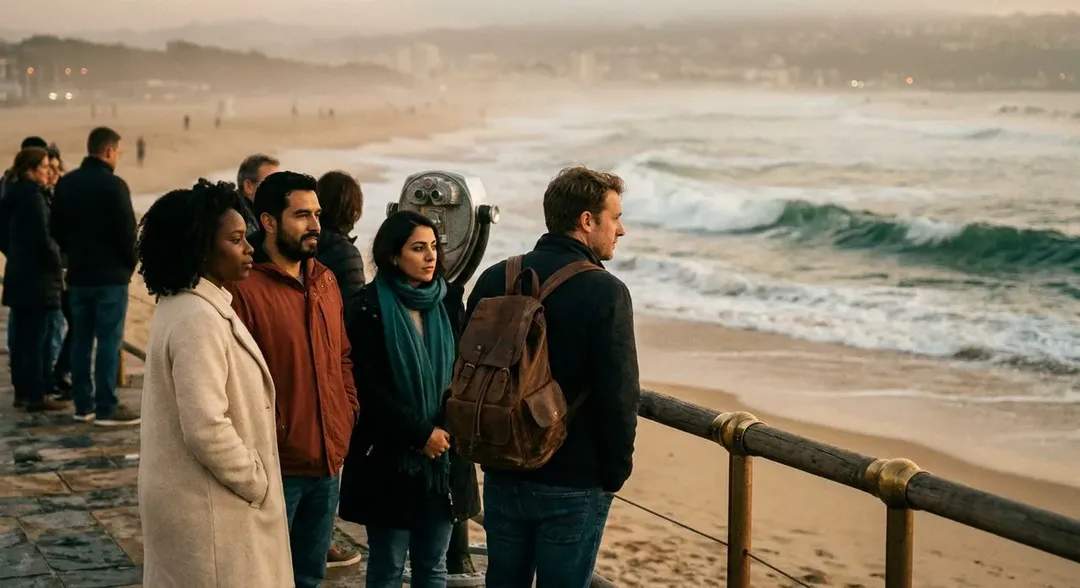
Step outside. Cross the Great Highway. The beach stretches three miles north to the Cliff House, unmarked and unmanicured. The sand is gray, not golden—crushed granite and basalt from the Farallon Islands, carried by currents and deposited here over millennia. In summer, fog rolls in by afternoon. In winter, the waves reach impressive heights. This is not a swimming beach. This is a contemplation beach. Walk to the waterline. Turn around. Miles east, the Ferry Building's clock tower is invisible, hidden by the city you just crossed. You've walked from fill dirt to bedrock, from human-made land to geological inevitability. The Pacific doesn't care about grids or boulevards or engineered parks. It was here first. It will be here last. A local trick: if you time this walk to arrive in late afternoon, you can catch the 18-46th Avenue bus at Judah Street. It runs frequently and deposits you at the Balboa Park BART station in about twenty minutes. Your feet will thank you.
Practical notes
Start at the Ferry Building (1 Ferry Building, San Francisco, CA 94111) any morning after 7 AM. The walk is seven miles, taking 2.5 to 3 hours at a steady pace, longer with stops. Wear comfortable shoes—the elevation gain totals roughly 350 feet, mostly gradual. No admission fees for the route itself, though Golden Gate Park museums charge entry if you detour. Public restrooms available at Ferry Building, Civic Center, and multiple locations throughout Golden Gate Park. The 5-Fulton and 5R-Fulton buses run the entire route if needed. Best seasons: September through November for clear skies, March through May for park blooms. Avoid summer weekends when the park fills with events. Bring water—there are refill stations at the Ferry Building and Beach Chalet. The entire walk is wheelchair accessible via paved paths, though some historical detours require stairs. End at Beach Chalet Brewery (1000 Great Highway) for food and restrooms before heading back.
Tags: #SanFrancisco #UrbanHiking #GoldenGatePark #FerryBuilding #OceanBeach #SFWalks #HiddenSF #BayArea #CivicCenter #Embarcadero #HayesValley #TheLongWayHome #SFGeology #WalkingSF #ExploreSF
Sources consulted: sfrecpark.org · sftravel.com
All trademarks are the property of their respective owners.
Ask Karpo for more information.
Keep reading
- Best Trick or Treating Neighborhoods Near Me: West Portal
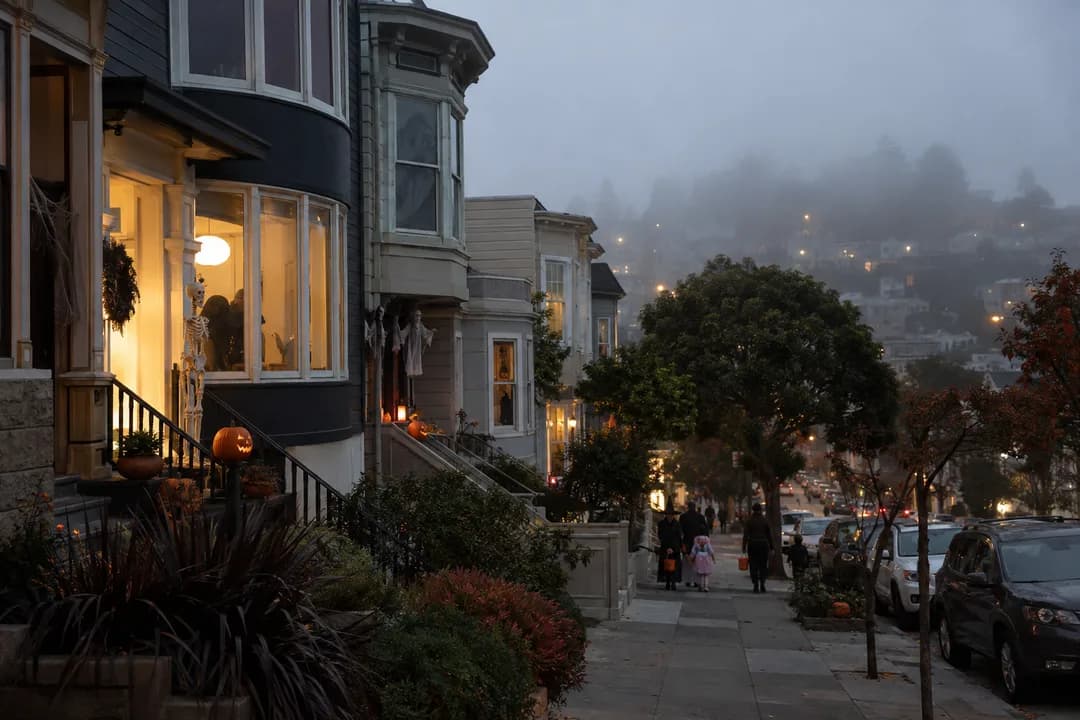 Best Trick or Treating Neighborhoods Near Me: Noe Valley
 Best Trick or Treating Neighborhoods Near Me: Bernal Heights