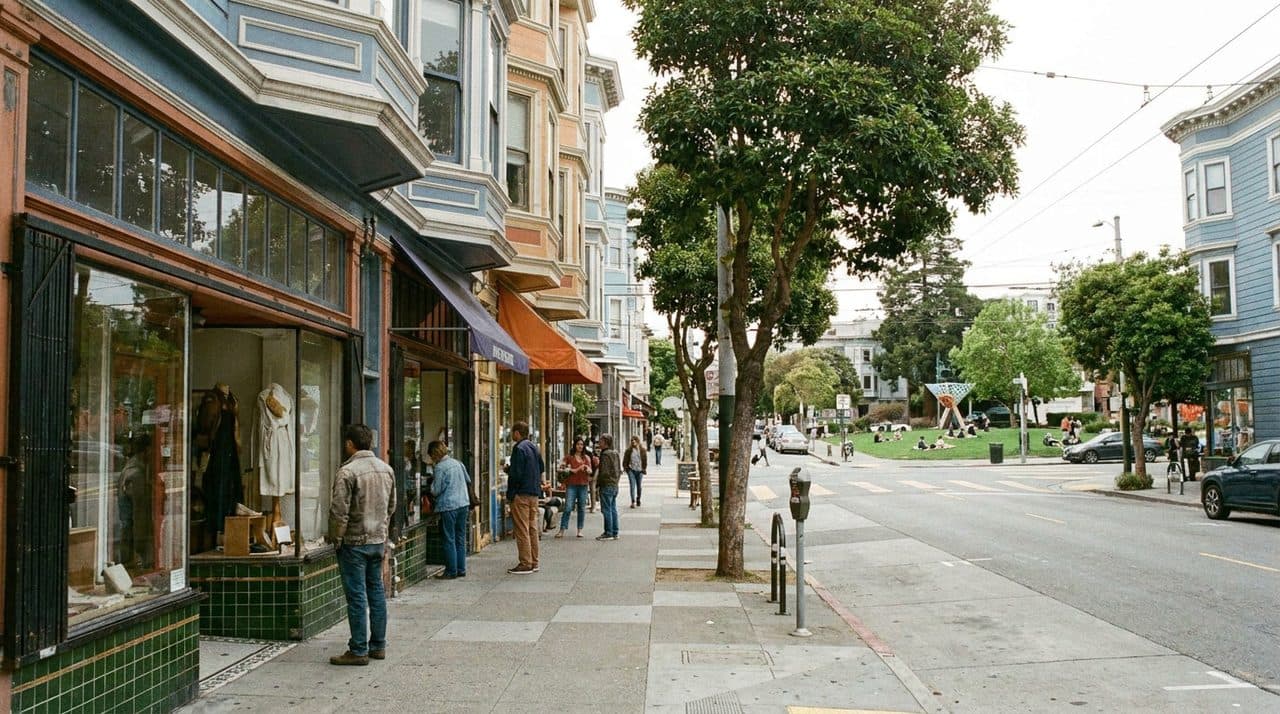
Hayes Valley wakes up slowly on a Saturday, the kind of slow that comes after decades of learning to be quiet. The neighborhood sits a ten-minute walk west of City Hall, bordered by streets that once carried commuter traffic toward the Central Freeway — a double-decker concrete scar that ran through until the 1989 earthquake made the decision for everyone. Where that freeway stood, there's now a narrow park with lawn chairs and food trucks, and around it, Victorian flats painted in blues and ochres house design shops that open their doors around eleven and close by six.
The Geography of What Fell Down
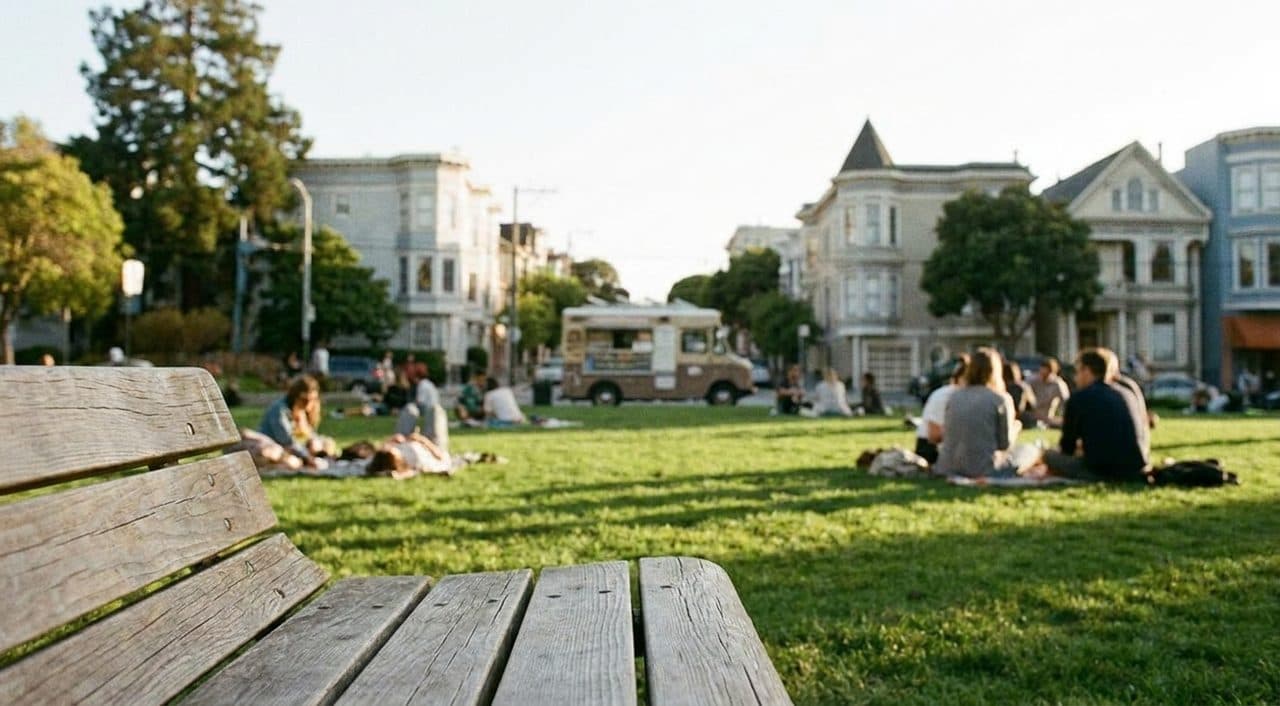
Patricia's Green stretches two blocks along Octavia Boulevard, a thin strip of grass and gravel where the elevated lanes used to block the sky. The park opened in 2005, sixteen years after the Loma Prieta quake damaged the freeway beyond repair. On Saturdays, whoever arrives early claims the metal chairs near the food trucks at the Hayes Street end, where the morning sun hits first. By noon, families spread blankets on the lawn and the dog walkers make their loops. The freeway's demolition left behind odd-shaped parcels and a street grid that doesn't quite line up, which is why some of the Victorians along Octavia face the boulevard at strange angles, their bay windows catching light in the afternoon that they never would have seen before 1989.
Boutiques That Open When They Open
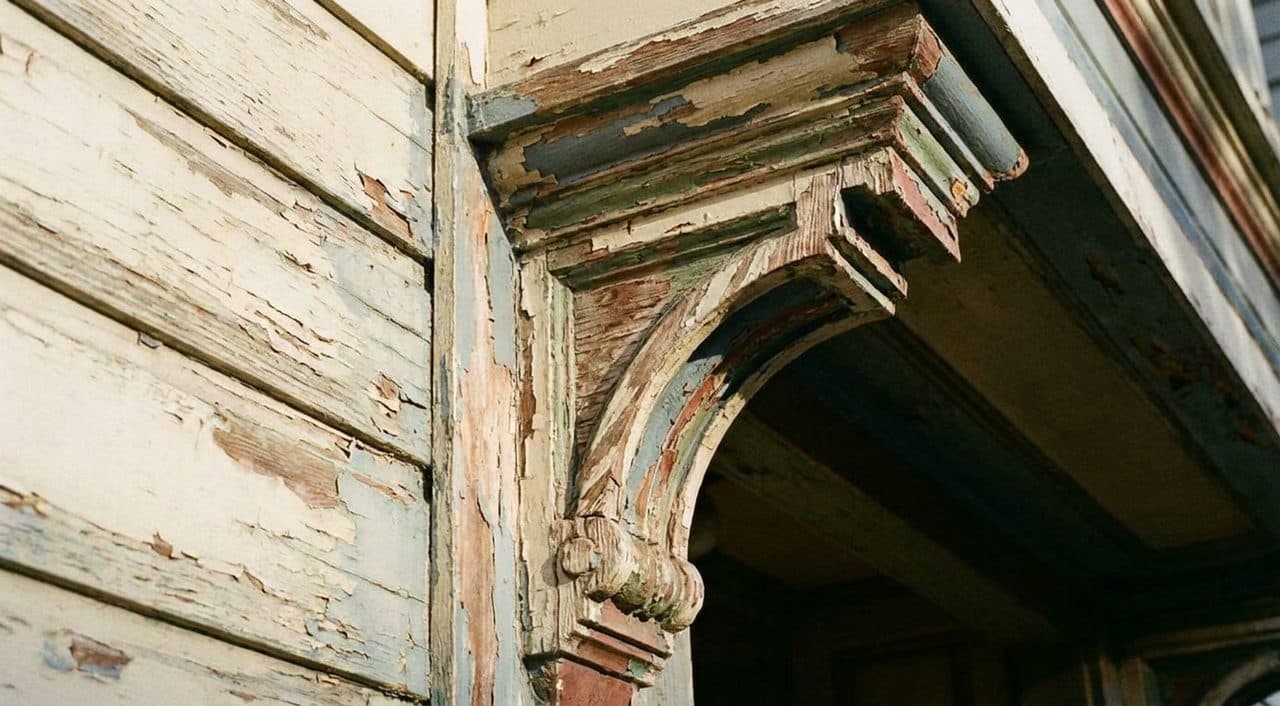
The design shops in Hayes Valley occupy ground-floor flats in buildings that predate the freeway by half a century. Most open between ten-thirty and eleven, depending on whether the owner is running solo that morning. The rhythm is residential, not retail — a buzzer on the door, a narrow hallway that leads to a front room with refinished floors and crown molding, racks of clothing or shelves of ceramics arranged like someone's well-edited apartment. One shop near the corner of Hayes and Gough keeps a small brass bell on the counter; another, in a Victorian painted deep teal, has a back room where the owner stores vintage furniture that isn't for sale but sometimes is, if the conversation goes the right way. First-timers often walk past these places twice before realizing the door is unlocked.
The Crowd That Stays Local
Saturday foot traffic in Hayes Valley skews toward people who live within a few neighborhoods and aren't in a hurry. The morning wave includes regulars from Alamo Square and the Western Addition, stopping for coffee at one of the cafés on Hayes before browsing. By early afternoon, the crowd thickens with visitors from other parts of the city — couples walking over from the Civic Center BART, friends meeting for lunch before heading to a matinee at the opera house a few blocks east. The demographic is mixed but leans toward those who remember when this stretch was emptier and a little rough, before the freeway came down and the rents climbed. There's a shared pace to how people move through the neighborhood on weekends: slower than downtown, more purposeful than a Sunday stroll.
What the Shops Actually Sell
The boutiques in Hayes Valley specialize in the kind of objects that require a story. A homeware shop in a lavender Victorian carries Japanese kitchen knives and French linen dishtowels, the kind of inventory that doesn't move fast but doesn't need to. A clothing store two doors down focuses on small-batch designers from Los Angeles and Copenhagen, with a rack in the back for sale items that never quite makes it to the front window. One shop near Laguna sells only ceramics — bowls, mugs, vases — made by a rotating roster of Bay Area potters whose names are written on small cards next to each piece. The owners of these places tend to be present on Saturdays, which means the shopping experience often includes a five-minute conversation about where something was made or why it's priced the way it is.
The Park as the Living Room
Patricia's Green functions as the neighborhood's de facto gathering spot, especially on weekends when the food trucks line up along Hayes. The lawn is never crowded but rarely empty. A group of regulars — mostly older men who live nearby — plays pétanque on the gravel court at the Fell Street end every Saturday afternoon, their games running from around one until the sun drops behind the buildings. The chairs scattered across the grass are city property, moved around constantly by whoever sits down. On warm Saturdays, the scene tilts toward picnics and paperback readers; on cooler days, people claim the sunny patches and stay for an hour before moving on. The park's narrow shape means it's hard to lose track of the street life around it — the boutiques, the cafés, the foot traffic — which is part of the appeal for those who come to sit and watch.
Practical Notes
Hayes Valley sits between the Civic Center and Alamo Square, accessible via the 21 Hayes bus line that runs along Hayes Street, or a ten-minute walk west from the Civic Center BART station. Most of the design boutiques open between ten-thirty and eleven on Saturdays and close by six or six-thirty. A few stay open later, but calling ahead isn't a bad idea — these are small operations, and hours can shift. Patricia's Green is open all day, every day, with food trucks typically arriving late morning and staying through early evening on weekends. No reservations needed for anything in the neighborhood; it's a walk-in kind of place. Street parking is metered and competitive on Saturdays; the garage on Fell near Laguna is the fallback.
The Detail That Tells the Story
There's a small historical marker at the north end of Patricia's Green, easy to miss unless walking the full length of the park. It shows a photograph of the Central Freeway in the 1970s, the concrete columns casting shadows across what is now lawn. The marker includes a timeline of the freeway's construction in 1959 and its partial demolition starting in 1999, ten years after the earthquake. On Saturdays, most people walk past it without stopping, but every so often someone pauses to read, then looks up at the Victorians and the open sky, doing the mental math of what used to be there. That pause — the moment of realizing how much changed in two decades — is the quiet center of Hayes Valley on a weekend, the thing that makes the slow pace feel earned rather than engineered.
Tags: #HayesValley #SanFrancisco #BayArea #NeighborhoodGuide #DesignBoutiques #PatriciasGreen #VictorianArchitecture #SFWeekend #UrbanRenewal #LocalShopping #SaturdayInTheCity #WalkableNeighborhoods #SFHistory #TheLongWayHome #CityLife
Sources consulted: timeout.com · atlasobscura.com · nycgo.com
All trademarks are the property of their respective owners.
Ask Karpo first
Want to know which boutiques are worth the stop, or where to grab lunch without a wait?
Ask Karpo for the Hayes Valley Saturday route and the park's current art installation before you head out.