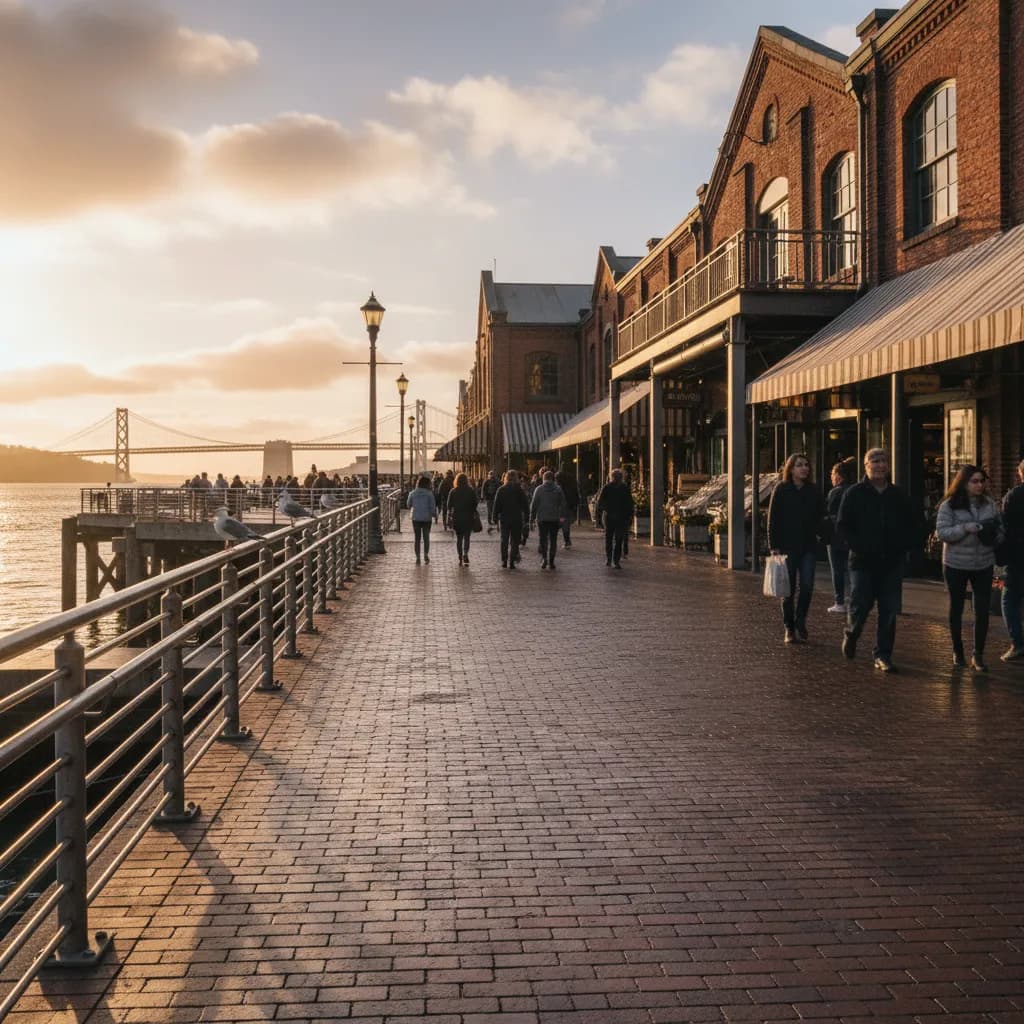
Ferry Building Marketplace as the Starting Point
The Ferry Building has stood at the foot of Market Street since 1898, serving as both gateway and landmark. Today the Marketplace houses nearly 50 local artisan food merchants and restaurants inside the restored structure, all offering panoramic views of the Bay. The building draws millions of visitors annually, functioning as both transit hub and destination. San Francisco Bay Ferry operates routes from the terminal, connecting passengers to key destinations across the water.
The Ferry Plaza Farmers Market runs three times weekly, operated by Foodwise as a California certified market. Vendors include sustainable growers and food makers from across the state. Inside the Marketplace, tenants range from Acme Bread Company, which uses organic flour and works with farmers on grain selection, to Far West Fungi, a shop dedicated entirely to culinary mushrooms. Book Passage occupies the Bay side of the building, and Heath Ceramics maintains a retail presence for its mid-century tableware and tiles.
The Embarcadero Promenade Stretch
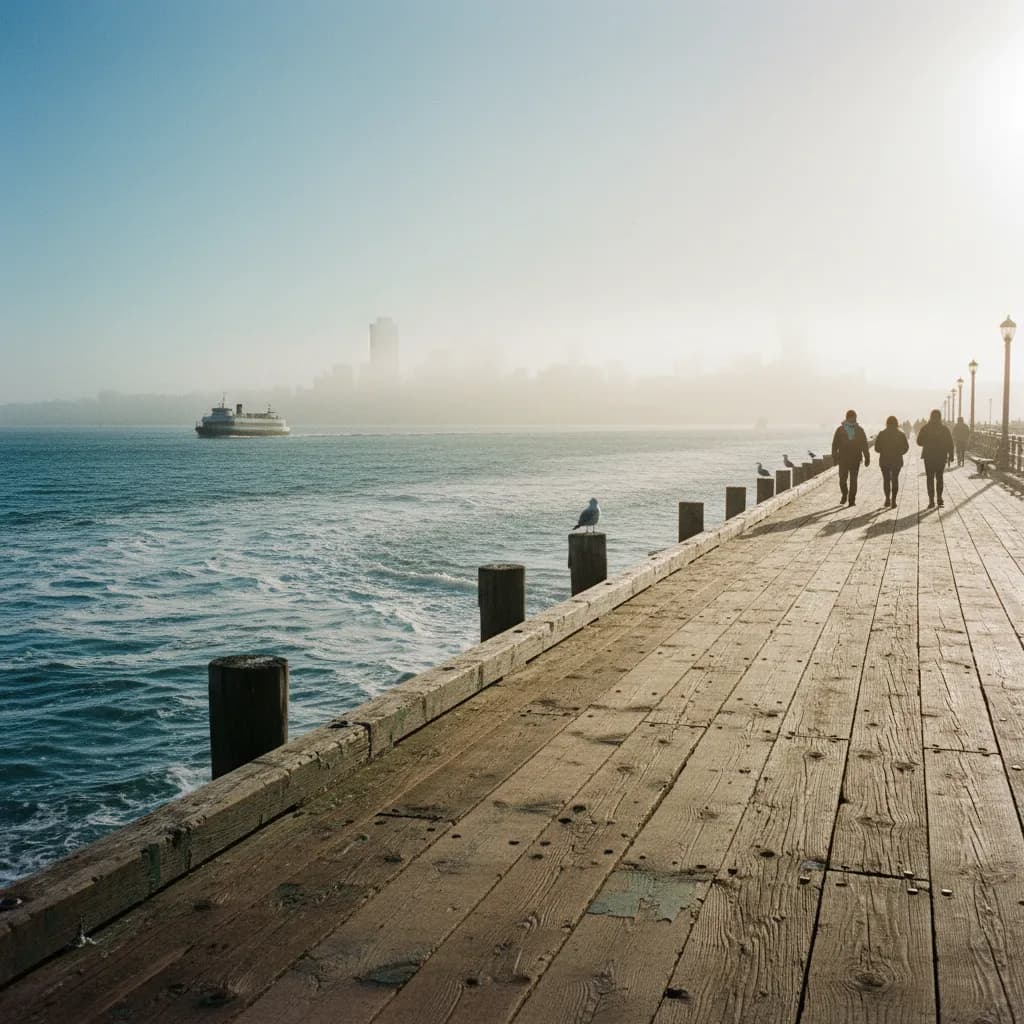
The waterfront path runs north from the Ferry Building along the Embarcadero, a wide pedestrian promenade separated from vehicle traffic. The route follows the curve of the Bay, with unobstructed views across the water. Benches line the walkway at regular intervals. The pavement is level and maintained, suitable for walking at any pace. Ferry schedules from San Francisco Bay Ferry determine the rhythm of boat traffic visible from the promenade throughout the day.
The walk passes a series of piers extending into the Bay, each numbered and marked. Some piers remain active for maritime use, while others have been repurposed. The Embarcadero's palm trees, planted in rows, provide intermittent shade. The path accommodates pedestrians, runners, and cyclists in designated lanes. Distance markers are absent, but the Ferry Building's clock tower remains visible for much of the northbound walk, serving as a reference point for anyone gauging their progress toward Fort Mason.
Fisherman's Wharf and the Tourist Density
The promenade enters Fisherman's Wharf, where foot traffic increases and the character of the waterfront shifts. Restaurants, seafood vendors, and souvenir shops line the inland side of the path. The smell of cooking crab and bread becomes persistent. Street performers and tour operators occupy the public spaces. The walking pace slows as the crowd thickens, particularly during midday hours and on weekends.
The wharf area extends for several blocks, requiring patience and navigation around clusters of tourists. The Bay views remain constant, but the experience becomes less about open space and more about threading through commercial activity. Continuing west requires commitment to the route, as the temptation to detour inland or abandon the waterfront walk increases. The path eventually clears as the wharf district ends and the route approaches the edge of Aquatic Park, where the density thins and the pavement widens again.
Aquatic Park and the Curve Toward Fort Mason
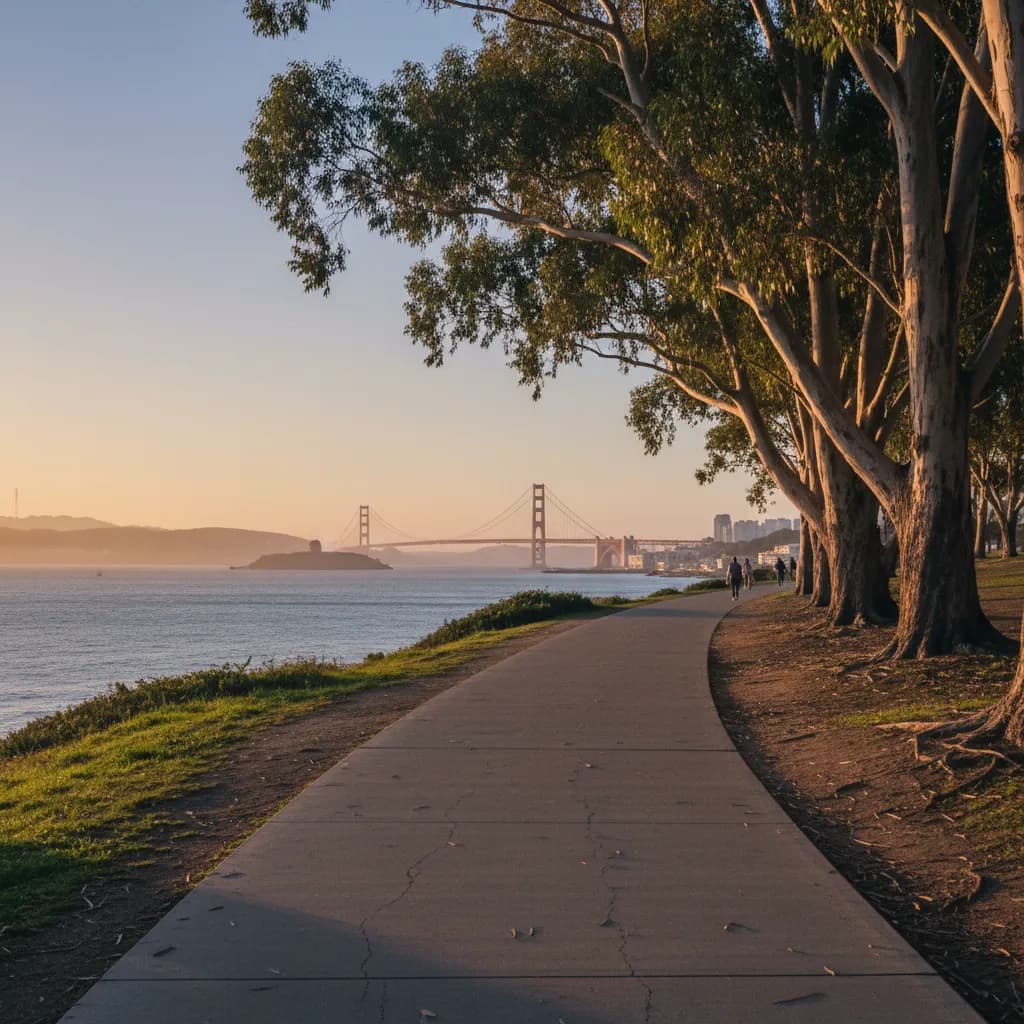
Aquatic Park marks a transition in the walk's character. The protected cove creates a break in the straight line of the Embarcadero, and the path curves around the water's edge. The beach here is narrow and often occupied by cold-water swimmers. The Maritime Museum building sits at the park's center, a streamlined structure from the 1930s. Benches face the water, and the foot traffic becomes more local, less tourist-driven.
The path climbs slightly as it rounds the western edge of the park, offering elevated views back toward the Ferry Building and across to Alcatraz. The pavement transitions from concrete to asphalt in places. Trees provide more consistent shade. The route begins to feel less like a commercial waterfront and more like a neighborhood edge. Fort Mason's green spaces become visible ahead, signaling the final stretch of the walk and a shift from urban promenade to parkland.
Fort Mason Center for Arts and Culture
Fort Mason occupies former military land along the northern waterfront, now managed by the National Park Service as part of the Golden Gate National Recreation Area. The site includes historic buildings, open lawns, and piers extending into the Bay. The Fort Mason Center for Arts and Culture operates within the complex, hosting galleries, theaters, and community organizations. The grounds are open to the public year-round, with no admission fee for access to the outdoor spaces.
The walk concludes at the Fort Mason piers, where the pavement ends and the Bay stretches west toward the Golden Gate Bridge. Visitors can explore the interior buildings or remain on the waterfront, where benches and grassy areas provide places to rest. The return trip to the Ferry Building can be made via the same waterfront route or by cutting inland through the city's northern neighborhoods. San Francisco Bay Ferry does not serve Fort Mason directly, so the walk back or a bus connection inland becomes necessary for completing the loop.
Why the Walk Takes an Afternoon
The distance from the Ferry Building to Fort Mason measures roughly three miles, a walk that would take an hour at a steady pace without stops. The afternoon disappears not because of distance but because of interruptions. The Ferry Building Marketplace invites browsing among its food vendors. The Farmers Market, when operating, adds another layer of delay. The Embarcadero promenade encourages pauses for Bay views and passing ferries. Fisherman's Wharf, despite its crowds, often traps walkers in the search for a specific food stall or a clearer photo angle.
Aquatic Park offers benches that face west, and the temptation to sit and watch the water adds minutes that accumulate into an hour. Fort Mason's lawns and piers provide a natural endpoint, but also a reason to linger rather than turn around immediately. The walk's length is deceptive because the waterfront constantly offers reasons to stop, and the flat terrain makes it easy to underestimate how much time has passed. The return trip, whether by foot or transit, adds another hour, making the entire outing a commitment that consumes most of an afternoon.
Practical notes
The Ferry Building is accessible via multiple Muni lines and BART at Embarcadero Station. San Francisco Bay Ferry operates from the terminal with routes to various Bay Area destinations; schedules and fares are available through the SF Bay Ferry app or Clipper Card. The Ferry Plaza Farmers Market operates three days per week; specific days and hours are listed on the Foodwise website. The waterfront path is fully paved and accessible, though Fisherman's Wharf sections become congested during peak tourist hours. Fort Mason grounds are open daily with no admission fee. Public restrooms are available at the Ferry Building, along Fisherman's Wharf, and at Fort Mason. Return transit options include Muni buses along Bay Street or retracing the waterfront route on foot.
Tags: #SFFerrySchedule #FerryBuilding #SanFranciscoWaterfront #EmbarcaderoWalk #FortMason #FishermansWharf #AquaticParkSF #SFBayFerry #SanFranciscoWalks #BayAreaFerry #FerryPlazaMarket #SFWaterfront #GoldenGateNRA #TheLongWayHome #SanFranciscoCA
Sources consulted: Ferry Building Marketplace · Fort Mason · San Francisco Bay Ferry
All trademarks are the property of their respective owners.


