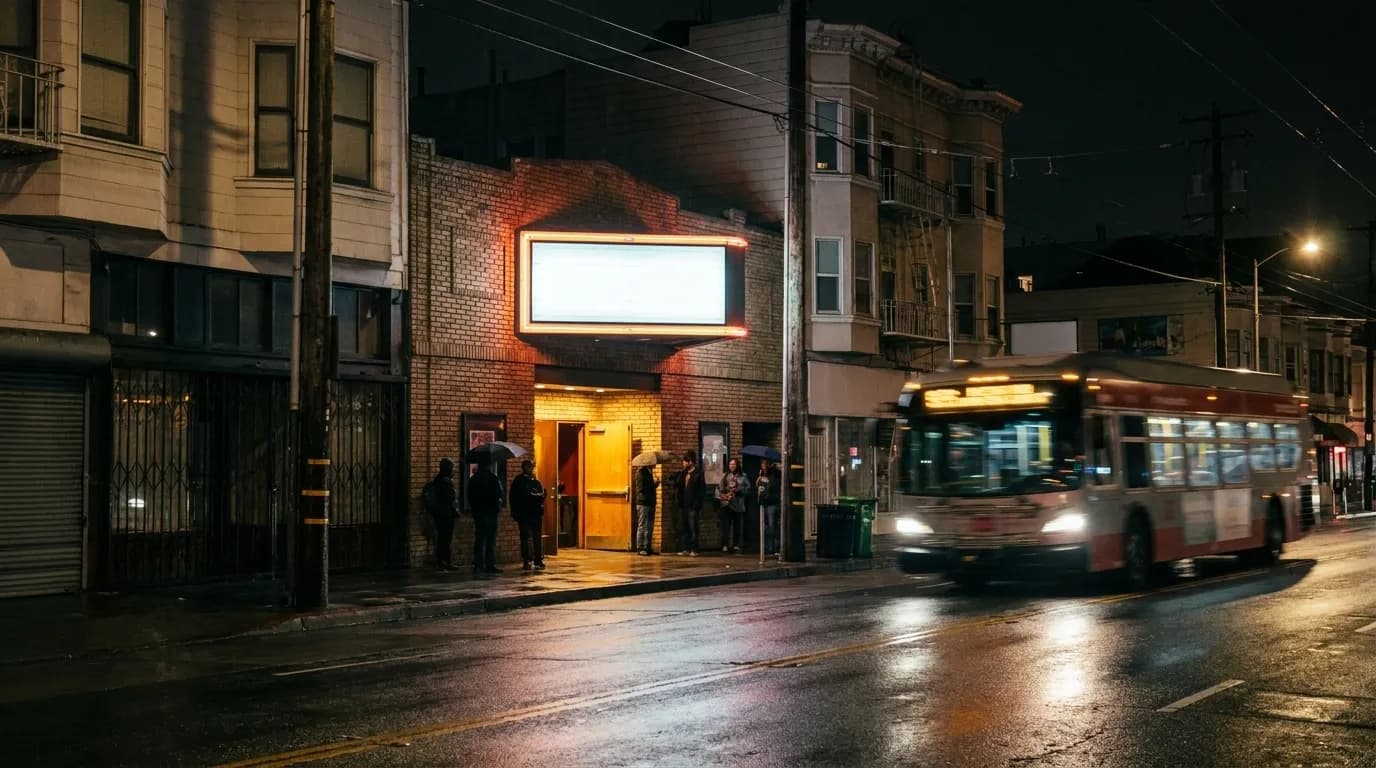
There is a particular kind of venue that only works at a particular size, and Brick & Mortar Music Hall sits right at it. The room at 1710 Mission Street holds about 250 people. It runs more than three hundred events a year, which works out to four to six shows in a normal week, across indie, funk, soul, jazz, rock and hip-hop with no house genre to speak of. At that cadence a venue stops being a destination you visit for a specific band and becomes something closer to a public utility: on almost any given night, something is happening, and the only real question is whether it is your something.
With four to six bills a week and no house genre, the useful question is not whether there is a show but whether tonight's show is yours. Ask Karpo what is on at Brick & Mortar this week and which night actually fits what you like.
Why 250 is the number that matters
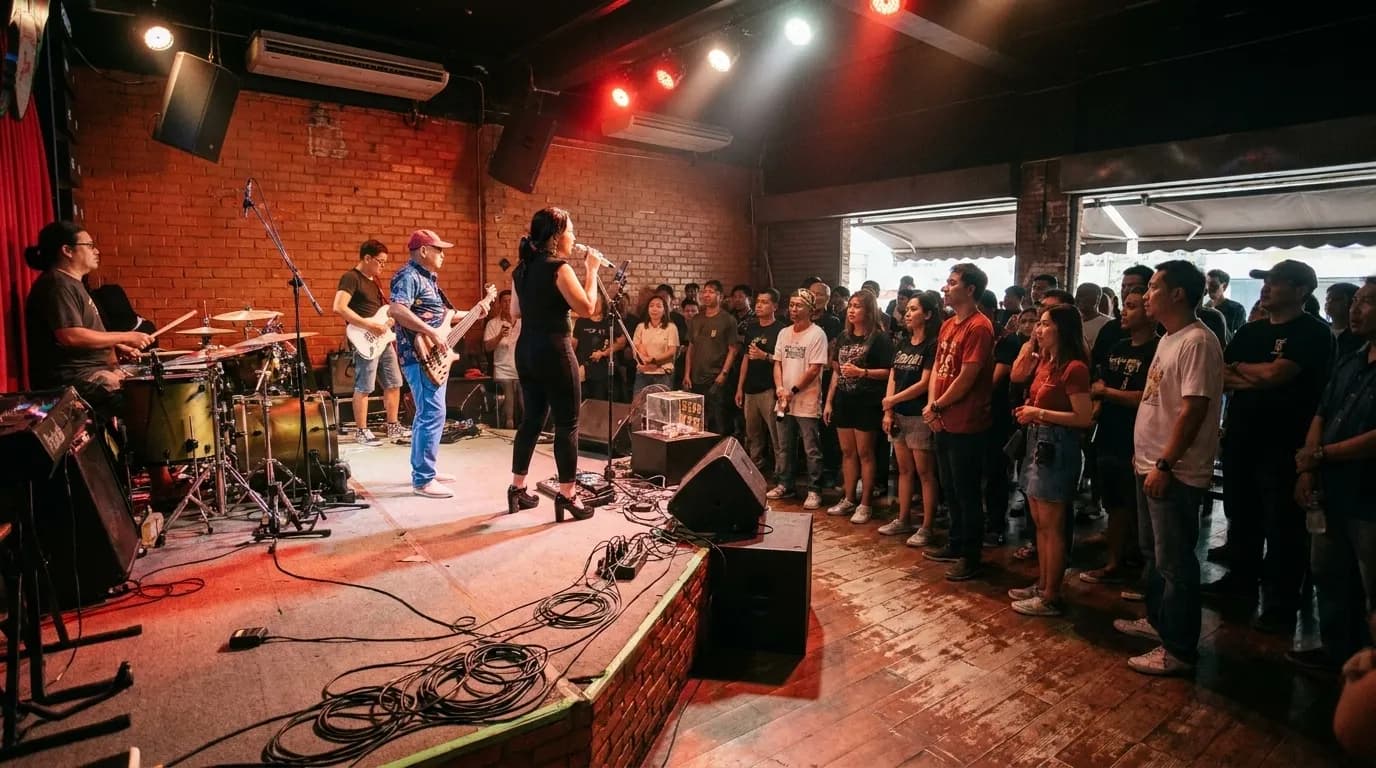
A 250-capacity room changes the economics of who can play. It is small enough that a band on its first national run can fill it, and small enough that a much larger act can drop in for a one-off and sell it out in an hour. It is also small enough that the distance from the back wall to the microphone is short in a way that a thousand-capacity hall physically cannot replicate. There is no bad sightline because there is not enough room to have one.
The trade-off is that the room has very little slack. When a show is genuinely popular, 250 people is a tight 250, and the bar becomes difficult to reach during the headliner. When a show is under-sold, the same room reads as quiet in a way a bigger space would disguise. Neither is a flaw exactly; it is just what this size does.
Reading a calendar with no genre
The venue describes its calendar as eclectic across all genres, and that is not marketing language — it is the actual booking policy. Consecutive nights can run a psych-rock bill, a soul revue, a hip-hop showcase and a jazz set. For a listener, this has one clear implication: you cannot use the venue as a filter. Loyalty to a room works at places with a narrow house sound. Here, the room is a room, and the bill is the whole story.
The upside is discovery. If you check one venue calendar a week and this is the one, you will end up at more things outside your usual lane than you would following artists you already know. Tickets in this capacity range are usually modest, which lowers the cost of guessing wrong.
Upper Mission Street is its own neighbourhood
The address sits at the northernmost edge of the Mission District, and that edge behaves differently from the stretch most visitors mean when they say the Mission. This is not the Valencia Street corridor of packed restaurant patios; it is the top of Mission Street, closer to the freeway approaches and the civic blocks, with a mix of older storefronts, auto shops and a handful of bars.
That has two consequences worth planning around. First, the dining density here is lower than it is ten blocks south, so if you want to eat well before a show, walk or ride down toward the heart of the Mission rather than looking on the block. Second, the walk between this end of Mission and the busier southern stretch is longer than it looks on a phone map, and it passes through quieter blocks. Late at night, that is a stretch most regulars ride rather than walk.
Getting there and getting out
Mission Street itself is one of the city's main bus corridors and runs directly past the door, which is the simplest way in and out. The 16th Street Mission BART station is the nearest rail stop, roughly half a mile south, and it is the option most people use coming from the East Bay or from downtown. Coming back the other way after a late set, check the last train time before the encore rather than after it.
Driving is possible and street parking in this pocket is marginally less brutal than it is around Valencia, but only marginally. On a Friday with four venues in the neighbourhood all letting out within the same half hour, the ride-hail surge on Mission Street is real. Walking two blocks off the main street before ordering a car is the standard workaround.
Practical notes
Brick & Mortar Music Hall is at 1710 Mission Street, San Francisco, CA 94103, at the northern edge of the Mission District. Capacity is about 250. The venue runs more than 300 events a year, typically four to six shows per week, spanning indie, funk, soul, jazz, rock and hip-hop with no fixed house genre — read the individual bill, not the venue name. Sightlines are good everywhere because the room is small, but the bar is hard to reach mid-headliner on a sold-out night. Mission Street buses stop at the door; 16th Street Mission BART is the closest rail, about half a mile south. Dining density is thinner at this end of Mission than further south, so plan dinner around the Valencia and 16th Street blocks and travel up for doors.
Tags: #Concerts #SanFranciscoConcerts #BrickAndMortar #MissionDistrict #MissionStreet #SFLiveMusic #SmallVenues #SFNightlife #IndependentVenues #BayAreaMusic #ThingsToDoInSF #ConcertsNearMe #LiveMusicSF #SFShows
Sources consulted: brickandmortarmusic.com · indieonthemove.com · axs.com
Please drink responsibly. Must be of legal drinking age.
All trademarks are the property of their respective owners.
Ask Karpo first
Want to know what is actually on at Brick & Mortar this week, whether it sold out, and where to eat first without stranding yourself at the top of Mission Street? Ask Karpo for the current calendar, a realistic doors-to-dinner order, and a way home that still runs after the encore.


