 North Beach Tailor Alteration Shop Finder: Inherited Suits
Neighborhood Guides
Dogpatch Art Walk Route Planner: Free Third Street Lofts
Browse free contemporary galleries at Minnesota Street Project, pass the 1917 American Can lofts on Third Street, and finish at bayfront Crane Cove Park.
Tucked between the eastern base of Potrero Hill and the working shipyards of the central San Francisco bayfront, Dogpatch replaces small boutique windows with vast, truss-roofed industrial warehouses and nineteenth-century ironworkers' cottages. Planning your afternoon around a Dogpatch art walk route planner lets you move effortlessly from the multi-gallery atrium of Minnesota Street Project to the 1917 American Can Company lofts on Third Street and the preserved maritime cranes of Crane Cove Park. Because the entire district sits on level waterfront fill and bedrock along the T-Third light rail line, you can cover every warehouse gallery, craft museum storefront, and shoreline sculpture court without tackling a single hill.
Inside the Skylit Warehouse Atrium of Minnesota Street Project
Start at the southern end of the loop on Minnesota Street between Twenty-Fourth and Twenty-Fifth Streets, where Minnesota Street Project opened in March 2016 as a permanent anchor for San Francisco's contemporary art ecosystem. Conceived by philanthropists Deborah and Andy Rappaport to keep commercial galleries, nonprofit arts organizations, and working studio artists from being priced out of the city, the campus spans three repurposed mid-century industrial warehouses across Minnesota and Twenty-Fifth Streets. Admission to the main warehouse atrium and its surrounding gallery rooms is completely free to the public during regular gallery days.
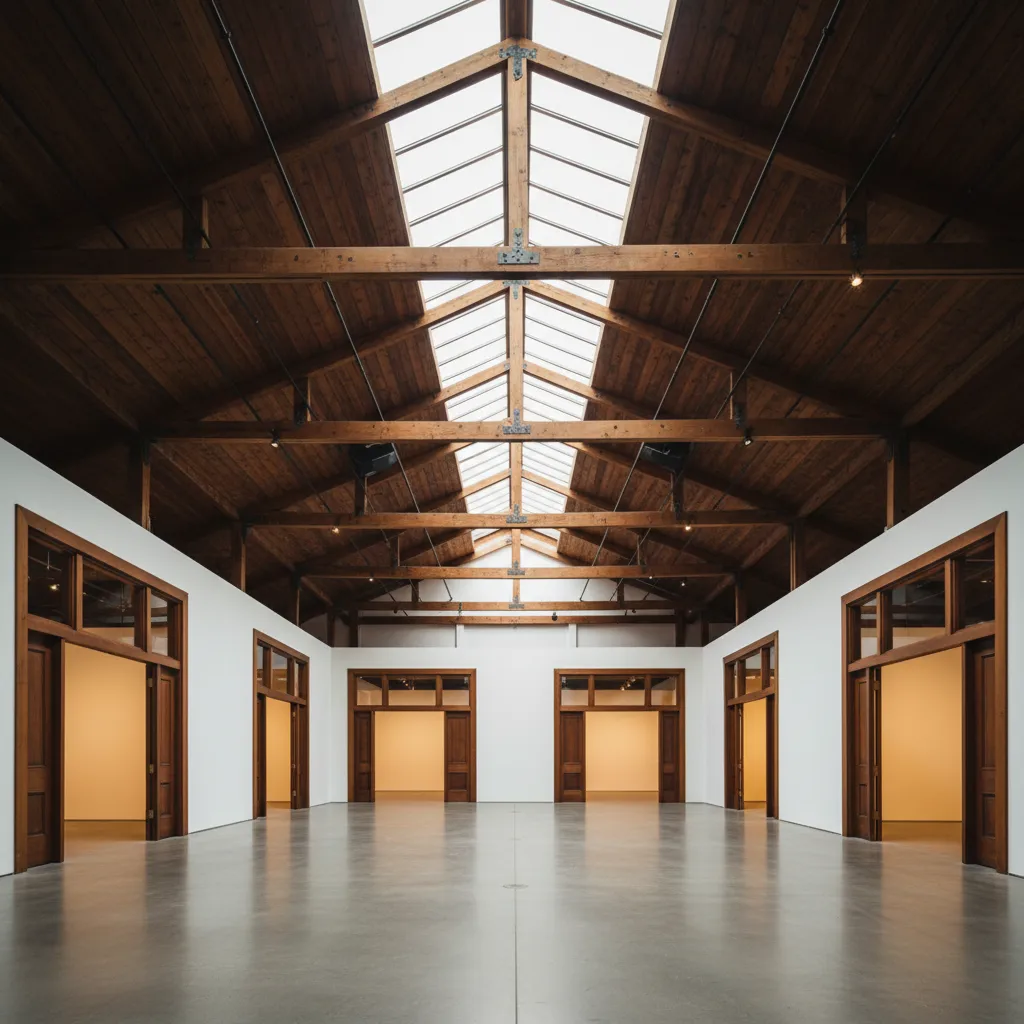
Stepping through the roll-up warehouse entrance into the central atrium reveals exposed bowstring Douglas fir roof trusses, poured concrete floors, and steel mezzanine walkways bathed in overhead skylight. More than a dozen exhibition spaces—including the SFArtsED Gallery, Eleanor Harwood Gallery, Casemore Gallery, and Themes + Projects—open off the ground-floor and upper corridors. Because each room occupies a former industrial bay with soaring ceilings, curators regularly mount monumental large-format photography, suspended kinetic sculpture, ceramic installations, and experimental video pieces that could never fit inside a narrow Victorian parlor.
Take forty-five minutes to circuit both levels of the main Minnesota Street building, then cross the street to check the adjacent project rooms and art book displays. Saturdays between eleven in the morning and five in the afternoon bring the liveliest rotation of artists and curators, while Thursday and Friday afternoons offer hushed, contemplative viewing across the concrete bays.
Victorian Workers' Cottages and the 1917 American Can Lofts
Walk two blocks north up Minnesota Street toward Twenty-Second Street to enter the heart of the Dogpatch Historic District, formally designated by the City of San Francisco in 2002. Because the steep serpentine ridge of Potrero Hill shielded this shoreline enclave from the April 1906 earthquake fire, blocks of modest wood-frame cottages built between the 1860s and 1890s for Union Iron Works shipbuilders, rope-walk hands, and tub-factory laborers still stand directly beside brick warehouses. Look at the simple Italianate brackets, sunken front gardens, and false-front cornices along Minnesota and Tennessee Streets to see how nineteenth-century maritime workers lived within walking distance of the slips.
Continuing up Minnesota Street toward Twentieth and Nineteenth Streets brings you alongside the redwood-shaded meadow of Esprit Park, originally created in 1982 as an open lawn beside the historic brick wine warehouse that served as Esprit's apparel headquarters and later gifted to the San Francisco Recreation and Park Department in 2001. In the late nineteenth century, the long blocks around Twenty-Second and Indiana Streets also supported the Tubbs Cordage Company ropewalk, established in the 1850s to twist Manila hemp hawser lines for Pacific sailing clippers and Gold Rush mining hoists, explaining why Dogpatch's street grid alternates so naturally between compact residential rows and monumental industrial spans.
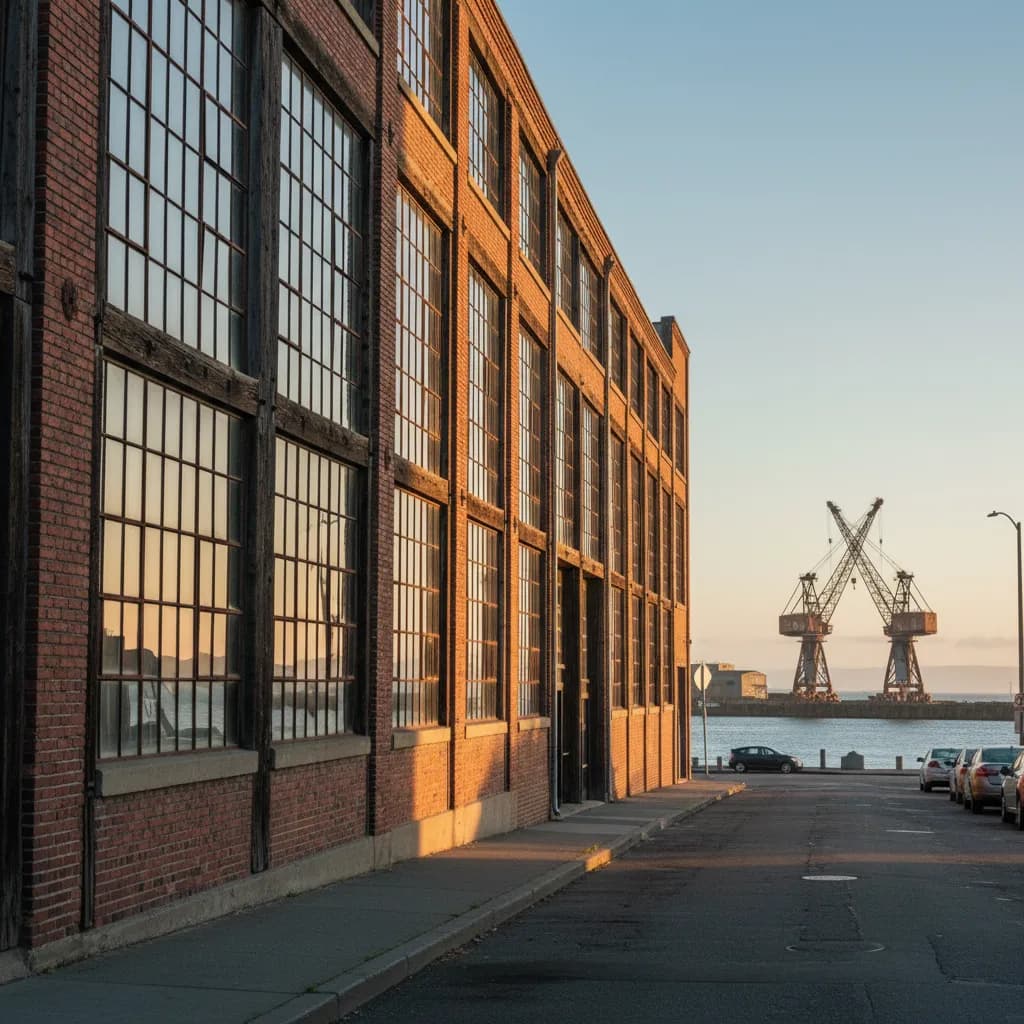
At Twenty-Second Street, turn east one block to Third Street, where the massive reinforced-concrete and red-brick complex of the former American Can Company stretches between Twenty-Second and Twenty-Third Streets. Erected starting in 1917 to manufacture millions of tin food containers for West Coast canneries, this multi-building industrial landmark now houses a dense community of architectural modelers, textile artisans, printmakers, and the Museum of Craft and Design. Founded in 2004 and relocated into the ground floor of the American Can Company building in 2013, the Museum of Craft and Design presents rotating exhibitions devoted to contemporary material craft, furniture design, and architectural fabrication.
Even if you only browse the museum's street-facing design store and look through the towering multi-pane steel factory windows along Third and Twenty-Second Streets, the interplay between raw industrial concrete columns and finely crafted woodwork, glass, and fiber art captures Dogpatch's maker identity. If you want to compare nearby sourdough bakeries, chocolate factories, coffee roasters, or taproom patios along Third and Twenty-Second Streets, open the Karpo APP and ask in plain language for Dogpatch options that match your afternoon break.
Maritime Steel Cranes and Shipyard Slipways at Crane Cove Park
For the final third of your walk, head north along Illinois Street—one block east of Third Street—past Twentieth and Nineteenth Streets to enter Crane Cove Park and the historic Pier 70 shipyard district at Eighteenth Street. Union Iron Works established its sprawling steel shipyard here in 1883, launching the battleship USS Oregon and hundreds of twentieth-century naval and merchant hulls. Opened to the public in September 2020, seven-acre Crane Cove Park transforms the former industrial shoreline and nineteenth-century Ship Building Slipway Number Four into an open-air maritime sculpture park.
Two towering twentieth-century steel whirley cranes—nicknamed Nick and Nora by shipyard crews—stand preserved along the concrete graving dock, framing unobstructed views across the calm cove water toward the Oakland container cranes and the Bay Bridge. Walk out along the timber-and-concrete edge of the historic slipway and inspect the red-brick Union Iron Works machine shop and office buildings dating from the 1880s and 1890s along Twentieth and Illinois Streets, where restored industrial masonry meets contemporary public plazas.
T-Third Light Rail Access, Sunny Microclimate, and Timing Notes
Dogpatch enjoys one of the warmest, least foggy microclimates on the San Francisco peninsula because Potrero Hill blocks the afternoon marine layer rolling in from the Pacific Ocean. Plan your route from south to north between one and four-thirty in the afternoon so you finish at the sunny shoreline lawn of Crane Cove Park when the western light turns the rusted shipyard steel and red brick facades deep amber.
Getting to and from the walk is simple via the Muni T-Third light rail line, which stops directly at Twenty-Third Street for Minnesota Street Project and the American Can Company lofts, and at Mariposa/Eighteenth Street for Crane Cove Park, or via the Twenty-Second Street Caltrain station tucked beneath the hill at Twenty-Second and Iowa Streets. When you wrap up by the bay and want to find an early dinner table, wood-fired pizza counter, or wine bar back on Third or Twenty-Second Street, ask the Karpo APP to surface neighborhood spots right along your transit return.
Ask Karpo for more information.
Keep reading
- North Beach Tailor Alteration Shop Finder: Inherited Suits
 Hayes Valley Tailor Alteration Shop Finder for Boutique Buys
 Pac Heights Tailor Alteration Shop Finder for Heirloom Gowns