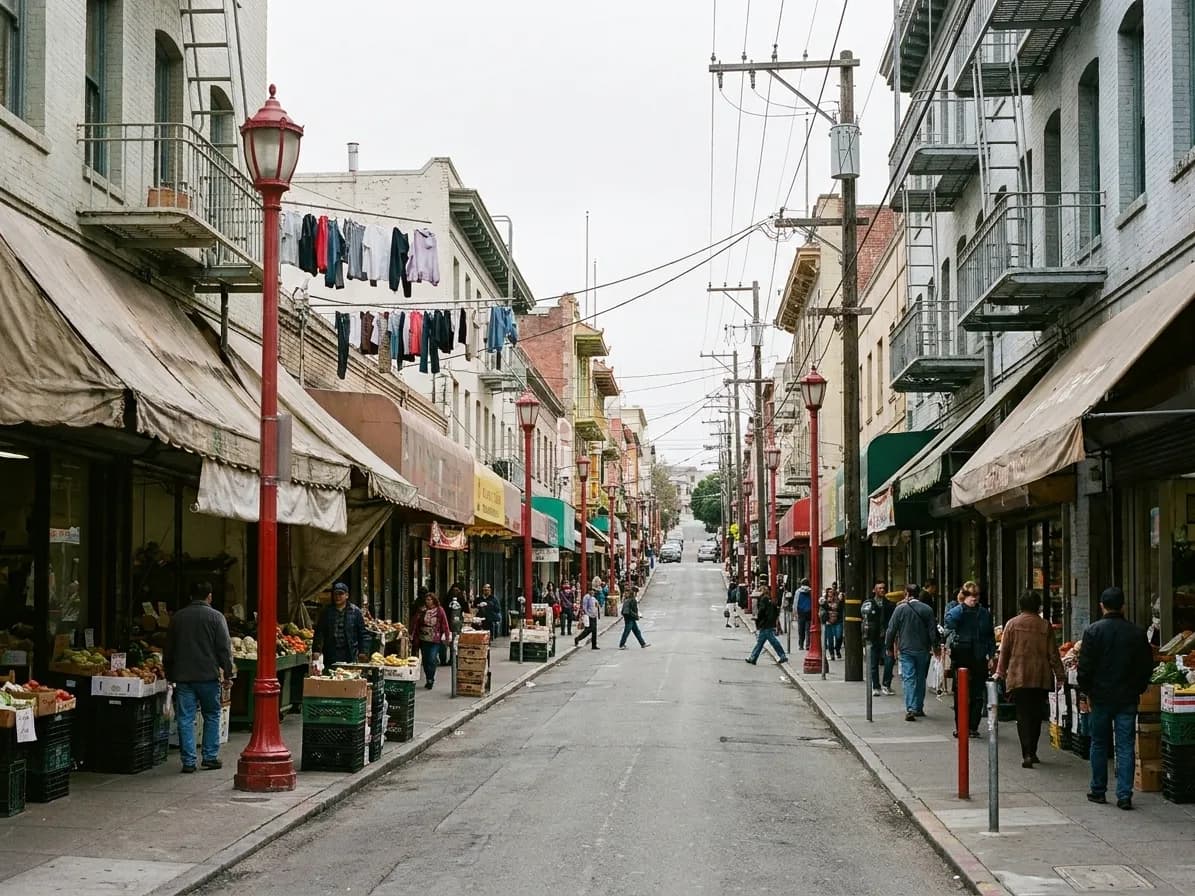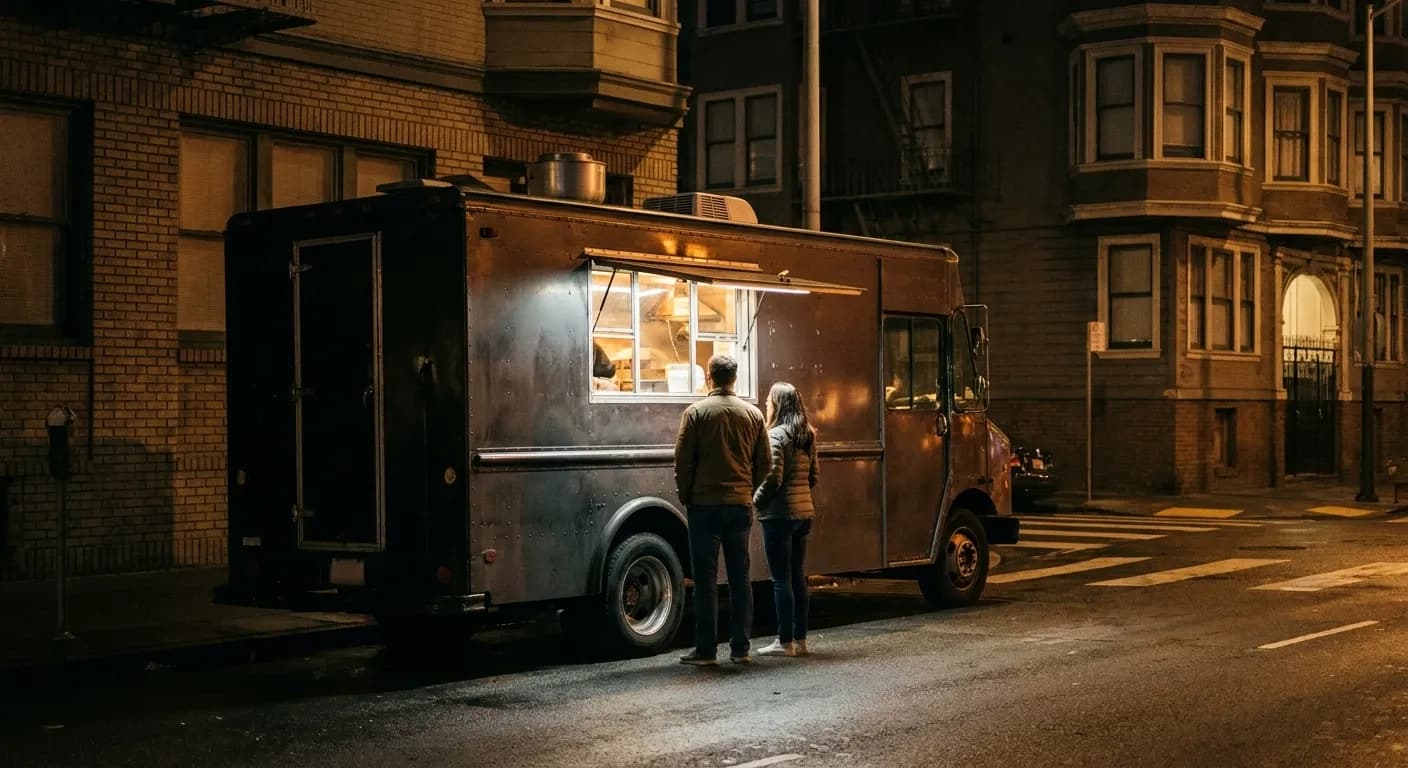
The perennial debate about the best tacos in San Francisco is unusually unproductive because the participants are comparing different cuisines. A Michoacán carnitas specialist, a Sinaloan seafood counter and a Yucatecan cochinita place are not competitors — they are three different regional traditions that happen to share a tortilla. Sorting the city's taquerias by style rather than by rank makes the map legible and settles most of the arguments on the spot.
Style beats ranking when you are choosing dinner. Ask Karpo which regional taquerias are near you and what each one is best at.
The Mission format is its own regional style
Start with the obvious one, because people outside the city misunderstand it. The Mission-style burrito — rice inside, foil, the size of a forearm — is a genuine local invention with a documented history here, not a corruption of anything. The taquerias that codified it in the 1960s and 70s built a format designed for a working lunch, and it has been exported worldwide.
The relevant point for taco hunting is that a great Mission burrito place is not necessarily a great taco place. They are optimised for a different assembly, with rice and beans doing structural work that a taco does not need. If the tacos at a burrito specialist taste underwhelming, that is not a failure — you have ordered outside the house style.
Michoacán and the carnitas houses
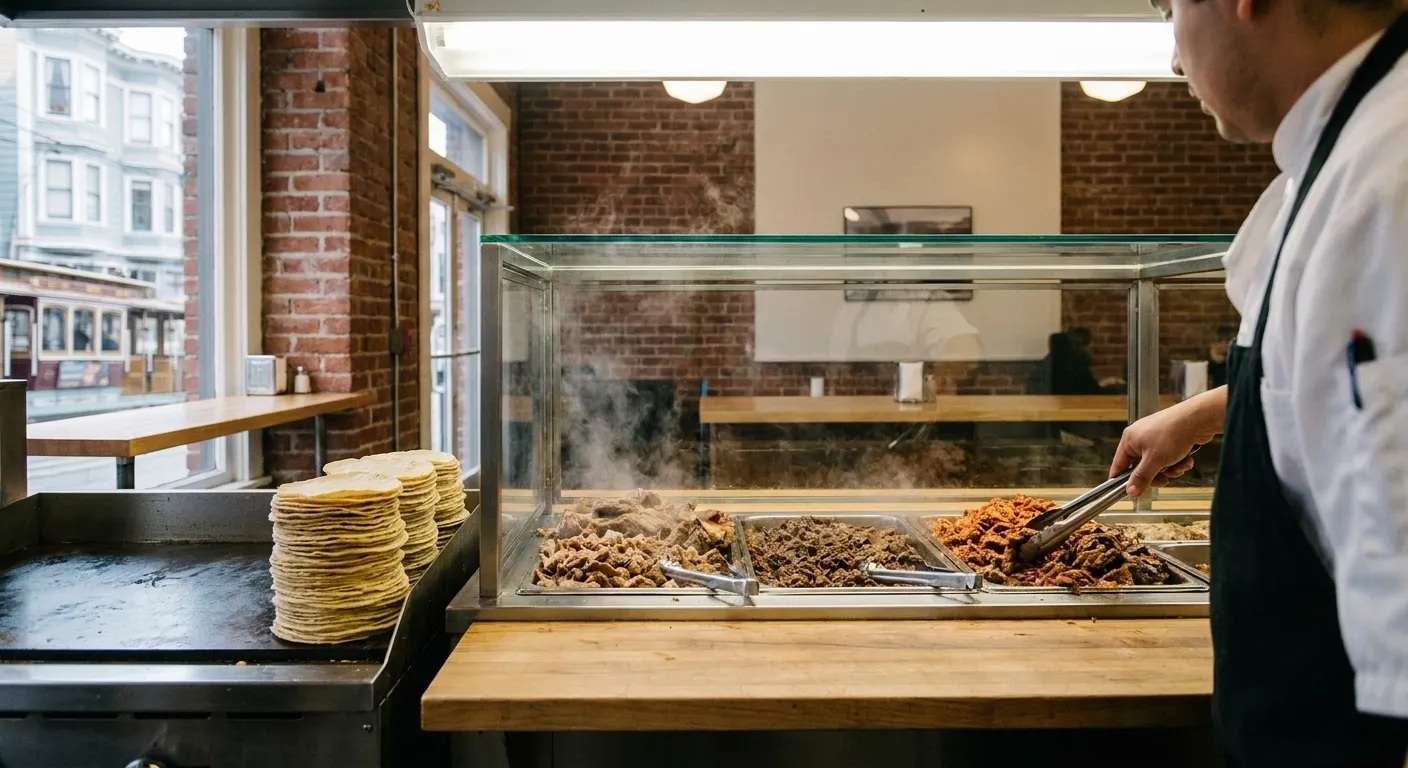
Carnitas is the Michoacán contribution and it is well represented across the Mission and the southern neighbourhoods. Done properly it involves a copper pot, several hours, and lard as a cooking medium rather than a flavouring, producing meat that is simultaneously soft and crisp at the edges. The tell is texture variation within a single portion — uniform pulled pork means it was braised, not confited.
The weekend is when these places are at their best, because carnitas is cooked in large batches and the weekend batch is the big one. A Sunday morning carnitas order, sold by weight to take home with tortillas and salsa separate, is one of the great cheap meals available in this city and is more or less invisible to anyone who only orders at a counter.
Sinaloan and the seafood counters
A distinct and growing presence here, concentrated in the outer Mission, the Excelsior and along a few commercial strips further south. Shrimp and fish tacos, ceviche, aguachile, tostadas — a lighter, sharper, more acidic register than the braised-meat taquerias, and a completely different lunch. These places are frequently daytime-only, which catches people out.
If you have decided you do not like tacos much, this is the branch to try, because it bears almost no resemblance to the category most people have formed an opinion about. Aguachile in particular is closer to a raw seafood dish than to anything under a taco heading, and the good versions here are excellent.
Yucatecan, Oaxacan and the smaller traditions
Thinner on the ground but present, and worth seeking out precisely because they are unusual here. Cochinita pibil — pork with achiote and sour orange, slow-cooked and served with pickled red onion — is the signature Yucatecan dish and is a completely different flavour profile from anything else in this list. Oaxacan places bring mole, tlayudas and quesillo, and are more likely to be restaurants than counters.
These do not cluster geographically the way the larger traditions do; they are scattered one to a neighbourhood. That makes them a destination rather than a convenience, and it is the main reason they stay under-visited despite being among the more interesting cooking in the city.
Reading a taqueria in thirty seconds
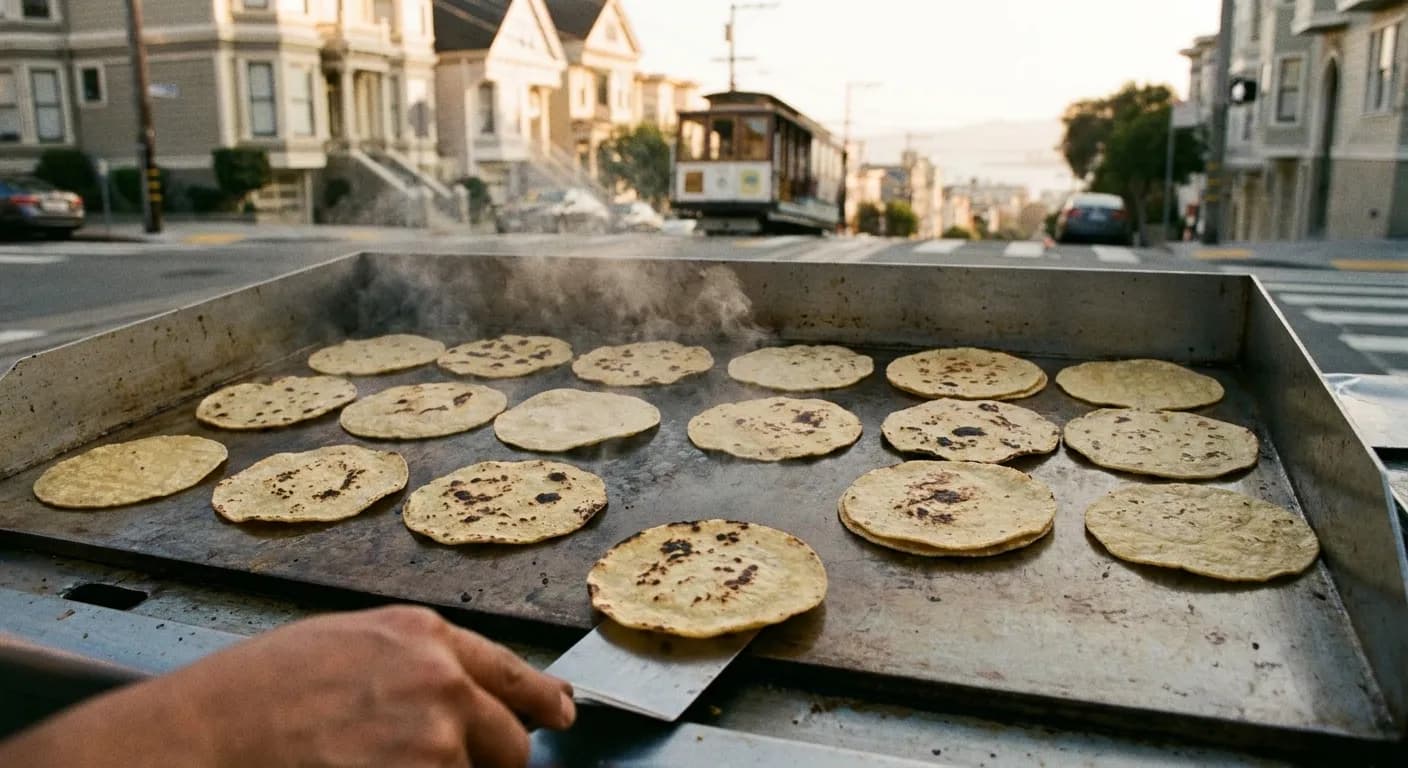
Look at the tortillas first. House-made corn tortillas, or at minimum tortillas being warmed to order on a griddle rather than steamed in a bag, is the highest-signal indicator available. Second, look at what the majority of customers are ordering — if everyone has a burrito, order the burrito; if everyone has three tacos on a paper plate, do that.
Third, look at the salsa station and the pickle situation, which tells you whether anyone is cooking beyond the meat. And fourth, listen: a room where the staff and most of the customers are speaking Spanish is not a guarantee of quality, but combined with the other three it is a reliable enough composite signal to walk in on.
Where each style clusters
The inner Mission holds the highest density and the widest range, including most of the burrito institutions. The outer Mission and the Excelsior have the Sinaloan seafood and a lot of the newer family operations. The Bayview and Portola have carnitas and the weekend batch cooking. And there are single excellent outposts in the Richmond, the Sunset and the Tenderloin that exist because a family lives there, not because of any cluster effect.
The useful habit is to stop treating the Mission as the answer and start treating it as one answer. It is the densest and the most convenient, and it is also the most expensive and the most crowded, and the equivalent quality forty blocks south costs a third less with no queue. That is the actual local knowledge in this category.
How to try a new style without wasting a meal
Order two tacos rather than a plate. At any counter, two tacos is a small enough commitment to be an experiment and large enough to tell you whether the kitchen is good. If they are, order more; if they are not, you have spent seven dollars and twenty minutes. This is how you work through a neighbourhood rather than through a list, and it is much faster than researching.
The other useful move is to order the thing you have not heard of. Every one of these traditions has a dish that does not travel and therefore does not appear in the general conversation about tacos — the offal cuts, the regional stews, the weekend-only preparations. Those are almost always where the kitchen's actual skill is, and the counter staff are usually pleased to be asked about them.
Tags: #SanFrancisco #TacosSF #Taqueria #MissionBurrito #Carnitas #Sinaloan #Yucatecan #SFEats #NeighbourhoodGuide #MissionDistrict #Excelsior #BayArea #MexicanFood
All trademarks are the property of their respective owners.
Ask Karpo first
Ask Karpo which taquerias near you in San Francisco cook which regional style, and which of them are open right now.