Typing salad near me into a search bar while standing on Calle Ocho in Little Havana will return a list of Cuban restaurants, which is accurate but not helpful. Every sit-down Cuban dining room in the neighbourhood serves a side salad—iceberg lettuce, tomato, sometimes avocado, dressed or plain—but that ensalada is a garnish meant to cut the richness of lechon asado and ropa vieja, not a vegetable plate in its own right. If you are looking for greens as the main event, or trying to eat vegetarian in a neighbourhood built around slow-roasted pork, you need to know which counters will actually plate a full salad, where the juice-and-batido stands fit into the lighter end of the menu, and what Florida avocado season does to pricing and availability.
Karpo maps every ventanita, juice counter, and sit-down Cuban room in Little Havana—and shows you which ones plate vegetables worth ordering. Open the neighbourhood guide to see what's open now.
Ensalada means garnish, not plate
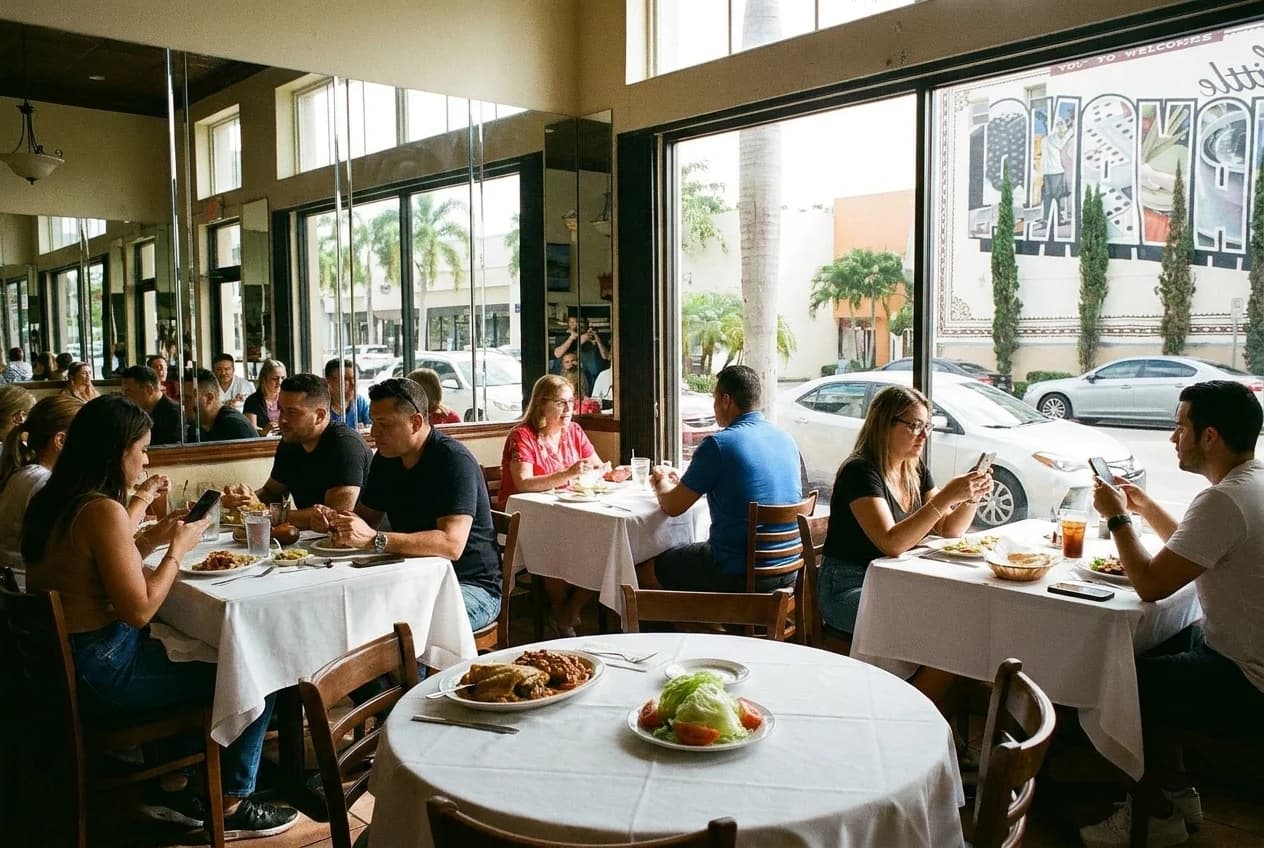
Walk into any Cuban dining room in Little Havana and order ropa vieja or lechon asado, and you will receive a side salad without asking. It arrives on a separate small plate: iceberg lettuce, one or two tomato wedges, sometimes a slice of avocado if you are lucky, dressed with oil and vinegar or left plain. This is ensalada in the Cuban kitchen tradition—a palate reset between bites of slow-roasted pork and black beans, not a vegetable course. The portion is small because the purpose is small. No one builds a meal around it.
At Versailles, the Calle Ocho institution at 3555 SW 8th Street that has operated since 1971, that side salad appears automatically with most entrees. The lettuce is always iceberg, the tomato is sliced thick, and the plate holds roughly two forkfuls. It costs nothing extra because it is understood to be part of the structure of a Cuban meal, the same way moros y cristianos and maduros are. If you want more vegetables than that, you order a separate side, and even then the kitchen is not built to accommodate a salad as the centrepiece.
Which counters plate a full salad
A small number of Little Havana kitchens will plate a larger salad if you ask for it as an entree, but the menu does not advertise this and the kitchen does not encourage it. La Carreta at 3632 SW 8th Street—the Calle Ocho diner that runs as a sister operation to Versailles—serves an ensalada mixta that upgrades the standard side: more lettuce, cucumber, onion, a proper wedge of avocado when in season, and a choice of dressing. It costs seven to nine dollars depending on the avocado. The portion is large enough to serve as a light lunch if paired with a pastelito from the bakery counter, but the room still expects most diners to order a protein plate.
At Cafe Versailles—the same building as the main Versailles dining room, operating the ventanita and bakery counter—the salad situation does not improve. The counter serves pastries, croquetas, and cafe con leche from 8 am, but no one walks up to a ventanita expecting to eat vegetables. The culture of the ventanita is coffee, speed, and standing; you drink your cortadito in three sips and move on. If you are vegetarian and hungry, the pastelitos filled with guava and cream cheese are your best path, not a salad request.
Juice counters carry the lighter end
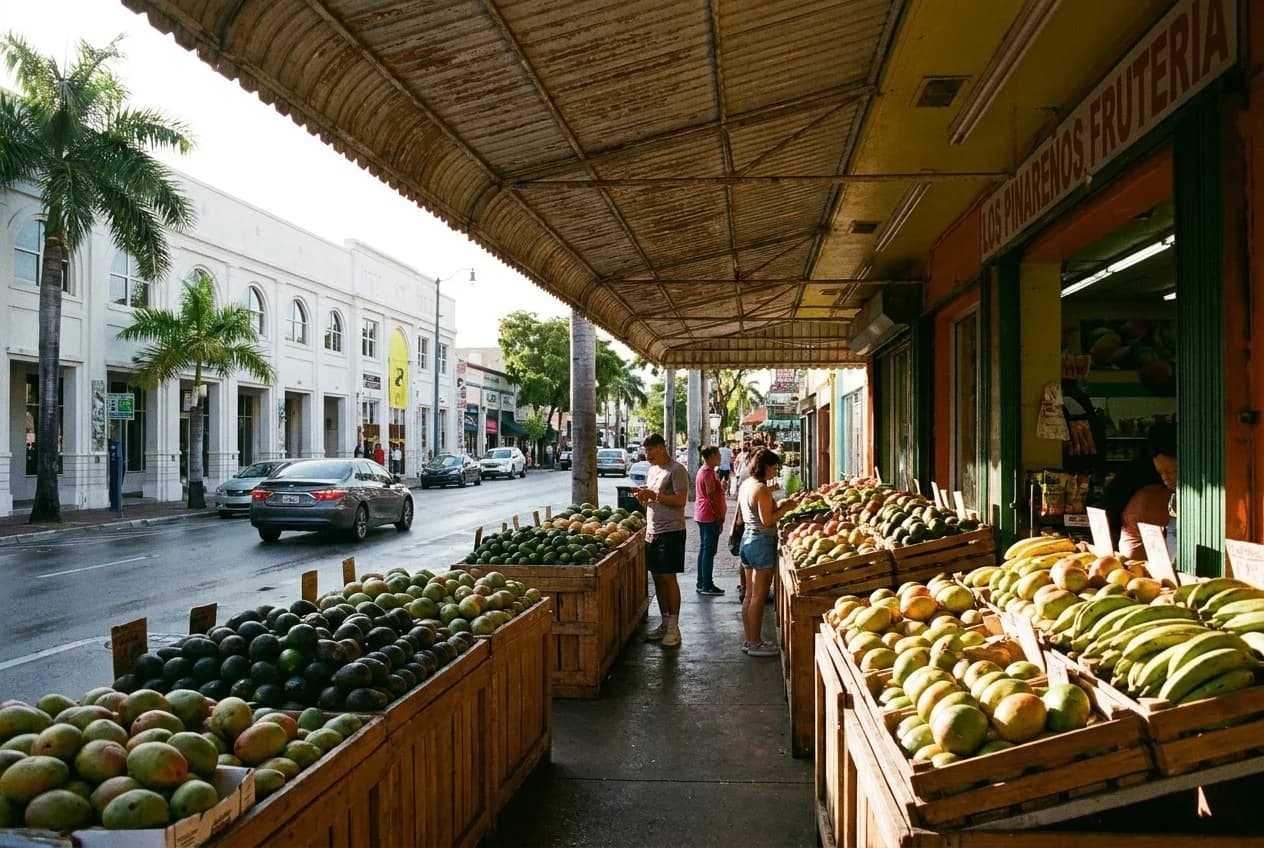
The real vegetable access in Little Havana happens at the juice and batido counters, which operate as a parallel food system to the Cuban dining rooms. These are not salad bars, but they process more fresh produce in a day than most restaurants do in a week. Los Pinareños Fruteria at 1334 SW 8th Street has run as a cash-only open-air fruit market since 1963. The counter presses sugarcane juice to order—guarapo with ginger and lime, served cold in a plastic cup—and blends batidos with mango, mamey, papaya, or guanabana depending on the season. A large batido costs four to six dollars and functions as a meal replacement if you are not trying to eat a fork-and-plate lunch.
The fruteria also sells whole avocados, tomatoes, and leafy greens by the pound, which matters if you are staying in the neighbourhood and assembling your own meals. Avocado pricing swings hard with the season: in summer months when Florida avocados are abundant, a single large avocado costs one dollar; in winter when supply tightens, the same fruit runs three dollars. That seasonal swing directly affects whether Cuban restaurants add avocado to the side salad or charge extra for it.
What avocado season does to the menu
Florida avocado season runs roughly June through February, peaking in late summer. During that window, the standard ensalada at most Cuban restaurants gains a proper avocado slice without an upcharge. Outside that window, avocado becomes an optional add-on priced at two to four dollars, and many kitchens stop offering it entirely rather than paying wholesale rates for California fruit. If you are searching for salad near me in Little Havana during March, April, or May, expect iceberg and tomato only unless you are willing to pay the supplement.
This is not a cost-cutting move; it is how Cuban home cooking has always worked. Avocado is a seasonal luxury, not a year-round staple, and the restaurant kitchens follow that logic even when the neighbourhood's residents would pay for off-season fruit. The dining rooms are not trying to serve a health-focused clientele; they are serving the Cuban diaspora's culinary memory, which does not include avocado toast or kale.
Vegetarian workarounds at pork-built counters
Little Havana's food culture is meat-forward in a way that makes vegetarian eating an engineering problem, not a menu category. The black beans are often cooked with ham hock or pork fat. The rice may be prepared in chicken stock. The croquetas are filled with ham. If you are vegetarian and trying to eat a full meal, you need to ask specific questions at the counter before ordering, and the answers will vary by kitchen.
At El Exquisito at 1510 SW 8th Street—a smaller, family-run Cuban counter often considered the neighbourhood's best traditional home cooking—the staff will confirm whether the beans of the day are vegetarian or pork-based, but do not expect a dedicated vegetarian menu. The kitchen can plate a meatless rice-and-beans with maduros and a side salad, which costs around twelve dollars and delivers enough calories to function as lunch. The avocado, again, depends on the season.
Sanguich de Miami at 2057 SW 8th Street, known for what many locals consider the city's best Cuban sandwich, does not offer a vegetarian Cuban. The kitchen's workaround is a pressed cheese sandwich on Cuban bread with pickles and mustard, which is not advertised but available if you ask. Pair it with a guava and cream cheese batido—the counter's signature milkshake—and you have a vegetarian-safe lunch that still tastes like Little Havana. The sandwich costs six to eight dollars, the batido another five.
Where the dining rooms make exceptions
Cafe La Trova at 971 SW 8th Street, which has appeared on the World's 50 Best Bars list and operates under chef Michelle Bernstein, runs a more upscale Cuban menu than the neighbourhood's old-guard dining rooms. The kitchen plates a composed salad with watercress, avocado, citrus, and a proper vinaigrette, priced around fourteen dollars. This is the only Little Havana restaurant where ordering a salad as your main course will not confuse the server. The room skews more formal than Versailles or La Carreta: reservations are accepted, the bar program is serious, and the crowd includes more non-Cuban diners.
That said, Cafe La Trova is still a Cuban restaurant, which means the menu's centre of gravity is lechon, ropa vieja, and arroz con pollo. The salad exists as an option, not as the point. If your primary goal is vegetables, you are better off at the juice counters and the fruteria market.
Practical notes
Los Pinareños Fruteria at 1334 SW 8th Street is cash only, open daily from 8 am to 6 pm, and sells whole avocados for one to three dollars depending on the season. La Carreta at 3632 SW 8th Street serves an ensalada mixta for seven to nine dollars; the dining room opens at 8 am daily. Cafe La Trova at 971 SW 8th Street plates a composed salad for around fourteen dollars; reservations accepted. Sanguich de Miami at 2057 SW 8th Street will make a pressed cheese sandwich on request for six to eight dollars, open Tuesday through Saturday 11 am to 6 pm. Versailles at 3555 SW 8th Street includes a small side salad with most entrees; hours run Monday through Thursday 8 am to midnight, Friday and Saturday 8 am to 1 am, Sunday 9 am to midnight. El Exquisito at 1510 SW 8th Street can plate vegetarian rice-and-beans with maduros for around twelve dollars. Avocado supplements cost two to four dollars when out of season.
Tags: #LittleHavana #CalleOcho #CubanFood #EnsaladaCubana #VegetarianMiami #JuiceCounters #BatidoMiami #AvocadoSeason #FruteriaMarket #CubanRestaurants #MiamiNeighbourhoods #SaladNearMe #LosPinarenos #CafeLaTrova #Versailles
Please drink responsibly. Must be of legal drinking age.
All trademarks are the property of their respective owners.
Ask Karpo first
Ask Karpo which Little Havana juice counters are open now, or which Cuban dining rooms plate a vegetarian-safe rice-and-beans without pork fat. Karpo tracks seasonal avocado pricing, ventanita hours, and which bakery counters sell pastelitos worth pairing with a batido when you need a meatless lunch on Calle Ocho.