 Kendall Pastelito Window Crawl to Pick a Birthday Party Box
Coffee & Dessert
Doral Pastelito Window Crawl for a Cuban and Venezuelan Duel
Plan a Doral pastelito window crawl that compares flaky Cuban guava pastries with fried Venezuelan pastelitos, tequeños and cachitos on one easy office break.
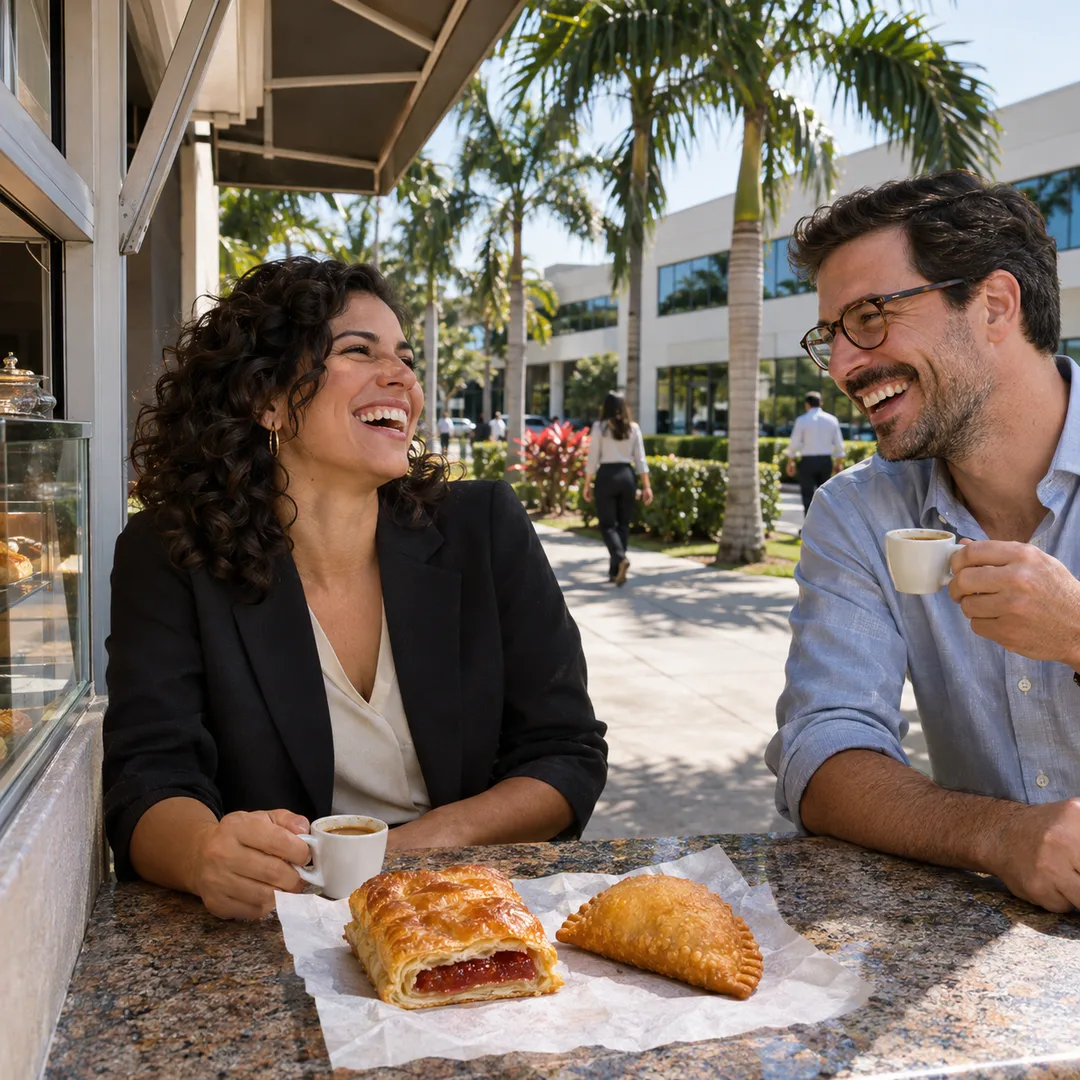
A pastelito window crawl in Doral comes with a twist, because the word means two different pastries depending on who is ordering. Lucía, who grew up in a Cuban family in Westchester, and her colleague Gabriel, who moved from Mérida in Venezuela, argued about it for months at their logistics office. One Friday they settled it the only fair way: three windows, one long coffee break and a scorecard that both promised to respect.
Why Doral Is a Two-Pastry Town
Doral grew out of former farmland and golf courses west of the airport into a city of warehouses, office parks and planned neighbourhoods. Over the past couple of decades it also became home to one of the largest Venezuelan communities in the United States, so much so that locals jokingly call it Doralzuela. Venezuelan arepa counters and bakeries now sit beside Cuban cafeterías and Colombian panaderías in the same plazas.
That mix makes Doral the most interesting place in Miami to run a pastry crawl. A Cuban pastelito is a flaky square of puff pastry filled with guava, cheese or seasoned beef. A Venezuelan pastelito, especially in the Andean style Gabriel grew up with, is a fried turnover of crisp dough wrapped around cheese, meat or chicken. Both are eaten standing up with strong coffee, and both have loyal fans who will not hear a word against them.
Setting the Rules
Lucía and Gabriel agreed on three windows, each within a short drive of their office, and set a strict lunch-break limit. At each stop they would order one Cuban pastelito de guayaba, one Venezuelan pastelito, and a coffee to share. They would score each pastry for crust, filling and how well it paired with coffee. A third coworker, Daniela, acted as an impartial judge, since her family is from Colombia and she claimed no loyalty to either side.
They planned the route with the Karpo app the night before, searching for café windows near their office and picking three that served both styles or sat close enough to each other to compare. The app does not decide the winner, of course, but it saved them from spending half their break driving between plazas. Daniela insisted the route end near a park, so she could walk off the pastry.
Window One: The Cuban Classic
The first stop was a Cuban window tucked into a plaza beside a print shop. Lucía ordered in rapid Spanish, a colada and a guava pastelito, and the pastry arrived warm, its layers shattering into flakes. Gabriel admitted the crust was impressive. He also pointed out that it covered his shirt in crumbs, which he considered a design flaw. Lucía said the crumbs were proof of quality.
Daniela noted that the guava paste had a tart edge that cut the sweetness, and gave it high marks for pairing with the colada. The coffee itself, thick with sugar, divided the group: Gabriel found it too sweet, while Lucía drank two tiny cups. It was a good reminder that a crawl is personal. Taste is shaped by what you grew up with, and that is half the fun.

Window Two: The Venezuelan Answer
The second stop was a Venezuelan bakery café with a busy walk-up counter where office workers ordered tequeños, cheese sticks wrapped in dough and fried until golden. Gabriel ordered a pastelito andino filled with white cheese and another with shredded beef, plus a cachito, a crescent roll stuffed with ham. He also asked for a marrón, the Venezuelan name for a coffee with a little milk.
Lucía was surprised by how light the fried pastry tasted. The dough was crisp and thin, with bubbles on the surface, and the cheese inside was salty and stretchy. She admitted it made a far better savoury snack than the Cuban carne pastelito she usually orders. Daniela gave the cachito an unofficial bonus point, since it was not technically part of the contest but was too good to ignore.
Window Three: The Tiebreaker
The final stop was a Cuban and Venezuelan café that served both styles side by side, chosen specifically as a tiebreaker. Here they ordered both pastelitos together, along with a guava and cheese square and a small golfeado, a sweet Venezuelan roll with papelón sugar and anise. With everything on one tray, the differences became clearer: the Cuban version was buttery and flaky, the Venezuelan one crunchy and savoury.
The scorecard ended in a near tie. Lucía awarded the sweet category to the Cuban guava pastelito, and Gabriel conceded. Gabriel took the savoury category for the Andean cheese pastelito, and Lucía agreed. Daniela, as judge, declared the whole thing a draw and suggested they repeat the crawl every month with different windows, which is exactly what they have done since.
Their coworkers now ask to join, and the monthly crawl has turned into a small office tradition. New hires are given a scorecard on their first Friday and asked to declare a side before tasting anything. Most change their minds by the second window, which Daniela says is the healthiest possible outcome for a contest about pastry.
Ending at a Doral Park
After the third window they drove to Doral Central Park, a large green space with lakes, walking paths and sports fields. A short walk around the water helped settle the pastries before the afternoon meetings. On weekends the park fills with families, but on a weekday lunch break it is quiet enough to sit on a bench and argue amicably about crumbs.
If you are exploring Downtown Doral instead, the walkable streets around its central plaza offer a more urban ending, with fountains, shaded benches and plenty of people watching. Either way, finishing a crawl outdoors gives the experience a natural closing moment and keeps it from feeling like a rushed series of transactions at a counter.
How to Plan Your Own Doral Taste-Off
Choose a mid-morning or early lunch slot, when pastries are still fresh and the office crowd is manageable. Plan three windows close together, use the Karpo app to see which plazas cluster near your starting point, and make sure at least one serves both Cuban and Venezuelan pastries for a side-by-side comparison. Bring a friend from each tradition if you can, and appoint a neutral judge.
Order one of each style at every stop, share coffee rather than buying full cups, and keep score with a simple note. Learn a few words: guayaba, queso, tequeño, cachito, marrón. Eat at the window and keep napkins handy, because one pastry flakes and the other drips. Whichever side wins, the real result is a better understanding of how two Caribbean food cultures share a single word and a single Miami suburb.
Ask Karpo for more information.
Keep reading
- Kendall Pastelito Window Crawl to Pick a Birthday Party Box
 Coral Gables Croqueta Bakery Picker for a Home Cook
 Westchester Croqueta Bakery Picker for a Finals Study Group